
Wintering koi: temperature management through the cold months
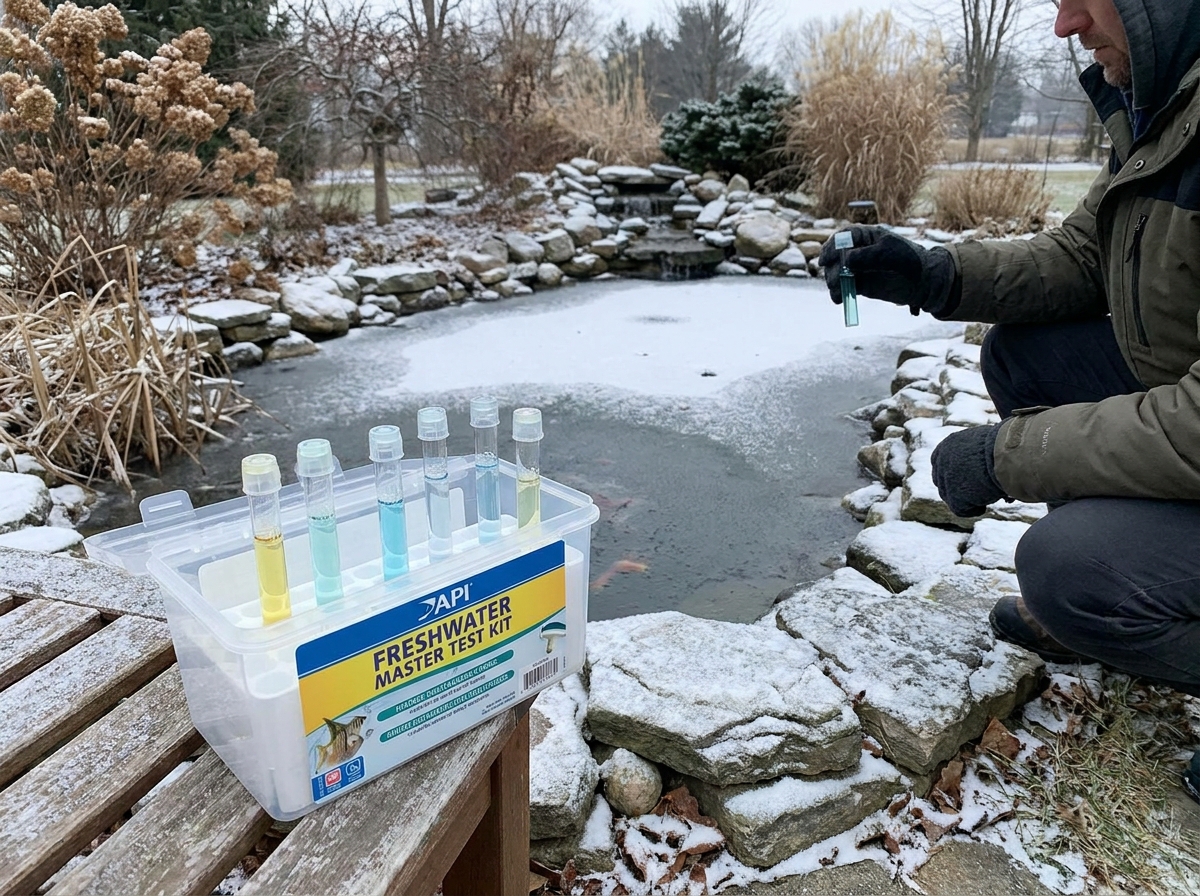
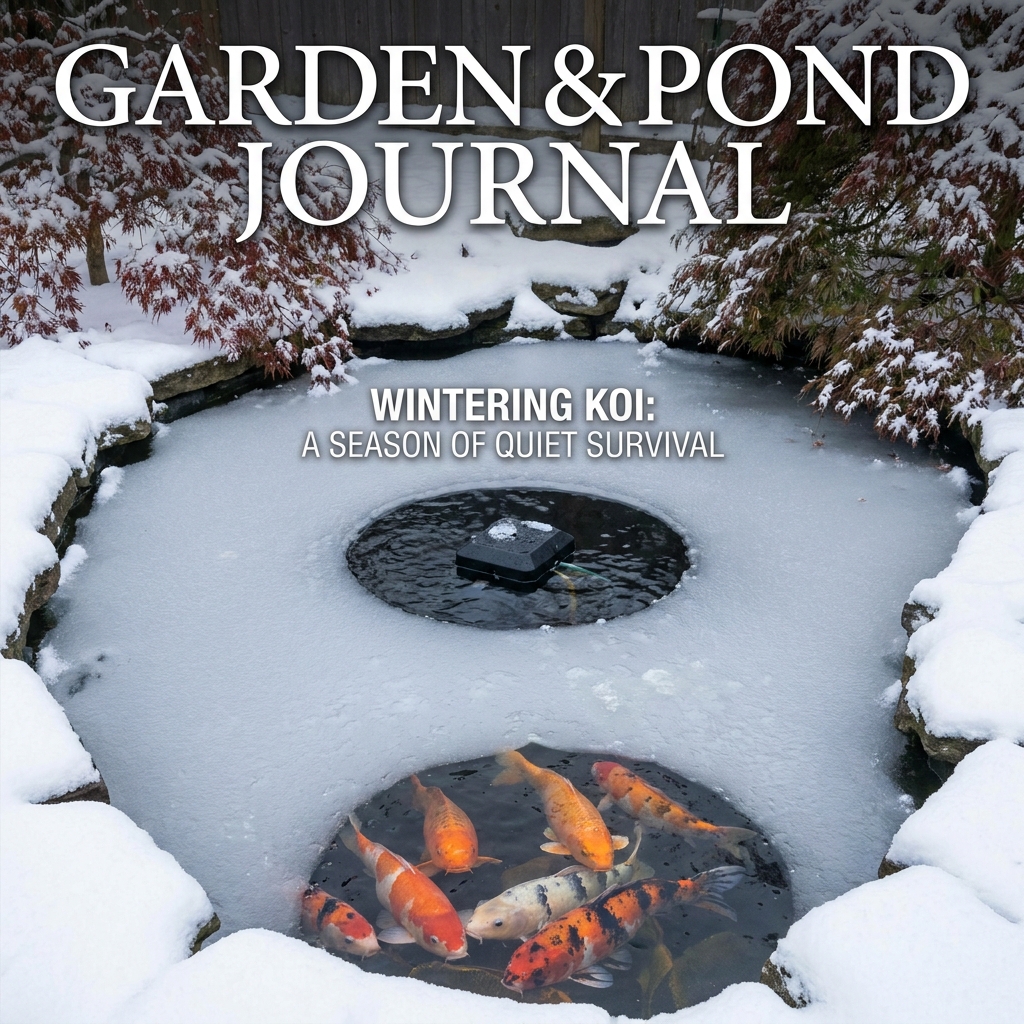
Koi are cold-water fish, and koi can survive water temperatures as low as 33°F (1°C) if the pond is properly managed. The properly-managed koi pond in winter maintains a small area of open water, keeps the dissolved oxygen above 5 ppm, keeps the ammonia and nitrite at 0 ppm, and stops feeding the koi when the water temperature drops below 50°F (10°C). The improperly-managed koi pond in winter has the surface completely frozen, the dissolved oxygen dropping to critical levels as the koi consume what is available, the koi succumbing to the low oxygen, and the koi that survive the winter emerging in spring with weakened immune systems and parasite infections. In this article I will walk through what the koi's metabolism does in cold water, the temperature management that produces the right conditions, the feeding protocol that matches the metabolism, the aeration and filtration that prevent the oxygen crashes, and the parasite prevention that keeps the koi healthy through the winter.
What the koi's metabolism does in cold water
Koi are ectothermic, which means the koi's body temperature tracks the water temperature. The koi's metabolism — the rate at which the koi digests food, the rate at which the koi's immune system functions, the rate at which the koi's tissues repair themselves — is directly proportional to the water temperature. The koi at 75°F (24°C) has a metabolic rate roughly 10 times higher than the koi at 50°F (10°C), and roughly 30 times higher than the koi at 40°F (4°C).
The implications of the metabolic slowing: the koi in cold water does not need much food (the digestion is slow and the food can rot in the gut if the koi is fed more than the metabolism can process), the koi's immune system is suppressed (the koi is more susceptible to parasites and bacterial infections), the koi's activity is reduced (the koi is mostly resting at the bottom of the pond), and the koi's oxygen consumption is reduced (the koi needs less oxygen per hour, but the dissolved oxygen in cold water is higher, so the total available oxygen is still adequate).
The koi keeper who understands the metabolic slowing is the keeper who does not overfeed the koi in cold water, who does not panic when the koi is resting at the bottom (this is normal), and who does not warm the water to "keep the koi active" (the warming is more harmful than the cold because it forces the koi to metabolize food it cannot process).
The temperature management
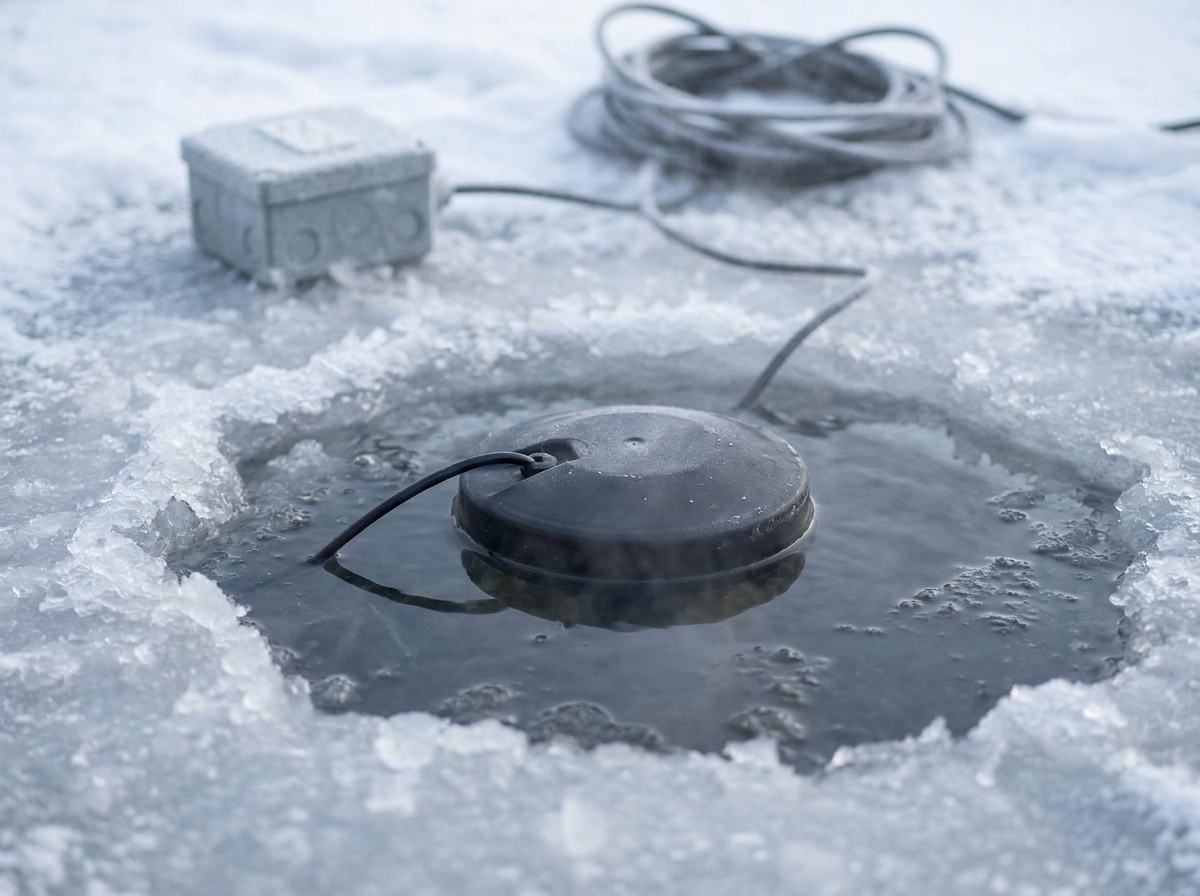
The goal of winter temperature management is to maintain a small area of open water in the pond, not to warm the entire pond. The open water is necessary for gas exchange — oxygen in, carbon dioxide and other gases out. The complete ice cover that seals the pond from the atmosphere is the condition that produces the gas exchange crisis.
The standard winter setup: a pond de-icer or a small pond heater that maintains a hole in the ice, typically 6-12 inches in diameter, at the surface of the pond. The de-icer is a floating or submersible heater that runs when the water temperature drops below 35-40°F (2-4°C) and keeps a small area of open water. The de-icer does not warm the entire pond; the de-icer keeps the small area at the surface above freezing. The bulk of the pond remains at the ambient temperature, which is 33-45°F (1-7°C) in most climates.
The placement of the de-icer: near the aeration or the water return, where the moving water brings the warmer water to the surface. The de-icer in the stagnant corner of the pond is the de-icer that may not be effective. The placement should also be in a location where the koi do not rest, because the de-icer can cause local overheating that can stress the koi.
The thermostat: most modern de-icers have a built-in thermostat that turns the heater on when the water temperature drops below 35°F and turns the heater off when the water temperature is above 40°F. The thermostat is the energy-saving feature that keeps the electricity cost low. The de-icer without a thermostat is the de-icer that runs constantly, costs more to operate, and may overheat the water if the de-icer is too powerful for the pond.
The feeding protocol
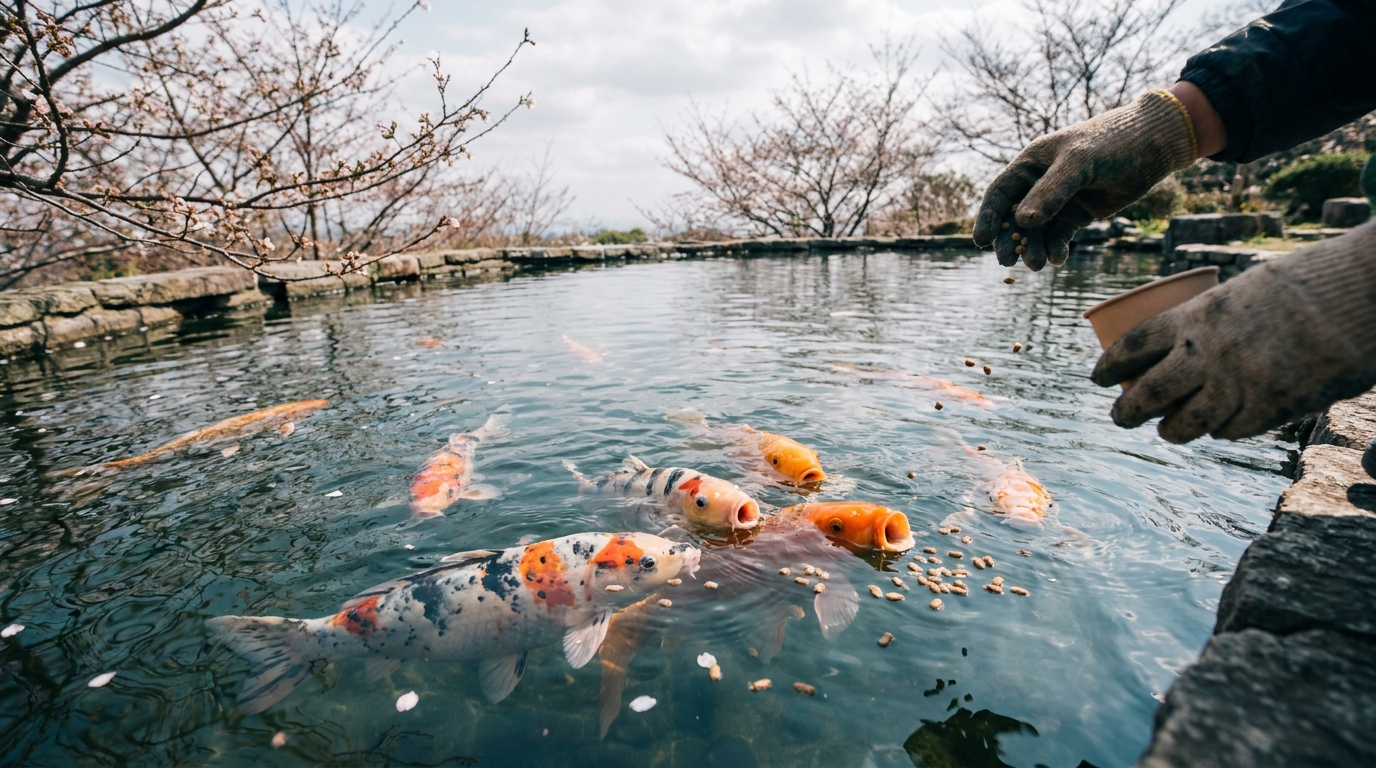
The feeding protocol in cold water: stop feeding when the water temperature drops below 50°F (10°C). The reason: the koi's metabolism is too slow to process the food, and the undigested food in the gut can rot, produce gas, and cause buoyancy issues or bacterial infection. The koi that is fed below 50°F is the koi that develops swim bladder problems and bacterial enteritis in the spring.
The transition: as the water temperature drops in the fall, gradually reduce the feeding. The koi at 60°F should be fed once a day in small amounts. The koi at 55°F should be fed every other day. The koi at 50°F should not be fed at all. The koi below 50°F is the koi that is in the winter rest state, and the koi is not eating.
The transition in the spring: as the water temperature rises, gradually resume feeding. The koi at 50°F can be fed small amounts of easily digestible food (wheat germ-based, which is easier to digest at low temperatures). The koi at 55°F can be fed normal amounts. The koi at 60°F can be fed the full summer ration. The transition is the mirror of the fall transition, and the same careful approach is needed.
The food type in cool water: wheat germ-based food, which is high in carbohydrates and easier to digest than the high-protein summer food. The major koi food manufacturers all offer a wheat germ formula. The wheat germ formula is the food for the spring and fall, when the water temperature is 50-65°F.
The aeration and filtration
The aeration in the winter is the most important piece of equipment. The aeration keeps the water moving, keeps the dissolved oxygen at the surface high, and prevents the ice from forming a complete seal. The standard winter aeration: a small air pump (the same pump used in the summer) running 24/7, with an air stone placed near the de-icer. The rising bubbles keep the water moving and keep the small area near the de-icer open.
The filtration in the winter: the biological filtration continues to function, but the rate of nitrification is slower because the bacteria are also affected by the cold. The filter should remain running, but the flow rate can be reduced. The filter that is turned off for the winter is the filter that loses the bacterial colony, and the spring startup requires a full re-cycle of the filter. The filter that runs through the winter is the filter that is ready to handle the spring bioload.
The UV sterilizer: most koi keepers turn the UV off for the winter, because the UV is not effective in cold water and the UV can be damaged by freezing. The UV is restarted in the spring when the water temperature is consistently above 50°F.
The parasite prevention
The koi in cold water has a suppressed immune system, and the suppressed immune system makes the koi more susceptible to parasites that the koi carries in low numbers through the summer. The common winter parasites: ich (Ichthyophthirius multifiliis), costia (Ichthyobodo necator), and flukes (Dactylogyrus and Gyrodactylus). The ich and the costia are particularly common in the spring, when the water temperature rises and the parasites activate.
The prevention: a winter parasite treatment, typically a formalin/malachite green combination or a salt treatment, applied in the late fall as the water temperature drops. The treatment is the final parasite prevention of the season, and the treatment reduces the parasite load to a level that the koi's suppressed immune system can handle through the winter.
The other prevention: a spring parasite treatment, applied as the water temperature rises and before the koi are actively feeding. The spring treatment catches the parasites that survived the winter treatment, and the spring treatment prevents the parasite bloom that is common in the spring.
The honest summary
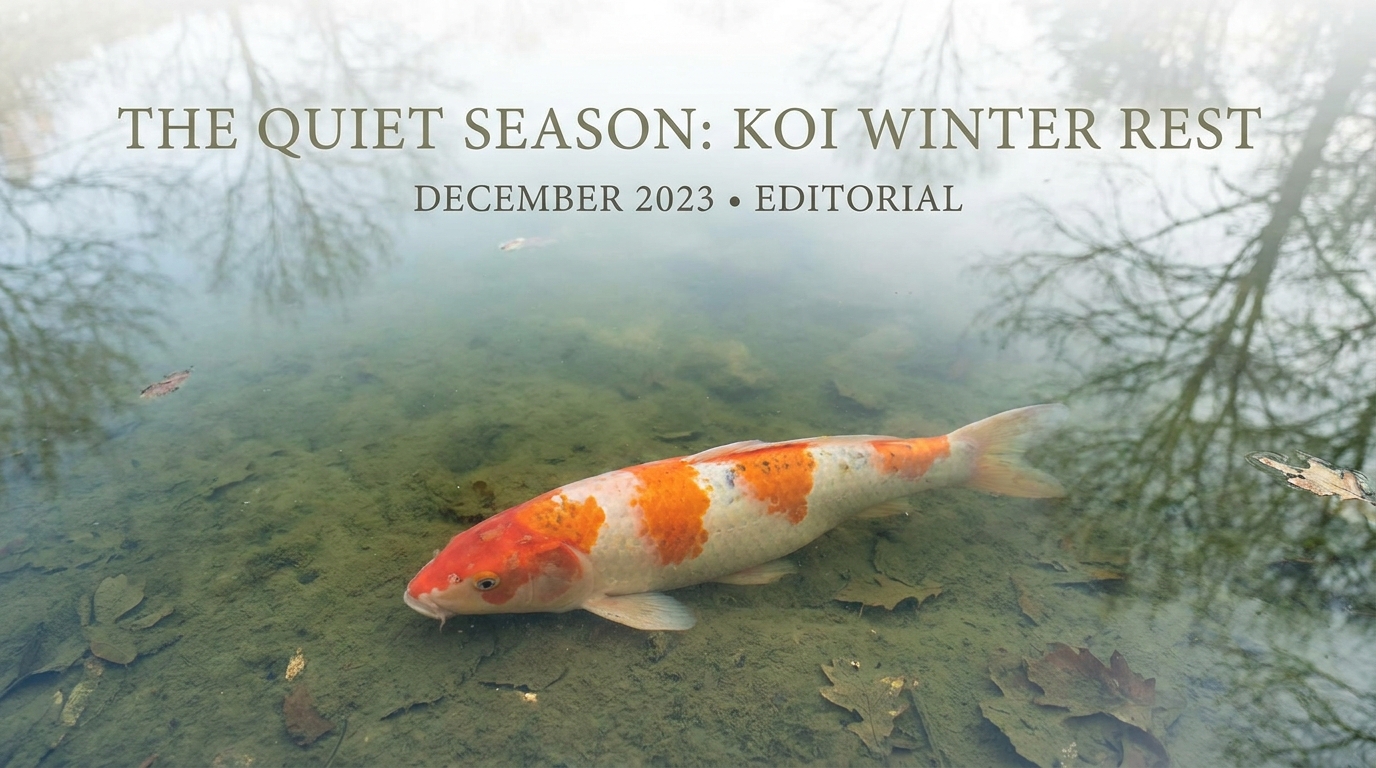
Koi can survive near-freezing water if the pond is properly managed. The management: a de-icer to keep a small area of open water, an air pump running 24/7, no feeding below 50°F, the filter running through the winter, and a parasite treatment in the fall and spring. The koi keeper who runs the protocol is the keeper whose koi survive the winter and emerge in the spring healthy and ready to grow. The koi keeper who does not run the protocol is the keeper who loses koi to oxygen crashes, to overfeeding, and to the spring parasite bloom. The management is the work. The management is what makes the difference.
The single sentence to remember
Koi can survive near-freezing water if the pond has a de-icer to keep a hole in the ice, an air pump running 24/7, no feeding below 50°F, the filter running, and a parasite treatment in the fall and spring. The koi keeper who runs the winter protocol is the keeper whose koi come back in the spring. The koi keeper who does not run the protocol is the keeper who loses koi.