
Cycling fish: what they actually do and which species work best in a planted tank
"Cycling fish" is a term that gets used loosely in the aquarium hobby, but the term is most useful when it refers to the fish and invertebrates that perform a specific role in the tank's maintenance: consuming the algae, the detritus, the leftover food, and the biofilm that would otherwise accumulate and degrade the tank's water quality and appearance. The right cycling species does the work quietly, efficiently, and without damaging the plants or the other fish. The wrong cycling species is too large, too aggressive, too plant-destructive, or too bioload-heavy to be useful in a planted tank. The planted tank keeper who has the right cycling crew is the keeper whose tank stays clean between water changes. The keeper who has the wrong cycling crew is the keeper who is constantly cleaning the tank and fighting the algae. In this article I will walk through what cycling fish actually do, the categories of cycling species, the specific species that work best in a planted tank, the species that should be avoided, and the stocking levels that match the tank size.
What cycling fish actually do
The cycling species are not a single category. The category includes fish that eat algae, fish that eat detritus, fish that eat biofilm, fish that stir the substrate, and invertebrates that perform similar roles. Each category addresses a different maintenance task, and the planted tank that has the right mix of cycling species across the categories is the tank that stays clean.
The algae eaters: the fish and invertebrates that consume the algae that grows on the glass, the hardscape, the plants, and the equipment. The most common algae eaters in the planted tank are the otocinclus catfish, the nerite snail, the amano shrimp, and the various species of algae-eating loach. Each species has preferences for certain types of algae, and the right mix is the mix that addresses the specific algae that the planted tank grows.
The detritus eaters: the fish and invertebrates that consume the organic debris that accumulates in the substrate. The most common detritus eaters are the corydoras catfish, the various species of small loach, the Malaysian trumpet snail, and the earthworm-style substrate stirrers. The detritus eaters do the work of preventing the substrate from becoming a nutrient sink, and the right mix is the mix that keeps the substrate clean without disturbing the plant roots.
The biofilm eaters: the fish and invertebrates that consume the biofilm that grows on the hardscape, the glass, and the slow-growing plant leaves. The biofilm is the slimy layer of bacteria and algae that is the foundation of the tank's microbial ecosystem, and the controlled consumption of the biofilm by the cycling species is what prevents the biofilm from becoming an unsightly mat.
The substrate stirrers: the fish and invertebrates that physically move the substrate, preventing the substrate from compacting and allowing the water to flow through the substrate. The substrate stirrers are the species that perform the work of biological filtration in the substrate, and the right mix is the mix that keeps the substrate aerated without uprooting the plants.
The best species for a planted tank
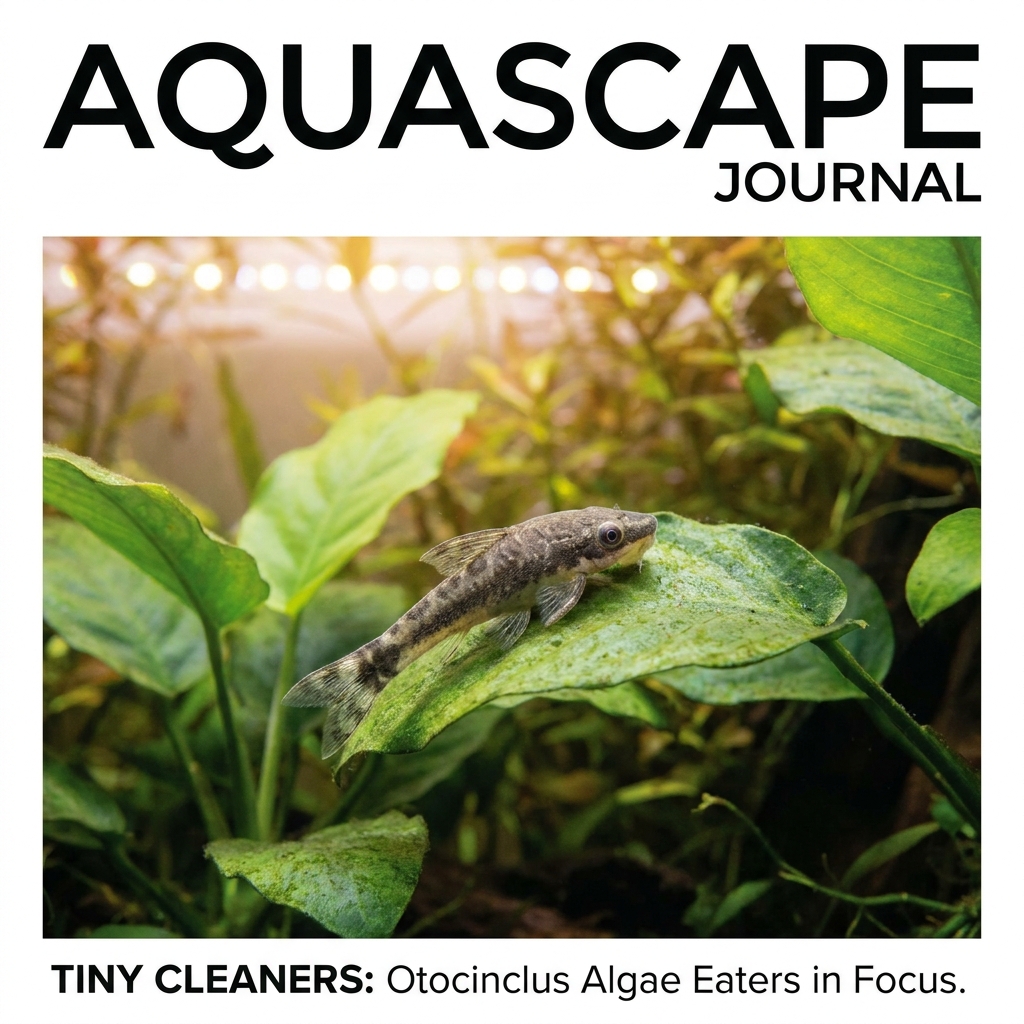
Otocinclus catfish (Otocinclus vittatus). The single best algae-eating fish for a planted tank. The otocinclus is a small (2-inch) schooling catfish that consumes the soft green algae and the brown diatom algae that grow on the plant leaves and the glass. The otocinclus is peaceful, does not damage the plants, and is efficient at its job. The stocking level: 1 otocinclus per 10 gallons of tank water, in groups of at least 6 (the otocinclus is a schooling species and the lone otocinclus is a stressed otocinclus). The otocinclus requires a mature tank (3+ months old) with a stable algae supply; the otocinclus added to a new tank will starve.
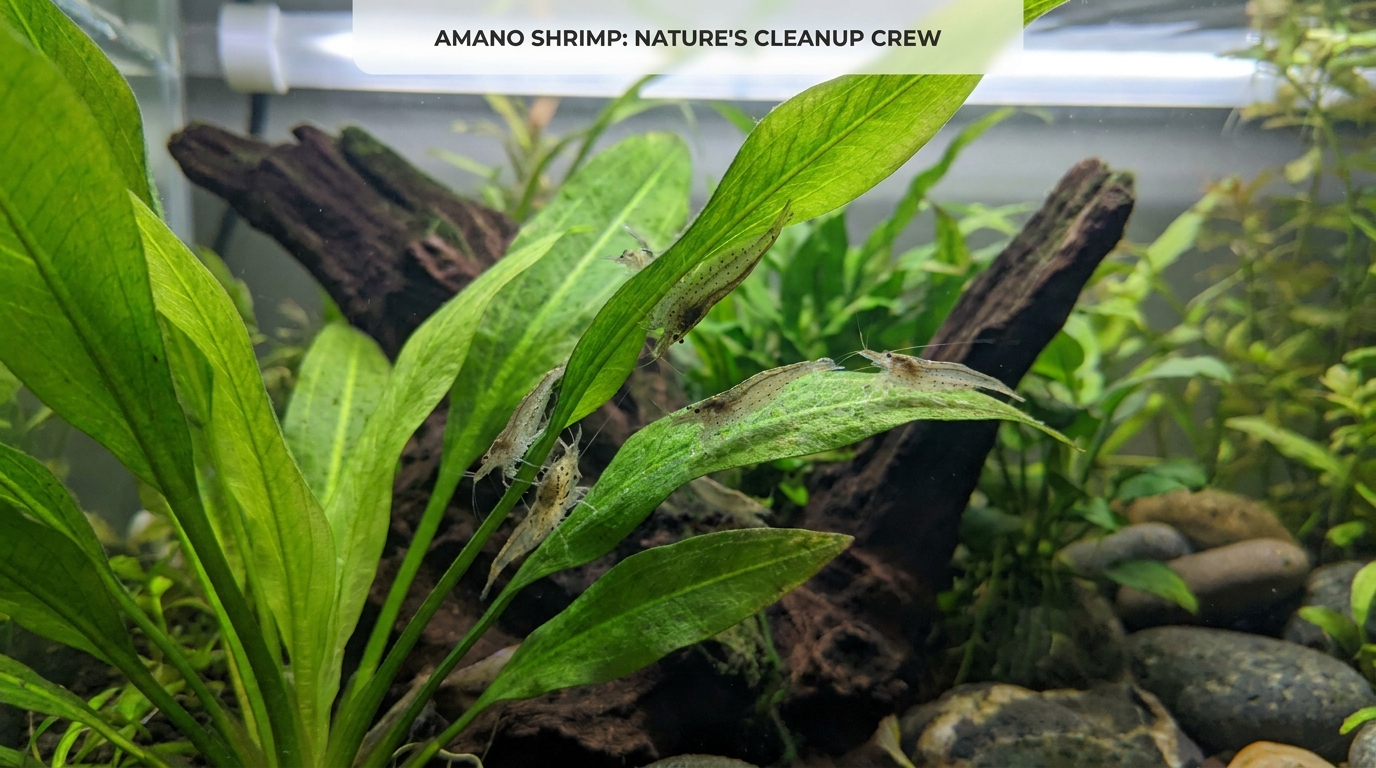
Amano shrimp (Caridina multidentata). The single best algae-eating invertebrate for a planted tank. The amano shrimp is a 1.5-2 inch shrimp that consumes the soft algae, the biofilm, and the detritus that the fish leave behind. The amano shrimp is peaceful, does not damage the plants, and is the most efficient algae-eating shrimp available. The stocking level: 1 amano shrimp per 5 gallons of tank water, in groups of at least 5. The amano shrimp requires a mature tank with a stable food supply; the amano shrimp added to a new tank will not survive.
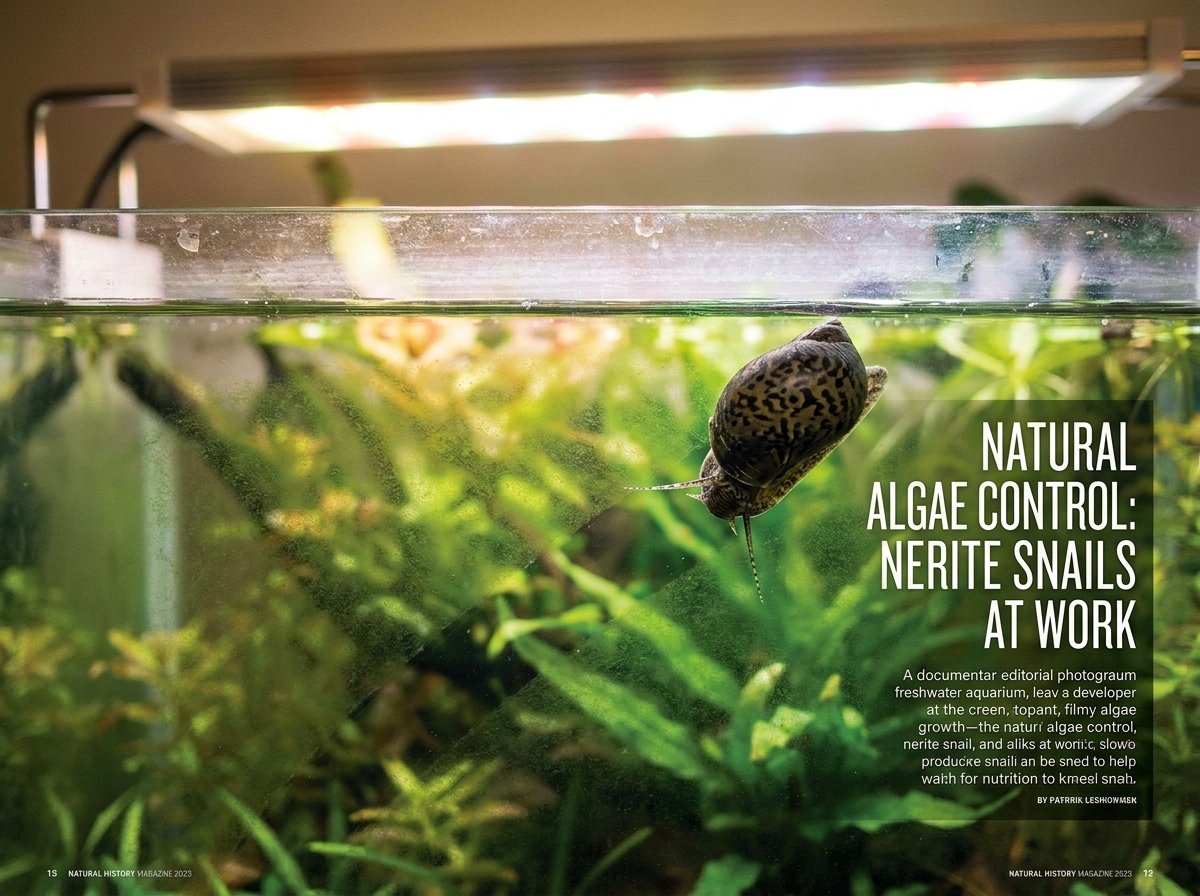
Nerite snail (Neritina spp.). The single best glass-and-hardscape algae eater for a planted tank. The nerite snail is a 0.5-1 inch snail that consumes the algae that grows on the glass, the hardscape, and the equipment. The nerite snail does not consume the plants and does not reproduce in freshwater (the nerite snail lays eggs in freshwater, but the eggs do not hatch). The stocking level: 1 nerite snail per 5-10 gallons of tank water. The nerite snail requires a stable water chemistry (the nerite snail does not tolerate soft acidic water well).
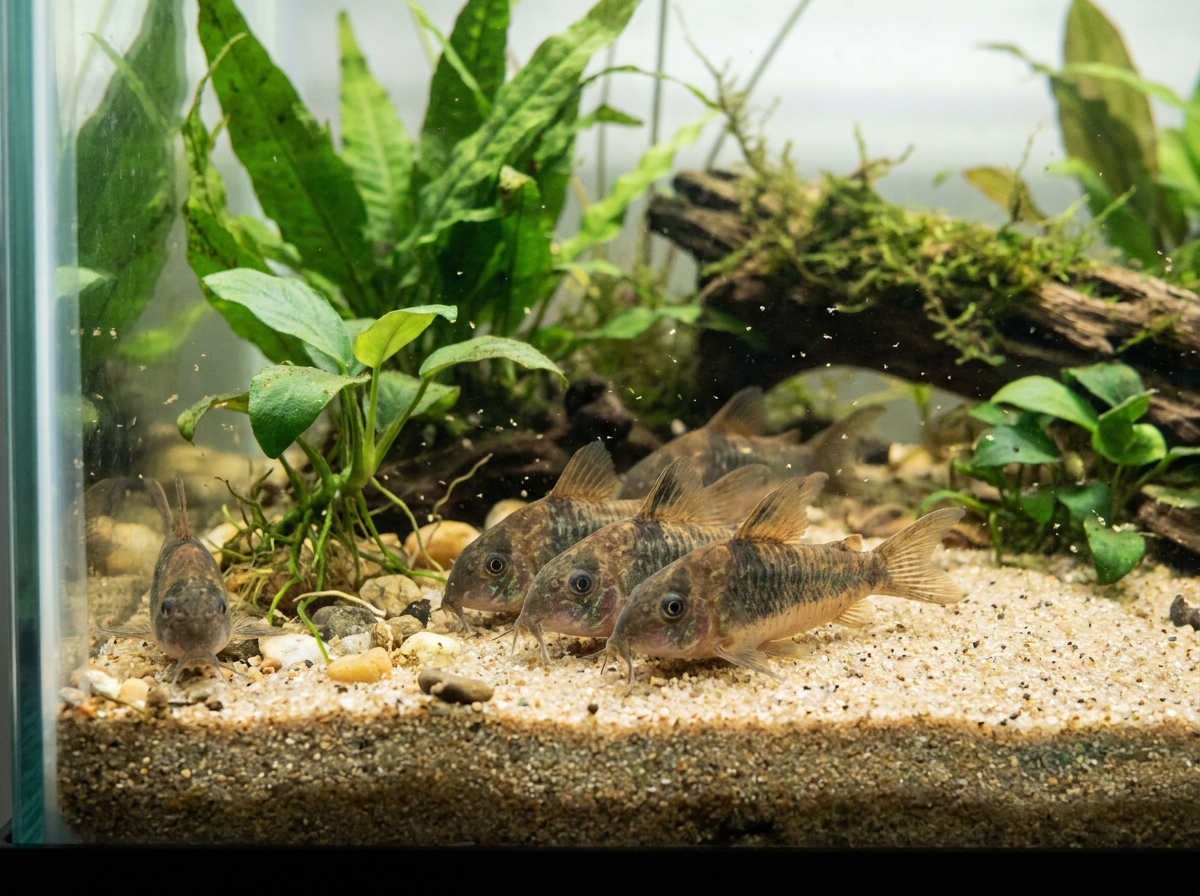
Corydoras catfish (Corydoras spp.). The single best substrate-cleaning fish for a planted tank. The corydoras is a 2-3 inch schooling catfish that consumes the detritus and the leftover food that settles into the substrate. The corydoras is peaceful, does not damage the plants, and is efficient at its job. The stocking level: 1 corydoras per 5-10 gallons of tank water, in groups of at least 6 (the corydoras is a schooling species). The corydoras requires a smooth substrate (sand or fine gravel); the corydoras on sharp gravel can damage their barbels.
Malaysian trumpet snail (MTS, Melanoides tuberculata). The single best substrate-aerating snail for a planted tank. The MTS is a 0.5-1 inch snail that burrows through the substrate during the day and emerges at night. The MTS prevents the substrate from compacting, aerates the substrate, and consumes detritus. The MTS reproduces in freshwater, but the population is self-regulating (the MTS population grows to the size that the food supply supports, and the population stops growing when the food supply is consumed). The stocking level: start with 10-20 MTS, and let the population establish itself.
The species to avoid in a planted tank
Common pleco (Hypostomus plecostomus). The pleco is a 12-18 inch catfish that consumes algae as a juvenile but becomes a wood-eating and waste-producing adult. The common pleco in a planted tank is a 12-18 inch fish that produces more waste than it consumes, that damages the plants by uprooting them, and that does not fit in any but the largest planted tanks. The common pleco should be avoided in planted tanks under 100 gallons.
Chinese algae eater (Gyrinocheilus aymonieri). The Chinese algae eater is a 6-10 inch fish that consumes algae as a juvenile but becomes a fish that sucks the slime coat off the other fish as an adult. The Chinese algae eater in a planted tank is a fish that damages the other fish and the plants. The Chinese algae eater should be avoided in any planted tank with other fish.
Goldfish (Carassius auratus). The goldfish is a popular cycling fish, but the goldfish is a 6-12 inch cold-water fish that eats plants, stirs the substrate, produces a heavy bioload, and prefers cooler water than the tropical planted tank. The goldfish in a tropical planted tank is a fish that does damage to the plants and the water quality.
Large cichlids (Oscar, Jack Dempsey, etc.). The large cichlids are aggressive, plant-destructive, and high-bioload. The large cichlid in a planted tank is a fish that tears up the plants, kills the other fish, and produces a bioload that the planted tank cannot handle. The large cichlids should be kept in species-only tanks, not planted tanks.
The stocking levels
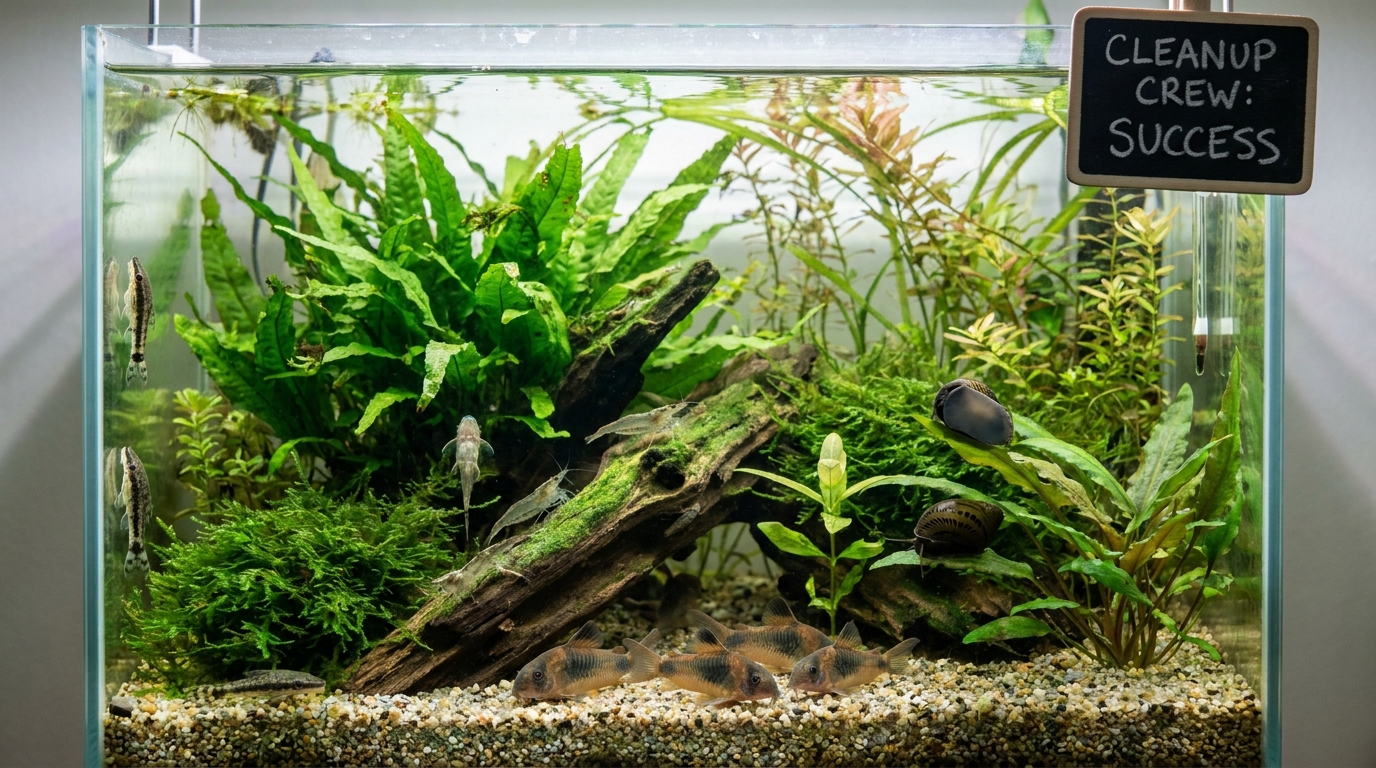
The general stocking rule for the cycling crew in a planted tank: the crew should be 10-20% of the total bioload. The planted tank with 30 inches of fish should have 3-6 inches of cycling crew. The 30-inch planted tank with the standard crew: 6 otocinclus (6 inches), 6 amano shrimp (negligible bioload), 2 nerite snails (negligible bioload), 6 corydoras (12 inches), 20 MTS (negligible bioload). Total cycling crew: 18 inches. The 18 inches is 60% of the 30 inches, which is on the high end — the planted tank with a heavy cycling crew is a planted tank that is well-maintained.
The planted tank that is overstocked with cycling crew is a planted tank that has the same bioload issues as a planted tank overstocked with display fish. The 100-gallon planted tank with 30 otocinclus, 30 amano shrimp, 10 nerite snails, 30 corydoras, and 100 MTS is a planted tank that has a bioload that the filter cannot handle, and the planted tank develops ammonia and nitrite spikes. The fix: stick to the 10-20% rule, and adjust based on the tank's capacity.
The honest summary
Cycling fish are the species that perform the maintenance tasks that the keeper would otherwise have to do. The right species for a planted tank: otocinclus for the leaves, amano shrimp for the biofilm, nerite snails for the glass and hardscape, corydoras for the substrate detritus, and MTS for the substrate aeration. The wrong species: common pleco, Chinese algae eater, goldfish, large cichlids. The stocking level: 10-20% of the total bioload. The planted tank keeper who has the right cycling crew is the keeper whose tank stays clean. The keeper who has the wrong cycling crew is the keeper who is constantly fighting the algae and the detritus. The cycling crew is the work. The cycling crew is what makes the planted tank sustainable.