SPS corals: starter species and difficulty tiers
If LPS corals are the "easy mode" of reefing and soft corals are the "training wheels", then SPS — small polyp stony corals — are the final exam. They are the corals that reef photographers spend eight years trying to grow, that vendors frag by the milligram, and that drive a $4,000 lighting upgrade when someone decides to "add a few Acros to the back wall." They are also the corals that reveal, in real time, whether the keeper actually understands what a reef tank is doing.
This article is the technical ground truth: what "SPS" means, the parameter ceiling these corals demand, the equipment that determines success or failure, and a tiered list of starter species ranked by difficulty. If you are a new reefkeeper thinking about dipping into SPS — or an intermediate keeper whose frags keep bleaching — the answer is almost always in the parameters, not the coral.
What "SPS" actually means — and what it does not
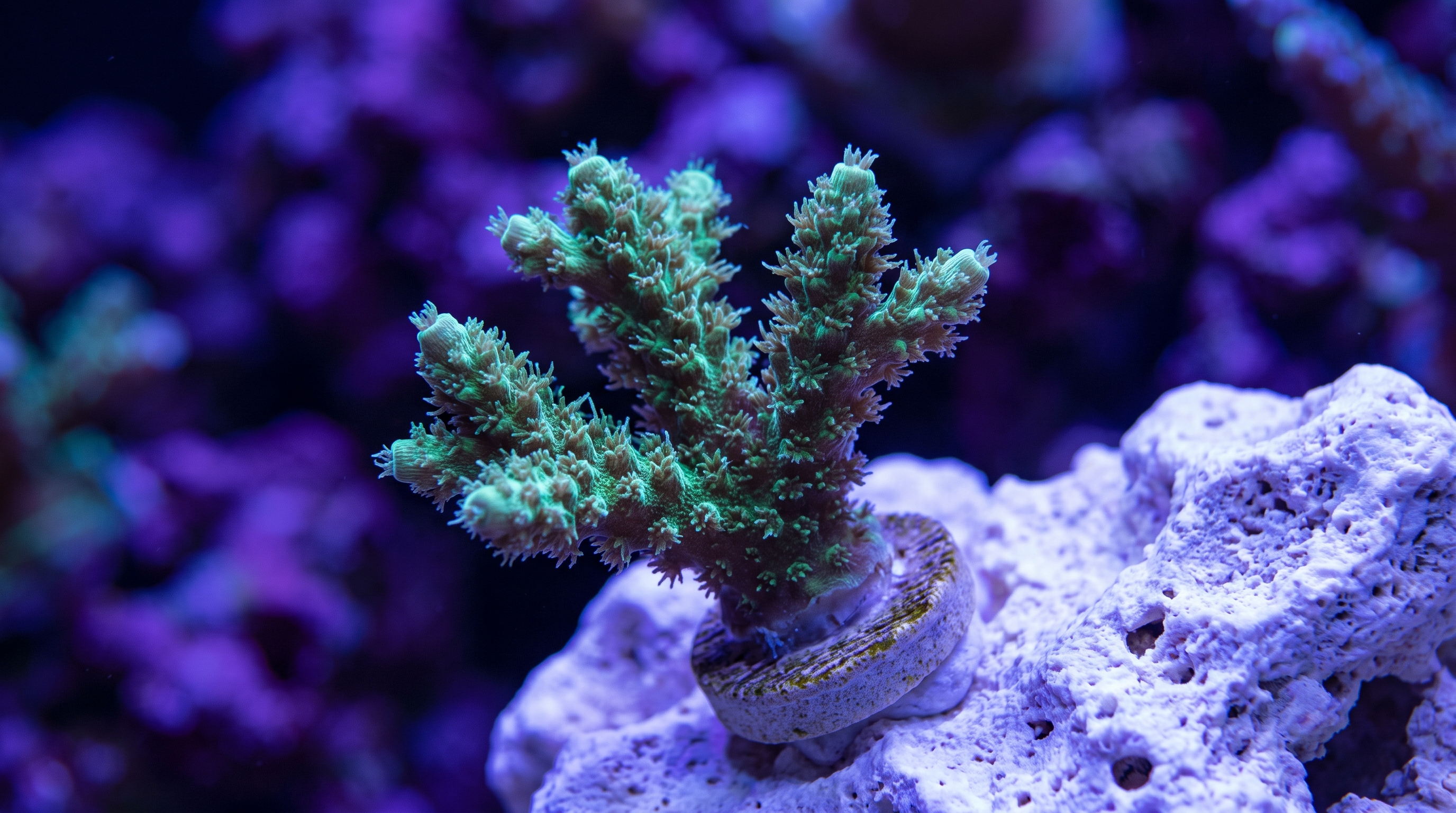
SPS stands for small polyp stony. The polyp is the soft, anemone-like animal; the stony part is the calcium carbonate skeleton it secretes underneath itself. SPS corals have polyps in the 1–3 mm range, which is roughly the size of a pencil eraser. The smaller the polyp, the more the coral depends on its symbiotic zooxanthellae for nutrition and the more sensitive it is to water chemistry.
The SPS family in the marine trade is dominated by three genera:
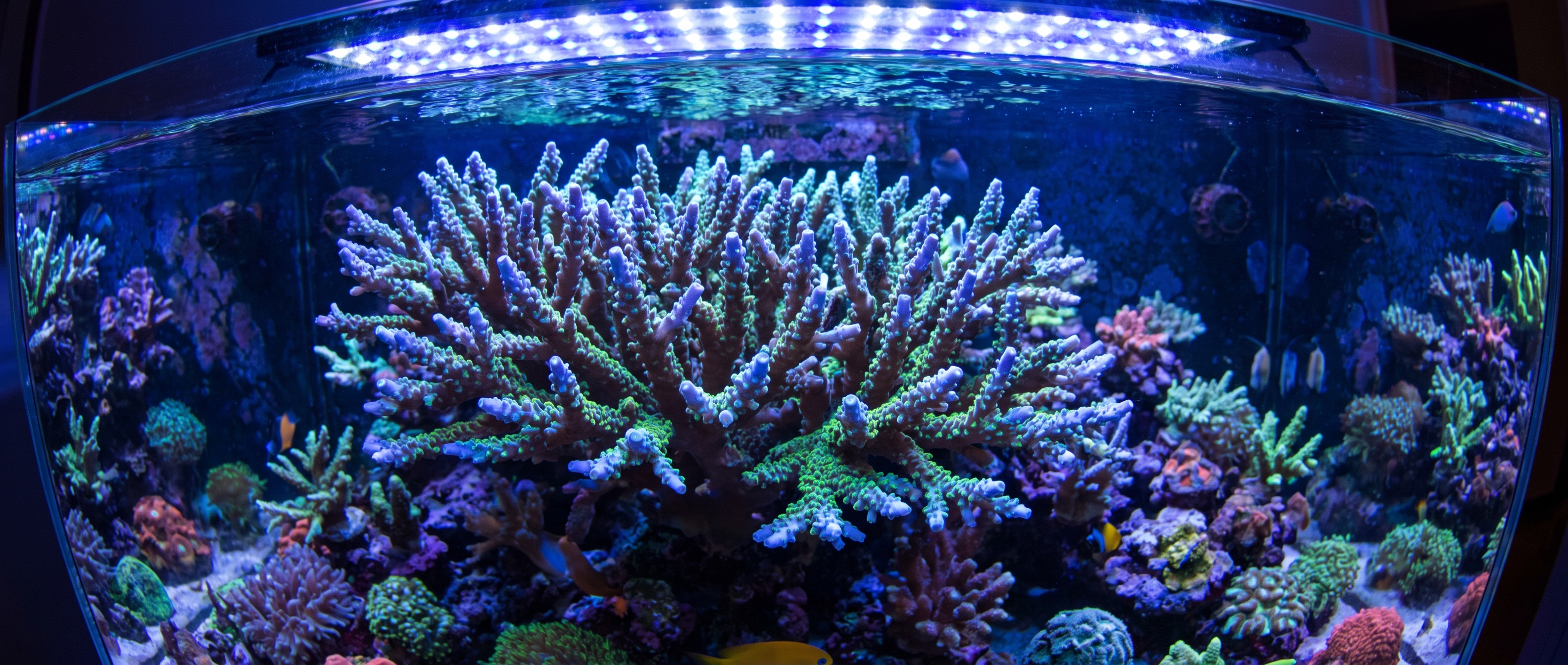
- Acropora — the most species-rich stony coral genus in the world (>150 species in the trade). Branching, table, and staghorn forms. These are the corals most reefkeepers mean when they say "SPS".
- Montipora — encrusting, plating, and branching forms. Generally more forgiving than Acropora, with slightly larger polyps.
- Pocillopora, Seriatopora, Stylophora — "bird's nest" corals. Cauliflower-shaped colonies, fast-growing, often the first SPS in a new tank.
What SPS does not mean: zoanthids, palythoa, GSP (green star polyps), or any leather coral. These are commonly mislabelled "SPS" in marketplace listings. True SPS is Acropora, Montipora, Pocillopora, Seriatopora, or Stylophora. The polyp size and skeletal structure are the defining features.
The shared biology is what makes these corals difficult. The small polyp means a low tissue-to-skeleton ratio, which means almost no capacity to buffer against parameter swings. A 0.5 dKH swing in alkalinity, a 2 ppm swing in calcium, or a 50 ppm swing in magnesium can bleach an Acropora in 48 hours. Compare this to a leather coral, which tolerates swings of 5x that magnitude. The smaller the polyp, the tighter the margin.
The parameter ceiling — water chemistry SPS demands
SPS corals do not ask for "good" water. They ask for stable water, at a specific setpoint, with no more than 2–3% daily variance. The hobby has converged on the following targets:
| Parameter | Target | Acceptable | Danger |
|---|---|---|---|
| Alkalinity (dKH) | 8.0–9.0 | 7.5–10.0 | <7.0 or >11.0 |
| Calcium (ppm) | 420–440 | 400–450 | <380 or >480 |
| Magnesium (ppm) | 1,300–1,350 | 1,250–1,400 | <1,200 or >1,500 |
| Nitrate (ppm) | 2–8 | 1–10 | <0.5 or >15 |
| Phosphate (ppm) | 0.02–0.05 | 0.01–0.08 | <0.005 or >0.10 |
| Salinity (sg) | 1.025 | 1.024–1.026 | <1.023 or >1.027 |
| Temperature (°F) | 77–78 | 76–79 | <75 or >82 |
| pH (day) | 8.2–8.4 | 8.0–8.4 | <7.9 or >8.5 |
The two parameters that kill SPS fastest are alkalinity and temperature. A dKH swing of >1.0 in 24 hours causes tissue loss. A temperature spike above 82°F for 8+ hours bleaches Acropora. This is why every serious SPS tank has:
- A dosing pump (BRS 2.1L, Kamoer X4, or GHL Doser 2.1) delivering two-part (or three-part) alkalinity, calcium, and magnesium supplementation. Hand-dosing is too inconsistent.
- A chiller or heater-controller redundancy (Inkbird or Neptune Apex with dual temperature probes). Apex with the PM1 module and the optional temperature port is the standard.
- A weekly ICP test (Triton, ATI, or Fauna Marin ICP) every 1–2 weeks to catch depletion of trace elements — strontium, iodine, potassium — that drive coral colour and growth.
The chemistry of dosing matters. The classic two-part recipe — soda ash (Na2CO3) for alkalinity and calcium chloride (CaCl2) for calcium — is the workhorse. The relationship is: 2.8 ppm Ca raised = 1 dKH lowered, and vice versa. This is why alkalinity and calcium are dosed on alternating schedules. If your target is 8.5 dKH and 430 ppm Ca, and your tank pulls ~0.5 dKH/day and ~6 ppm Ca/day, dose ~5 mL of each per 10 gallons per day, split into 8+ doses with a dosing pump.
Magnesium is the silent partner. It precipitates as magnesium carbonate (MgCO3) alongside calcium, locking alkalinity out of solution. The Mg:Ca ratio should be maintained at 3.0–3.2:1 (i.e., 1,300 ppm Mg with 430 ppm Ca). If Mg drops below 1,200 ppm, alkalinity becomes impossible to hold.
Equipment tiers that determine success
You can keep an SPS tank on modest equipment if the parameters are right. But "modest" in 2026 looks different than it did in 2010. The baseline:
Lighting (minimum 200 PAR at the coral, target 300–400 for Acropora):
- Tier 1 — Radion XR30 G6 (Ecotech) or Hydra 32HD (AI): $500–$700 each, the hobby standard, full spectrum with UV/blue peak control.
- Tier 2 — Kessil AP9X: $1,000+, the colour is unmatched, but coverage is narrower.
- Tier 3 — ReefBreeders Photon V2 or Orphek OR3: $300–$500, the budget SPS-capable option.
Flow (random, turbulent, 20–50x turnover per hour):
- MP40wQD (Ecotech) or Nero 5 (AI): $250–$350 each. Two are usually enough for a 75-gallon tank. Avoid the older MP10/40 models.
- Gyre XF350 (Maxspect): alternative form factor, fewer mechanical parts.
Filtration (skim aggressively, export nutrients hard):
- Skimmer: a DC pump skimmer rated at 2–3x tank volume per hour of air draw. Cone skimmer (e.g., Reef Octopus Regal, IceCap K2) is the modern standard.
- ATS or refugium: 20–30% of display volume for a low-nutrient system.
Test kits (Hanna Checker for daily, ICP for monthly):
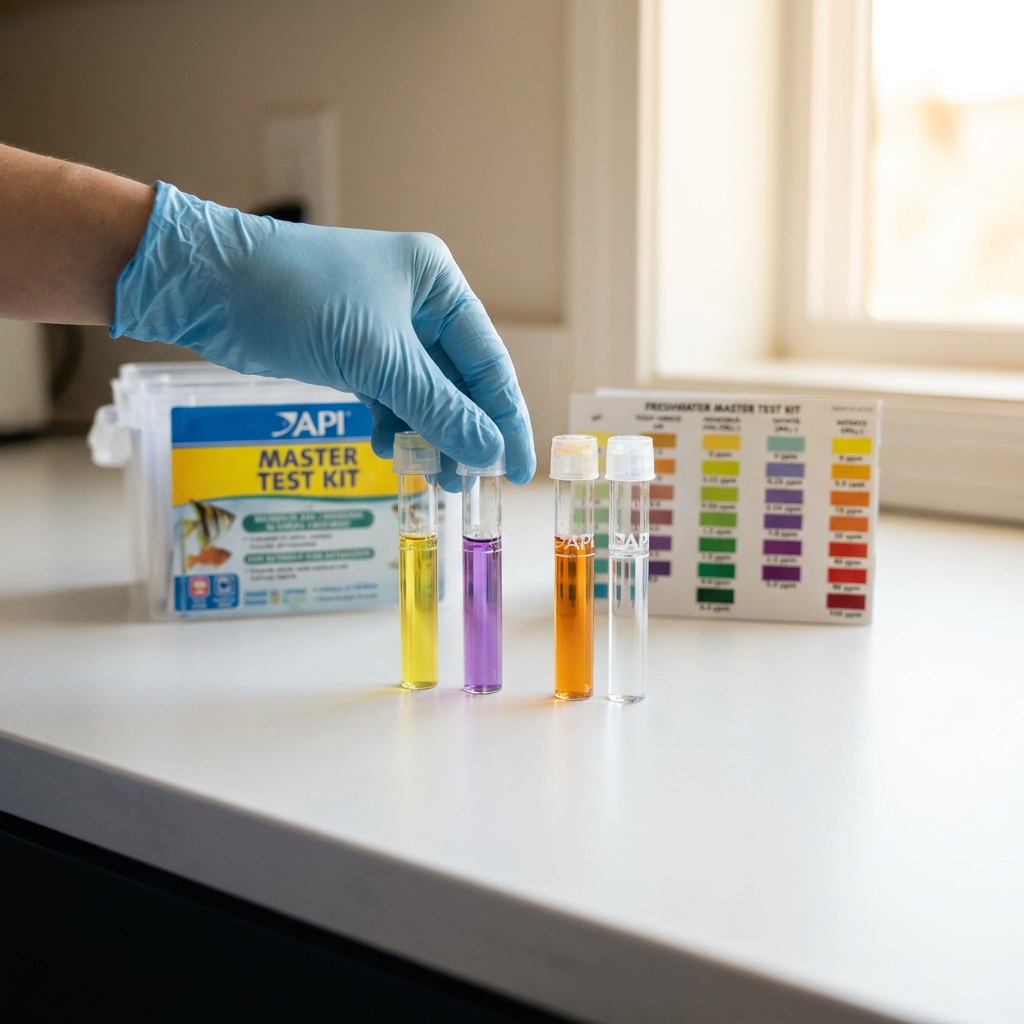
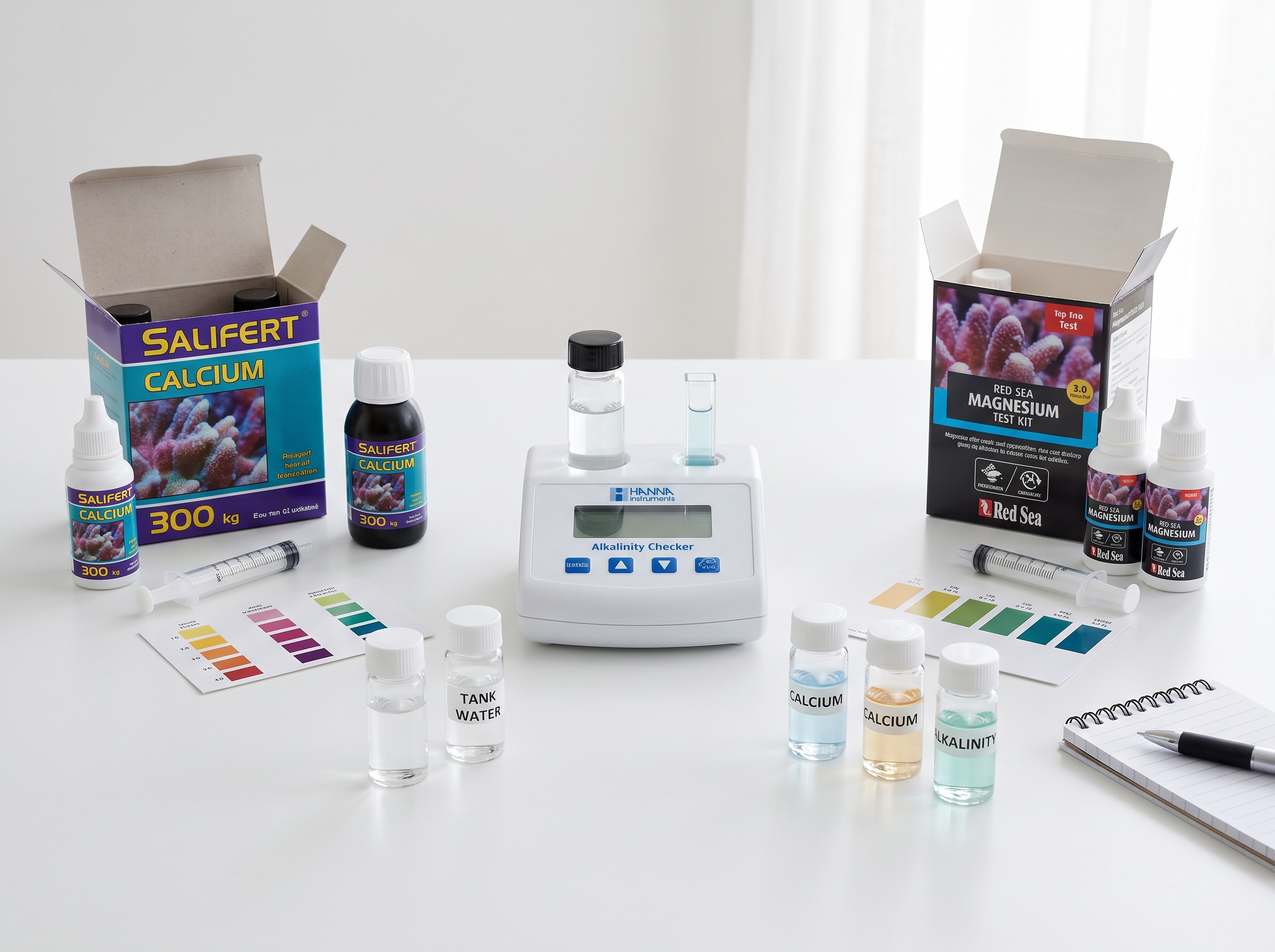
- Hanna HI772 (alkalinity), HI758 (calcium), HI783 (magnesium): ~$50 each, accurate to 0.1 dKH / 1 ppm / 1 ppm. The three-checker bundle is the keeper's daily driver.
- Hanna HI736 (phosphate), HI764 (nitrate ULR): ultra-low range, required because SPS keepers run 0.02–0.05 ppm PO4.
- Salifert or Nyos: backup, less accurate, but useful cross-check.
The hidden cost: a stable controller. The Neptune Apex with the DOS for fluid dosing, the PM1 for outlet control, and the TRH probe for temperature/pH is the de facto standard. The system costs $1,200 fully loaded but pays for itself in avoided coral losses.
The three difficulty tiers
This is the practical answer to "what should I start with?" — ranked by what survives in a tank that is stable but not yet expert.
Tier 1 — Beginner SPS (0–6 months in the hobby)
- Montipora digitata (forest fire digitata, forest fire, sunset): encrusting/branching, tolerant of 7.5–9.5 dKH, tolerates nitrates up to 10 ppm. Frag price $15–$30. Grows visibly in weeks. The single most recommended first SPS.
- Seriatopora hystrix (bird's nest, pink/green/yellow morphs): fast-growing, forgiving, but has thin branches that break with handling. Frag price $15–$25.
- Pocillopora damicornis (cauliflower coral, "Poci"): branching, fast-growing, tolerates a range of parameters. The "GSP of SPS" — recommended for anyone whose tank is still settling.
PAR target: 200–300. Flow: medium, random.
Tier 2 — Intermediate SPS (6–18 months)
- Stylophora pistillata (smooth cauliflower, "Stylo"): thicker branches than Poci, vivid pink/purple morphs, prefers 8.0–9.0 dKH, 420–440 ppm Ca. Frag $25–$50.
- Montipora capricornis (plating Monti, "cap"): grows in horizontal plates, demands stable parameters and 250+ PAR. The "showcase" coral for many intermediate tanks.
- Acropora millepora (the workhorse Acro): the gateway to true Acropora. Tolerant of parameter swings relative to other Acros, but still requires 8.0–9.0 dKH and 380–450 PAR. Frag $30–$60.
PAR target: 280–380. Flow: strong, random, alternating direction.
Tier 3 — Advanced SPS (18+ months, dialed-in system)
- Acropora tenuis, A. tortuosa, A. loripes, A. microclados: the "micros" — small polyp, slow-growing, brilliant colour (rainbow, garf, Jason Fox lines). Demands 8.0–8.5 dKH (not higher — the colour fades above 9.0), 430–450 ppm Ca, 1,320+ ppm Mg, NO3 <5 ppm, PO4 <0.03 ppm, 380–500 PAR, and very high random flow. Frag price $50–$500 per tip. Loss rate for new keepers: 40–60% in the first 90 days.
- Acropora hyacinthus, A. granulosa, A. secale: table and staghorn forms, fast-growing when happy but bleach at the slightest parameter dip.
PAR target: 380–500. Flow: very strong, chaotic. Alkalinity precision: ±0.3 dKH daily.
The rule of thumb: a tank that can hold green Montipora digitata for 3 months with consistent growth can be considered for Acropora millepora. A tank that holds A. millepora for 6 months with growth and colour is ready for the micros.
The first-90-days protocol
For a new SPS addition, the protocol is:
- Acclimate over 30+ minutes in tank water with a slow drip of display water (drip-line method). Do not dump bag water in.
- Mount on a frag plug with epoxy or IC gel glue onto live rock at the target PAR/flow zone. Do not place near aggressive neighbours (Euphyllia, large LPS tentacles reach ~10 cm at night).
- Photograph the coral on day 1, day 7, day 30, day 90 under the same lighting. Polyp extension and tissue colour are the leading indicators. Sticky white tips = good growth. Bleaching (white tissue, intact skeleton) = parameter check.
- Test alkalinity, calcium, and magnesium at the same time every day for the first 30 days. Hanna checkers are accurate enough. The variance matters more than the absolute value.
- Do not dose amino acids, phytoplankton, or "coral foods" for the first 60 days. SPS are primarily phototrophic. Excess nutrients in the first 60 days cause the brown jelly infections that wipe out new frags.
If the coral is still coloured and growing at 90 days, the tank is ready for the next tier.
Closing — the SPS mindset
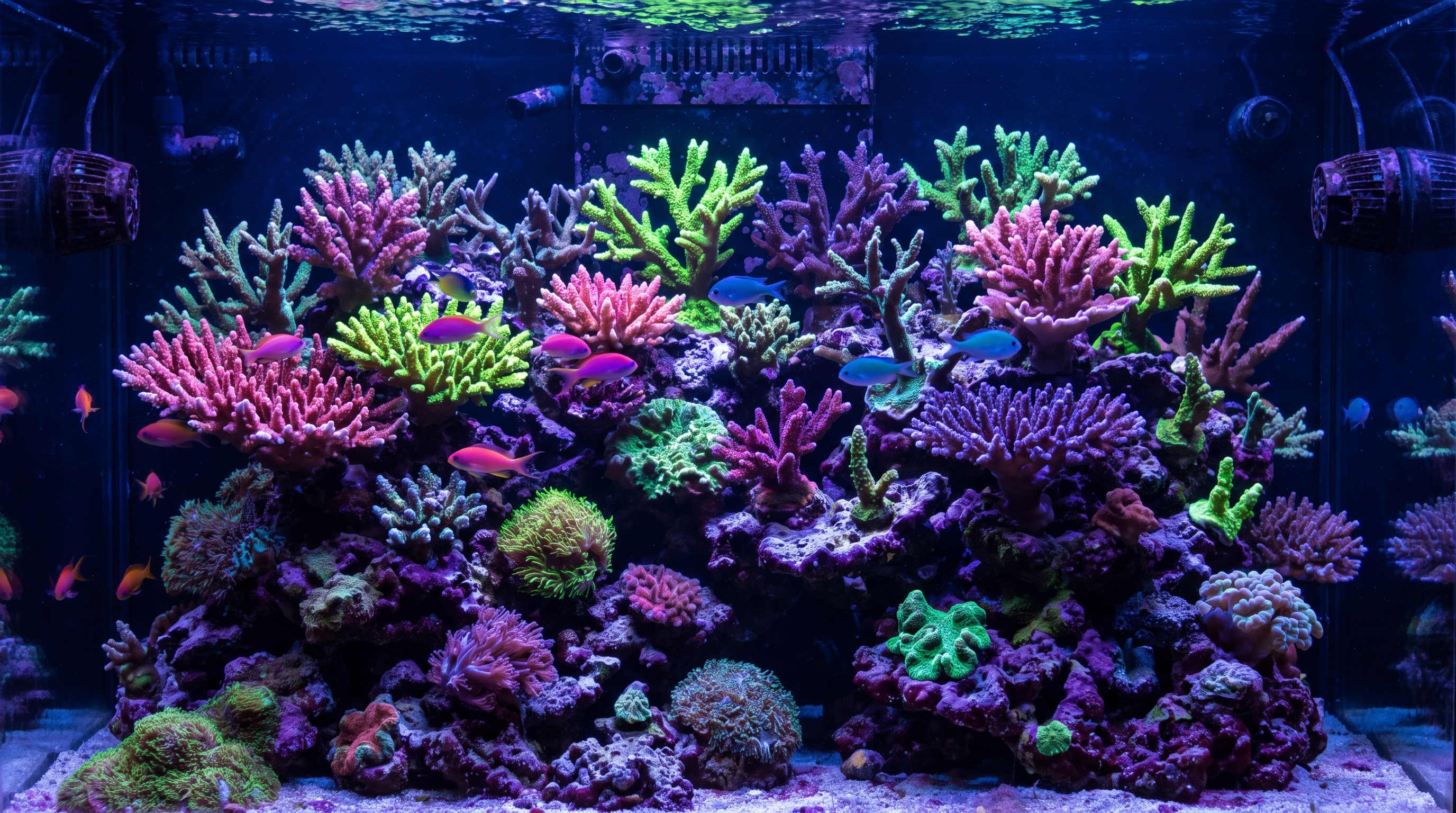
SPS is not a coral purchase. It is a parameter commitment. The corals cost $20–$200; the system behind them costs $2,000–$10,000. The keeper who succeeds is the one who reads the ICP report, dials alkalinity to 8.4 dKH, holds calcium at 430 ppm, and accepts that every frag in the tank is a 30-day parameter check. The keeper who fails buys an A. microclados frag, puts it under 200 PAR with 7.0 dKH swings, and posts a "why is my coral bleaching" question on a forum a week later.
The good news: the parameters are knowable, the equipment is mature, the frags are widely available, and the husbandry pattern is well-documented. Once a tank holds SPS, it tends to hold SPS for years. The first 90 days are the only hard part.
Start with Montipora digitata. Hold it for 90 days. Then move up the tier list.