
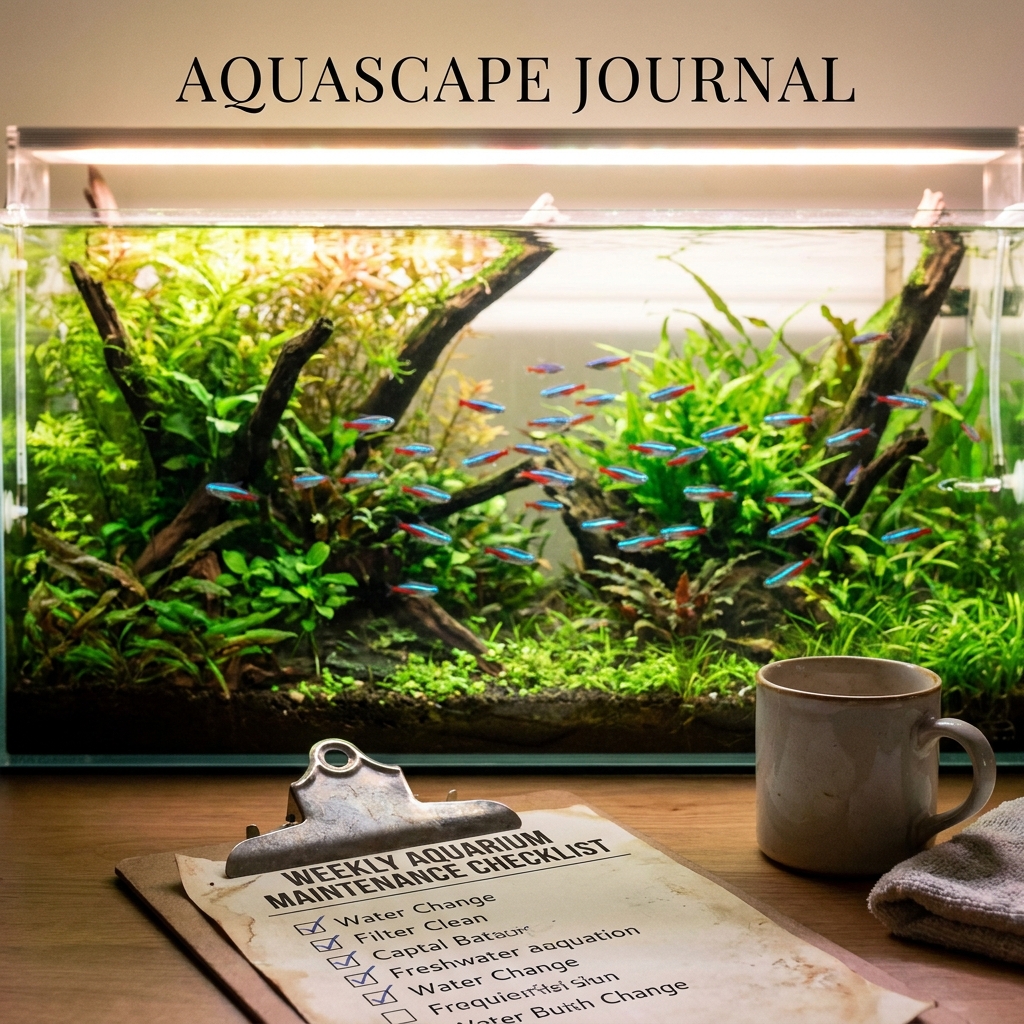
Weekly aquarium maintenance schedule: a printable routine that prevents 90% of problems
In twenty-five years of keeping freshwater, brackish, and saltwater tanks, the single piece of advice I have given the most often is also the simplest: run a consistent weekly routine, and write it down. The tanks that thrive are not the ones with the best equipment or the most expensive livestock. They are the ones whose owners show up every Sunday with a bucket, a siphon, and a checklist. The tanks that crash are almost always the ones where maintenance drifted — life got busy, the water change got skipped, the test kit sat in the drawer for two months, and by the time something visible went wrong the underlying imbalance had been building for weeks. This article is the printable weekly schedule I give to every new client, with the rationale for every line on the list so you can adapt it to your own tank.
The principle behind a fixed weekly schedule
A weekly cadence is not because aquariums need a specific day; it is because aquariums are forgiving of small mistakes as long as the mistakes are small and frequent. A 20% water change every week is a minor, recoverable disturbance. A 50% water change once a month is a major event that the tank has to absorb all at once, and a 100% "I'll get to it next month" change is the kind of stress that pushes a tank from stable to crash in a single afternoon. The weekly schedule exists to make the small, frequent disturbance automatic so that you never have to make the big, infrequent one.
The other reason a fixed schedule matters is that it builds a habit of looking. Most aquarium problems announce themselves weeks before they become visible to the fish. A filter that is starting to slow down, a patch of cyanobacteria that is just beginning to spread, a fish that is breathing slightly faster than last week — none of those are visible on a single glance. They are visible to an owner who has been looking at the tank for fifteen minutes every week for the last six months. The maintenance schedule is the excuse to look; the looking is the actual point.
The 30-minute weekly routine
The whole routine fits inside 30 minutes for a tank up to about 75 gallons. Plan for 45-60 minutes for the first month, when you are still learning the steps. After that, 30 is realistic. The order matters: do the things that need the lights on first, the things that need the lights off last, and the things that need the tank to be calm in the middle.
Start by turning off the equipment — filter, heater, UV sterilizer, CO2, lights. Unplug, do not just turn off; unplugging prevents any chance of a siphon mishap pulling water into a live socket. Check the heater and the thermometer; the temperature should match what the fish have been living at. Check the filter flow rate by looking at the outlet; the flow should be roughly the same as last week. A 10-15% drop in flow over a week is normal; a 50% drop means the filter needs attention now, not in three weeks.
The 20% water change
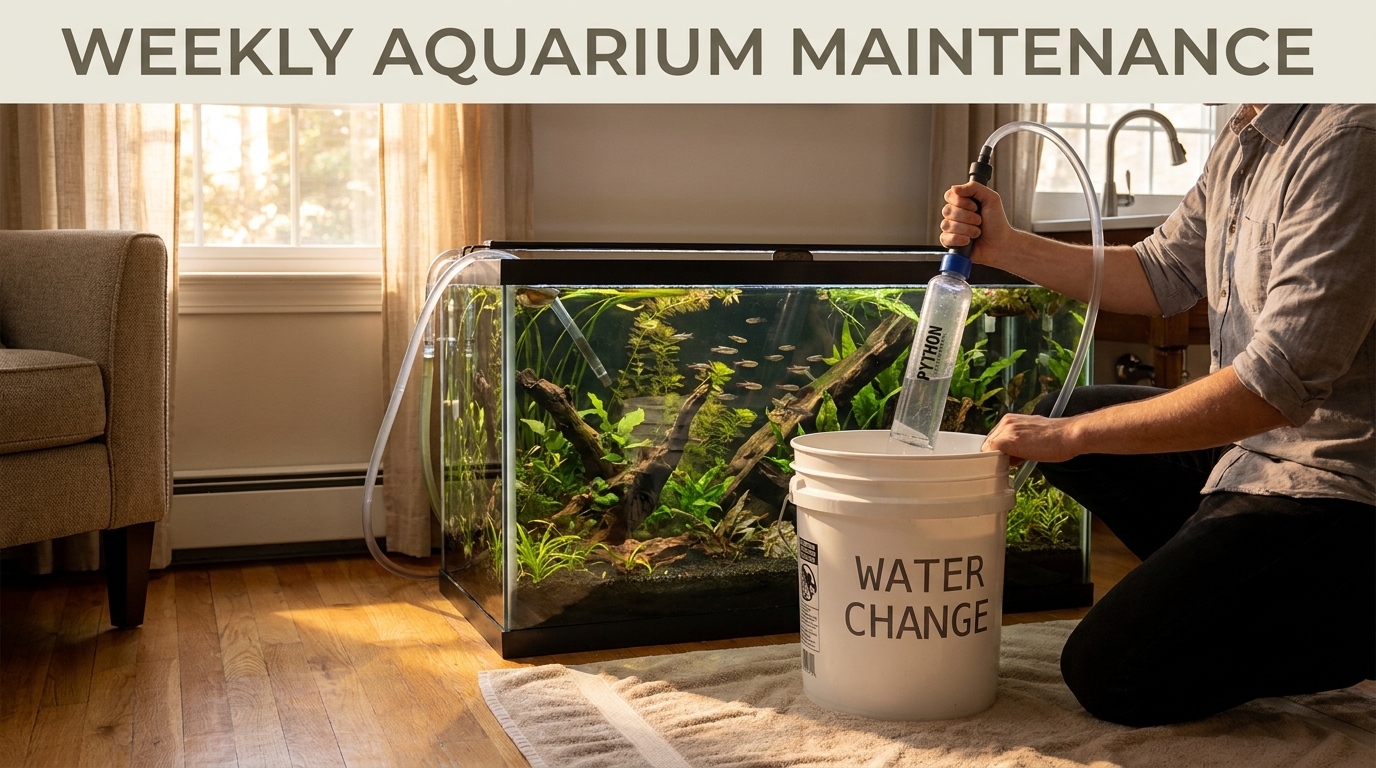
The single most important line on the schedule. A 20% water change every week on a freshwater community tank, a 10-15% water change every week on a saltwater reef, and a 25-30% water change every week on a heavily stocked African cichlid or goldfish tank. The 20% is a compromise: large enough to dilute dissolved organics meaningfully, small enough to keep the bacterial and chemical balance of the tank undisturbed. The replacement water must be dechlorinated and temperature-matched. A 2-3 degree mismatch is fine; a 6+ degree mismatch will stress the fish and can shock a reef.
Siphon the gravel or sand while the water is draining. A Python-style siphon or a simple hose with a gravel vacuum does this in one step. Move slowly. The goal is to lift settled debris from the substrate, not to dig trenches in it. In a planted tank, hover the siphon over the plants and let the roots hold the substrate; in a sand tank, the siphon rests on the surface and the lighter debris floats up into the flow.
Refill with treated water at the same temperature. Add a buffer or remineralizer as needed for the specific tank (RO/DI water for reef tanks, dechlorinated tap for most freshwater, slightly mineralized water for African cichlids and livebearers). Test the temperature after the refill; the heater will catch up within an hour.
The once-a-month additions to the weekly routine
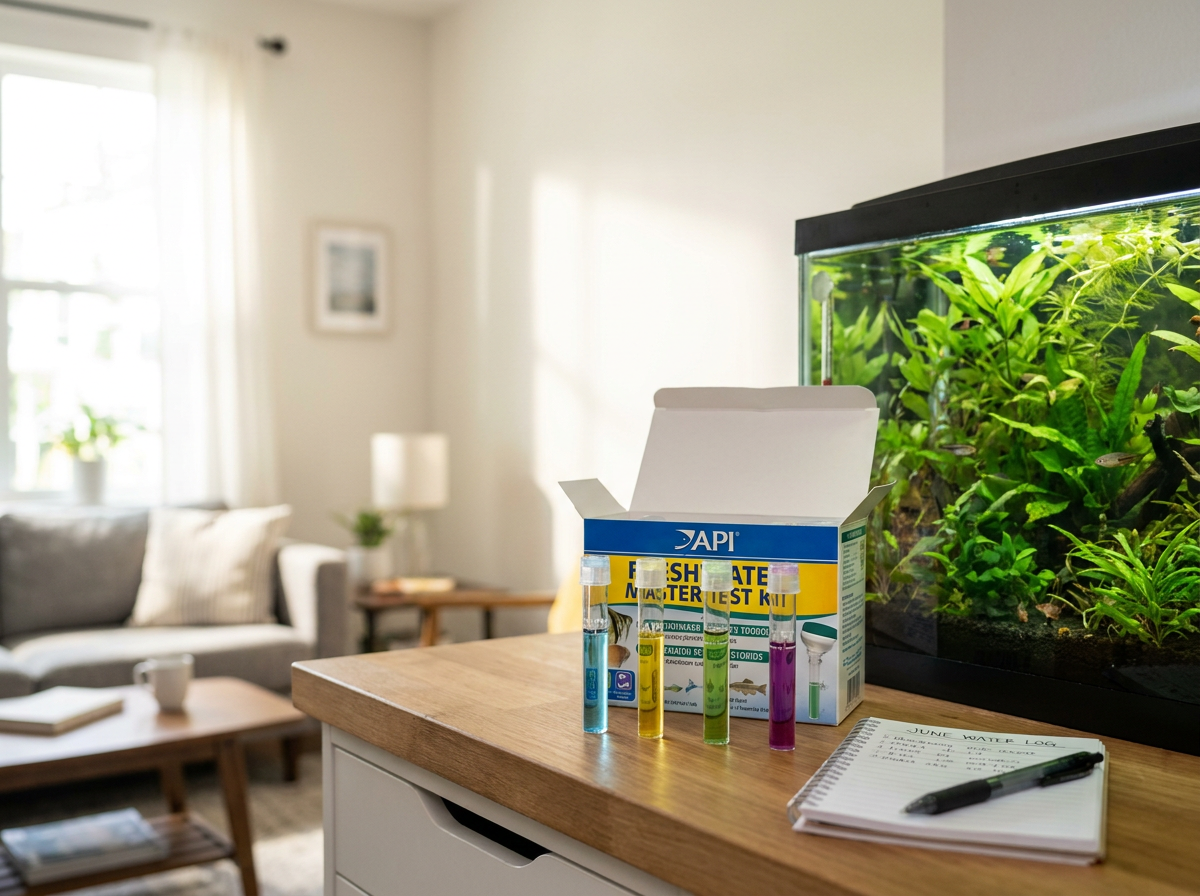
Once a month, the weekly routine gets three extra steps. Test the water with a master test kit — pH, ammonia, nitrite, nitrate for freshwater; alkalinity, calcium, magnesium, phosphate, nitrate for saltwater. The monthly test catches trends that weekly observation misses. Trim plants; remove any dead or yellowing leaves, and propagate the healthy cuttings. Clean the glass; an algae scraper or a magnetic cleaner handles 90% of the job, and a razor blade handles the stubborn spots (acrylic tanks need the plastic-safe blade, not a razor).
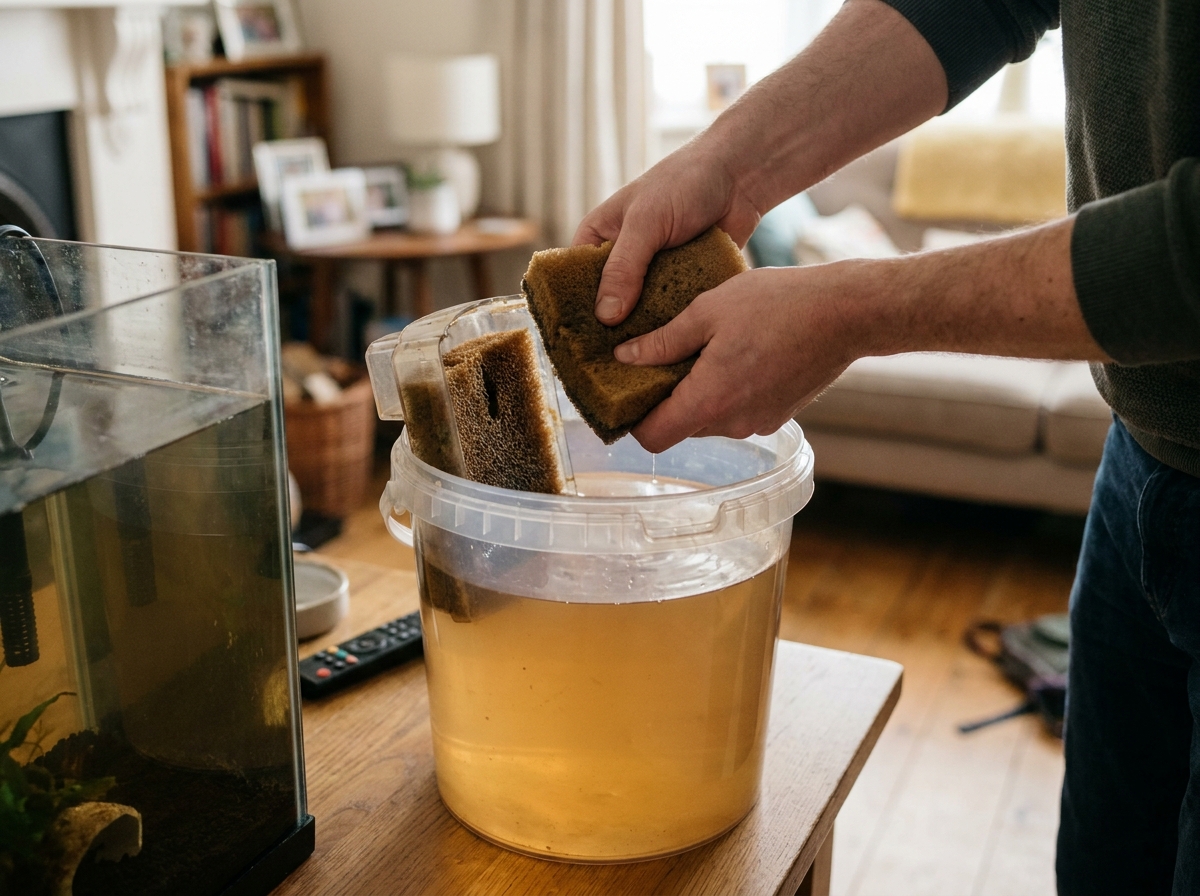
Filter maintenance is the most common place for a routine to drift. The filter should be cleaned in tank water, never in tap water, and only when the flow has clearly dropped. The most common mistake is over-cleaning the filter — pulling every cartridge out, rinsing it under the kitchen tap, and throwing the bacterial colony back into the tank at quarter strength. The right move is to clean one half of the filter media at a time, in a bucket of tank water drawn during the water change, and to leave the other half untouched. The untouched half reseeds the cleaned half. The filter is then back to full strength in 24 hours. Done wrong, the filter is back to full strength in 4-6 weeks — and in those 4-6 weeks, ammonia and nitrite will both spike.
The printable template
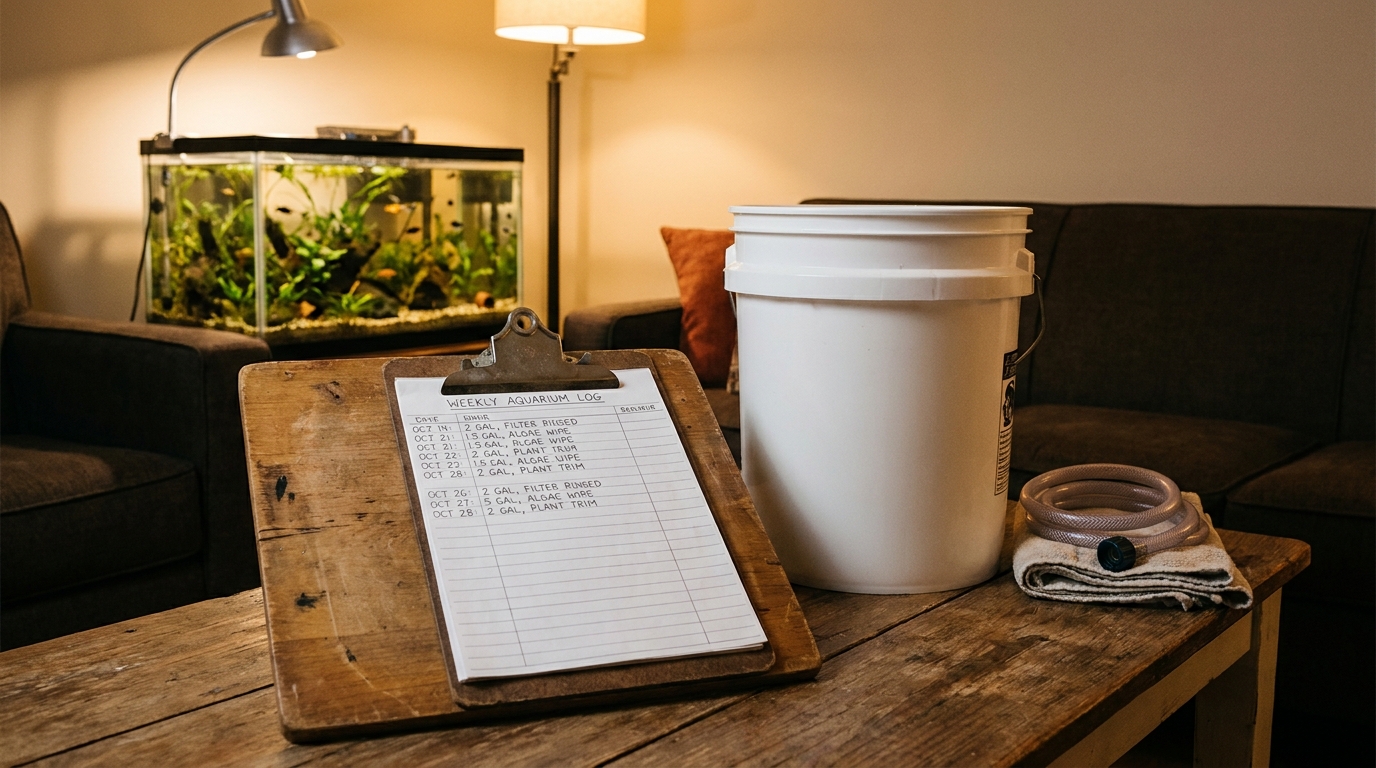
A useful schedule has to be printable, and it has to be specific. Generic advice does not survive a busy week; specific instructions do. The version I use has the date line at the top, the tank identifier (size, inhabitants, age), the routine steps in order, and a notes section for things that came up this week. The notes section is the most important part: it is where the owner writes "filter flow slightly down, will check next week" or "saw a small patch of cyanobacteria on the right rock, will check alkalinity." The notes from two months ago are what tell you whether the pattern is real.
When to break the schedule
Three situations override the weekly cadence. A sudden fish death: do a 25-30% water change, test ammonia and nitrite immediately, and check the filter. A visible algae bloom: do not increase the water change (the problem is usually light or nutrients, not the water change schedule), but do test phosphate and nitrate, and check the lighting duration. A suspected disease in the tank: do not do the scheduled water change until you have quarantined the affected fish, or until you have decided to treat the display tank. Adding medication to a display tank resets the biological filter and is rarely the right move.
The three habits that compound
Showing up. Same day, same time, every week. The 20% water change is not optional and is not a "I'll do it Tuesday if I have time." Looking. Glance at the fish individually during the routine. A fish that is hanging at the surface, or a fish that is hiding, or a fish that is breathing twice as fast as the others — all of these are early signals that the water test will not catch. Writing it down. A tank with six months of weekly notes is a tank an owner understands. A tank with no notes is a tank an owner is guessing about.