
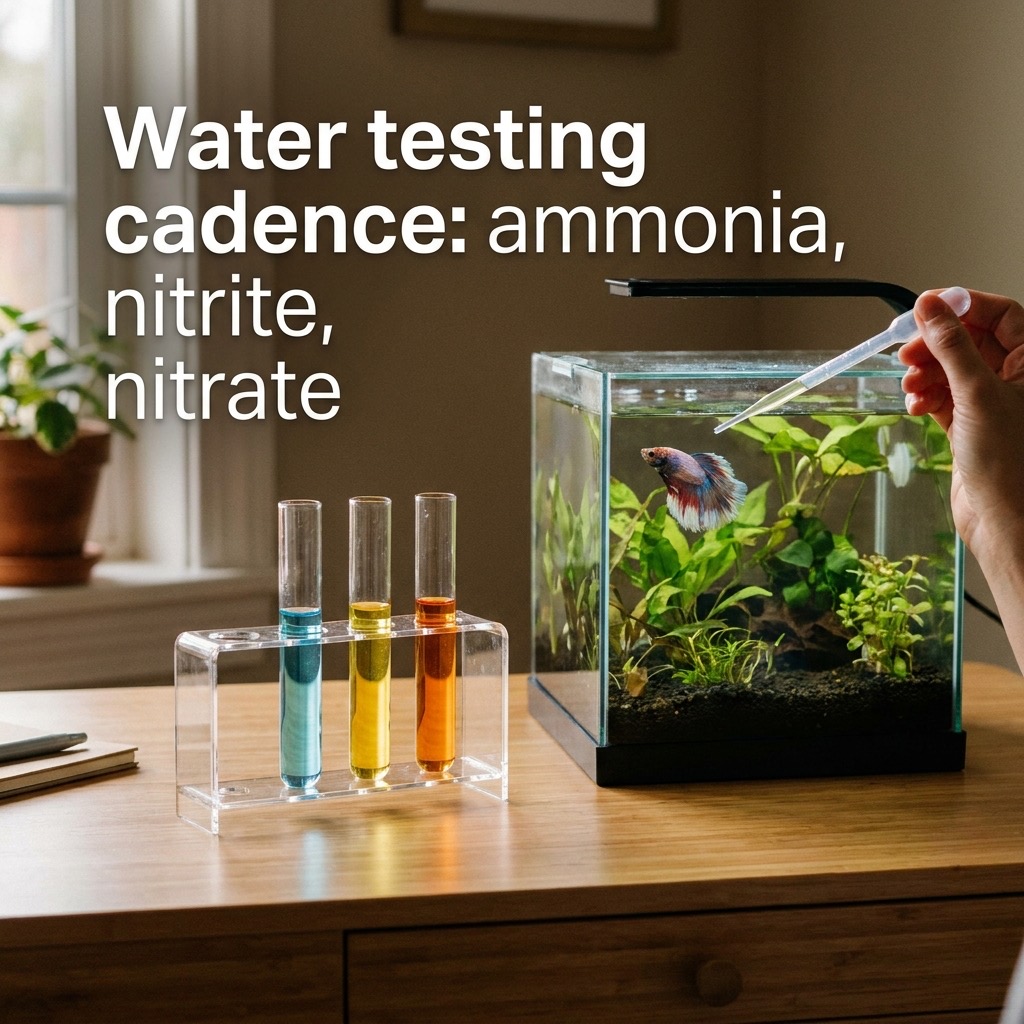
Water testing cadence for aquariums: ammonia, nitrite, and nitrate — when to test what
The freshwater aquarium hobby has a testing problem. New keepers either don't test at all (until fish die), or they test daily for months on a stable mature tank (wasting money and seeing meaningless micro-variations). The right cadence depends on which phase your tank is in.
The four parameters that matter
Out of the dozen things you can test, these four are non-negotiable for any freshwater tank:
| Parameter | Why | Acceptable range |
|---|---|---|
| Ammonia (NH₃/NH₄⁺) | Lethal at low levels | 0 mg/L |
| Nitrite (NO₂⁻) | Lethal at low levels, causes "brown blood disease" | 0 mg/L |
| Nitrate (NO₃⁻) | Chronic toxin, algae driver | <40 mg/L freshwater, <20 mg/L reef |
| pH | Affects ammonia toxicity (more toxic at higher pH) | species-specific (6.5–8.0 typical) |
Skip phosphate, GH, KH, copper, and TDS testing unless you have a specific reason (planted tank with CO₂, African cichlid tank with high pH target, etc.).
Phase 1: fishless cycle (4–6 weeks)
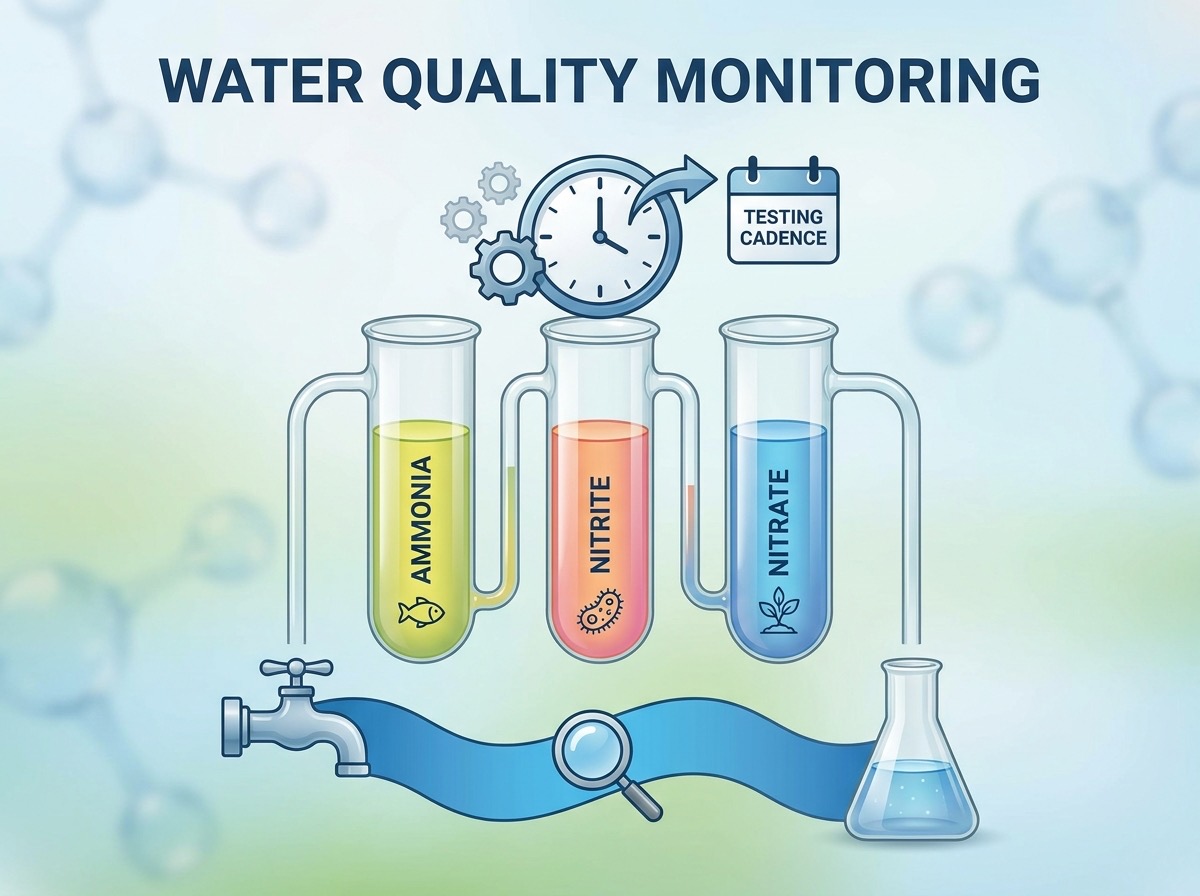
Cadence: every 2–3 days, all four parameters.
You are watching for:
- Ammonia spike (you added 2–4 ppm to start the cycle)
- Nitrite rise (3–7 days after ammonia dose)
- Nitrite fall + nitrate rise (3–4 weeks in)
- Ammonia + nitrite both 0 within 24 hours of redosing ammonia to 2 ppm (cycle is complete)
Test every 2–3 days. Daily testing wastes reagents and doesn't change your action (you cannot speed the cycle up).
Phase 2: first 4 weeks after adding fish
Cadence: weekly, all four parameters.
The bio-filter is still establishing its adult capacity. A spike here means the bacteria colony hasn't grown enough for your bioload. Weekly testing catches problems before fish are visibly affected.
Common patterns in this phase:
- Ammonia climbs to 0.25–0.5 mg/L for a few days after a new fish is added — normal
- Ammonia climbs and stays >0.5 mg/L — overstocked or under-filtered; do a partial water change and re-evaluate stocking
Phase 3: established tank (months 2–12)
Cadence: monthly, ammonia/nitrite; weekly to monthly, nitrate.
By month 3–6, your bio-filter is mature. Ammonia and nitrite should be undetectable. Testing them monthly is enough to catch a crashed cycle (e.g., after a power outage killed the bacteria).
Nitrate testing is the higher-frequency one — it accumulates over time. Test weekly or bi-weekly and use the trend to set your water change schedule.
Phase 4: long-term stable tank (year 2+)
Cadence: monthly nitrate; ammonia/nitrite only if you suspect a problem.
A mature tank is a stable system. Routine monthly nitrate testing is enough to confirm your water change schedule is keeping up with bioload. Skip ammonia and nitrite unless something has changed — filter maintenance, power outage, new fish added, fish looking unwell.
Action thresholds
| Parameter | Action level | What to do |
|---|---|---|
| Ammonia > 0.25 mg/L | Investigate | Stop feeding, partial water change, retest in 24h |
| Nitrite > 0.5 mg/L | Investigate | Partial water change, add salt (chloride) to protect fish, retest |
| Nitrate > 80 mg/L freshwater | Investigate | Larger or more frequent water changes; reduce feeding |
| Nitrate > 40 mg/L planted tank | Investigate | Same as above |
Which test kit to buy
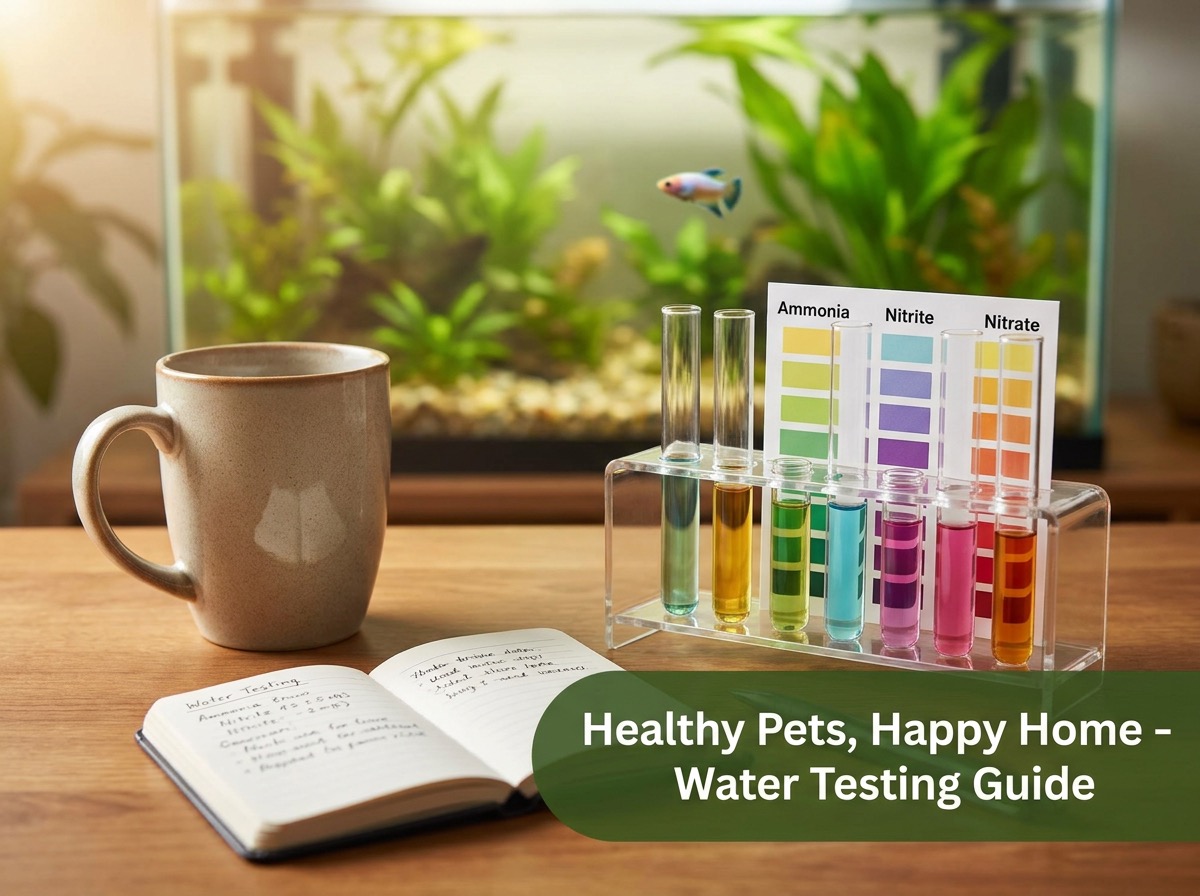
The API Freshwater Master Test Kit is the hobbyist standard for a reason: it is cheap, accurate enough for routine monitoring, and includes all four parameters. Liquid-drop tests are more accurate than test strips. Test strips are fine for nitrate-only monitoring in established tanks.
What you DON'T need to test routinely
- GH / KH — test once when setting up the tank; check again if you change source water
- Phosphate — only matters for planted tanks with CO₂ and for reef tanks
- Copper — only if you're treating for parasites or suspect contamination
- TDS — a poor proxy for actual water chemistry; not actionable
- Dissolved oxygen — not testable reliably at home; manage through surface agitation
When testing is urgent (not routine)
Test all four parameters immediately if:
- Fish are gasping at the surface (ammonia or oxygen issue)
- Multiple fish die in 24 hours
- A power outage >6 hours just ended
- Filter was off or disconnected for any reason
- Tank is cloudy or smells unusual
- New fish added without quarantine and existing fish showing signs
Bottom line
The mistake I see most often is testing daily forever on a stable tank (waste) or testing monthly on a cycling tank (too late). Match cadence to phase: every 2–3 days cycling, weekly in month 1 with fish, monthly once mature. One API Master kit, four parameters, $25, used correctly will catch 95% of preventable fish losses.
---
About the author: [Kenji Tanaka](../Kenji%20Tanaka.md) is a ZNA-certified koi judge with 25 years of freshwater ornamental fish research. He has served on the judging panel of the All Japan Nishikigoi Show on multiple occasions.