
Koi feeding: quantity, frequency, and seasonal adjustment through the year
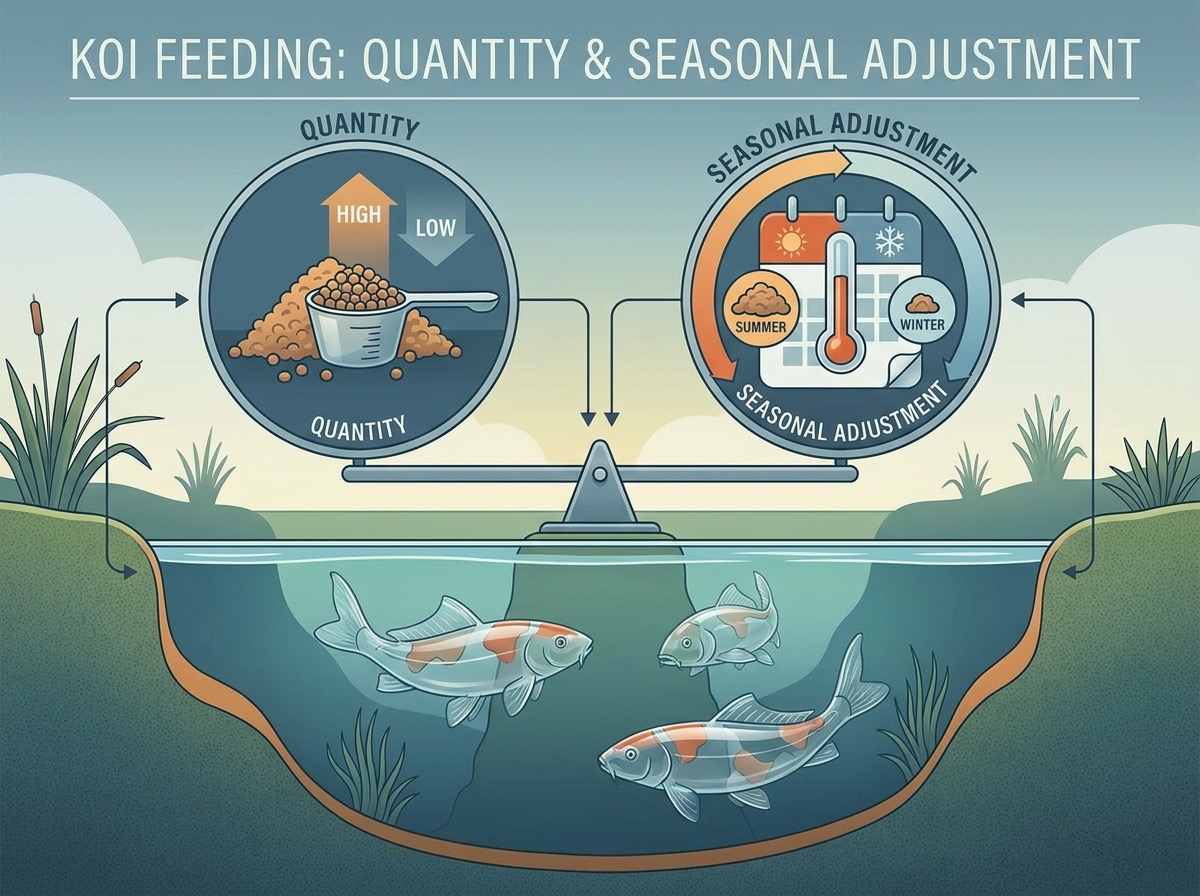
The single most common mistake I see in koi keeping is feeding the same amount all year. Koi are cold-blooded; their metabolism runs at a speed set by water temperature. Feed them as if it's always summer, and you overload their digestion in cold months, dirty the water, and damage their long-term growth pattern.
Feed them correctly across the seasons, and your koi will grow faster, colour deeper, and live longer.
The temperature-metabolism rule
Koi metabolism roughly halves for every 10°C drop in water temperature. The practical implication:
- 24–28°C (summer): full metabolism, full feeding
- 18–23°C (spring/autumn warm): 60–80% of summer feeding
- 12–17°C (spring/autumn cool): 30–40% of summer feeding
- 8–11°C: minimal feeding, easy-to-digest food only
- Below 8°C: do not feed
Below 8°C, koi digestion effectively stops. Food sits in the gut and rots, often killing the fish.
The seasonal feeding calendar
Spring (water 8–18°C, gradually warming)
This is the most dangerous season for feeding errors. Koi are coming out of winter torpor and are eager to eat — but their digestion is not yet at full capacity.
| Water temp | What to feed | How much | How often |
|---|---|---|---|
| 8–12°C | Wheat germ-based food (easy protein, easy fat) | Light — what they consume in 5 min | 2–3x per week |
| 12–16°C | Wheat germ + small amount of growth food | What they consume in 5 min | Daily |
| 16–18°C | Growth food + colour food | What they consume in 5 min | 1–2x daily |
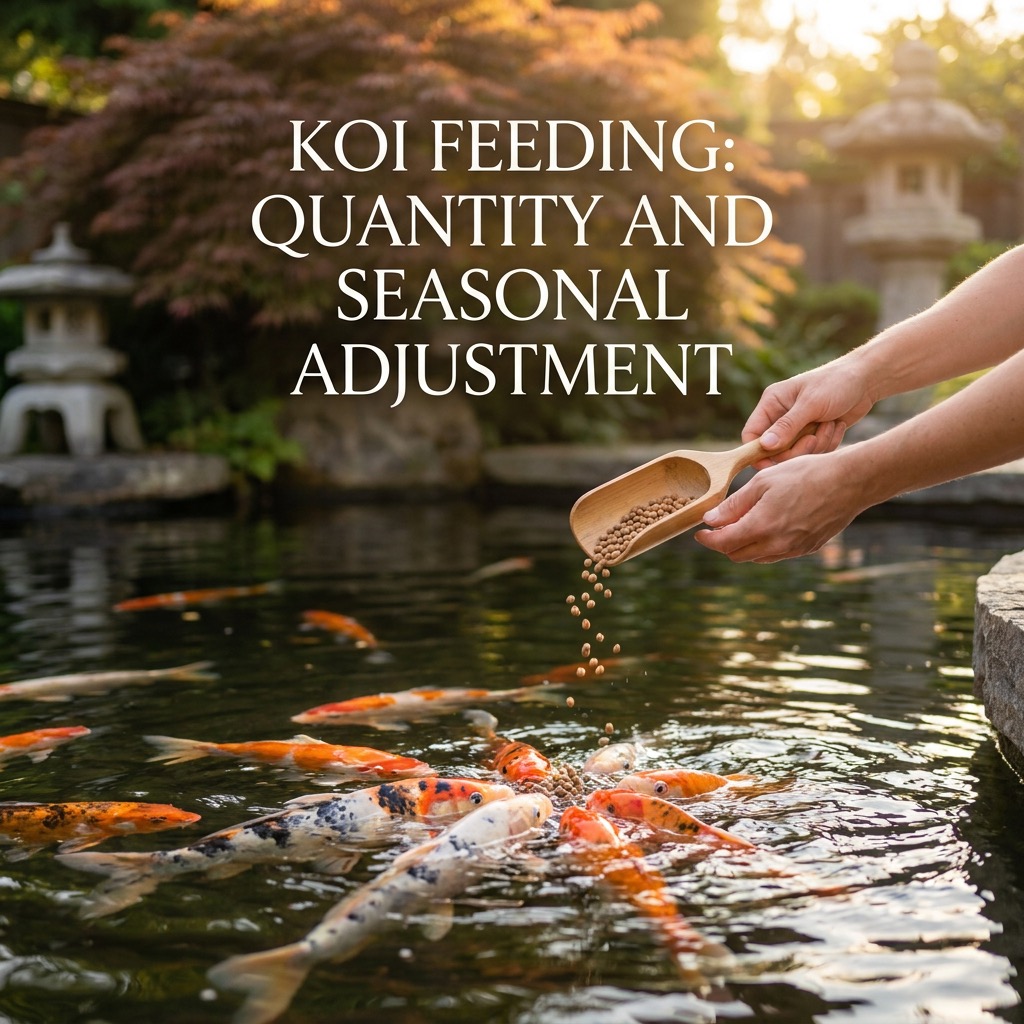
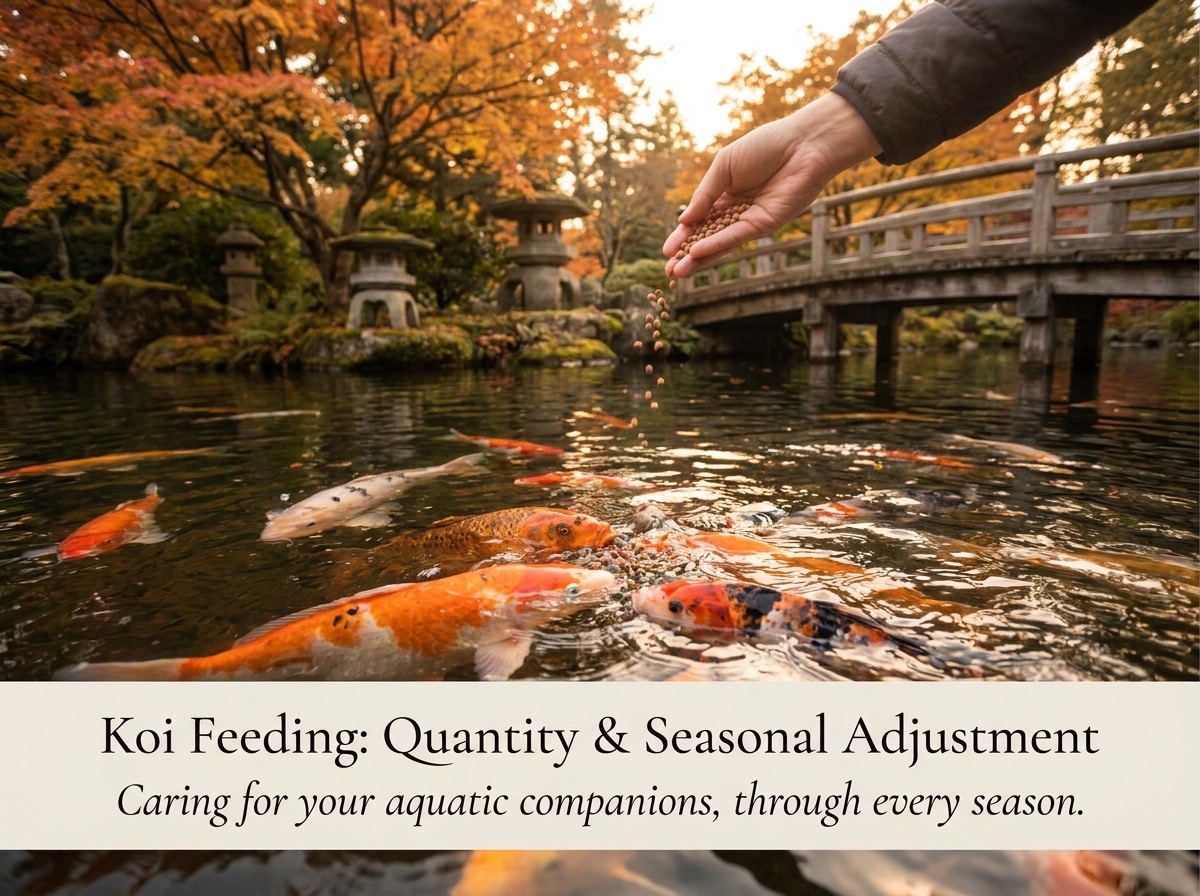
The 5-minute rule: feed only what the koi consume in 5 minutes. After 5 minutes, net out uneaten food. Uneaten food decays, spikes ammonia, and defeats your bio-filter.
Summer (water 18–28°C)
The growth season. Feed aggressively but within reason.
- 2–4x daily for juvenile koi (under 2 years)
- 2x daily for adult koi (over 2 years)
- Mix: 60–70% growth food, 20–30% colour-enhancing food, 10% wheat germ as a digestive aid
- Quantity: 5-minute rule still applies, but for koi under 30 cm, allow up to 10 minutes
Summer is also when you can use higher-protein food (40%+ crude protein) for juveniles. For adult koi, 35% protein is plenty — excess protein does not turn into growth, it turns into ammonia.
Autumn (water 12–22°C, gradually cooling)
This is the second-most-dangerous season. Koi are still feeding actively, but as temperature drops you must shift food type before they stop eating — by then the digestion has slowed and rich food sits in the gut.
| Water temp | What to feed | How much |
|---|---|---|
| 16–22°C | 50% growth, 50% wheat germ | 5-minute rule |
| 12–16°C | 100% wheat germ | 5-minute rule, daily |
| 8–12°C | Wheat germ only | 2–3x per week |
Wheat germ is the bridge food. Its protein and fat are easier to digest than growth food, and it contains natural vitamin E which supports immune function through winter.
Winter (water below 8°C)
Do not feed. Koi digestion is essentially zero. Any food sits in the gut and rots.
If you have a heated pond or live in a tropical climate where water stays above 12°C year-round, continue wheat germ feeding at reduced frequency.
Food types and what they do
| Food type | Protein % | Fat % | Best for |
|---|---|---|---|
| Growth / staple | 35–45% | 4–8% | Active growth (juveniles, summer) |
| Colour-enhancing | 35–40% | 6–10% | Enhancing red, yellow, and black (contains spirulina, astaxanthin, paprika) |
| Wheat germ | 28–32% | 4–6% | Cold-season feeding, digestive aid |
| Sinking pellet | 30–40% | 4–8% | Bottom-feeding behaviour, shy koi |
| Floating pellet | 32–42% | 4–8% | Daily feeding, observing feeding response |
The colour food works over months, not weeks. Owners who expect visible colour change in 2 weeks are disappointed. Real changes show at 3–6 months of consistent colour-food feeding.
The 5-minute rule, explained
The 5-minute rule is simple but its execution matters:
- Toss a small amount of food. Watch the koi consume it.
- Toss a bit more. Watch again.
- Continue until koi start to ignore floating pellets, lose interest, or 5 minutes have passed.
- Net out any uneaten food from the pond.
- Tomorrow, adjust — feed slightly more if 5 minutes had everything gone in 2 minutes; slightly less if you had leftovers at 5.
In a properly stocked and filtered pond, the 5-minute rule self-corrects over a few days. The most common error is overfeeding by 30–50% — owners enjoy feeding, koi act hungry, food gets dumped.
Common mistakes
- Year-round same feeding rate — the temperature-metabolism link is real and ignored
- High-protein food in cold water — undigested protein rots in the gut
- Feeding at temperatures below 8°C — the gut has effectively shut down
- Not netting uneaten food — it decays, spikes ammonia, and triggers algae
- Treat-only feeding — bread, lettuce, citrus. These lack the nutrient balance koi need and can pollute the water fast
A weekly routine for a hobbyist koi keeper
| Day | Action |
|---|---|
| Monday | Feed 2x daily at 5-min rule |
| Tuesday | Same |
| Wednesday | Same + check filter flow |
| Thursday | Same |
| Friday | Same |
| Saturday | Feed once, longer observation (any sick fish?) |
| Sunday | Skip one feeding (helps water quality, mimics natural fasting cycles) |
Bottom line
Koi feeding is not complicated, but it is seasonal. Match food type to water temperature, follow the 5-minute rule, and shift to wheat germ as the water cools in autumn — before the koi stop eating, not after. This single practice is what separates koi keepers whose fish grow steadily and live 25+ years from those who don't.
---
About the author: [Kenji Tanaka](../Kenji%20Tanaka.md) is a ZNA-certified koi judge with 25 years of freshwater ornamental fish research. He has served on the judging panel of the All Japan Nishikigoi Show on multiple occasions.