
Water changes: frequency and volume (10-30% weekly)
If I could keep only one piece of advice for any fish keeper - beginner or 30-year veteran - it would be this: do your water changes, and do enough of them. Most of the fish health problems I see in my consultation work are downstream of inconsistent or insufficient water changes. Ich, fin rot, velvet, hole-in-the-head, chronic wasting, unexplained deaths - the vast majority of these have a water quality story in the background.
The 10-30% weekly water change is the standard recommendation. It is also one of the most frequently violated. People under-change because they are busy, or because the water "looks fine," or because they read on a forum that their filter handles everything. The filter does not handle everything. Nothing handles everything. The water change is the one maintenance task that cannot be replaced by equipment or supplements.
Why water changes work
Three things a water change accomplishes, all of which matter:
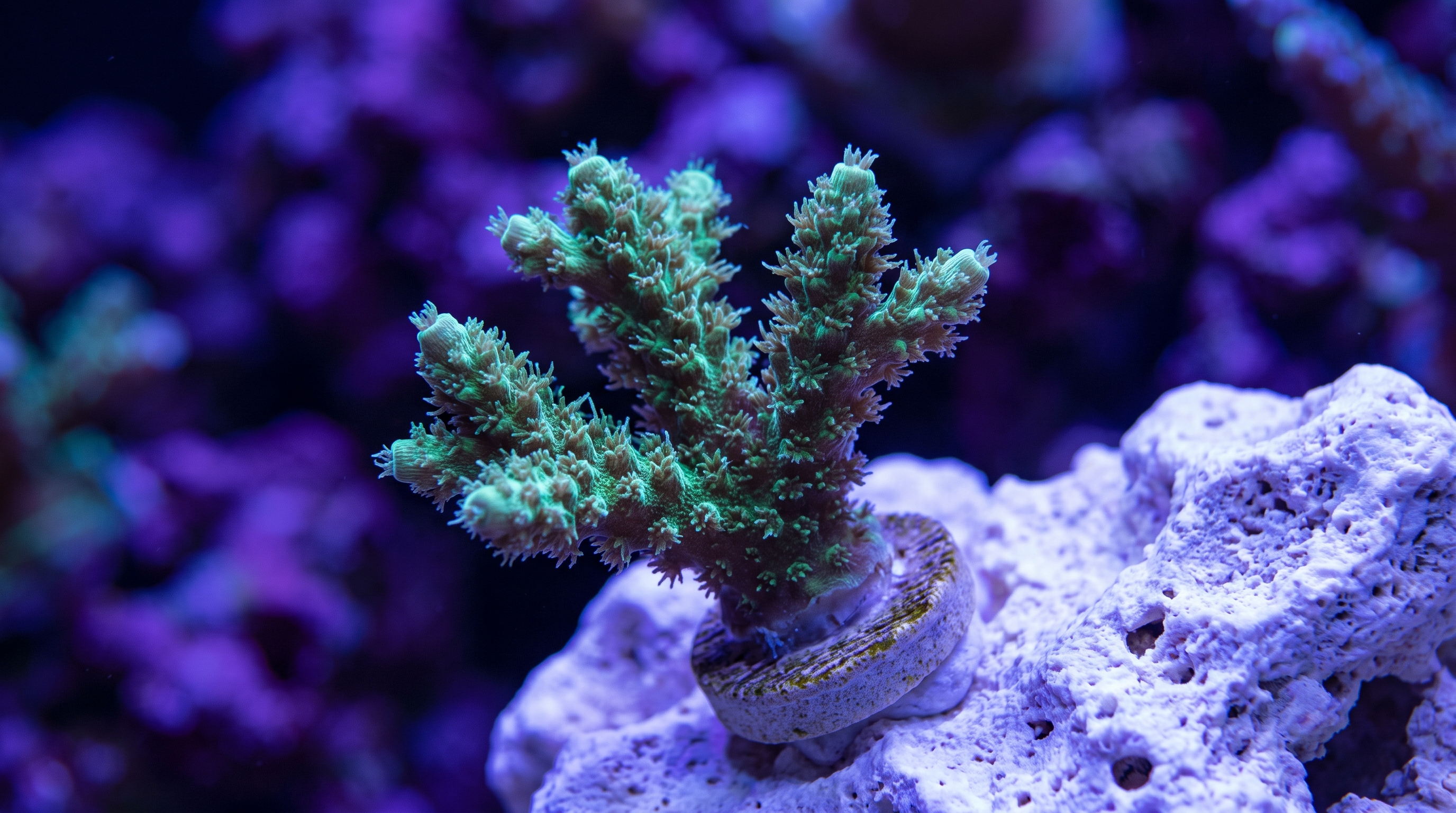
- Nitrate export. The nitrogen cycle ends in nitrate. Nitrate accumulates in the closed system of an aquarium. Plants and algae use some of it, but in a typical display tank, the steady state nitrate concentration climbs week over week without a water change. Most freshwater fish tolerate nitrate up to 40 ppm indefinitely. Many saltwater fish and most corals prefer it under 10 ppm. A weekly water change is the most reliable way to keep nitrate in range.
- Buffer replenishment. The carbonate hardness (KH) that stabilizes pH is consumed slowly by the nitrogen cycle and other biological processes. In a tank with low KH, pH crashes are a real risk during a power outage, a heavy bio-load, or a missed water change. Fresh water with appropriate KH refills the buffer.
- Trace element reset. Fish, plants, and corals consume a long list of trace minerals - iodine, strontium, molybdenum, and dozens of others. Some are replaced by fish food, some by salt mixes, some by supplements. None of them are added in the exact ratios that the system needs. A water change dilutes any accumulated imbalances and refills the missing pieces.
How much to change
The "10-30% weekly" range is a real range, not a single number. The right number for your system depends on four factors:
- Stocking density. A lightly stocked 200-liter community tank with 20 small fish needs 10-15% per week. A heavily stocked 200-liter tank with 30 large fish needs 25-30% per week or more.
- Feeding rate. Heavy feeding produces more waste, more ammonia, more nitrate. A tank being fed 3 times a day at full portion needs a bigger water change than a tank being fed once daily at half portion.
- Plant load. A heavily planted tank uses nitrate as fertilizer and may not need as large a water change to control nitrate. A tank with no live plants needs more.
- Target nitrate. The target depends on what is in the tank. A planted freshwater community tank: under 40 ppm is fine. A reef tank: 5-10 ppm. A discus or altum angelfish tank: under 20 ppm. A koi pond: under 40 ppm is typical, under 20 ppm is excellent.
The most common rule of thumb for a general freshwater tank: change 20% weekly. For a reef tank, 10-20% twice a week. For a koi pond, 10% weekly or 20-30% every two weeks.
How to do it without shocking the fish
The most common water change mistake is changing too much water at once. A 50% water change on a tank that has been stable for six months sounds like a good cleanup. In practice, it is a recipe for pH crash, ammonia spike from the filter bacteria adjusting, and stressed fish.
Three things to match between the new water and the tank water:
- Temperature. New water should be within 1-2°C of tank water. Bigger temperature swings stress fish and can trigger ich outbreaks.
- pH and KH. New water should have the same or slightly higher pH and KH than tank water. Lower KH in the new water than the tank has had for six months is the most common cause of post-water-change pH crash.
- Chlorine/chloramine. Tap water in most municipal systems contains chlorine or chloramine, both of which kill the beneficial bacteria in the filter and on surfaces. Treat new water with a conditioner (Seachem Prime, API Tap Water Conditioner, Kordon AmQuel) before adding it to the tank.
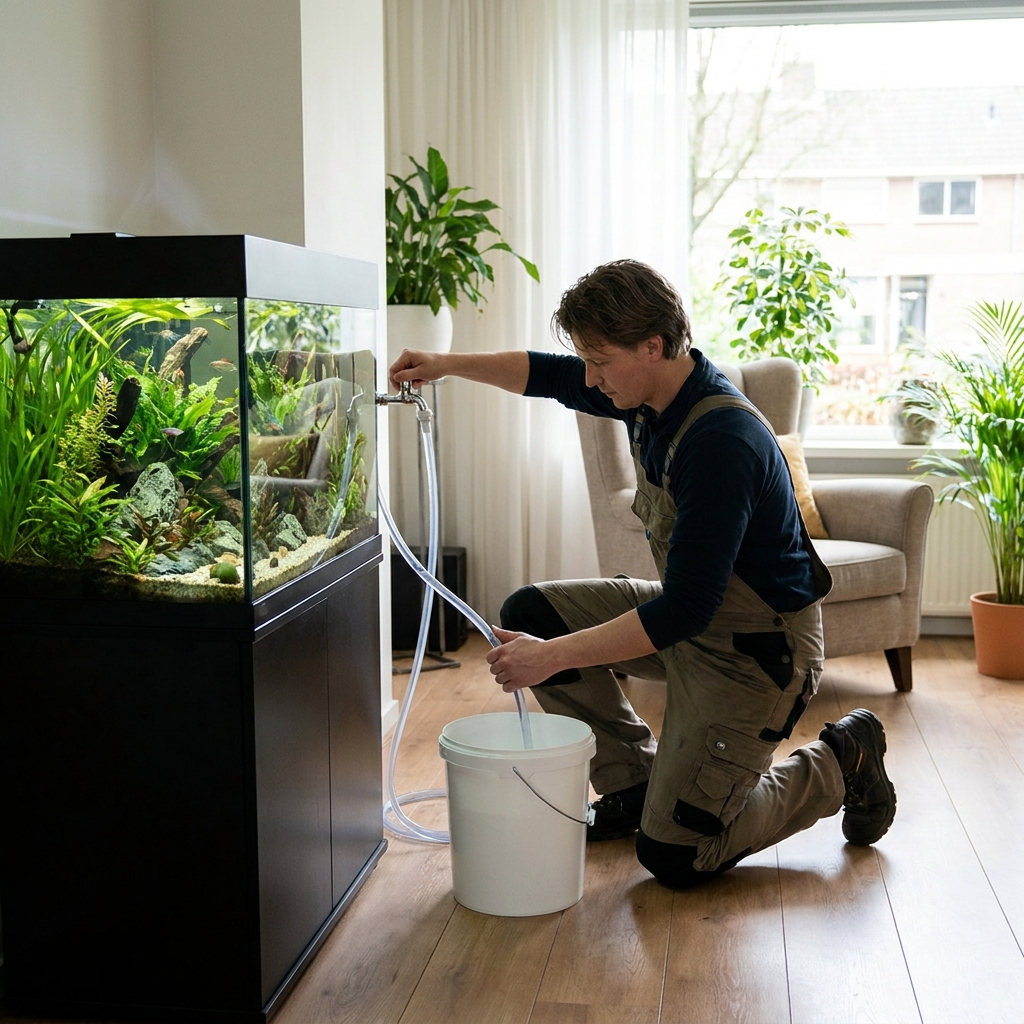
The fastest way to do a water change well: a Python No Spill Clean and Fill hose connected to a sink, a 5-gallon bucket, and a gravel vacuum. The Python siphons water out of the tank, can be reconfigured to add water back, and the whole process takes 15-20 minutes for a 75-gallon tank.
Schedule that actually happens
The single biggest predictor of whether a water change happens is whether it is on a calendar. The 2 AM "I should really do a water change this weekend" thought is the enemy of consistent maintenance. Pick a day and a time, write it on the calendar, and treat it like a non-negotiable appointment.
Common successful patterns:
- Sunday morning, 30 minutes before the rest of the household wakes up. Quiet, no distractions, becomes a meditative routine.
- Wednesday evening and Sunday evening, 15 minutes each. Smaller, more frequent changes for tanks that need them.
- Every Sunday, batch all tanks at once. 60-90 minutes once a week covers everything for most home aquarists.
The pattern that fails: "I'll do it when the tank looks dirty." The tank always looks dirty at this point, and the fish are already showing stress.
The exception: when not to change water
There are times to skip or reduce a water change. Mostly, these are times when the system is in a transient unstable state and a large water change would make things worse:
- During medication treatment. Many medications are dosed based on tank volume. Changing water reduces the medication concentration. Coordinate with the medication schedule.
- During a fishless cycle. The bacteria colony is being deliberately starved of ammonia. A water change dilutes the ammonia and slows the cycle. Skip until the cycle is complete.
- Immediately after a major disturbance (large water change the previous day, a power outage, a fish death). The system is in a recovery state. Let it stabilize for 48 hours before the next water change.
- When the new water source has a problem. If the municipal water system has issued a boil-water advisory, defer the water change. Chlorine levels in the distribution system can spike during these events and overwhelm a standard conditioner.
The bottom line
A consistent water change is the cheapest and most effective fish health intervention that exists. Buy a Python hose, a 5-gallon bucket, and a good conditioner. Set a weekly appointment on your calendar. Change 20% of the water. Match the temperature and treat the chlorine. That is the whole protocol. Most of the other complicated advice in fishkeeping is a workaround for not doing this consistently.
About the author
Kenji Tanaka is a koi and freshwater aquarium specialist based in Osaka, with 24 years of experience in koi husbandry, freshwater planted tanks, and quarantine facility management. He consults with koi clubs and public aquariums across the Asia-Pacific region and writes about practical water management for hobby keepers. See his full profile at [authors/Kenji Tanaka/](../Kenji%20Tanaka.md).