
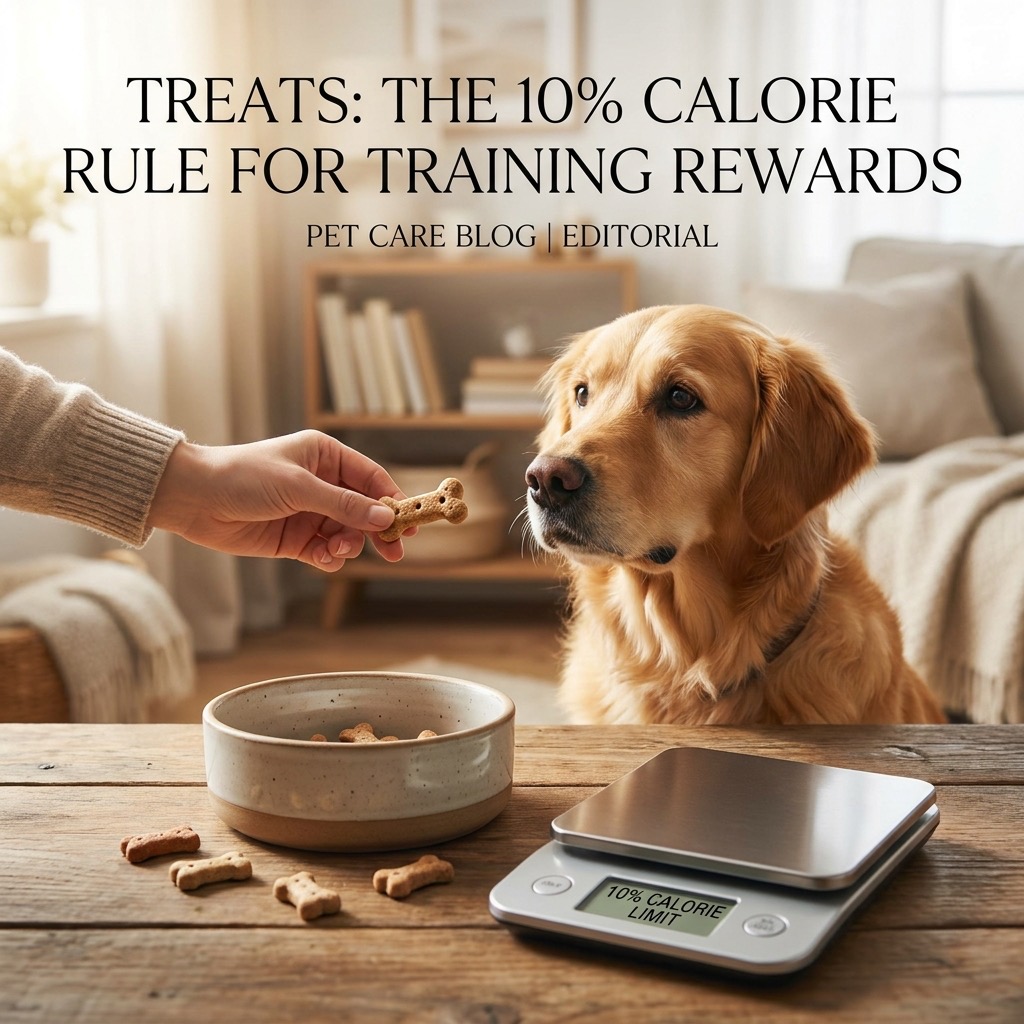
Treats: the 10% calorie rule for training rewards
The most common conversation I have with owners of overweight dogs is not about the main meal. It is about the treats. Treats are where the unaccounted calories hide, and the daily training routine that owners feel good about is the same routine quietly putting 200–400 extra calories into a dog every day.
The 10% rule
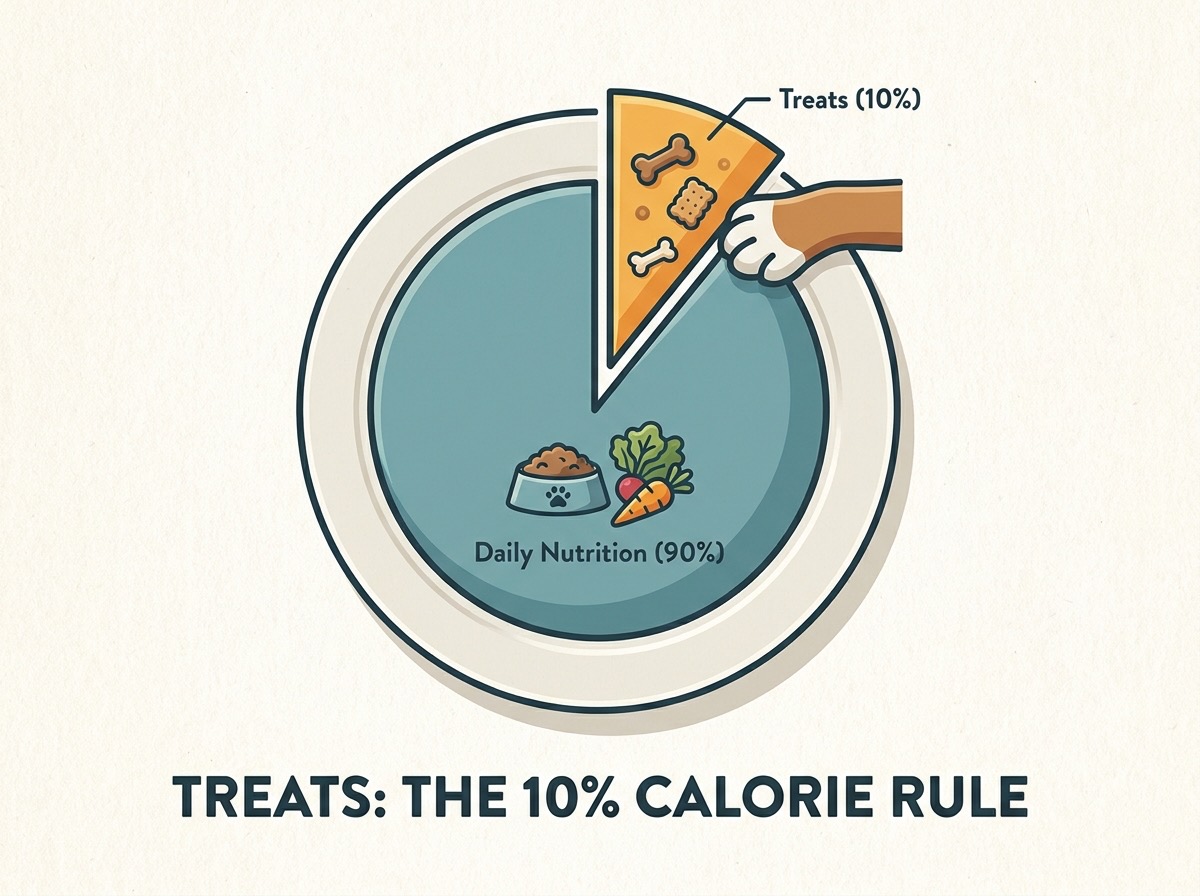
A widely-cited veterinary nutrition guideline: treats and extras should make up no more than 10% of a dog's daily caloric intake.
For a 10 kg dog with a maintenance requirement of 400 kcal/day, that means 40 kcal or less from treats. For a 25 kg dog at 1,100 kcal/day, 110 kcal or less from treats.
What 10% looks like for common treats
| Treat | Approximate kcal per piece | For a 10 kg dog (40 kcal budget) |
|---|---|---|
| Small milk-bone biscuit | 15–20 kcal | 2 pieces |
| Medium training treat (Zuke's mini) | 3–5 kcal | 8–10 pieces |
| Large biscuit (Pedigree Marrobone) | 60–80 kcal | Over the budget |
| Slice of cheese (1 cm cube) | 30–40 kcal | 1 cube |
| Slice of deli meat (1 slice) | 30–50 kcal | 1 slice (already most of the budget) |
| Peanut butter (1 tsp) | 30–40 kcal | 1 teaspoon |
| Commercial jerky strip | 50–100 kcal | Over the budget |
The arithmetic is unforgiving. A few "small" treats easily exceed the daily budget.
The training-treat paradox
The treats that work best for training are also the most calorically dense — they need to be smelly, palatable, and immediate. This pulls in two directions:
- High-value, high-calorie: cheese, hot dogs, liver — great for learning, terrible for daily calories
- Low-calorie, low-value: kibble, carrot, apple — easy on calories, but dogs may not work for them
The compromise is to use the daily ration as treats for routine training. The dog is working for food either way; making it the same food they would have eaten anyway costs zero extra calories.
For genuinely high-distraction environments (the park, a class), break the high-value treat into pea-sized pieces. 5 pea-sized pieces of hot dog is about 20 kcal — manageable. One whole hot dog slice is 40+ kcal.
The "human food" tax
Most owners underestimate human-food calories by 5–10x. A "little piece" of cheese to a 25 kg dog is like 6–8 pieces of cheese to a person. A daily bite of butter or peanut butter on the spoon while cooking can add 100–200 kcal — the entire daily treat budget.
If you give human food:
- Weigh it on a kitchen scale until you have a reliable eye for portion
- Subtract from the daily ration, don't add to it
- Choose low-calorie options (carrot, green beans, air-popped plain popcorn) for casual giving
A practical daily tracking method
- Calculate the dog's daily kcal target (use a calculator or your vet's recommendation).
- Subtract 10% — that's the treat budget.
- Weigh out that total amount of treats at the start of the day into a small container.
- When the container is empty, no more treats today.
This single change is more effective than any fancy diet food, because it removes the guesswork from "just one more".
Special situations
- Working dogs (police, sport, agility): higher treat budgets are appropriate. The 10% rule is for pets.
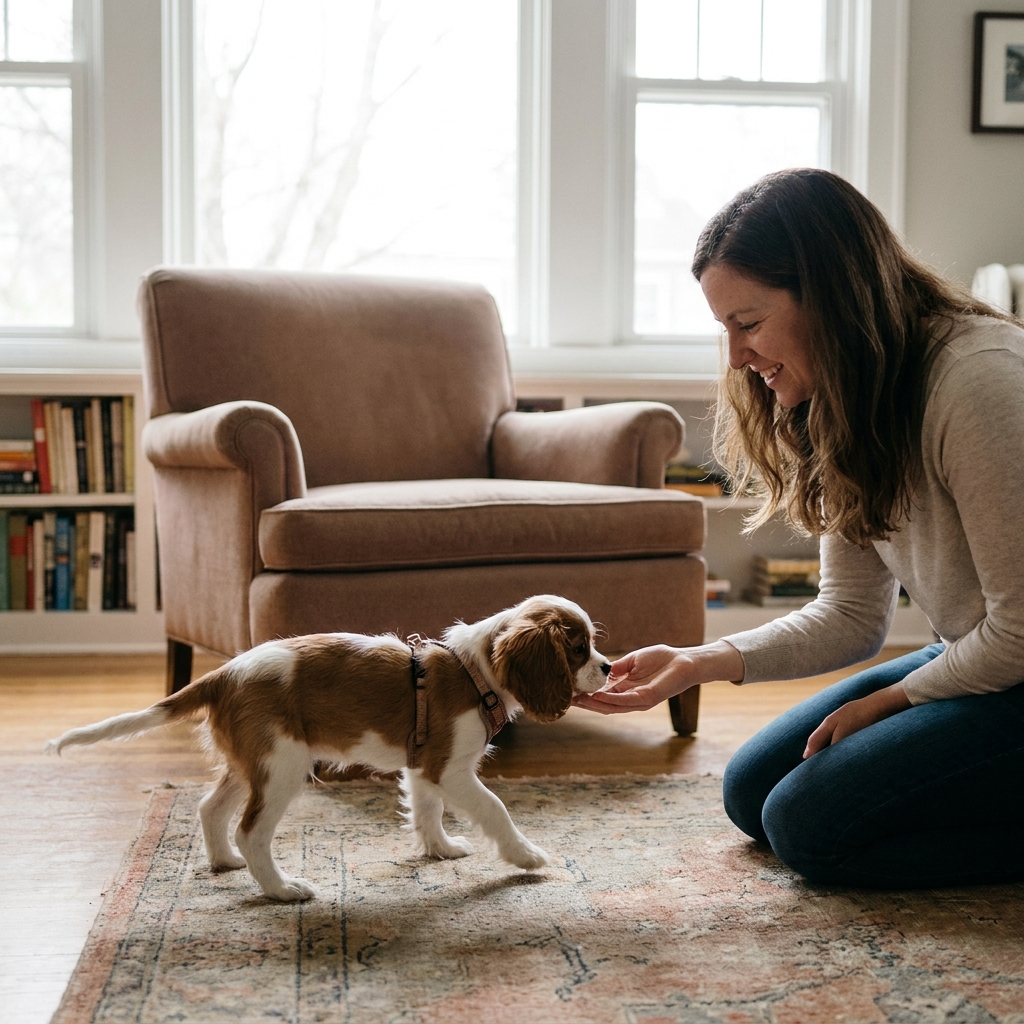
- Puppies in training classes: use the daily ration. The class IS the meal.
- Weight-loss dogs: hold treats to 5% of daily calories, and use green beans, carrot, or ice cubes for casual reinforcement.
When to ignore the 10% rule
- During a 1–2 week intensive training block (e.g., learning to come when called for the first time)
- For medication administration (use the smallest amount of high-value food possible)
- For one-off celebrations (birthday, gotcha day) — a small extra treat once a month is fine
Bottom line
The treats are not the villain — unmeasured treats are. Once you measure the daily budget, weigh out the day's portion, and stop dipping into the bag, weight management becomes dramatically easier. For most dogs, this single change produces 2–4 kg of weight loss in 6 months without any change to the main meal.
---
About the author: [Sarah Chen](../Sarah%20Chen.md) is a registered animal nutritionist (DAN) with a Master of Veterinary Medicine from the University of Melbourne. She served as canine nutrition consultant at RSPCA Australia for 12 years.