
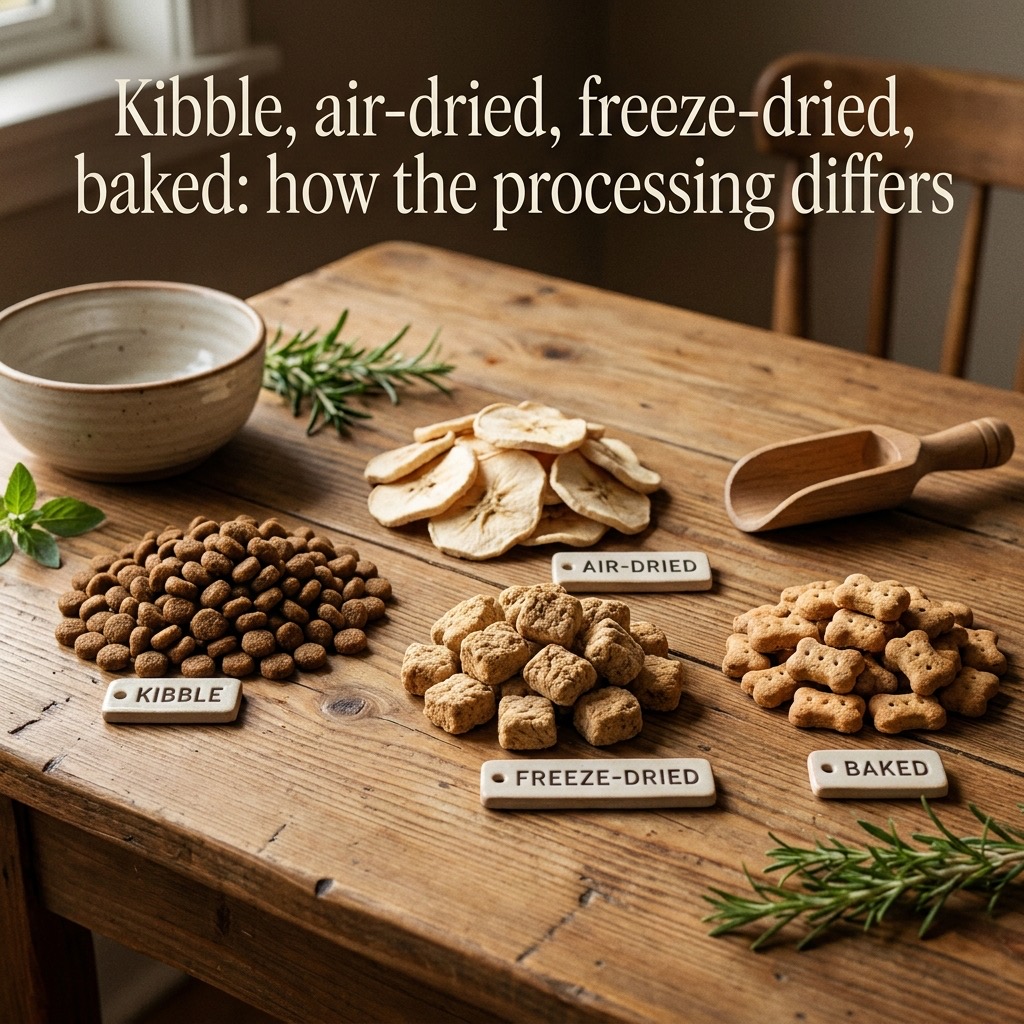
Kibble, air-dried, freeze-dried, baked: how processing actually changes your dog's food
Two kibbles from different brands can look almost identical in the bowl. Two raw-cooked diets at different price points can claim similar ingredient lists. The difference that matters is almost always the processing method — and that affects nutrient retention, digestibility, shelf life, cost per calorie, and food safety.
The four mainstream processing methods
Extruded kibble (the 80% market)
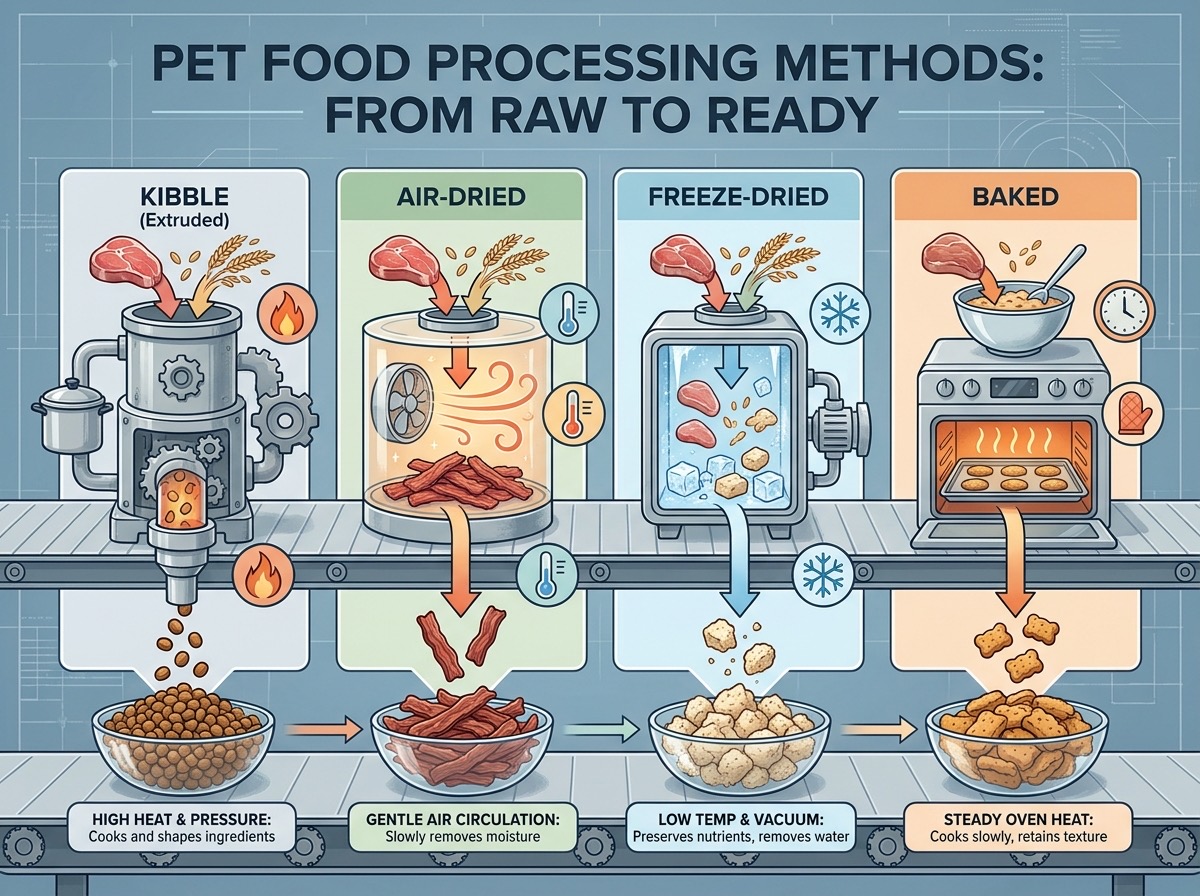
Process: ground ingredients mixed with steam and water, pushed through a die under high temperature (150–200°C) and pressure, cut into kibble shapes, dried, and coated with fat and palatants.
What it does to nutrients:
- Proteins: denatured (which actually improves digestibility for most dogs)
- Fats: well-preserved because of the post-extrusion fat coating
- Vitamins: heat-sensitive vitamins (B vitamins, vitamin A) are reduced; manufacturers over-supply pre-extrusion to compensate
- Starches: gelatinised, highly digestible
Pros: cheapest per calorie, longest shelf life (12–18 months), easy portion control, widely researched
Cons: highest heat treatment reduces some phytonutrients; palatability varies; lower moisture content (10–12%) means dogs need to drink more
Baked kibble
Process: lower-temperature (90–120°C), longer-time baking. Less mechanical shear than extrusion.
What it does to nutrients: gentler than extrusion, slightly better retention of heat-sensitive nutrients. Starch still gelatinises (needed for digestibility).
Pros: gentler processing, no extrusion by-products. Many dogs find it more palatable.
Cons: more expensive per calorie than extruded. Higher fat content sometimes needed for the baking process to work, which can be an issue for weight management.
Air-dried
Process: raw ingredients are mixed, formed, and dried slowly in a controlled warm-air environment (60–80°C) for 10–24 hours. No cooking — just dehydration.
What it does to nutrients:
- Proteins: minimally denatured; preserves amino acid profile
- Enzymes and probiotics (if added): survive because temperatures are below probiotic kill thresholds
- Fats: minimal oxidation if nitrogen-flushed packaging is used
- Vitamins: better retention than kibble for most heat-sensitive vitamins
Pros: minimal processing, high palatability, convenient (no refrigeration needed), shelf-stable 12+ months
Cons: 3–4x the cost per calorie of kibble. Food safety profile is mixed — because the food is not heat-sterilised, sourcing and handling matter more. Avoid air-dried products without HACCP certification.
Freeze-dried
Process: raw or lightly cooked ingredients are frozen, then water is removed by sublimation (vacuum + low heat). The food returns to "raw" appearance and texture when rehydrated.
What it does to nutrients: the gentlest processing of the four methods. Most nutrients, enzymes, and probiotic activity are preserved. Texture and aroma closest to raw food.
Pros: best nutrient retention, longest shelf-stable raw format, excellent palatability, lightweight
Cons: most expensive per calorie. Must be handled like raw meat (clean bowls, separate from human food). Some dogs find the dry texture unappealing until rehydrated.
Side-by-side comparison
| Parameter | Extruded kibble | Baked | Air-dried | Freeze-dried |
|---|---|---|---|---|
| Processing temp | 150–200°C | 90–120°C | 60–80°C | <40°C |
| Moisture | 10–12% | 10–12% | 5–8% | 3–5% |
| Cost per 100 kcal | $0.20–0.50 | $0.40–0.80 | $0.80–1.50 | $1.20–2.50 |
| Shelf life (unopened) | 12–18 months | 12–18 months | 12–18 months | 18–24 months |
| Heat damage | High | Moderate | Low | Minimal |
| Palatability | Variable | Usually high | Very high | Very high |
| Digestibility | High | High | Very high | Very high |
Which is "best"?
There is no single best. Each method has its place:
- Extruded kibble is the right choice for most owners on a budget feeding a healthy dog. Modern extrusion, when the recipe is well-designed, is nutritionally complete and highly digestible.
- Baked is a sensible middle ground if you want slightly better nutrient retention without paying premium prices.
- Air-dried is worth the cost for dogs with sensitive digestion, picky eaters, or when you want a "less processed" diet without the food-safety complexity of raw.
- Freeze-dried is best for toppers, treats, or as a complete diet when budget allows and you handle it like raw food.
What the marketing hides
Two common label tricks:
- "Gently cooked" or "slow-cooked" — usually means air-dried or low-temperature baked. Real, but not magic.
- "Raw-fed benefits, gently cooked" — implies the benefits of raw without the risk. Nutrient retention is similar to air-dried, but feeding trials have not shown air-dried to be clinically superior to high-quality kibble in healthy dogs.
A decision framework
| Priority | Choose |
|---|---|
| Lowest cost, longest shelf life | Extruded kibble |
| Better palatability at moderate cost | Baked |
| Less processing, sensitive stomach | Air-dried |
| Closest to raw without raw risk | Freeze-dried |
| Topper / supplement to kibble | Freeze-dried |
| Working dog, high calories per kg | Extruded (cost) |
What about raw?
Raw feeding is its own category — no heat treatment, so nutrient and enzyme retention is maximal but bacterial load (Salmonella, E. coli, Listeria) is also maximal. The American Veterinary Medical Association, CDC, and FDA all currently advise against raw feeding in households with children under 5, immunocompromised individuals, or elderly people. If you choose raw, work with a vet who handles raw-feeding cases and is comfortable advising on sourcing and handling.
Bottom line
The processing method is one of the most important but least-discussed decisions you make when choosing a dog food. The label says "complete and balanced" for all of them — and that's legally true — but the path to that complete-and-balanced varies. Match the method to your dog's needs and your household's risk tolerance, and don't pay for premium processing if your dog does equally well on a well-formulated extruded kibble.
---
About the author: [Sarah Chen](../Sarah%20Chen.md) is a registered animal nutritionist (DAN) with a Master of Veterinary Medicine from the University of Melbourne. She served as canine nutrition consultant at RSPCA Australia for 12 years.