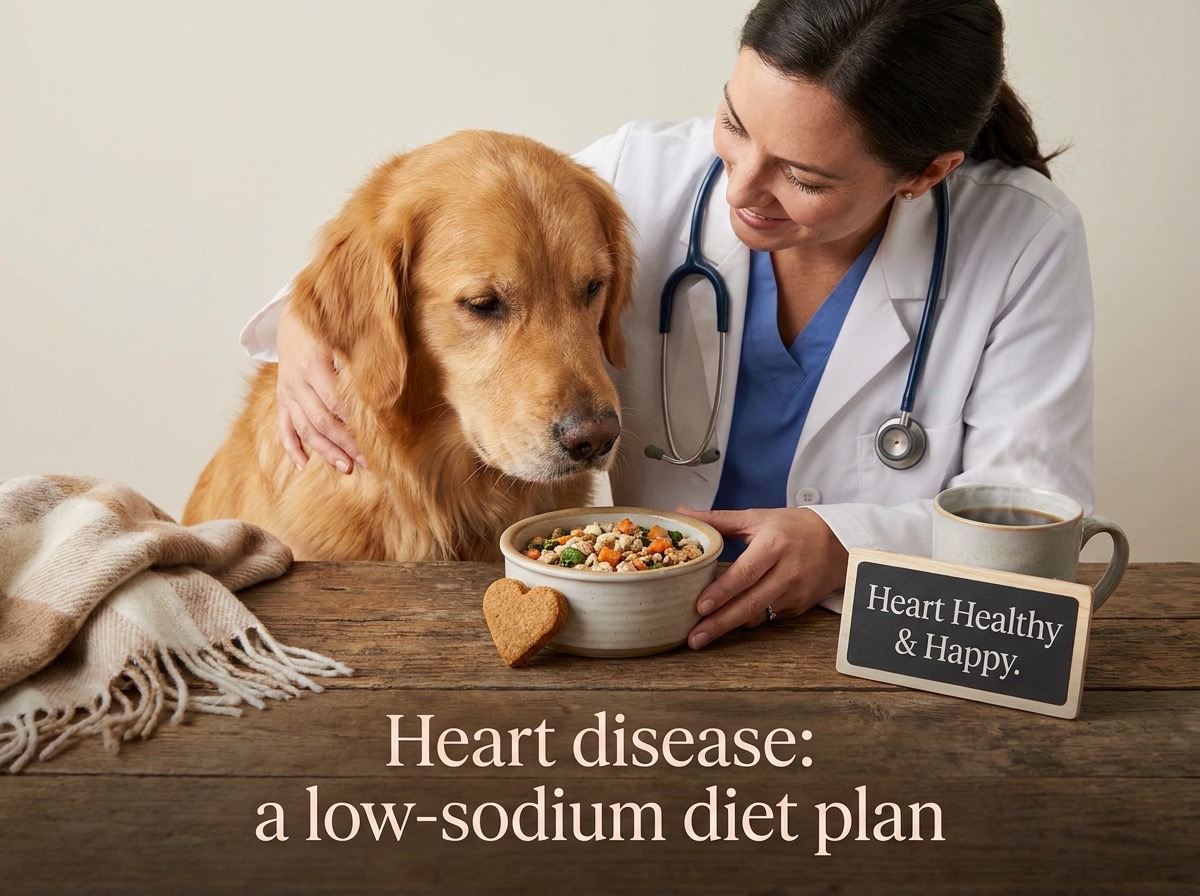


Heart disease in dogs: a low-sodium diet plan that actually helps
When a dog is diagnosed with myxomatous mitral valve disease (MMVD) or dilated cardiomyopathy (DCM), diet becomes part of the treatment, not just supportive care. The right nutritional stack can slow progression, reduce medication doses, and improve quality of life. The wrong one can quietly undo what the medications are doing.
This is what an evidence-based cardiac diet actually looks like.
The four mechanisms a cardiac diet targets
A dog in heart failure has four problems a diet can help with:
- Sodium and fluid retention — the failing heart struggles to clear sodium, leading to fluid buildup (pulmonary oedema, ascites)
- Cardiac muscle wasting — chronic heart failure causes cachexia, especially loss of lean body mass
- Inflammation — chronic low-grade inflammation accelerates cardiac damage
- Taurine / carnitine depletion — particularly relevant in DCM, where some cases are nutritionally driven
Sodium: how low is low?
The numbers to know:
| Disease stage | Daily sodium target (per kg body weight) |
|---|---|
| Early MMVD (B1, asymptomatic) | 50–80 mg/kg |
| Moderate MMVD (B2, no symptoms) | 30–50 mg/kg |
| Active heart failure (C) | <30 mg/kg |
| Refractory heart failure (D) | <20 mg/kg |
A typical commercial adult maintenance diet contains 100–150 mg sodium per 100 kcal — far too high for any dog past early MMVD. A veterinary cardiac diet contains 20–50 mg per 100 kcal.
Practical implications:
- Stop the table scraps. Cheese, deli meats, processed treats are sodium bombs.
- Switch to a cardiac prescription diet. Hills h/d, Royal Canin Early Cardiac, Purina Pro Plan Veterinary CardioCare — these are formulated to the right sodium ranges and have appropriate protein and omega-3 levels.
- Read labels on "grain-free" or "limited ingredient" treats. Many are not low-sodium.
- Use the prescription diet as treats too. Kibbles from the daily ration work great as training rewards.
Protein: enough, not excess
Cachexia (muscle wasting) is the single biggest predictor of poor outcome in canine heart failure. Restricting protein too aggressively accelerates this.
The right approach:
- Adequate protein — 4–5 g/kg body weight daily for adult dogs in heart failure, or ~25% of calories from high-quality protein
- High biological value — animal-source proteins (chicken, fish, egg) over plant proteins
- Easy to digest — the failing circulation has reduced tolerance for heavy meals
Avoid the outdated "low-protein cardiac diet" thinking. Modern cardiology favours adequate protein with controlled sodium.
Omega-3 fatty acids: the strongest supplement evidence
This is the one supplement with consistent RCT evidence in canine heart disease:
- EPA + DHA at 50–75 mg/kg combined daily
- Source: marine fish oil, third-party tested for heavy metals
- Effect: reduced inflammation, improved appetite, modest survival benefit
- Onset: 6–8 weeks to see clinical effect
Fish oil also helps with cachexia — dogs in heart failure given fish oil maintain lean body mass better than those without.
Other supplements with supportive evidence
| Supplement | Evidence | Dose |
|---|---|---|
| Taurine | Strong for some DCM cases | 500–1,000 mg per 10 kg, twice daily |
| L-carnitine | Moderate for certain DCM | 50–100 mg/kg daily |
| Coenzyme Q10 | Weak-moderate | 30–90 mg daily, divided |
| Vitamin B complex | Supportive, especially with diuretics | Standard multivitamin |
Taurine and carnitine are especially relevant if your dog is on a grain-free or boutique diet — there is a recognised association between certain grain-free diets and taurine-deficiency DCM, particularly in golden retrievers and some other breeds. If your dog is on a grain-free diet, ask your vet to check taurine levels before assuming DCM is primary.
What to feed, in order of preference
- Prescription cardiac diet (e.g., Hill's h/d, Royal Canin Early Cardiac, Purina CV) — designed for the job
- Senior diet with controlled sodium — second-best if prescription food is refused
- Home-cooked cardiac diet formulated by a veterinary nutritionist — possible, but requires careful balance
- Adult maintenance diet with sodium supplements controlled — least preferred, requires significant label work
Sample daily plan for a 10 kg dog in moderate heart failure (B2/C)
- Morning: 60 g prescription cardiac kibble + 1 tsp warm water (to soften)
- Midday: 5 g freeze-dried chicken treat (low-sodium brand only)
- Evening: 60 g prescription cardiac kibble + 200 g cooked lean chicken breast, no salt
- Supplements: Fish oil capsule (1,000 mg total, providing ~600 mg EPA+DHA), divided morning and evening
- Treats during training: 5–10 kibbles from the daily ration
- Water: free access, but monitor intake (an increase can signal decompensation)
Common mistakes
- Adding salt for "palatability" — never. A dog that refuses cardiac food for 2 days is not in danger; a dog eating salty food for 2 years is.
- Using baby food as a topper — most commercial baby food has significant added salt. Read labels.
- Rotating between cardiac and regular food — defeats the purpose. Pick one and stick.
- Stopping omega-3 because you don't see immediate effect — the benefits accumulate over 6–8 weeks.
When to call the vet
Call your vet or emergency service if:
- Appetite drops for >24 hours
- Resting respiratory rate exceeds 40 breaths per minute (count while sleeping)
- Cough frequency increases
- Belly appears distended (ascites)
- Collapse episode, even brief
Resting respiratory rate is the single most useful home-monitoring tool. Count breaths for 60 seconds while your dog is sleeping. A normal rate is 15–30/min. A rate consistently >35/min signals decompensation.
Bottom line
A cardiac diet is one of the few things you can control directly in heart disease management. The combination of sodium restriction, adequate high-quality protein, marine omega-3 at the right dose, and (when indicated) taurine and carnitine supplementation is the evidence-backed stack. Prescription diets make this easy; home-cooked is possible but requires expert formulation. Either way, the diet is part of the treatment, not separate from it.
---
About the author: [Sarah Chen](../Sarah%20Chen.md) is a registered animal nutritionist (DAN) with a Master of Veterinary Medicine from the University of Melbourne. She served as canine nutrition consultant at RSPCA Australia for 12 years.