
Puppy socialization: how to use the critical 16-week window
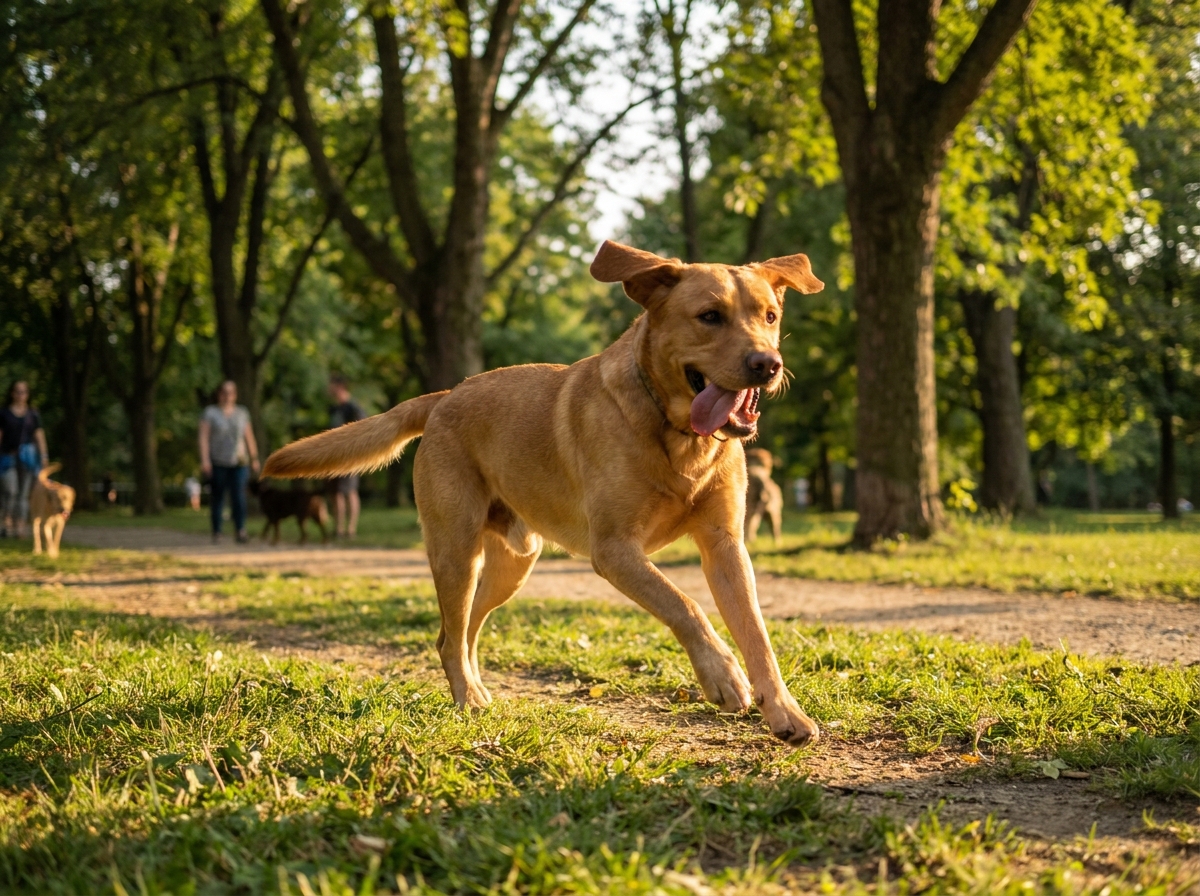
The most common sentence I hear from the owner of an 18-month-old reactive dog is: "But I socialized him. I took him to the dog park every weekend from 10 weeks." That puppy was not socialized. He was flooded. He is now the patient.
The socialization window in domestic dogs runs from roughly 3 weeks to 12–16 weeks of age. Within that window, the puppy's amygdala is still maturing and the brain is laying down the templates it will use for the rest of the dog's life to decide what is safe, what is novel, and what is a threat. This is a neurodevelopmental fact, established in Scott and Fuller's 1965 work and confirmed since by Michael Fox, Ian Dunbar, and Jessica Hekman's recent work on the genetics of canine fear. What the puppy files away in this window is what the adult dog reaches for when the world gets loud.
Most owners misunderstand the work in two ways. They think socialization is a quantity problem. And they think the puppy's wagging tail means the puppy is coping. Neither is reliably true. The actual work is a quality problem, and the puppy's tail is one of the least useful data points you have.
The window is shorter than you think
A puppy typically goes home at 8 to 10 weeks. That gives the owner a real work window of two to eight weeks before the clock runs out. By 12 weeks, the window is well into its closing phase. By 16 weeks, novel stimuli are processed through a fear framework, and the work becomes behavior modification: slower, harder, and never quite as reliable as it would have been at week 10.
This is why timing matters more than volume. A puppy that meets 100 dogs between weeks 8 and 12 in chaotic settings is in worse shape at 18 months than a puppy that meets 20 dogs in well-managed, sub-threshold sessions in the same window. The first puppy has built a file labeled "other dogs = overwhelming." The second has built a file labeled "other dogs = predictable and rewarding." Only one of those files will help them in a vet waiting room at age six. The work is not "expose the puppy to the world." It is "expose the puppy to the world in doses the puppy can absorb without going over threshold." The difference is everything.
The body language that tells you the puppy is past threshold
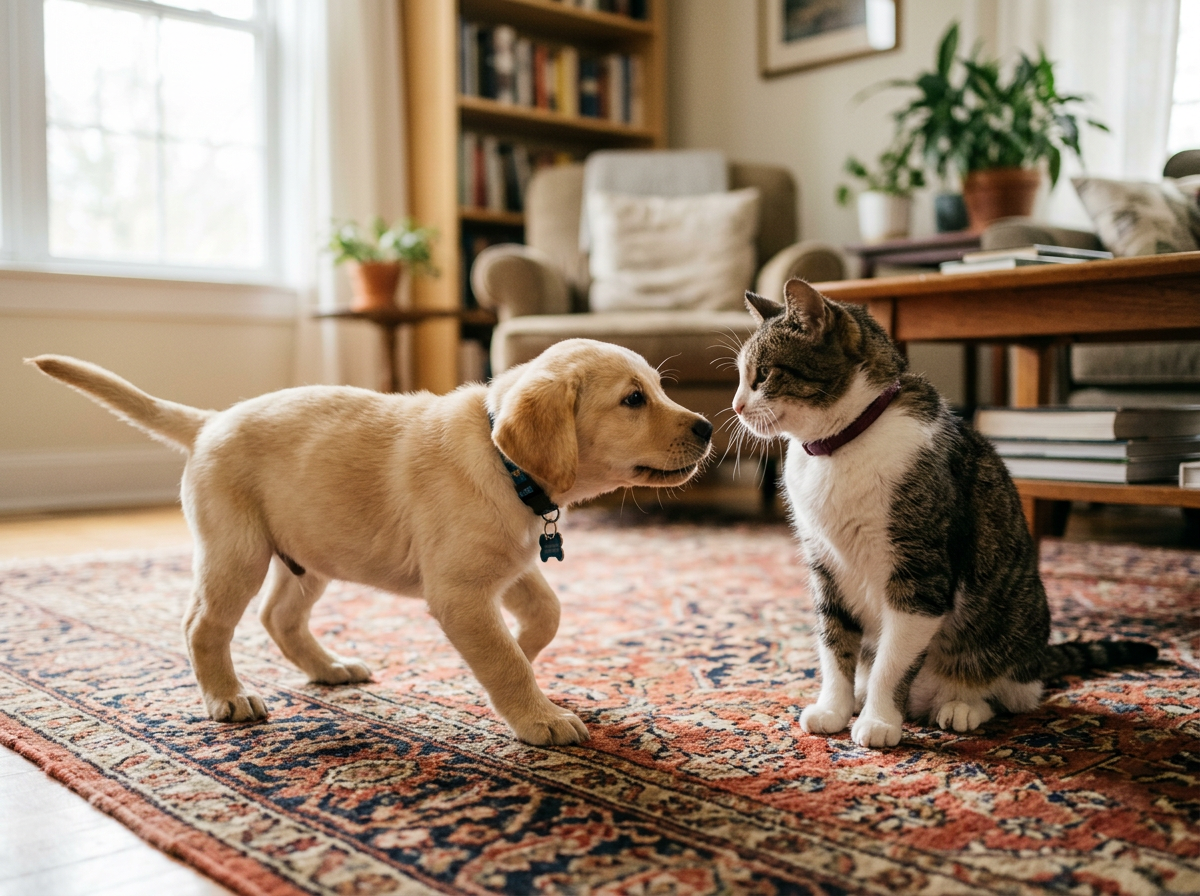
You cannot run a sub-threshold protocol if you cannot read a puppy. Tail wagging is the least reliable signal in the canine body, and I have watched dozens of puppies wag their tails while urinating on themselves at a busy sidewalk cafe. The data you want is in the face, the body, and the choices the puppy is making.
The signs a puppy is at or past threshold:
- Lip licking, yawning, or nose licking in the absence of food. Displacement behaviors. The puppy is not being friendly. They are self-soothing.
- Body lowering, tail tuck, or weight shifted onto the back legs. The puppy is making themselves small. It reads as "submissive" to other dogs. It is not. It is fear.
- Whale eye — the half-moon of white sclera visible as the puppy turns the head away from a stimulus while keeping the eyes locked on it. A high-alert sign.
- Pinned or rotated ears, even in a floppy-eared breed. The base of the ear pulls back and outward in a stressed puppy.
- Displacement sniffing — sudden intense investigation of the ground when a person or dog approaches. The puppy is defusing the encounter.
- Panting in a cool environment with a soft, loose body. Sympathetic arousal.
Dr. Sophia Yin's body language chart (the 2011 poster is still the best single training tool for new puppy owners) puts these signals on a single page. The rule: if you see two of these signals at the same time, the puppy is past threshold and the handler's only job is to add distance from the stimulus until the signals stop.
The puppy's behavioral choice is the most reliable signal of all. A coping puppy approaches and retreats voluntarily, looks back at the owner for reassurance, and returns to being a puppy. A puppy past threshold freezes, bolts, hides behind the owner, or shuts down. A shut-down puppy — lying quietly in the stroller, eyes wide — is not "calm." They have gone into learned helplessness.
The four exposure categories you need to cover
Socialization is not a single thing. It is exposure to four distinct categories of stimulus, and missing any one produces a specific, predictable problem in the adult dog.
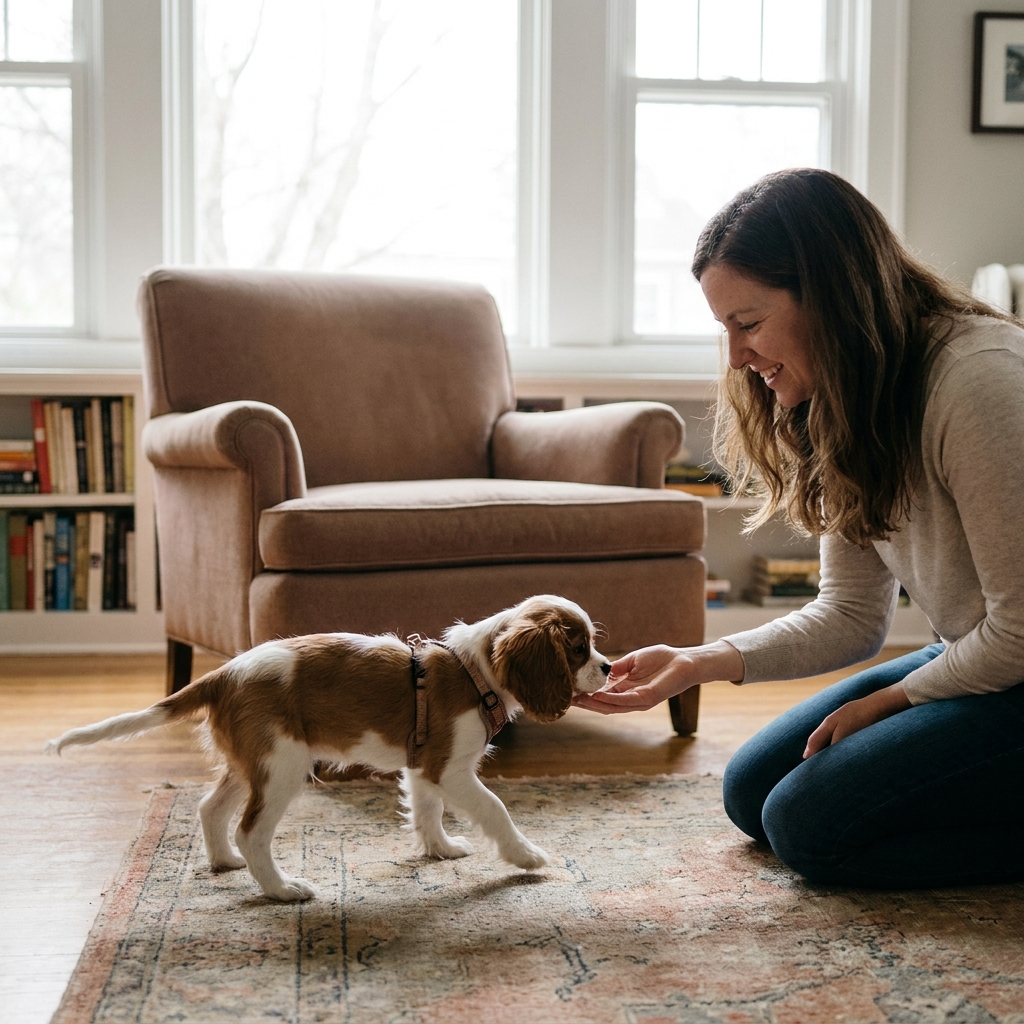
1. Other dogs. Calm, neutral encounters. Parallel walks with a known-stable adult dog beat dog-park chaos at any age. I have owners use a 6-foot biothane lead and a Blue-9 Pet Products KLIMB platform (useful for teaching the puppy to settle on a stable surface when other dogs walk past) and work at a distance where the puppy notices the other dog but does not escalate.
2. People of all shapes. Hats, beards, umbrellas, strollers, canes, wheelchairs, tall men, small children, uniforms, motorcycle helmets. Most owners cover "kids" and "men" and never think about "person in a reflective vest with a leaf blower." The adult dog who lunges at the UPS driver did not meet enough delivery workers as a puppy.
3. Surfaces and environments. Grass, concrete, wet pavement, metal grates, vet linoleum, the wobble of a low tree branch. The puppy who never walked on a metal grate at 10 weeks will sometimes refuse to cross one as a three-year-old. For home base, a Karinear foldable exercise pen on a washable pet mat gives the puppy a stable "yes" surface to retreat to.
4. Sounds, sights, and handling. Thunder recordings on Spotify, fireworks audio, vacuum cleaners, hair dryers, the doorbell. Handling work — paws touched, ears lifted, teeth looked at, belly exposed — is done on a Blue-9 KLIMB platform, with treats delivered from a Wellness CORE Pure Rewards pouch for each rep.
The right equipment lowers the handler's stress, and the handler's stress is a direct input into the puppy's threshold. A handler fumbling with a slip lead at the dog park will push the puppy past threshold within thirty seconds.
The week-by-week checklist
Most owners ask me for a list. Here is the list. It is not a curriculum to complete at all costs. On any day the puppy is sick, tired, or showing two or more of the body language signals above, skip the day. There is no recovery from forcing it.
- Week 8 (or the week the puppy comes home). Set up the home base: exercise pen, mat, water, Kong Classic stuffed with kibble and frozen wet food. One short handling session per day on the platform. Play a thunder recording at 10% volume for ten minutes during a meal.
- Week 9. Two parallel-walk sessions with a known-stable adult dog, ten minutes each, at whatever distance the puppy can cope. One novel-person encounter per day.
- Week 10. Add a new surface each day (metal grate, wobble board, wet towel on tile, vet linoleum if your vet will let you walk in for a treat-only visit). Add the vacuum cleaner at 30% volume during a meal.
- Week 11. Enroll in a puppy class run by a CBCC-KA, CPDT-KA, or Karen Pryor Academy Certified Training Partner. Group classes at this age give controlled exposure plus a trainer who can read the room. Avoid classes that use prong collars, e-collars, or "dominance" framing.
- Week 12. First car ride to a fun destination. Practice the novel-person list on a moving target: different sizes, gaits, a person on crutches, a person pushing a stroller.
- Week 13. First short trip to a busy environment: a hardware store parking lot, a quiet outdoor cafe patio, a school yard at pickup. Keep sessions under fifteen minutes.
- Week 14. Begin systematic sound desensitization: fireworks at 20%, thunder at 30%, hair dryer at 40%, paired with meals. Add a second vet visit (treats only).
- Week 15. A half-day "play and rest" session at a friend's home with a stable, vaccinated adult dog.
- Week 16. The window is essentially closed. Take stock: which categories still have gaps? Build a maintenance plan. Do not push.
By the end of week 16, the well-managed puppy has had 60 to 80 positive exposures across the four categories. Not 300. Not 1,000. Sixty to eighty positive exposures.

The single most common mistake
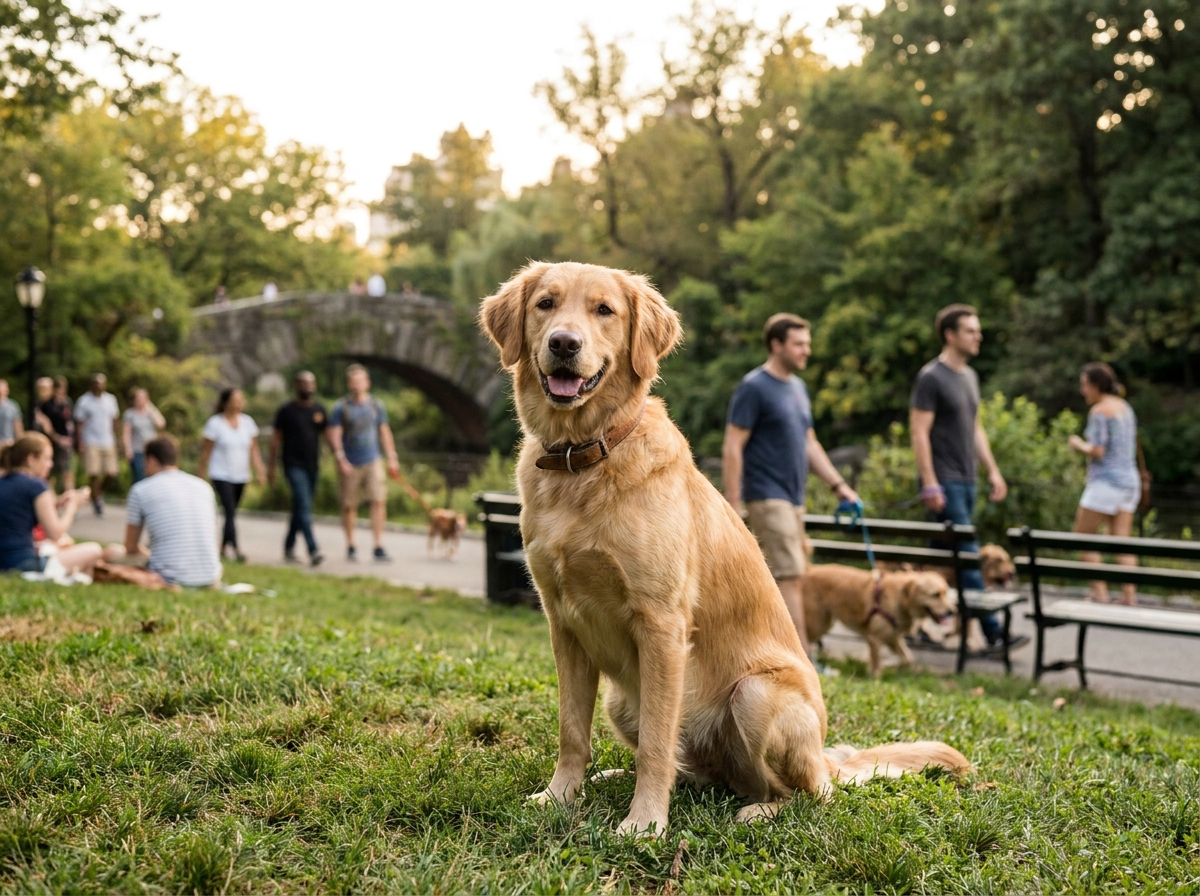
Confusing "met a lot of dogs" with socialized. The dog park on a Saturday at 11 a.m. is the single worst socialization environment for a puppy under 16 weeks. There are too many dogs, the dogs are rude, the air is full of stress signals, and the puppy has no off-ramp. The puppy who "loved the dog park" at 12 weeks is the same puppy who lunges at other dogs on leash at 18 months, because the file they built was "other dogs = chaotic," not "other dogs = pleasant and safe." The same logic applies to unstructured puppy playgroups, dog-friendly restaurants, and friends bringing their under-socialized adult dog over for a "play date." The puppy's nervous system does not have a "more is better" lever. It has a "predictable and rewarded" lever.
When to bring in a professional
The protocol above works for about 80% of puppies when run consistently. Escalate when the puppy shows threshold signals at low-intensity exposures (a quiet sidewalk is already too much — often genetic; bring in a CBCC-KA or CDBC and ask your vet about a referral to a DACVB); when the puppy shuts down in novel environments (lying still, eyes wide — learned helplessness, not calm); when the puppy growls, snaps, or bites at novel stimuli under 16 weeks; or when the owner is overwhelmed. A certified consultant can run the protocol with you.
The closing thought
The 16-week window is a window, not a guarantee. The puppy that comes out the other side confident and stable is the one whose owner treated the work as a quality problem. The dogs I see at 18 months for reactivity almost always had owners who cared. They just did the wrong version. The right version is short, structured, and boring. Do it. Your eight-year-old dog will thank you.
---
About the author: [Marcus Whitfield](../Marcus%20Whitfield.md) is a Certified Canine Behavior Consultant (CBCC-KA) with over 20 years of practice and 3,000+ family consultations. Author of The Canine Mind: Understanding and Shaping Your Dog's Behavior and a long-time columnist for Whole Dog Journal and AKC Family Dog.