
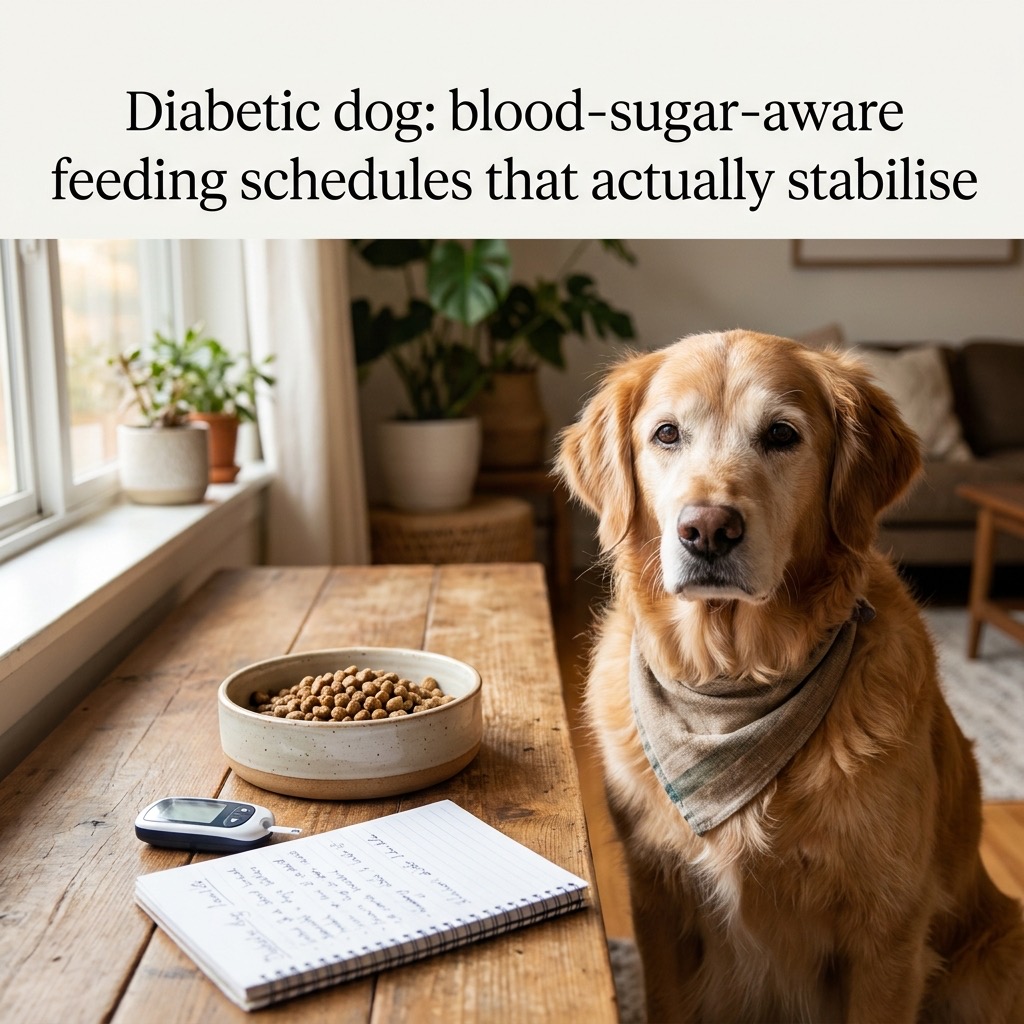
Diabetic dog: blood-sugar-aware feeding schedules that actually stabilise
Diet is not the entire treatment for canine diabetes — insulin is. But diet is what determines how stable the dog is day to day, how much insulin you end up needing, and whether you spend the next decade fighting hypoglycaemic crashes or cruising. I have seen diabetic dogs on identical insulin doses diverge by 30% in glucose variability based purely on what and when they eat. That is not a small effect. It is the difference between a manageable condition and a constant emergency.
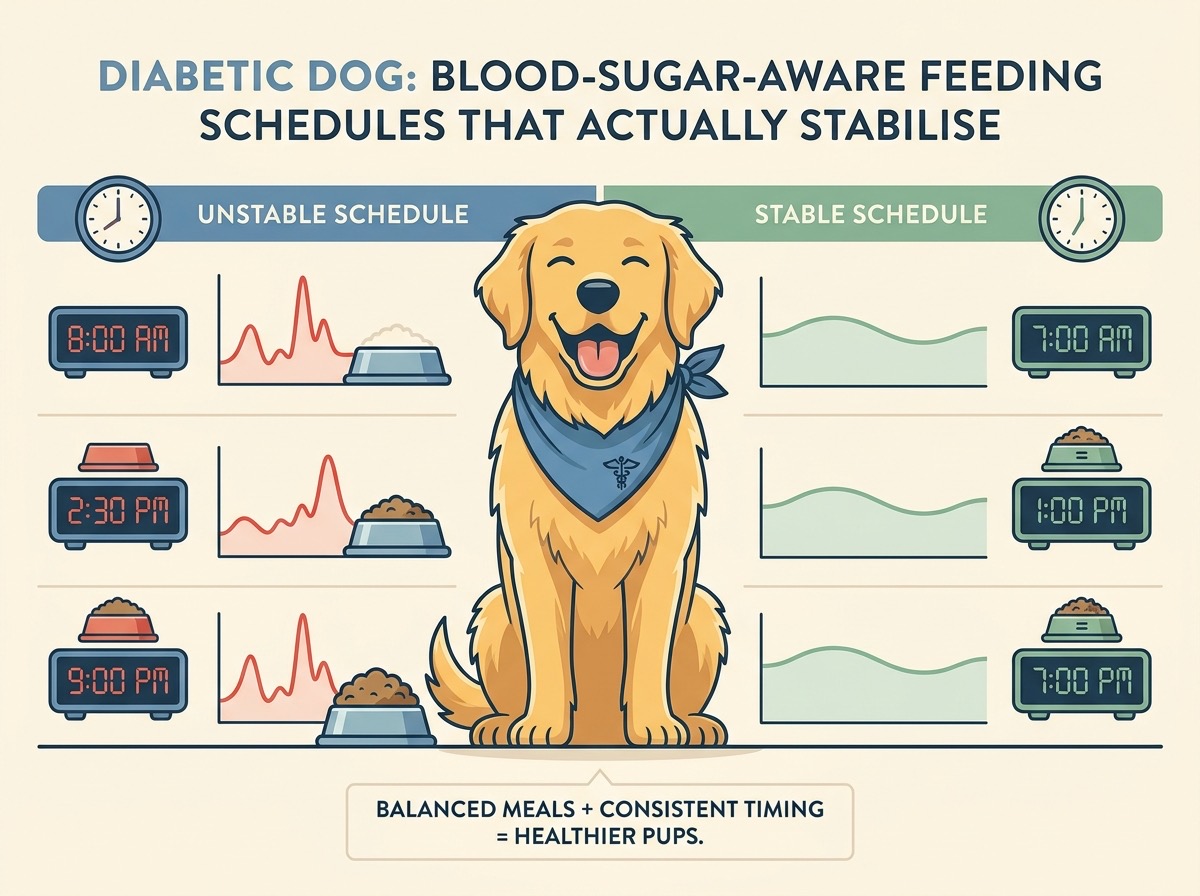
The single biggest mistake: free-choice feeding
I will say this bluntly. Free-choice feeding a diabetic dog is the single most common feeding mistake owners make, and it is almost always unintentional. They have always left the bowl down, the diagnosis changes nothing about the routine, and six weeks later they are wondering why the glucose curve looks like the Alps.
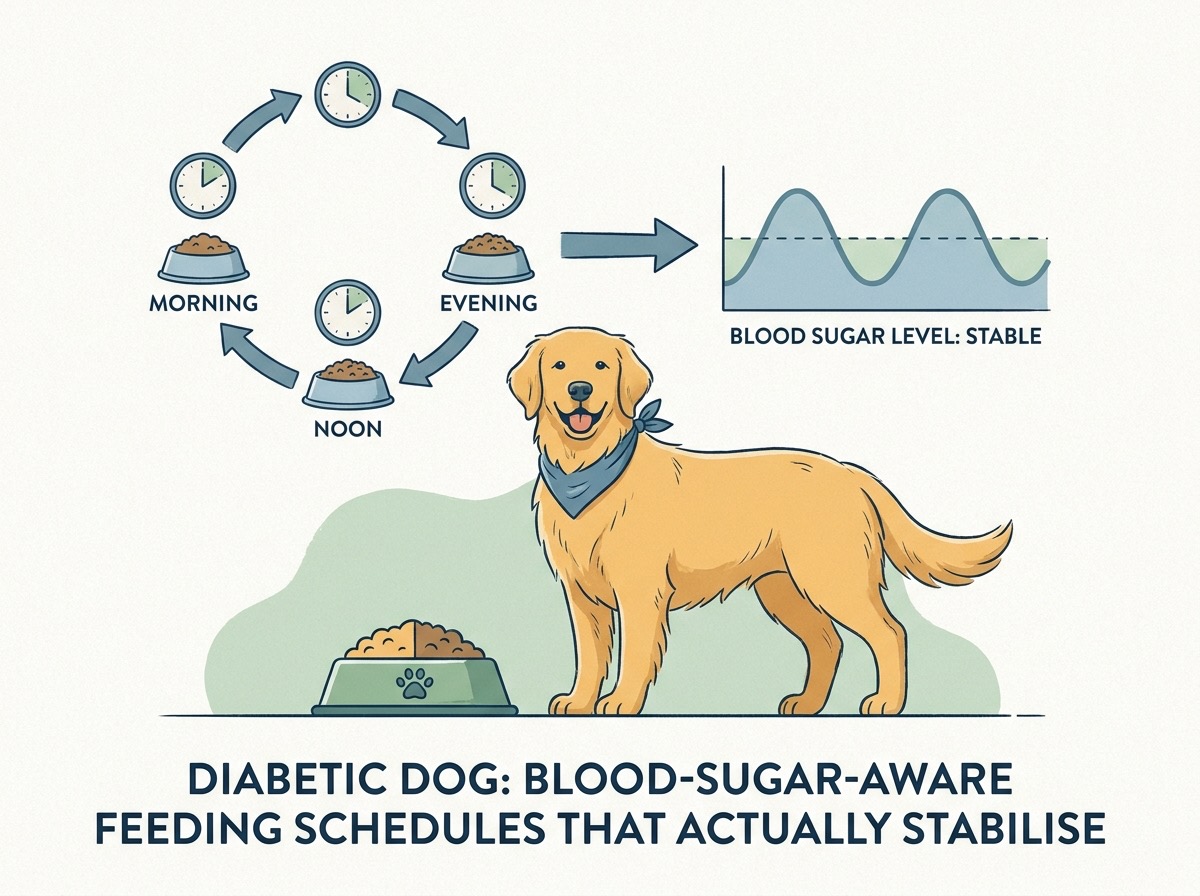
Insulin needs a predictable glucose load to act on. Variable food = variable glucose = variable insulin demand = unpredictable glucose response. The fix is to feed meals at fixed times relative to insulin injections.
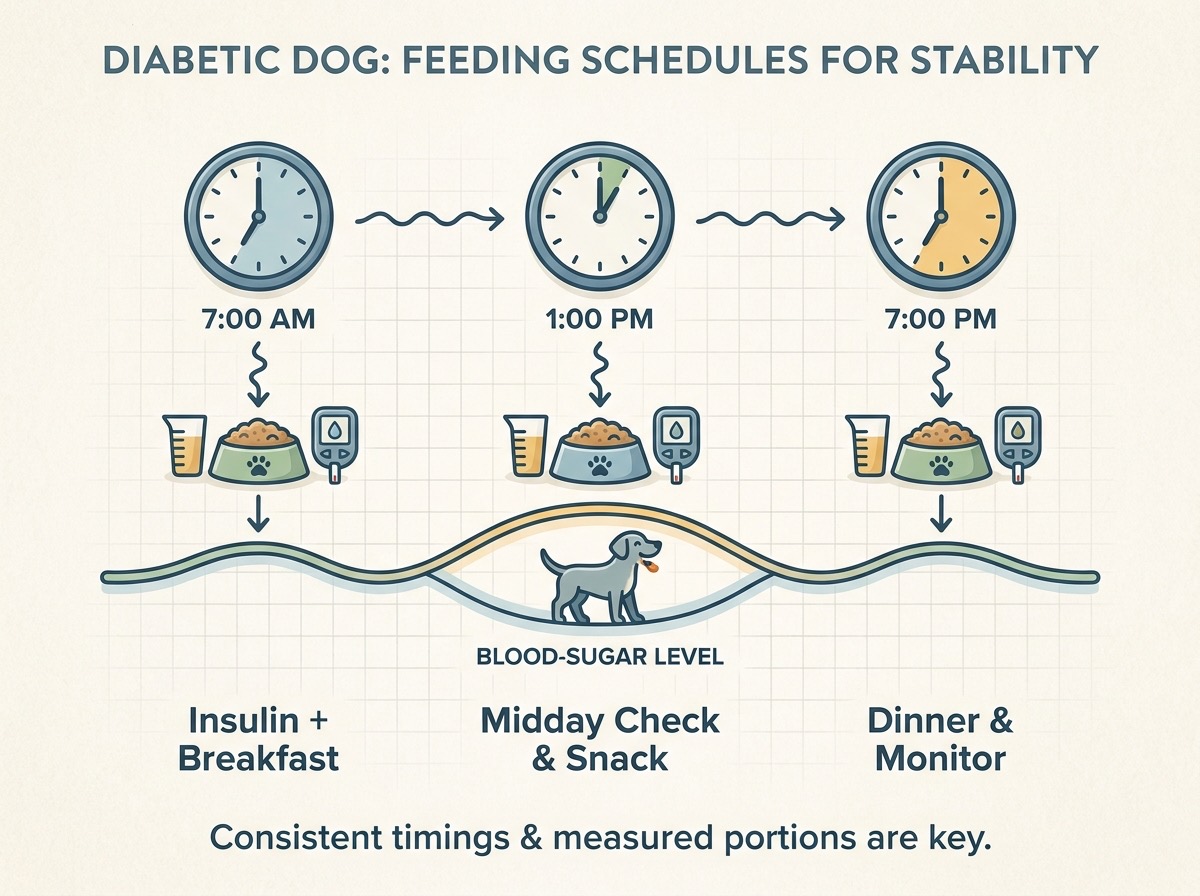
The standard protocol:
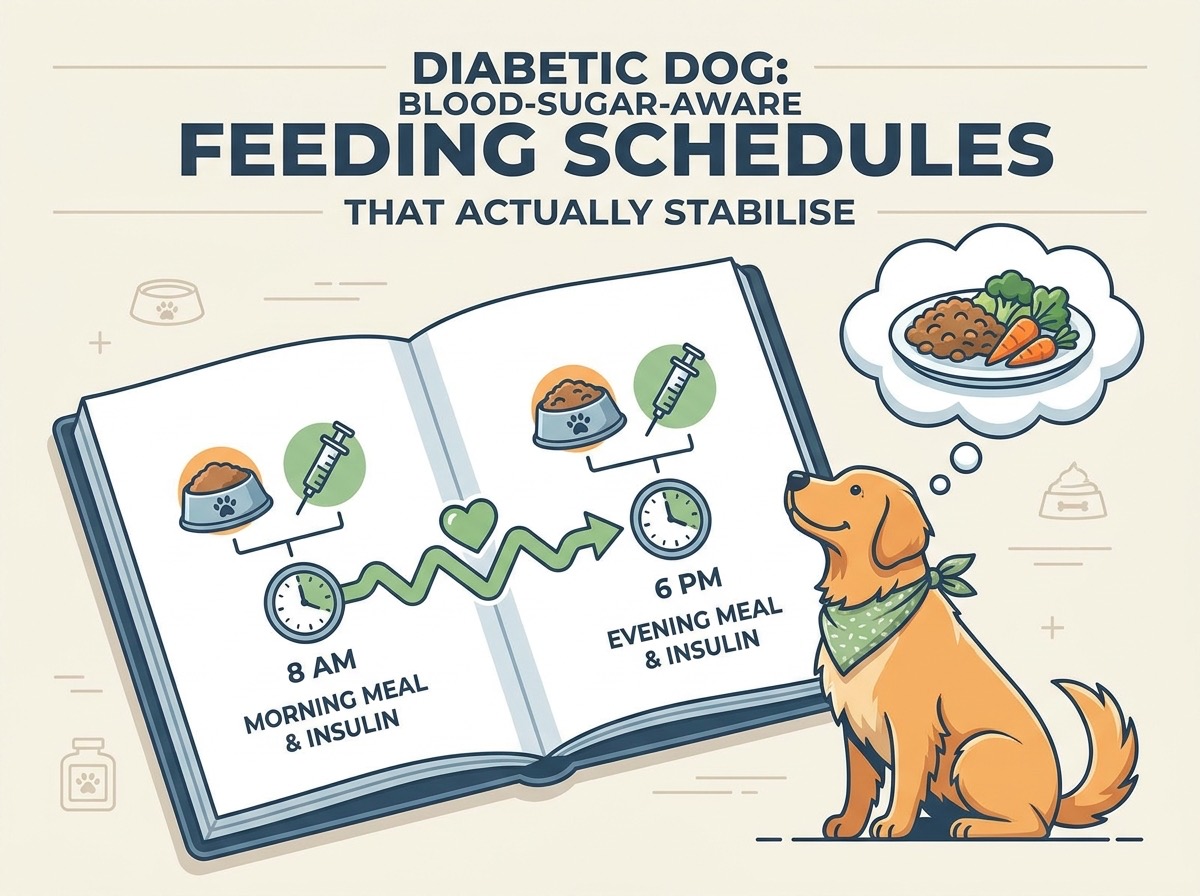
- Twice-daily insulin (most dogs are on NPH or glargine) → feed two meals, one at the time of each injection
- Once-daily insulin (glargine in some dogs) → one meal at injection time, second smaller meal 8 hours later
- Twice-daily insulin with a "snack" meal → a small midday snack to catch the insulin peak, especially in dogs prone to mid-day hypoglycaemia
The size of each meal should be roughly equal. A 60/40 split is fine, but 90/10 (one big meal, one tiny meal) is harder to manage.
What the food should be made of
For canine diabetes, the target macronutrient profile is:
| Component | Target | Why |
|---|---|---|
| Protein | 25–30% of calories | Adequate for muscle maintenance, low gluconeogenic impact |
| Fat | 25–35% of calories | Slows gastric emptying, blunts glucose spike |
| Carbohydrate | 25–35% of calories, complex only | Slow-release energy, avoids post-prandial spike |
| Fibre | 8–12% dry matter, soluble + insoluble mix | Slows glucose absorption, helps satiety |
The two things to avoid:
- Simple sugars and high-glycaemic carbs — white rice, potatoes, sweet potato in large amounts, sugary fruits, honey, corn syrup. These spike glucose faster than insulin can respond.
- Highly variable diets — rotating between several different foods day to day. Pick a food and stick with it. Switching foods requires re-doing the glucose curve.
The easiest path: a high-fibre, moderate-fat, complex-carb veterinary diabetic diet (Hill's w/d, Royal Canin Diabetic, Purina Pro Plan DM). These are formulated to the right profile and tested in diabetic dogs.
If you want to home-cook, you can. But you need a veterinary nutritionist to balance the recipe, and you must commit to that exact recipe for the long term.
The fibre question
Fibre is the most under-appreciated tool in the diabetic dog toolkit. The mechanism is simple: soluble fibre forms a gel in the gut that slows glucose absorption. The result is a flatter post-prandial glucose curve and less insulin demand.
Practical fibre sources:
- Pumpkin (plain canned, not pie filling) — 1–4 tablespoons per meal depending on dog size
- Psyllium husk — 1–2 tsp per meal
- Green beans (steamed, plain) — useful for filling volume without calories
- Chicory root / inulin — prebiotic fibre, also helps the microbiome
A dog that goes from a standard maintenance diet to a high-fibre diabetic diet typically needs 15–25% less insulin to achieve the same glucose control. Talk to your vet about a dose reduction plan when switching diets, because if you don't reduce insulin when adding fibre, hypoglycaemia becomes a real risk.
Treats: the rule that keeps everything stable
Treats are where most diabetic dog feeding plans fall apart. The 10% calorie rule I usually recommend still applies, but with a tighter constraint: treats should be low-glycaemic, single-ingredient, and given at predictable times.
Good options:
- Frozen green beans
- Small piece of cooked chicken breast (no skin, no seasoning)
- Tiny piece of carrot
- Hills w/d or Royal Canin Diabetic treats (specifically designed for this)
Avoid:
- Commercial biscuits (variable carb content, often sugary)
- "Dental" treats (most are high-carb)
- Anything containing molasses, honey, or sugar as a primary ingredient
- Peanut butter (sugar content is high)
If you use treats for training, count them in the daily calorie budget and feed them at consistent times. A 5-calorie training treat given 50 times a day across a diabetic dog adds up to a measurable glucose effect.
Exercise, food, and the timing triangle
Insulin, food, and exercise form a triangle in the diabetic dog. The glucose-lowering effect of each adds up. Mismanaging any one of them creates instability.
The exercise rule:
- Consistent — same daily amount, same intensity
- Post-meal — walks AFTER meals, not before, because exercise on an empty stomach plus insulin is hypoglycaemia waiting to happen
- Moderate — high-intensity or extended exercise drops glucose sharply in a diabetic dog
A diabetic dog that suddenly goes for a 5-mile hike after a normal insulin dose and normal meal is at real risk of hypoglycaemic collapse. Keep exercise predictable.
Hypoglycaemia: what to do when the curve breaks
Hypoglycaemia (blood glucose < 3.5 mmol/L or 60 mg/dL) is the most dangerous acute complication of canine diabetes. Signs:
- Lethargy, weakness, wobbliness
- Confusion, staring into space
- Trembling, shaking
- Seizures, loss of consciousness
If you catch it early:
- Offer food. If the dog eats, problem likely solved.
- If the dog will not eat, rub honey or corn syrup on the gums. Glucose absorbs through the oral mucosa.
- Re-check in 10–15 minutes.
- If no improvement or worsening, go to the emergency vet.
Always have a source of fast sugar at home. Honey, corn syrup, glucose gel — pick one and keep it accessible.
Building a stable routine: a sample day
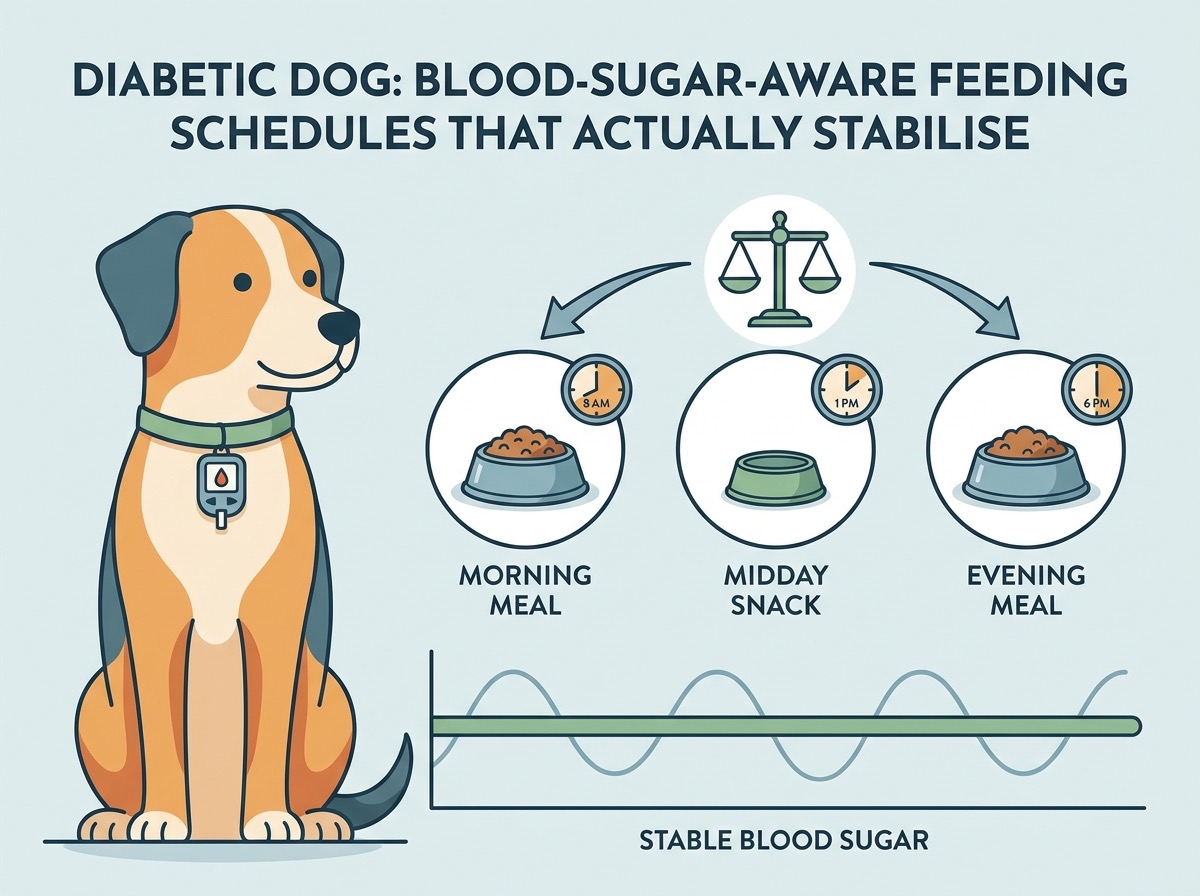
For a 12 kg diabetic dog on twice-daily glargine (basal insulin) and twice-daily meals:
| Time | Action |
|---|---|
| 07:00 | Glucose check (if your vet has you home-testing), then ½ cup diabetic kibble + 1 tbsp pumpkin, then glargine injection |
| 12:00 | 5–6 green bean treats during a short walk |
| 13:00 | Glucose mid-day check (optional but useful) |
| 18:00 | ½ cup diabetic kibble + 1 tbsp pumpkin + tiny portion of training treats |
| 19:00 | Short evening walk (15–20 min, consistent pace) |
| 21:00 | Glucose check before bed |
| 22:00 | Last opportunity snack if glucose is trending low |
Same times every day. Same food. Same portions. Same exercise.
When to call the vet
- Glucose persistently > 20 mmol/L or < 4 mmol/L on home readings
- Polyuria, polydipsia, or weight loss returning (suggests insulin resistance or wrong dose)
- Cataract formation (common in diabetic dogs, may need ophthalmology referral)
- Repeated hypoglycaemic episodes (urgent review of insulin dose and feeding schedule)
- Any sudden change in appetite, energy, or behaviour
The bottom line
Insulin keeps a diabetic dog alive. Diet keeps a diabetic dog stable. A consistent feeding schedule, the right macronutrient profile, adequate fibre, and predictable exercise are what turn insulin therapy from a daily battle into a routine. Most owners I work with see meaningful glucose stabilisation within 4–6 weeks of getting the feeding-and-exercise triangle dialed in, and many end up with a lower insulin dose than they started with.
---
About the author: [Sarah Chen](../Sarah%20Chen.md) is a registered animal nutritionist (DAN) with a Master of Veterinary Medicine from the University of Melbourne, and served as canine nutrition consultant at RSPCA Australia for 12 years.