
Thunderstorm and fireworks phobia: a desensitization plan for the noise-reactive dog
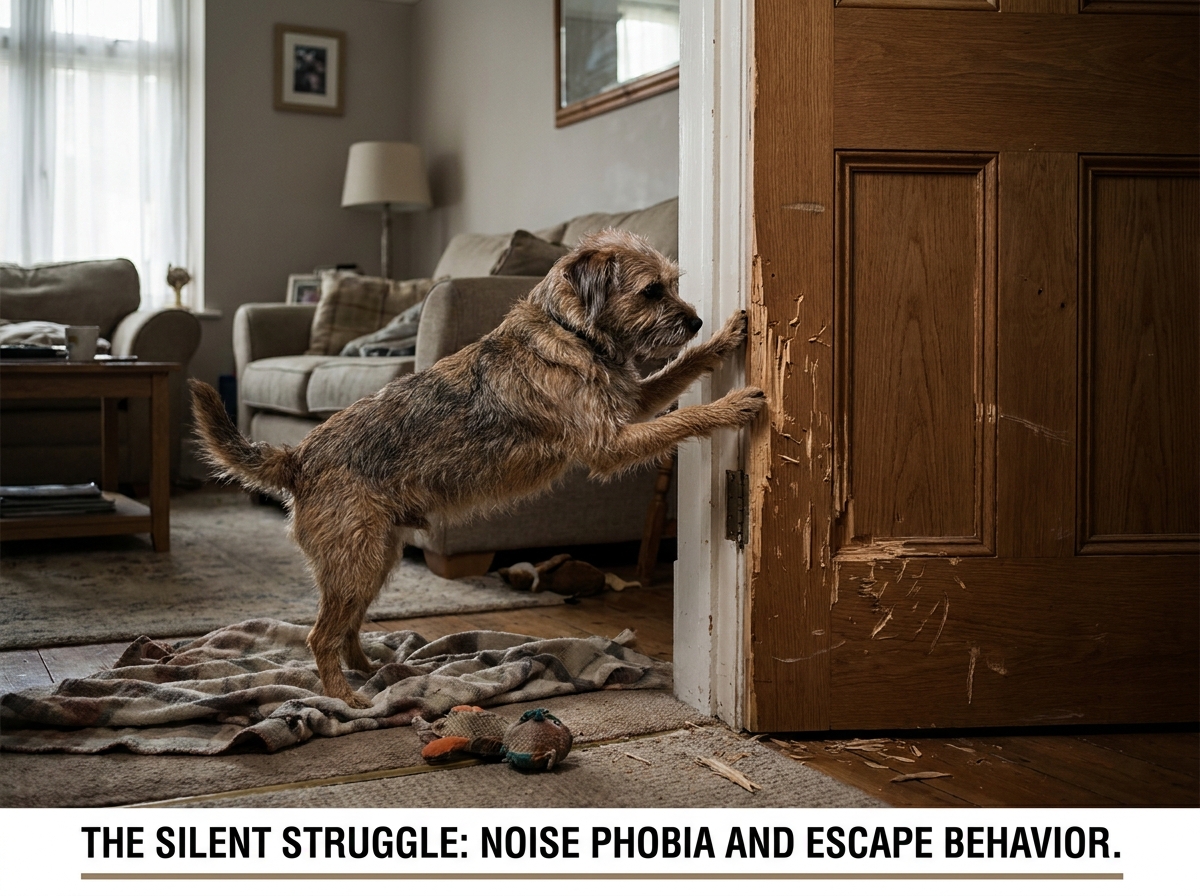
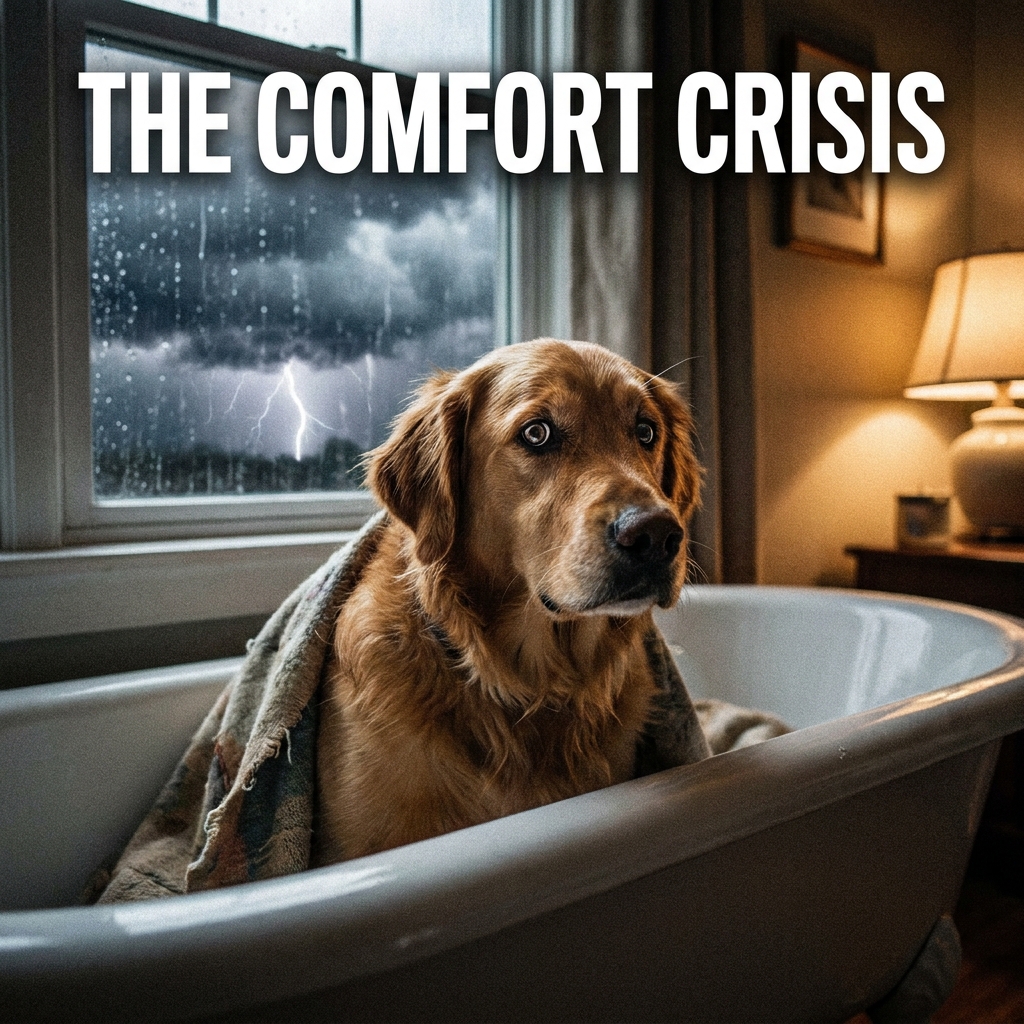
The dog that destroys the door during a thunderstorm, the dog that hides in the bathtub for the entire July 4th fireworks, the dog that shakes so hard the owner can feel the dog trembling through the leash — these dogs are not being dramatic, and the owner who thinks the dog will "get over it" is the owner who is missing a serious welfare problem. Noise phobia is one of the most common and most under-treated behavior conditions in dogs. The prevalence is 30-50% in the general dog population, and the severity ranges from mild trembling to self-injury, escape attempts, and house destruction. The dog with severe noise phobia is the dog that breaks teeth trying to escape a crate, breaks through a window screen, or ruptures a toenail on a door. The dog is not being dramatic; the dog is in a full panic state with a stress hormone profile that resembles a medical emergency. In this article I will walk through what noise phobia actually is, the desensitization and counterconditioning plan that produces a long-term change, the management tools that support the dog during the protocol, and the medication backup that the dog with severe phobia needs.
What noise phobia is
Noise phobia is a learned emotional response in which the dog experiences a severe fear response to a specific class of sound — thunder, fireworks, gunshots, construction noise, or other sudden loud sounds. The response is not "the dog is being dramatic." The response is a full activation of the sympathetic nervous system: the adrenal glands release adrenaline, the heart rate increases, the respiration rate increases, the blood is shunted to the muscles, the pupils dilate, the dog is in fight-or-flight mode. The dog that is in this state is not making choices; the dog is responding to a survival threat that the dog's brain has categorized as life-threatening.
The sound class matters. The dog that is phobic of thunder but not fireworks has a more specific phobia. The dog that is phobic of all sudden loud sounds has a more general phobia. The dog that is phobic of thunder and lightning separately is a dog that has learned to associate the atmospheric changes (barometric pressure drop, ozone smell, static charge) with the storm, and the dog that is phobic of fireworks is a dog that has learned to associate the visual and auditory cues (the flash, the boom, the smell) with the explosion. Each sound class has a different protocol, because each sound class has different cues that need to be desensitized.
The severity also matters. The mild case: the dog trembles, paces, and seeks reassurance, but the dog is not destructive and the dog recovers within an hour of the storm ending. The moderate case: the dog hides, refuses to eat, and the dog is not destructive but the dog's stress is significant and visible. The severe case: the dog is destructive, the dog is self-injurious, the dog is escape-prone, and the dog's stress persists for hours after the storm ends. The mild case can often be managed with behavior modification alone. The moderate case needs behavior modification plus management. The severe case needs behavior modification, management, and medication.
The desensitization and counterconditioning plan
The plan is the same DSCC (desensitization and counterconditioning) framework used for any fear-based behavior, applied to the specific sound class. The principle: gradually expose the dog to the feared sound at an intensity the dog can handle, and pair the exposure with a high-value reward. The dog's emotional response to the sound shifts from "panic" to "anticipation of reward."
The plan has four phases, in order:
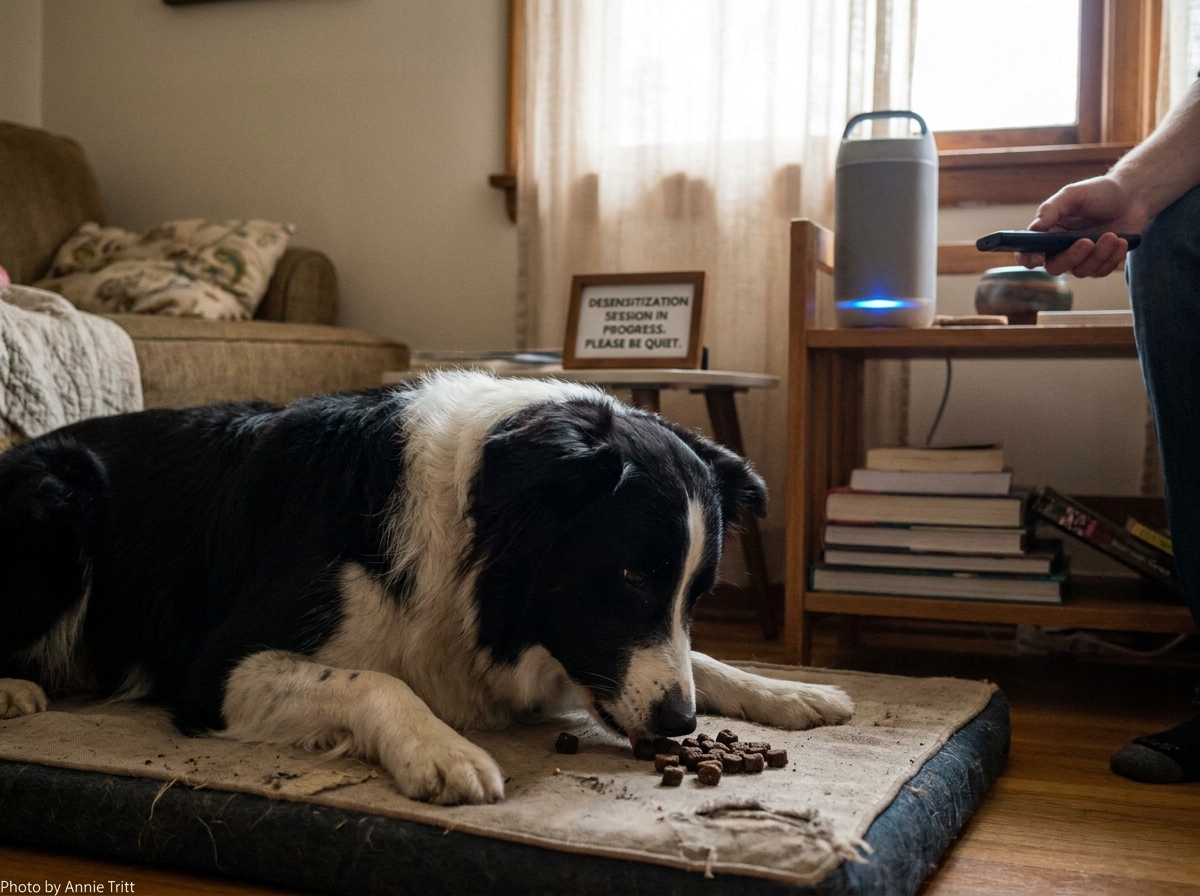
Phase 1: the recording introduction. The owner obtains a high-quality recording of the feared sound — a thunderstorm recording, a fireworks recording, a gunshot recording. The recording is played at a very low volume (barely audible) during a time when the dog is relaxed and engaged in a positive activity (eating, playing, being petted). The dog hears the sound but does not react. The owner marks the calm behavior with a click or "yes" and gives a high-value treat. The session is 5-10 minutes, once or twice a day.
The volume is gradually increased over days or weeks, as long as the dog remains calm. The rate of increase is determined by the dog. The dog that is calm at 10% volume can move to 15% the next session. The dog that is showing stress at 30% volume goes back to 25% and tries again. The protocol is the dog's pace, not the owner's pace.
Phase 2: the variable introduction. The recording is varied — different thunder recordings, different fireworks recordings, different distances, different durations. The dog learns that the sound is not a single threatening event but a class of events, and the class is non-threatening. The variability is what produces the generalization. The dog that has been desensitized to one thunder recording is a dog that may still react to a different thunder recording. The dog that has been desensitized to multiple thunder recordings is a dog that has generalized the new association.
Phase 3: the real-world exposure. The dog is exposed to the real sound at a low intensity — a distant thunderstorm (the dog hears the thunder but at a low volume), a distant fireworks display (the dog hears the booms but at a low volume), a recording played outdoors at low volume. The owner rewards the calm behavior. The real-world exposure is harder than the recording exposure because the sound is more realistic and the dog has more cues to process.
Phase 4: the maintenance. The dog is exposed to the recording or the real sound once a week at a low volume, with treats. The maintenance keeps the new association strong. The dog that is on a maintenance protocol is the dog that maintains the improvement over time. The dog that is not on a maintenance protocol may regress, particularly during a particularly severe storm season.
The timeline for the protocol: 8-16 weeks for a mild case, 16-24 weeks for a moderate case, 6-12 months for a severe case. The dog that responds to the protocol is the dog that has a measurable reduction in the panic response during the next storm season. The owner who runs the protocol is the owner who gives the dog a long-term change in the dog's emotional response.
The management tools
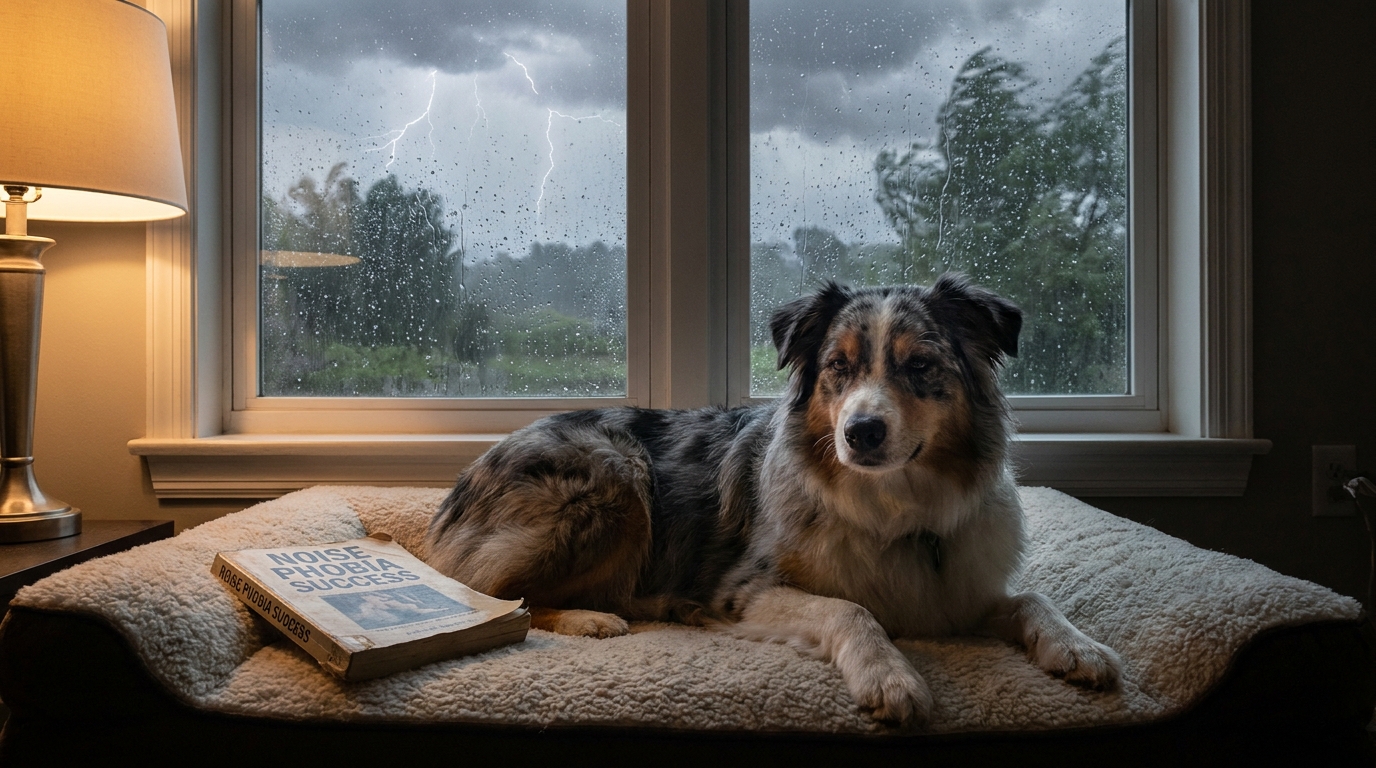
The management tools are the things the owner does during the protocol to support the dog. The most important: a safe space. The dog that has a designated safe space (a crate in a quiet room, a basement, an interior bathroom) is the dog that has a place to retreat during a storm. The safe space should be available at all times, not just during storms, so the dog does not associate the safe space with the storm. The dog that is in the safe space is not being punished or confined; the dog is choosing to go to the safe space, and the safe space is paired with treats and comfort.
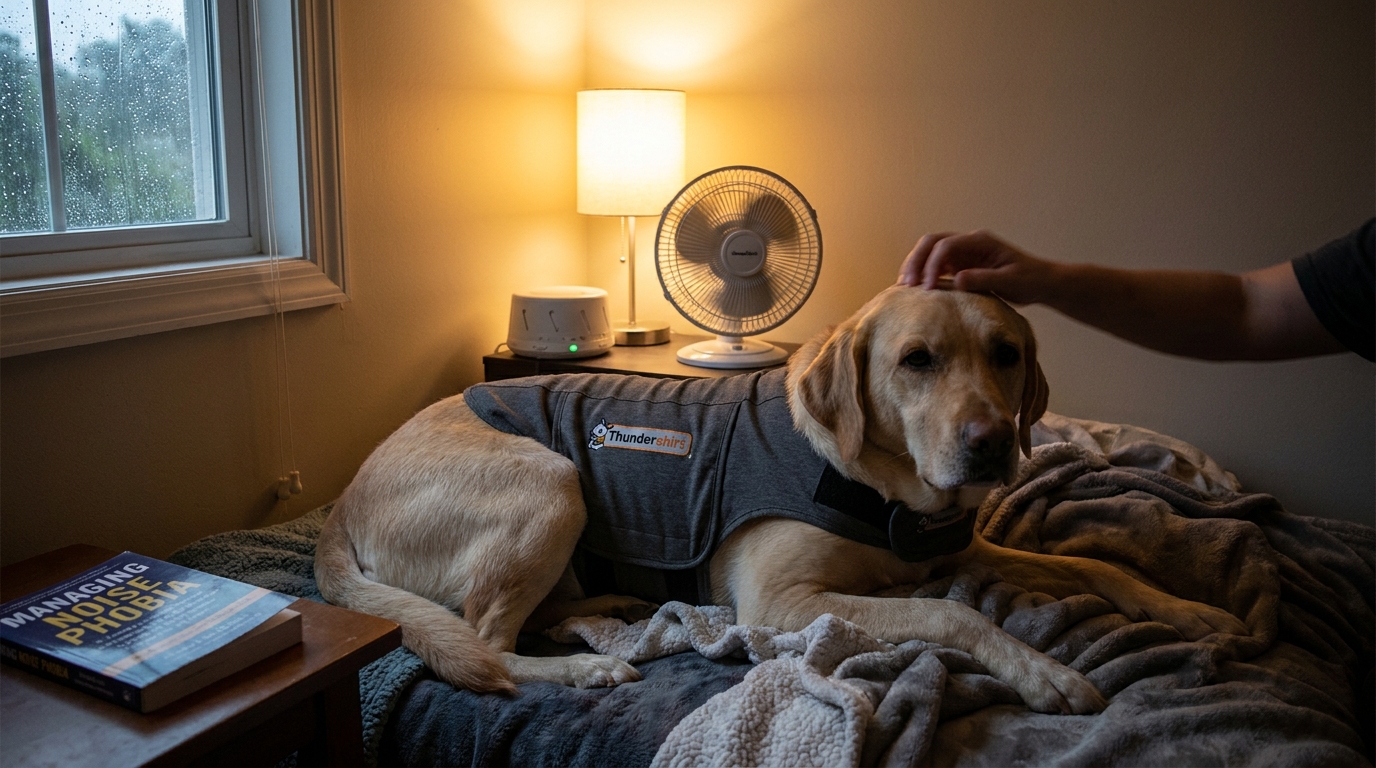
The other management tools: a pressure wrap (Thundershirt or similar), which applies gentle pressure to the dog's torso and has been shown to reduce anxiety in many dogs. A white noise machine or a fan in the safe space, which masks the sound of the storm. A pheromone diffuser (Adaptil or similar), which has a small calming effect for some dogs. The owner who combines these tools is the owner who is supporting the dog in every available way.
The owner should not: punish the dog for the phobia, force the dog to "face the fear" during a storm, or attempt to reassure the dog with excessive coddling (which can reinforce the fear response by signaling to the dog that the fear is justified). The owner should be calm, confident, and matter-of-fact during the storm. The dog that sees the owner being calm is the dog that learns to be calm.
The medication backup
The dog with severe noise phobia — the dog that is destructive, the dog that is self-injurious, the dog that has broken through a window — needs medication in addition to the behavior modification. The medication is not a substitute for the protocol; the medication is a bridge that allows the dog to be calm enough to participate in the protocol and to survive the storm season without injury.
The medications that are used, in order of how commonly they are prescribed: trazodone (a serotonin antagonist and reuptake inhibitor, used as a situational anxiolytic), gabapentin (an analgesic with anxiolytic effects), clonidine (an alpha-2 agonist that reduces the sympathetic response), and alprazolam (a benzodiazepine for short-term situational use). The medications are prescribed by the vet based on the dog's specific needs. The dog that is on trazodone or gabapentin before the storm is the dog that is calm enough to be in the safe space, and the dog that is calm enough to be in the safe space is the dog that is not breaking through the window.
The medication is not forever. The medication is for the storm season, or for the early phase of the behavior modification protocol. The goal of the medication is to support the dog while the behavior modification is doing the long-term work. The dog that is on the medication plus the behavior modification for 6-12 months is the dog that can often be weaned off the medication as the behavior modification takes effect.
The one mistake to avoid
The mistake is waiting for the next storm to start the protocol. The owner who intends to "do something about the noise phobia" but who does not start the desensitization recording until the next storm season is the owner who has missed another year of protocol. The recording is available now. The high-value treats are available now. The safe space can be set up now. The dog that is on the protocol during the off-season is the dog that is calm during the next storm season. The owner who waits is the owner who has another year of stress and another year of damage.
The one-page summary
Noise phobia is a panic response, not a drama. The desensitization and counterconditioning plan produces a long-term change in the dog's emotional response. The management tools (safe space, pressure wrap, white noise) support the dog during the protocol. The medication backup supports the dog with severe phobia. The protocol takes 8-24 weeks depending on severity. The maintenance keeps the improvement. The owner who runs the protocol during the off-season is the owner who has a calm dog during the storm season. The owner who waits is the owner who has another year of panic and another year of damage.