
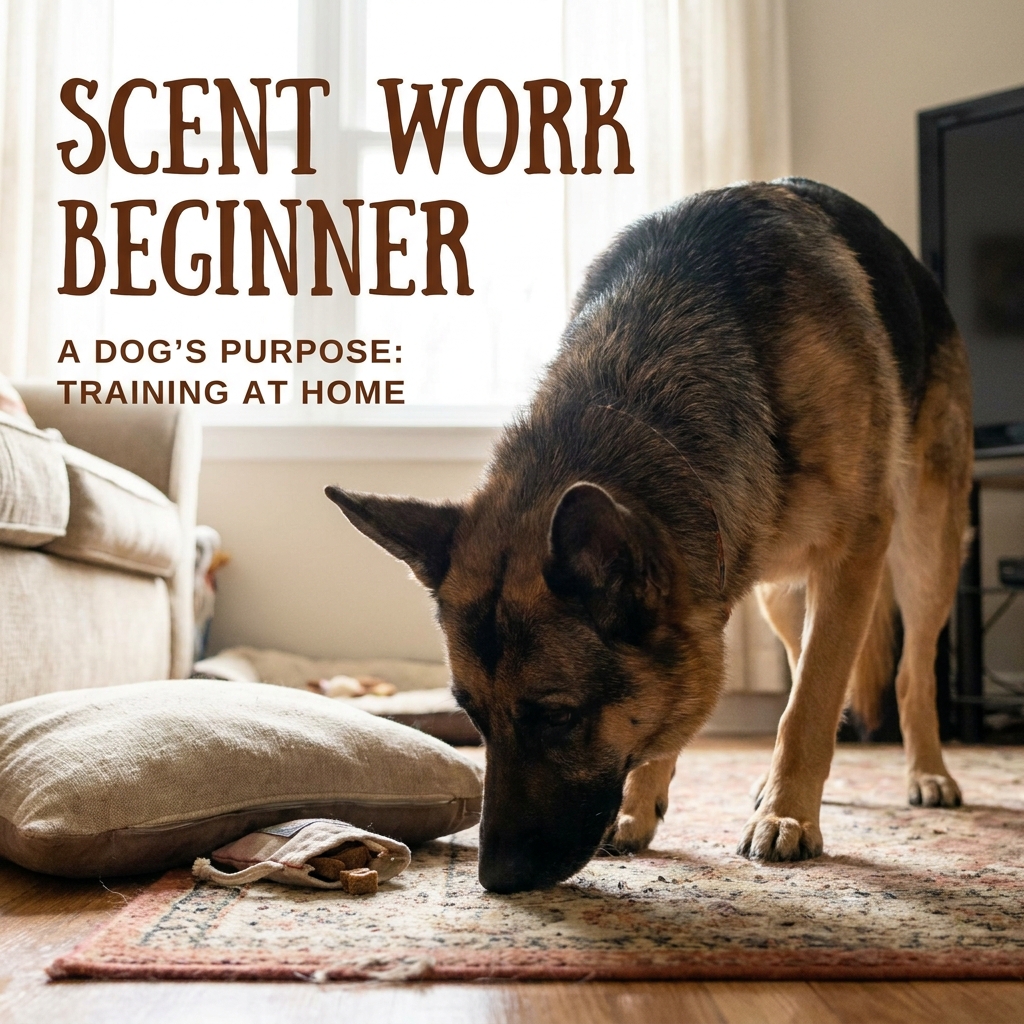
Scent work and nose games you can set up at home for enrichment and confidence
The dog's nose is the most powerful sensory tool in the household, and the dog that is allowed to use the nose is the dog that is mentally tired, behaviorally calm, and emotionally confident. The dog that is not allowed to use the nose is the dog that is bored, frustrated, and under-stimulated, and the dog that is under-stimulated is the dog that develops the behavior problems that the owner is trying to prevent. Scent work is the enrichment that uses the nose, that tires the dog in 15-20 minutes (the equivalent of a 2-hour walk in mental fatigue), and that can be set up at home with no special equipment. In this article I will walk through what scent work does for the dog, the three levels of home scent work from beginner to advanced, the equipment that helps and the equipment that is not needed, the sports that the home scent work prepares the dog for, and the mistakes that turn the nose games into frustration.
What scent work does for the dog
The dog's olfactory system is 10,000-100,000 times more sensitive than the human's, depending on the breed. The dog has up to 300 million olfactory receptors, compared to the human's 5-6 million. The dog's olfactory bulb (the part of the brain that processes smell) is proportionally 40 times larger than the human's. The dog is, in a meaningful sense, a nose with a body attached, and the dog that is not allowed to use the nose is the dog that is not allowed to be what the dog is.
Scent work engages the dog's nose in a focused task. The dog that is searching for a specific scent is the dog that is in a state of focused attention, with the dog's brain fully engaged in the task. The state of focused attention is the state that produces mental fatigue, and the mental fatigue is the fatigue that lasts for hours after the session. The dog that has had a 15-minute scent work session is the dog that comes home and sleeps for 2-3 hours, regardless of the weather or the amount of physical exercise the dog has had.
The secondary benefits: the dog that is in a state of focused attention is the dog that is not anxious, not reactive, not bored. The dog that is searching is the dog that is not barking at the window. The dog that is using the nose is the dog that is not using the mouth to chew the couch. The dog that is mentally engaged is the dog that is behaviorally calm.
The confidence benefit: the dog that successfully finds the scent is the dog that has just had a positive experience of solving a problem, and the dog that solves problems regularly is the dog that develops confidence in the dog's own ability. The shy dog, the fearful dog, the reactive dog — all of these dogs benefit from scent work, because scent work gives the dog a task that the dog can succeed at, and the success builds the confidence that the dog is missing.
Level 1: the find-the-treat game
The simplest scent work game, the game that any dog can play, the game that requires no special equipment: the find-the-treat game. The owner takes 5-10 small high-value treats, hides them around a single room (under a chair, behind a pillow, on a low shelf, in a corner, on the rug), and then sends the dog to "find it." The dog uses the nose to locate the treats, and the owner rewards each find with verbal praise and a "yes" or click.
The protocol: the treats should be hidden in easy-to-find locations at first, with progressively more challenging locations as the dog learns the game. The dog should be encouraged with "find it" as the cue, and the dog should be rewarded with each find. The session is 5-10 minutes, with 5-10 treats, and the session is a daily or every-other-day routine.
The progression: the treats are hidden in harder locations (inside a box, under a towel, on a high shelf the dog has to work to reach), the treats are hidden outdoors (in the yard, on a walk, in a park), and the treats are hidden with multiple dogs searching (the competition adds energy and engagement).
Level 2: the specific-scent game
The specific-scent game is the next level. The owner chooses a specific scent (a specific essential oil, a specific herb, a specific treat), and the dog learns to find that specific scent among distractions. The owner charges the scent (the dog learns to associate the scent with a reward), and the owner hides the scented object (a cotton ball with the essential oil, a piece of the herb, a small bag of the treat) in a location for the dog to find.
The charging protocol: the owner places the scented object near the dog's food bowl for several meals, so the dog associates the scent with food. The owner plays the find-the-treat game with the scented object as the target, rewarding the dog for finding the scented object specifically. The dog learns that the specific scent is what the owner is asking for, and the dog begins to actively search for that specific scent.
The progression: the scented object is hidden in a room with multiple other scented objects (the dog has to find the specific scent, not just any scent), the scented object is hidden outdoors, the scented object is hidden in containers (the dog has to indicate which container has the scent), and the dog is asked to find a specific person's scent (the dog's owner, a family member, a friend).
Level 3: the structured scent work
The structured scent work is the level that prepares the dog for the scent work sports (NASDU, UKC, AKC scent work). The dog searches for a specific scent in a defined search area, the dog indicates the find with a trained alert (a sit, a down, a paw touch, a nose touch), and the handler rewards the alert. The search areas can be containers (a line of boxes, a row of luggage), a room (an interior search), a vehicle (an exterior vehicle search), or an area (an outdoor area search).
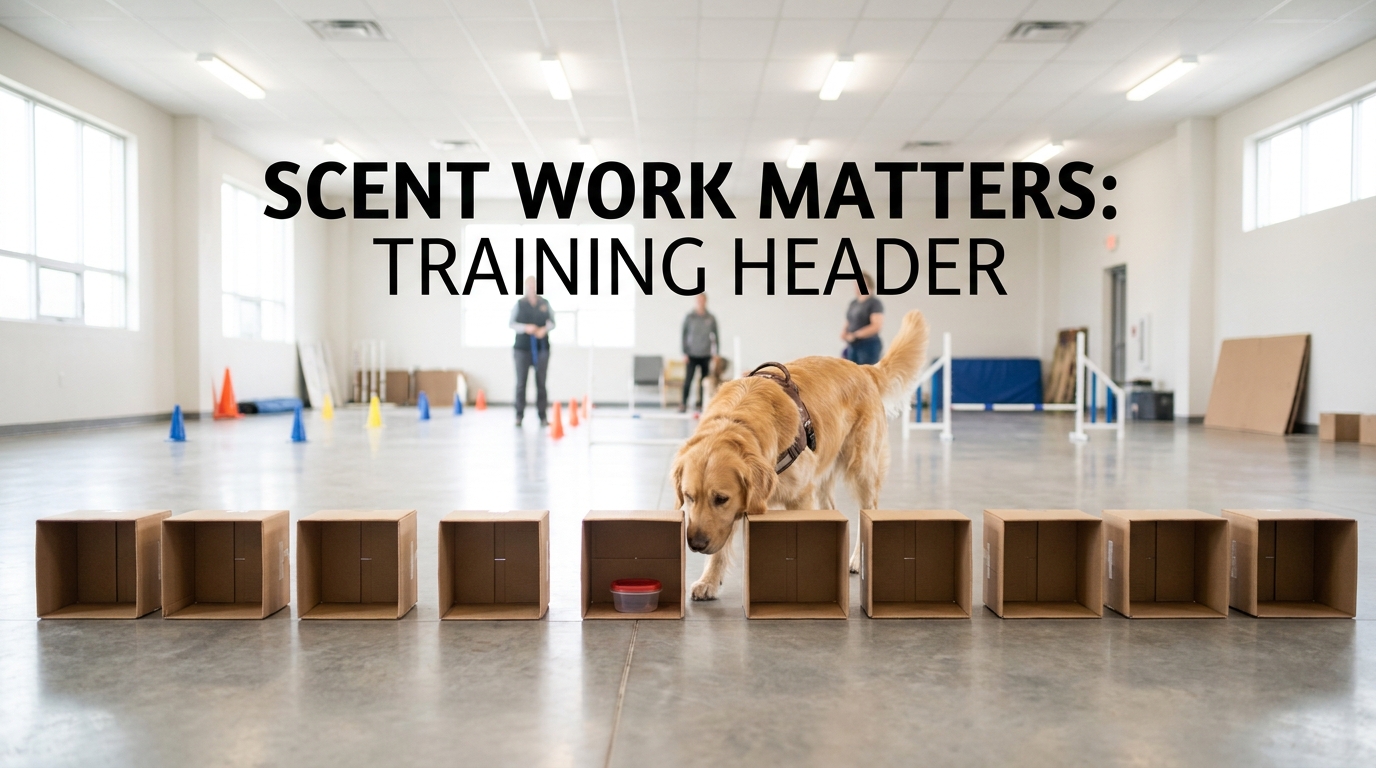
The setup for the home structured scent work: a line of 5-10 identical boxes, with one box containing the scented object. The dog is sent to search the line, and the dog indicates the box with the scent. The dog is rewarded for the correct indication. The session is 10-15 minutes, with 5-10 searches per session.
The progression: the number of boxes is increased (5 to 10 to 20), the search area is increased (line of boxes to a room), the number of distractions is increased (other scents in the boxes, multiple scented objects), and the search becomes more complex (containers within containers, scent under objects, scent on objects).
The equipment that helps and the equipment that is not needed
The equipment that helps: small high-value treats (freeze-dried liver, boiled chicken, cheese), a clicker or a marker word, a long lead for outdoor searches, a consistent set of containers for the structured work (the same boxes used every time). The cost is $20-50 for a starter setup.
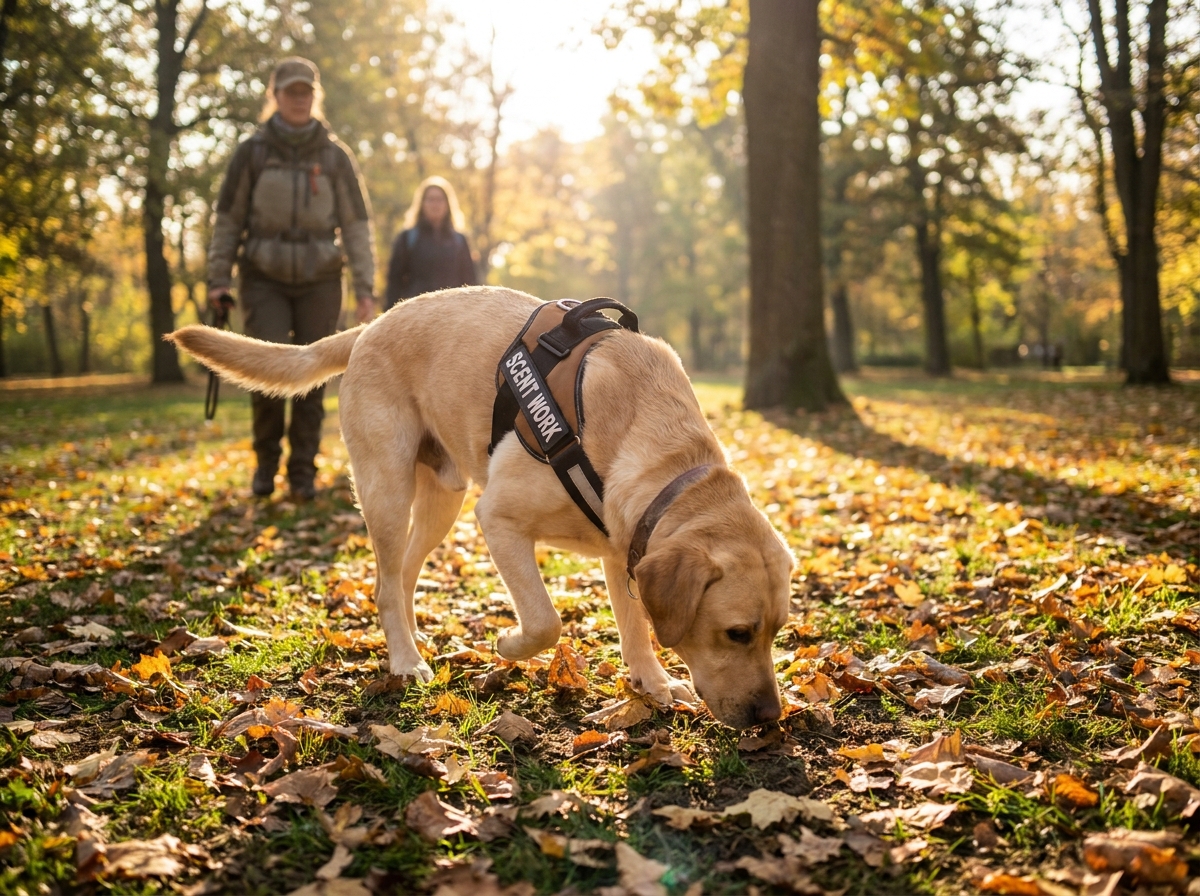
The equipment that is not needed: a special "scent work dog" (any dog can do scent work), a special "scent work harness" (a regular flat collar or harness is fine), a professional trainer (the home games can be set up by the owner with no professional help). The owner who is told that scent work requires expensive equipment or a professional trainer is the owner who is being sold something the owner does not need.
The sports that the home scent work prepares for
The home scent work is the foundation for the formal scent work sports. The National Association of Search Dog United (NASDU) offers scent work trials at multiple levels. The United Kennel Club (UKC) offers nosework trials. The American Kennel Club (AKC) offers scent work trials. Each sport has multiple levels, with multiple scent categories (birch, anise, clove, cypress), and the home scent work prepares the dog for the trials.
The owner who is interested in the sports should join a local scent work class or club, and the class or club will provide the training and the trial opportunities. The owner who is just interested in the home enrichment can stop at the home level and have a well-exercised, mentally engaged, behaviorally calm dog.
The mistakes
The first mistake is helping too much. The owner who points to the hiding spot, who guides the dog to the treat, who picks up the treat and brings it to the dog — is the owner who is doing the work for the dog, and the dog that is not doing the work is the dog that is not getting the mental exercise. The fix: let the dog work for the treat, even if the dog takes 2-3 minutes to find it. The waiting is the work.
The second mistake is using low-value treats. The dog that is searching for a dry kibble is the dog that is not motivated to search. The dog that is searching for a high-value treat (freeze-dried liver, cheese, chicken) is the dog that is highly motivated to search. The fix: use the high-value treats that the dog only gets during the scent work sessions, and the dog will be motivated to find them.
The third mistake is making the game too hard too fast. The owner who hides the treats in impossible locations from the start is the owner whose dog gives up. The dog that gives up is the dog that does not develop the confidence. The fix: start easy, progress gradually, and celebrate every find.
The one-page summary
Scent work is the enrichment that uses the dog's most powerful sensory tool. The three levels: the find-the-treat game (beginner), the specific-scent game (intermediate), the structured scent work (advanced). The equipment needed: $20-50 of high-value treats and a consistent set of containers. The benefits: 15-20 minutes of scent work tires the dog for 2-3 hours, the dog becomes behaviorally calm, the dog develops confidence. The mistakes: helping too much, using low-value treats, making the game too hard too fast. The owner who runs the protocol is the owner who has a mentally engaged, behaviorally calm, emotionally confident dog. The nose work is the work. The nose work is what makes the difference.