

Moving house or renovating: behavior adjustments for the resident dog
The household that is moving to a new home, or that is renovating the existing home, is a household that is under stress. The dog in the household is a dog that is also under stress, and the dog's stress often shows up as behavior changes that the owner did not anticipate. The dog that was housetrained and is now peeing in the new house. The dog that was calm and is now barking at every sound. The dog that was friendly and is now hiding under the bed. The dog that is anxious about the renovation noise and is now refusing to eat. The behavior changes are the dog's response to the disruption, and the behavior changes can be managed with the right preparation, the right environment, and the right expectations. In this article I will walk through the preparation for a move, the first 30 days in a new home, the management of a renovation, the behavior changes to watch for, and the protocol for resolving the behavior changes that the disruption produces.
The preparation for a move
The preparation for a move starts 2-4 weeks before the moving day. The preparation reduces the stress on the day and reduces the behavior changes in the days after.
The first preparation: maintain the routine. The dog that has a stable routine (feeding times, walk times, training times, sleep times) is the dog that has a stable emotional state. The owner who is in the chaos of the move is the owner who is tempted to skip the walks, to skip the training, to skip the routine. The owner who maintains the routine through the chaos is the owner whose dog has the stable emotional state that prevents the behavior changes.
The second preparation: visit the new home with the dog before the move. If possible, the owner takes the dog to the new home 2-3 times before the move, for short visits. The visits allow the dog to sniff the new home, to explore the new yard, and to form a positive association with the new location. The dog that has visited the new home is the dog that has a head start on the adjustment.
The third preparation: pack the dog's belongings last. The dog's bed, the dog's toys, the dog's food and water bowls, the dog's crate — these items are the dog's familiar scent, and the familiar scent is the dog's anchor. The owner who packs the dog's belongings last is the owner who keeps the dog's anchor in place until the last possible moment.
The fourth preparation: prepare the new home. The new home has the dog's bed, the dog's crate, the dog's food and water bowls, and the dog's toys in place before the dog arrives. The dog that walks into a new home and finds the familiar items is the dog that has a base room. The dog that walks into a new home and finds nothing familiar is the dog that is immediately stressed.
The first 30 days in a new home
The protocol for the first 30 days is the same as the cat 3-3-3 rule, adapted for dogs:
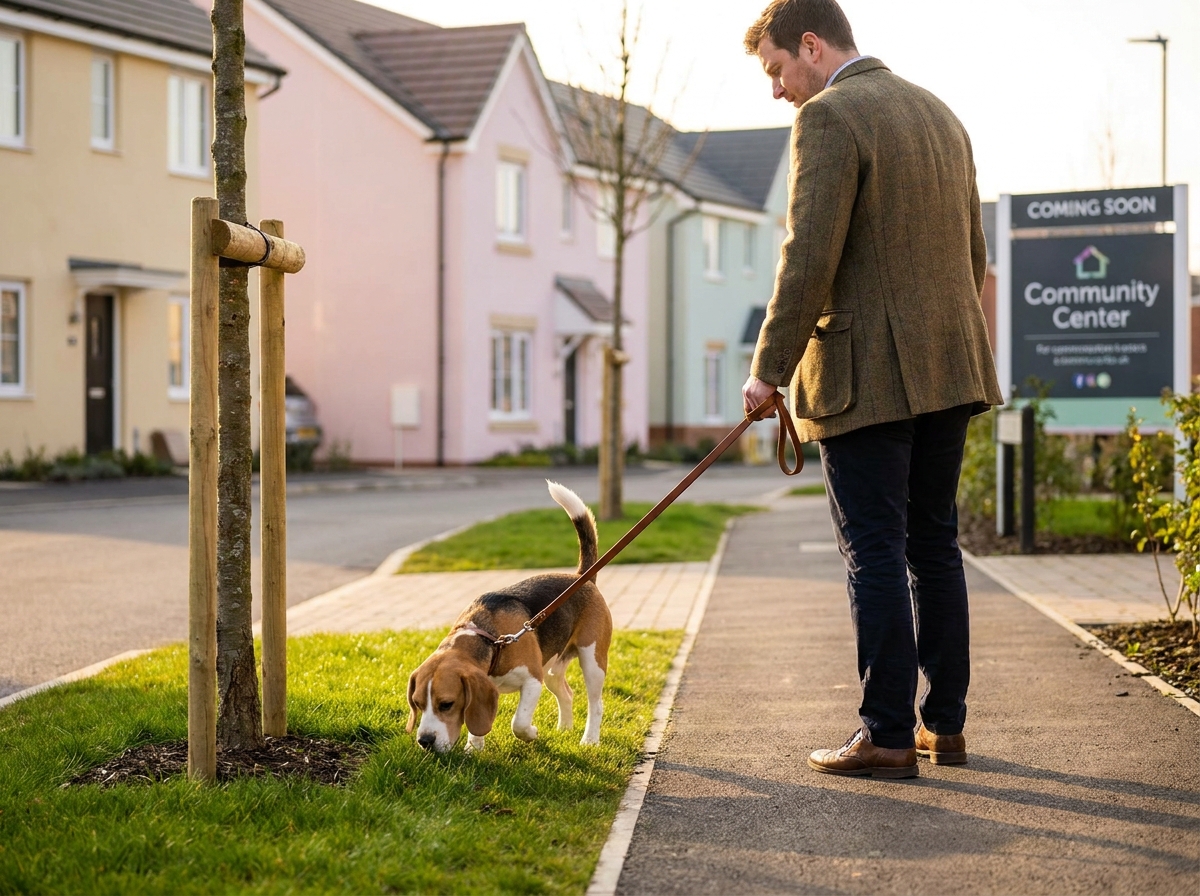
- Days 1-3: the dog is in a base room, with the familiar items, with limited access to the rest of the home. The dog is walked in the new neighborhood, with the owner keeping the dog on a leash to prevent the dog from wandering or running off. The dog is fed in the base room, with the food and water bowls in the same locations as the familiar items.
- Days 4-14: the dog is gradually introduced to the rest of the home, one room at a time. The dog is allowed to explore at the dog's own pace, with the owner supervising. The dog is walked in the neighborhood on a regular schedule, and the dog is given the opportunity to meet any new neighbors (and their dogs, if appropriate) gradually.
- Days 15-30: the dog is given full access to the home, with the familiar items still in their established locations. The dog is walked on a regular schedule, and the dog is given the opportunity to establish the new territory. The dog that is showing the behavior changes (hiding, barking, housetraining accidents) is the dog that needs more time, more routine, and possibly a vet visit to rule out a medical cause.
The behavior changes that are normal in the first 30 days: hiding, mild anorexia for 1-2 days, increased vocalization, mild housetraining accidents, increased clinginess, increased reactivity to sounds and strangers. The behavior changes that are NOT normal and that warrant a vet visit: persistent anorexia (more than 2-3 days), persistent housetraining accidents (more than 1 week), self-injurious behavior (chewing paws, scratching until bleeding), aggressive behavior that was not present before, or any sign of illness (vomiting, diarrhea, lethargy).
The management of a renovation
The renovation is a different kind of disruption from a move. The renovation happens in the dog's existing home, and the dog has the advantage of the familiar territory. The dog also has the disadvantage of the noise, the strangers, the changing layout, and the loss of the familiar spaces.
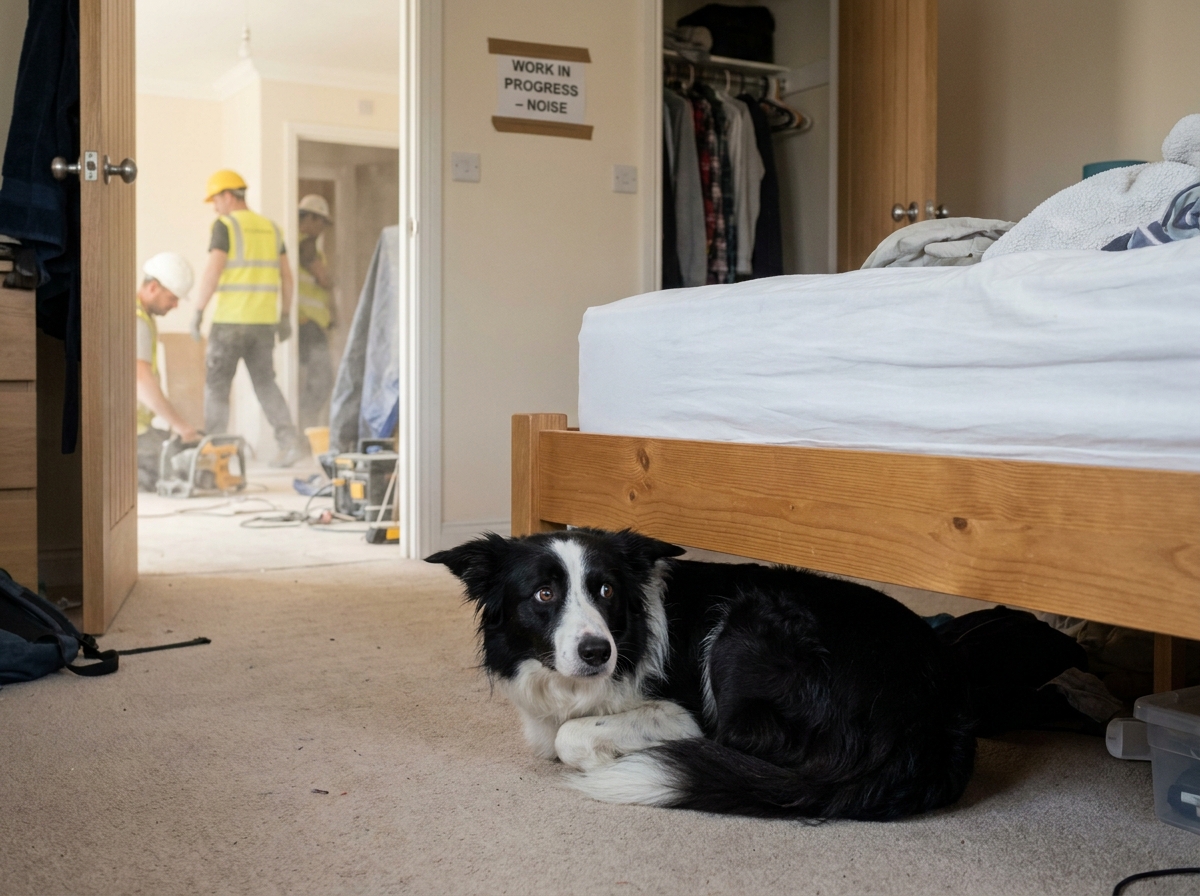
The protocol for a renovation: identify a base room that is NOT being renovated. The base room is the dog's refuge, with the bed, the crate, the food and water bowls, and the toys. The dog is kept in the base room during the active renovation hours, and the dog is allowed out of the base room only when the renovation workers are not present. The base room is the dog's anchor, and the anchor is what prevents the behavior changes.
The noise management: the renovation that involves hammering, sawing, or power tools is the renovation that produces the most stress. The white noise machine or the music in the base room can mask the renovation noise. The dog that is exposed to the noise gradually (a few hours per day, then longer) is the dog that adapts to the noise. The dog that is exposed to the noise all at once is the dog that develops a noise phobia that can persist after the renovation is complete.
The strangers: the renovation workers are strangers, and the stranger-averse dog is the dog that is stressed by the strangers. The dog that is kept in the base room during the work hours is the dog that avoids the stress. The dog that is allowed to interact with the workers (if the workers are dog-friendly and if the dog is dog-friendly) is the dog that may form positive associations with the workers.
The changing layout: the renovation changes the layout of the home, and the dog that is used to a specific layout is the dog that is confused by the changes. The dog is walked through the new layout, the new doorways and barriers are identified, and the dog is supervised until the dog has learned the new layout.
The behavior changes and the resolution
The behavior changes that are the most common in the move or the renovation: housetraining accidents, increased vocalization, hiding, separation anxiety flare, resource guarding, increased reactivity. The resolution of each behavior change:
Housetraining accidents: the dog that was housetrained and is now peeing in the new house is the dog that does not yet have the established potty routine in the new location. The fix: take the dog out more frequently, reward every successful potty break in the new location, and clean any indoor accidents with an enzymatic cleaner. The housetraining re-establishes in the new home within 1-2 weeks.
Increased vocalization: the dog that is barking more than usual is the dog that is responding to the new sounds and the new environment. The fix: provide more physical and mental exercise (the tired dog is the quiet dog), provide the white noise to mask the new sounds, and do not reinforce the barking with attention or reassurance.
Hiding: the dog that is hiding is the dog that is feeling unsafe. The fix: provide the base room with the familiar items, allow the dog to come out on the dog's own terms, and do not force the dog out of the hiding spot.
Separation anxiety flare: the dog that was fine alone and is now panicking when the owner leaves is the dog that is responding to the disruption. The fix: maintain the routine, do not make a big deal of the departures and the returns, and use the desensitization protocol (the same one used for the original separation anxiety training).
The honest summary
The dog that is moving or that is in a renovation is the dog that is under stress. The stress produces behavior changes, and the behavior changes can be managed with the right preparation, the right environment, and the right expectations. The preparation: maintain the routine, visit the new home if possible, pack the dog's items last, and prepare the new home with the familiar items. The first 30 days: base room, gradual introduction, regular walks, and observation. The renovation: base room, noise management, controlled introduction to the workers, and supervision. The behavior changes: addressed with the specific resolution for each. The dog that is supported through the disruption is the dog that adjusts within 1-2 months. The dog that is not supported is the dog that develops long-term behavior problems. The support is the work. The support is what makes the difference.