
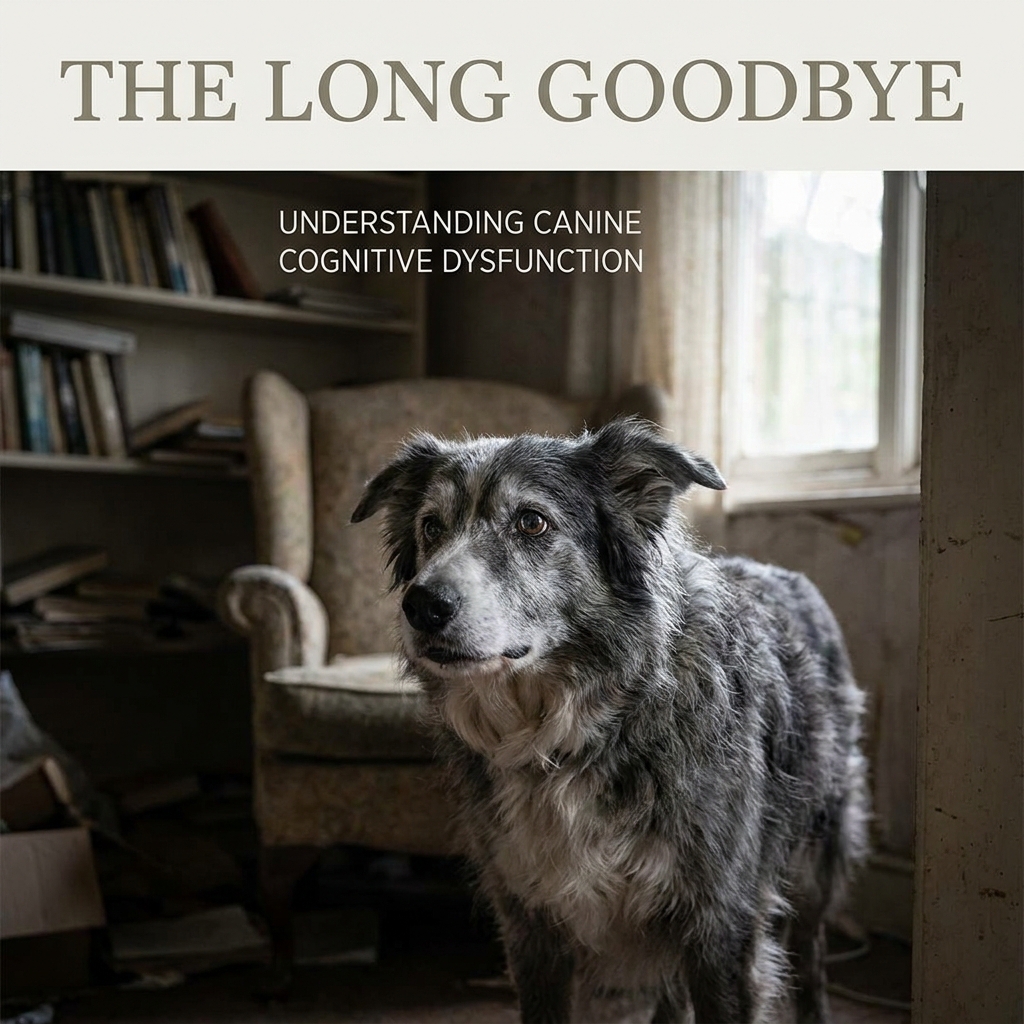
Canine Cognitive Dysfunction: home care for the senior dog that forgets the rules
Canine cognitive dysfunction (CCD), sometimes called "dog dementia" or "cognitive dysfunction syndrome," is the age-related decline in the cognitive function of the dog. The decline is similar to Alzheimer's disease in humans, with similar pathology (amyloid plaques in the brain, neuronal loss, neurotransmitter changes) and similar clinical signs (disorientation, altered sleep-wake cycles, housetraining accidents, altered social interactions, anxiety). The prevalence of CCD increases with age: approximately 14% of dogs at 7 years, 22% at 9 years, 32% at 11 years, and 60%+ at 15 years. The dog with CCD is the dog that is showing one or more of the clinical signs, and the dog that benefits from the home care, the environmental adjustments, and the medications that slow the decline. In this article I will walk through the clinical signs, the diagnosis, the home care, the environmental adjustments, the medications, and the realistic expectations for the dog with CCD.
The clinical signs: the DISHA acronym
The clinical signs of CCD are summarized by the DISHA acronym, which stands for Disorientation, Interactions changed, Sleep-wake cycles altered, Housetraining lost, and Activity level changed.
Disorientation. The dog that gets lost in the house, that gets stuck in corners, that goes to the wrong door, that stares at the wall or the floor, that does not recognize the family members. The disorientation is often the first sign the owner notices, and the disorientation is often the most distressing for the owner.
Interactions changed. The dog that becomes more clingy, more anxious, more irritable, or more withdrawn. The dog that no longer greets the owner at the door, or that greets the owner and then immediately walks away. The dog that snaps at the other pets, or that avoids the other pets.
Sleep-wake cycles altered. The dog that paces at night, that wakes the owner at 3 am, that sleeps during the day and is awake at night. The sleep-wake cycle disruption is one of the most common signs, and the sleep-wake cycle disruption is one of the most disruptive for the household.
Housetraining lost. The dog that has accidents in the house, that forgets to ask to go out, that goes to the wrong place to eliminate. The housetraining loss is often the sign that prompts the owner to bring the dog to the vet.
Activity level changed. The dog that has decreased activity, that sleeps more, that is less interested in walks, that has decreased exploration. The dog may also have increased anxiety, increased pacing, or increased repetitive behaviors (licking, circling).
The diagnosis: the vet diagnoses CCD based on the clinical signs and the exclusion of other causes. The vet should perform a full physical and neurologic exam, a CBC and chemistry to rule out metabolic causes, a urinalysis to rule out urinary causes of the housetraining accidents, and possibly an MRI to rule out structural brain disease. The dog that has the DISHA signs and no other identifiable cause is the dog with CCD.
The home care
The home care is the foundation of the CCD management. The home care is what supports the dog through the day and what slows the progression of the cognitive decline.
The routine: the dog with CCD benefits from a strict, predictable routine. The feeding times, the walk times, the play times, the sleep times are all set and consistent. The dog that has a strict routine has the cognitive anchors that the brain uses to maintain the cognitive function. The dog that has an inconsistent routine has the cognitive disorientation that the brain cannot compensate for.
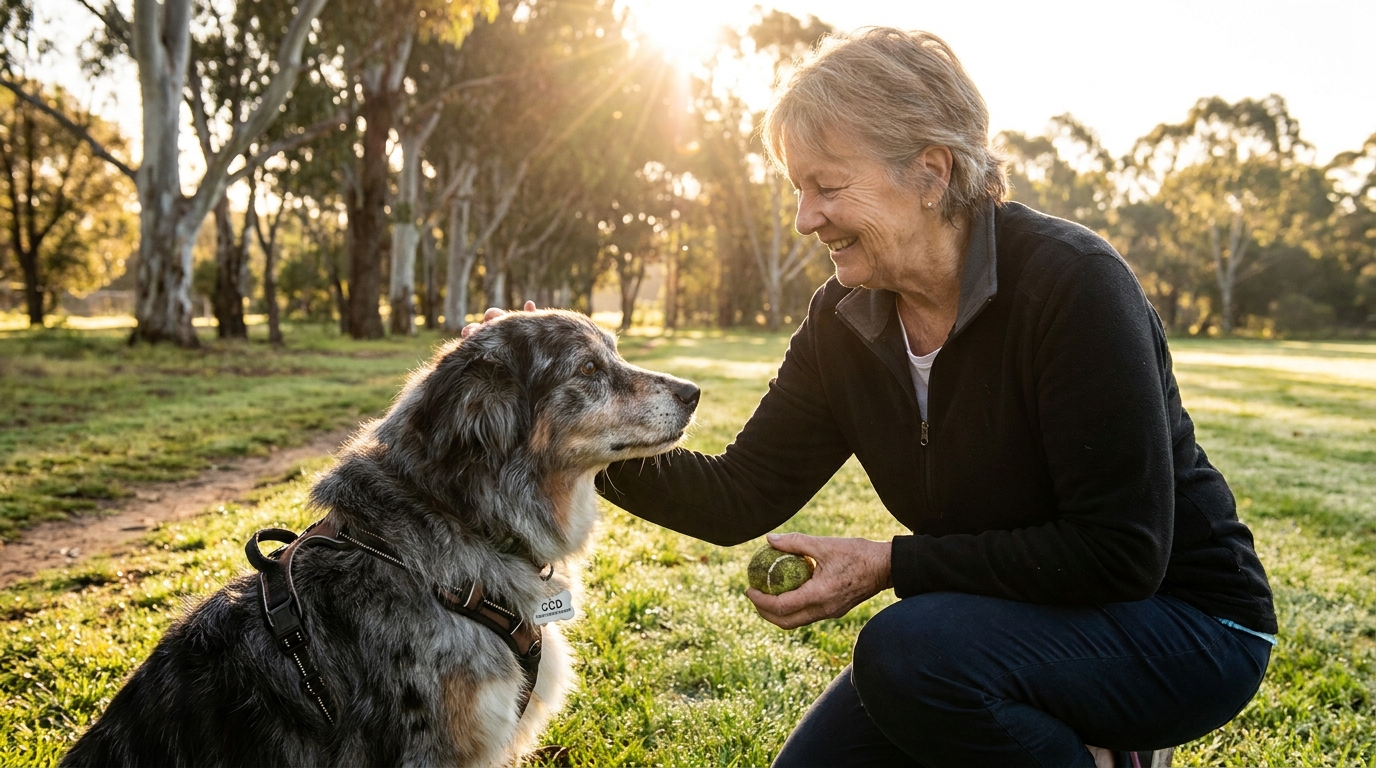
The exercise: the dog with CCD benefits from daily exercise, both physical and mental. The physical exercise is the daily walk, the play session, the swim. The mental exercise is the training session, the puzzle feeder, the nose work. The exercise stimulates the brain, slows the cognitive decline, and improves the sleep-wake cycle. The dog that does not exercise is the dog that has the faster cognitive decline.
The diet: the diet that has been supplemented with antioxidants, omega-3 fatty acids, and medium-chain triglycerides (MCTs) has been shown to slow the cognitive decline in dogs. The major pet food manufacturers offer senior diets that are formulated with the cognitive support nutrients (Hill's b/d, Purina Pro Plan Bright Mind, Royal Canin Mature Consult). The diet should be supplemented with the cognitive support nutrients, either through a senior diet or through specific supplements.
The supplements: the supplements that have evidence for the cognitive support in dogs include SAMe (S-adenosylmethionine, 20-40 mg/kg per day), omega-3 fatty acids (the anti-inflammatory fatty acids, 50-75 mg/kg of combined EPA and DHA per day), vitamin E (the antioxidant, 400-800 IU per day for the medium dog), and medium-chain triglycerides (MCTs, 1-2 g per 10 pounds of body weight per day). The supplements are not substitutes for the medication, but the supplements are additions to the home care and the medication that provide additional support.
The environmental adjustments
The environmental adjustments: the home should be modified to support the dog with CCD. The modifications:
- Consistent layout. The furniture, the food bowl, the water bowl, the bed are all in the same locations every day. The dog with CCD does not handle the rearrangement well.
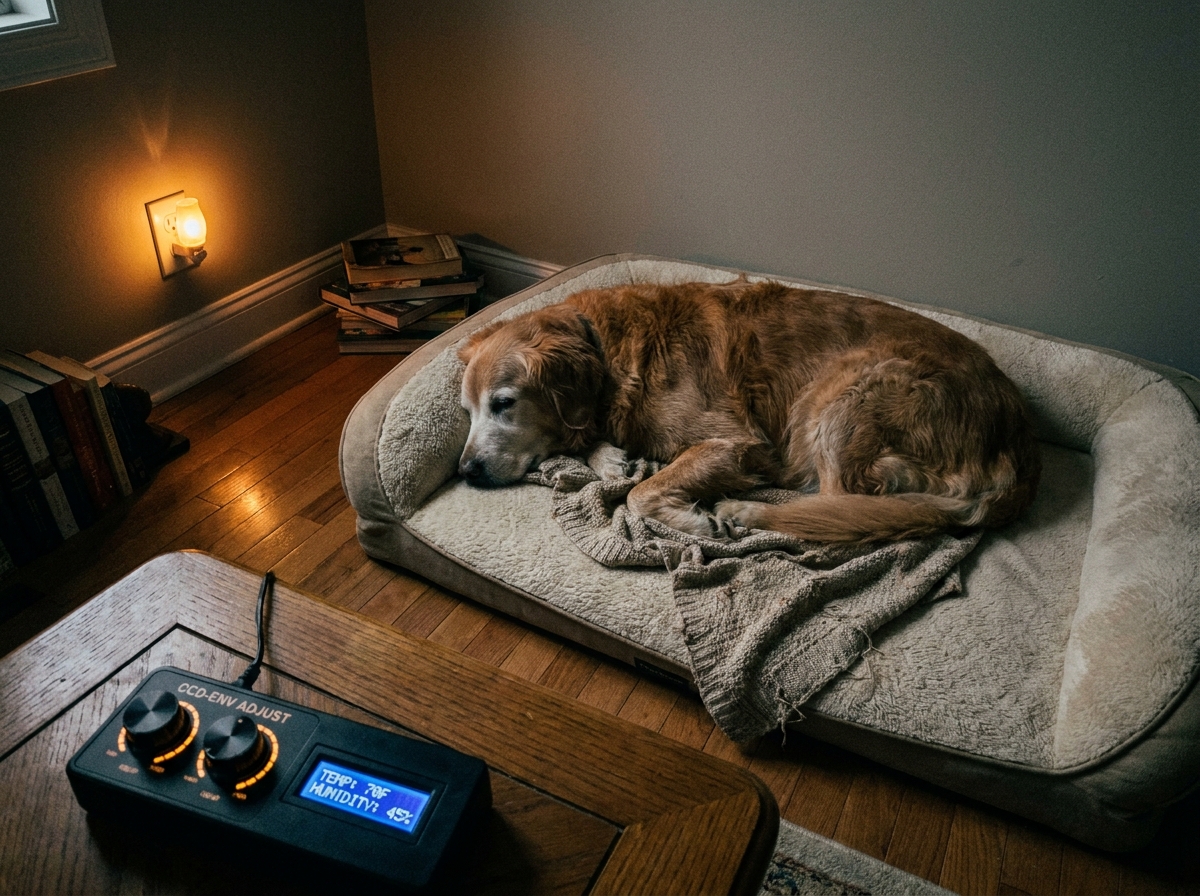
- Night lights. The night lights in the hallways, the bathroom, and the dog's sleeping area help the dog navigate at night. The dog with CCD that cannot see in the dark is the dog that gets disoriented and paces.
- Baby gates. The baby gates that block access to the stairs, the pool, and the other hazards prevent the dog from getting into trouble. The dog with CCD that has access to the hazards is the dog that can fall down the stairs, fall into the pool, or wander out of the house.
- Easy access to the elimination area. The dog door (for the dog that can use it), the dog walker (for the dog that needs to be taken out), or the indoor potty (for the dog that cannot be taken out easily) are the options for the dog with CCD and the housetraining issues. The dog that has easy access to the elimination area is the dog that has fewer accidents.
- Comfortable resting area. The orthopedic bed, the quiet location, the consistent temperature are the environmental factors that support the dog with CCD. The dog that is comfortable is the dog that sleeps better, paces less, and has fewer behavior problems.
The medications
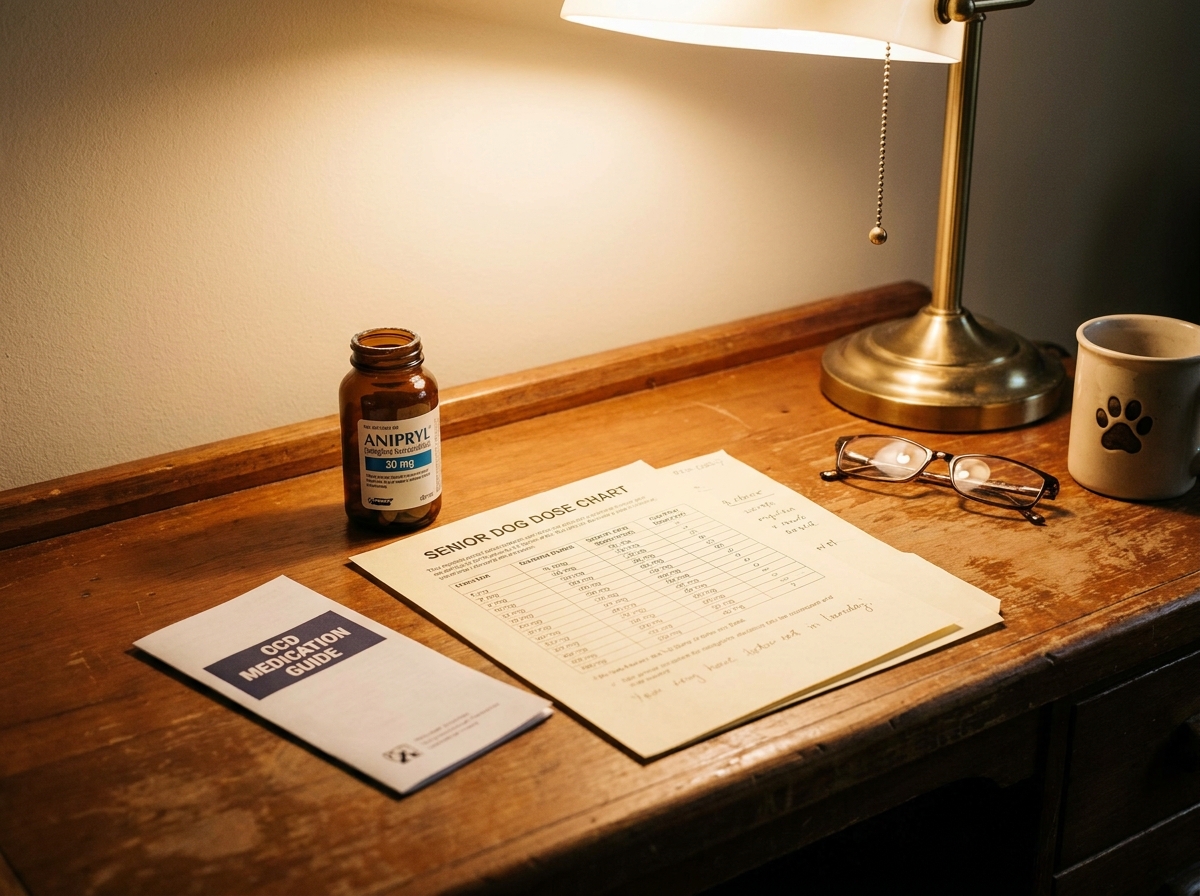
The medications that are used for CCD: selegiline (Anipryl), the only FDA-approved medication for CCD in dogs. Selegiline is a monoamine oxidase B inhibitor that increases the dopamine levels in the brain, and the increased dopamine slows the cognitive decline. The starting dose is 0.5-1 mg/kg per day, given orally in the morning. The effects of selegiline are typically visible within 4-8 weeks, and the effects include improved activity, improved interaction, improved sleep-wake cycle, and improved housetraining.
The other medications that are used off-label: propentofylline (a vasodilator that improves the brain blood flow), nicergoline (an alpha-adrenergic antagonist that improves the brain blood flow), and gabapentin (for the anxiety component of CCD). The off-label medications are used when the selegiline is not effective or when the selegiline is not tolerated.
The supplements that work alongside the medications: SAMe, omega-3 fatty acids, vitamin E, MCTs. The combination of the medication and the supplements is what produces the best response in the dog with CCD.
The realistic expectations
The CCD is a progressive condition, and the goal of the treatment is to slow the progression, not to cure the condition. The dog that is started on the home care and the medication at the first signs of CCD has the best chance of slowing the progression. The dog that is started late, when the clinical signs are advanced, has a slower response and a faster progression.
The owner should expect: a 4-8 week period for the medication to take effect, a period of improvement followed by a period of stable function, and eventually a period of decline as the disease progresses. The dog that is on the medication and the home care typically has 12-24 months of good quality of life from the time of the diagnosis. The dog that is not on the treatment has 6-12 months of good quality of life.
The owner should also expect: the day when the medication is no longer effective, the day when the dog no longer recognizes the family, the day when the dog is pacing all night, the day when the dog is having multiple accidents a day. The day is the day when the humane euthanasia conversation begins. The owner who has been through the home care and the medication is the owner who can make the decision with a clear conscience, knowing that everything that could have been done was done.
The one-page summary
Canine cognitive dysfunction is the age-related decline in the cognitive function of the dog, with the prevalence of 60%+ at 15 years. The clinical signs are the DISHA: disorientation, interactions changed, sleep-wake cycles altered, housetraining lost, activity level changed. The diagnosis is by the clinical signs and the exclusion of other causes. The home care: strict routine, daily exercise, senior diet, supplements. The environmental adjustments: consistent layout, night lights, baby gates, easy elimination, comfortable resting area. The medications: selegiline (the FDA-approved), with the supplements (SAMe, omega-3, vitamin E, MCTs). The realistic expectations: 4-8 weeks for the medication to take effect, 12-24 months of good quality of life. The owner who runs the protocol is the owner who gives the dog the longest period of cognitive function. The protocol is the work. The protocol is what makes the difference.