
Senior dog kidney-friendly: a low-phosphorus diet primer for early CKD
Chronic kidney disease is one of the most common diagnoses in senior dogs, and one of the few that can be meaningfully managed through diet. The transition from "senior dog with normal bloodwork" to "senior dog with early CKD" is the transition that determines how much longer the dog will live and how much quality of life the dog will have in those remaining years. The diet change is the single most powerful intervention at this stage, and the diet change is also the change that most owners are hesitant to make. The senior dog that has been eating the same kibble for eight years is the dog that is going to resist the diet change, and the owner that is going to feel guilty about making the change. In this article I will walk through what early CKD actually is, what the low-phosphorus prescription diet does at the cellular level, when to start the transition, how to make the transition without losing the dog's appetite, and what the realistic outcome looks like for a dog on the diet.
What early CKD looks like at the cellular level
Chronic kidney disease in dogs is a progressive loss of functional nephrons — the filtering units of the kidney. The loss is irreversible: nephrons that have been damaged do not regenerate. The body compensates for the loss by hyperfiltration in the remaining nephrons, which accelerates their damage, which leads to more loss, in a downward spiral. By the time the dog's bloodwork shows elevated creatinine and BUN, the dog has already lost roughly 70% of functional kidney capacity. The "early" CKD label, in clinical terms, is IRIS Stage 1 or 2 — creatinine in the high-normal range, SDMA slightly elevated, urine specific gravity low but not severely dilute, no clinical signs.
The dietary intervention at this stage is aimed at slowing the downward spiral. The two main levers are phosphorus restriction and protein modulation. The phosphorus restriction is the more important of the two, because phosphorus retention is what drives the secondary hyperparathyroidism that damages the remaining nephrons. The protein modulation is a secondary lever: too much protein in advanced CKD generates uremic toxins, but too little protein in early CKD causes muscle loss. The right level of protein is the level that maintains lean body mass without generating excess uremic toxins.
What the prescription diet actually does
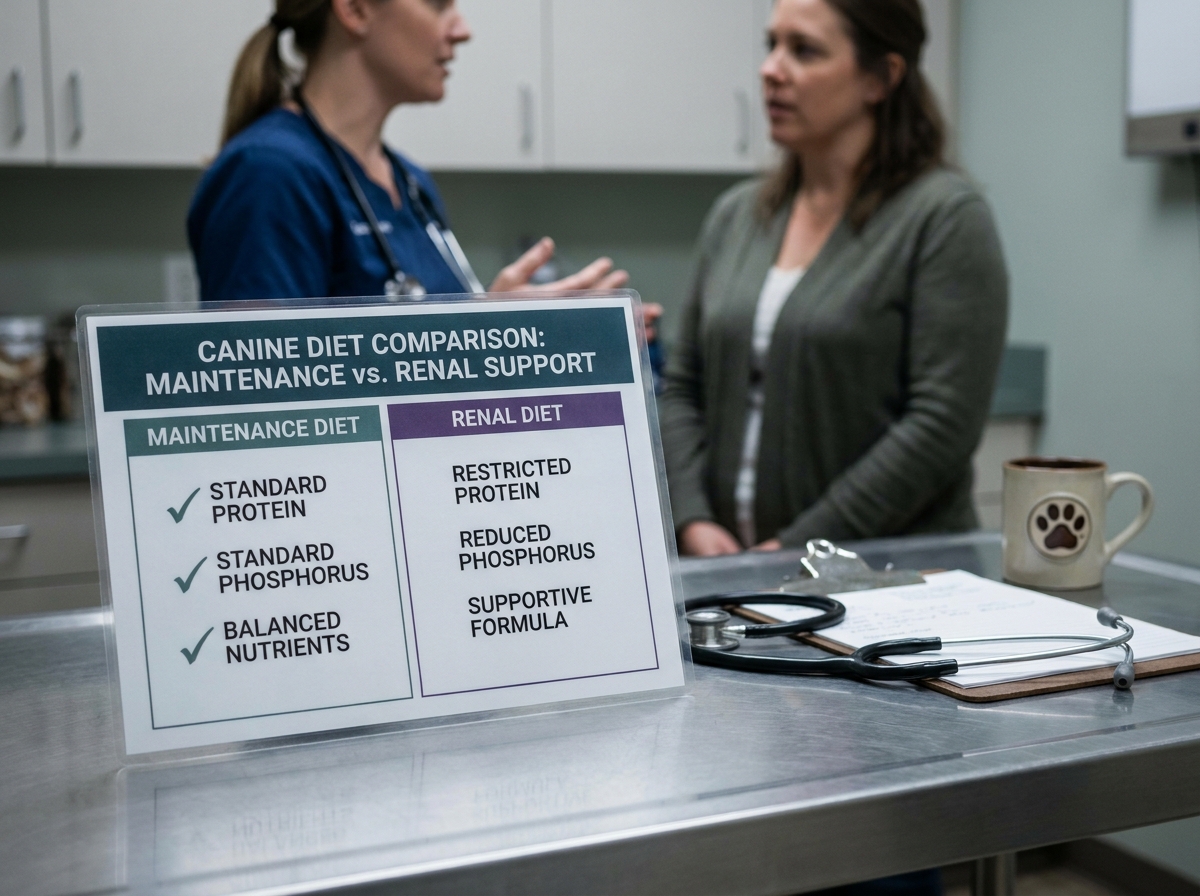
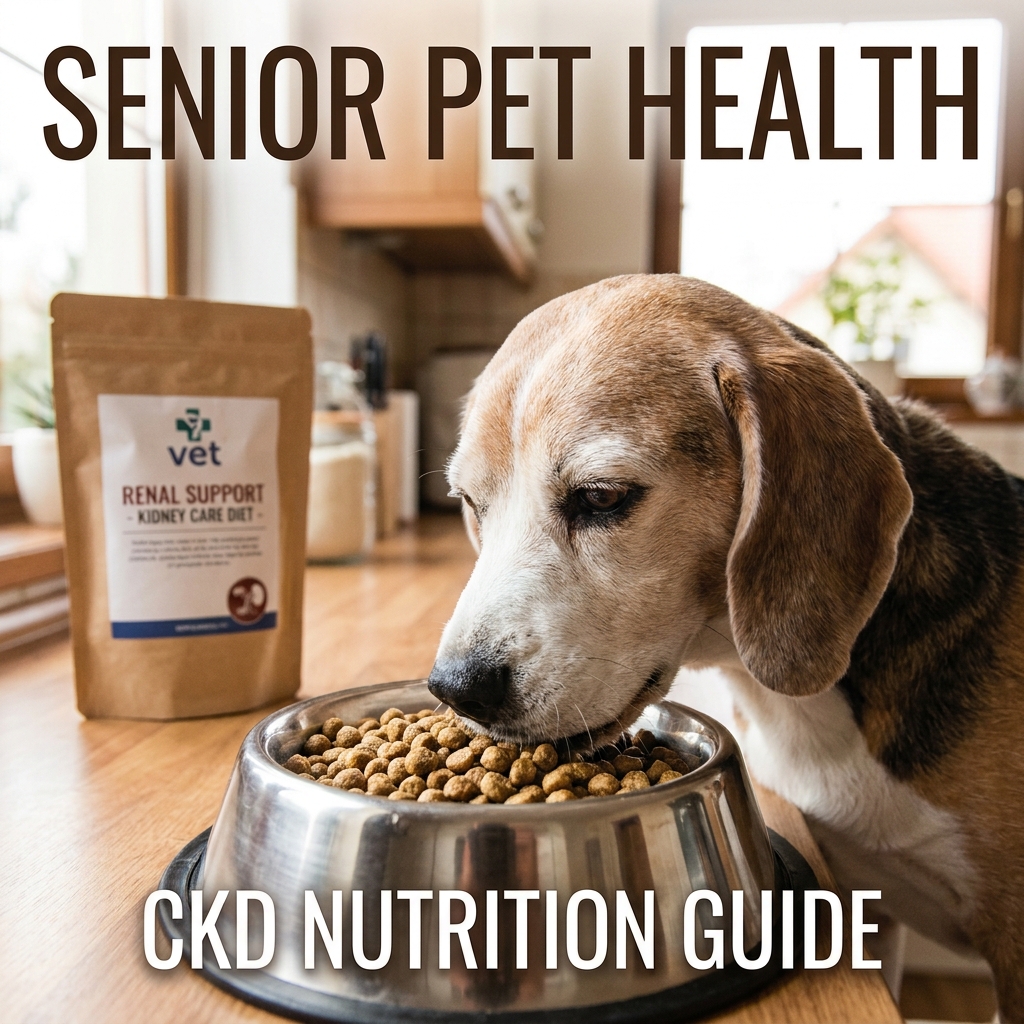
The renal prescription diets (the major brands all have one: Hill's k/d, Royal Canin Renal, Purina NF) are formulated with three key differences from a maintenance adult food. The phosphorus is reduced to roughly 0.2-0.4% dry matter, compared to 0.6-1.0% in a maintenance food. The protein is moderately reduced (typically 18-22% dry matter) and is from high-quality, highly digestible sources. The omega-3 fatty acid content is elevated, with marine-source EPA and DHA at levels that have been shown to reduce glomerular inflammation.
The phosphorus restriction is what produces the most measurable benefit. The dog that is started on a low-phosphorus diet at IRIS Stage 2 has a median survival of 12-18 months from the time of the diet change, compared to 4-8 months for a dog that is not on a renal diet. The protein modulation adds another 2-4 months of survival on average, and the omega-3 supplementation adds another 1-3 months. The combination of the three is what the published data supports.
The renal diet is not a cure. The dog on the diet is still losing kidney function, just more slowly than the dog off the diet. The dog on the diet is also still progressing to IRIS Stage 3 and 4 eventually. The diet buys time. The time it buys is meaningful — the difference between 4-8 months of remaining life and 18-24 months is the difference between the dog meeting the new baby and the dog not.
When to start the transition
The transition to the renal diet should happen as soon as the dog is diagnosed with IRIS Stage 1 or 2 CKD, ideally before clinical signs develop. The dog that is started on the diet at the time of diagnosis is the dog that has the most nephrons left to protect. The dog that is started on the diet only after the dog has stopped eating or has begun vomiting is a dog that has lost 80-90% of kidney function and is too far along for the diet to make a meaningful difference.
The bloodwork and urinalysis that catch early CKD: a routine senior blood panel (CBC, chemistry, urinalysis) annually for dogs over 7 years of age, with SDMA added for earlier detection. The SDMA catches kidney decline months before creatinine does, which means the diet can be started months earlier. The dog that is diagnosed on SDMA alone, before creatinine is elevated, is the dog that benefits most from the early diet change.
How to make the transition without losing the appetite
The senior dog that has been eating the same kibble for eight years is going to resist the diet change. The new food smells different, tastes different, has a different texture. The dog that is offered the new food as a complete swap is the dog that refuses to eat, and the dog that refuses to eat is a senior CKD dog that loses body condition and muscle mass — which is exactly the opposite of what the diet is trying to achieve.
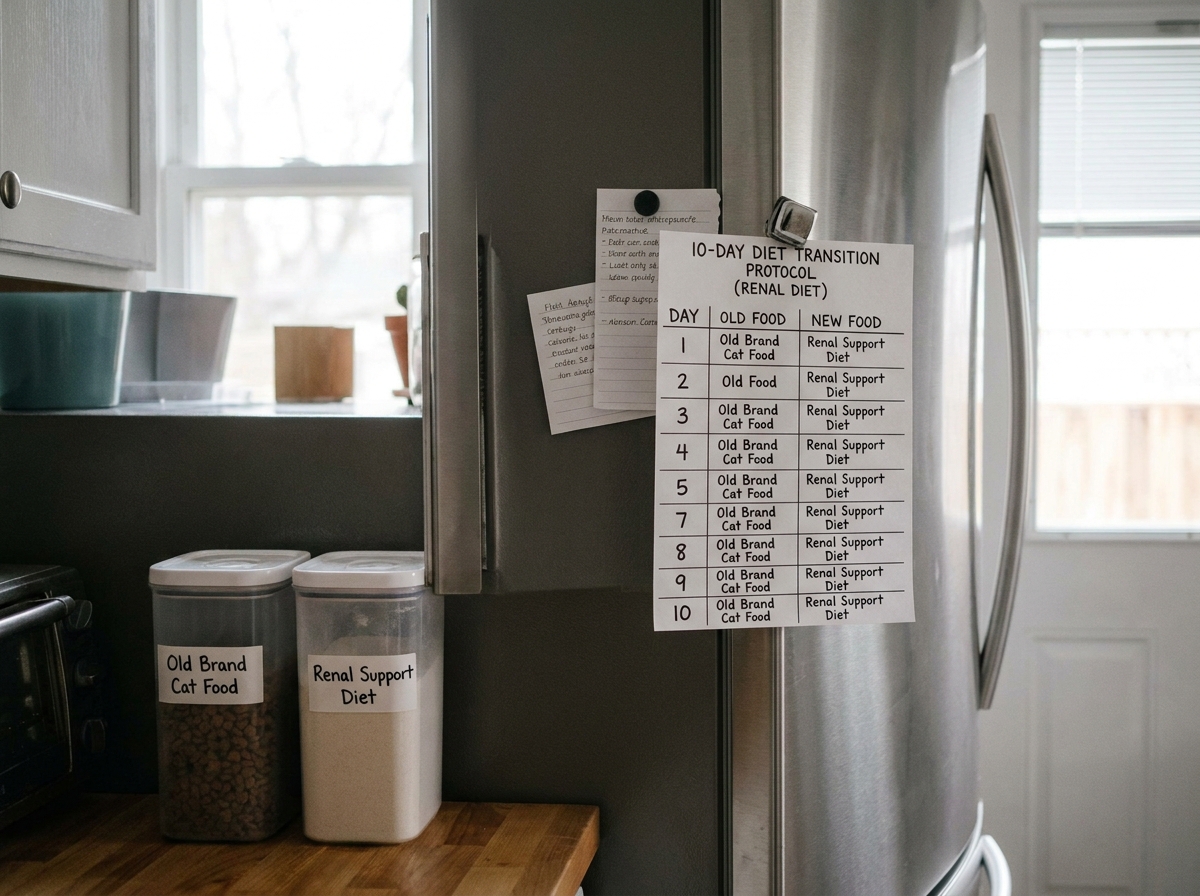
The right way to transition: a 10-14 day gradual swap. Days 1-3: 75% old food, 25% new food. Days 4-6: 50/50. Days 7-9: 25% old, 75% new. Days 10-14: 100% new. The dog's appetite is monitored at every step. If the dog refuses to eat at any step, hold at that step for an extra 2-3 days before progressing. If the dog is still refusing after a week, try a different flavor or texture of the renal diet (the major brands all have multiple formulations). If the dog still refuses, consider a home-cooked renal diet formulated by a board-certified veterinary nutritionist.
The warming trick: warm the new food in the microwave for 5-10 seconds (just to body temperature, not hot). The warmth increases the aroma, and the increased aroma increases the palatability for the senior dog that is being asked to accept a new food. The senior dog that is losing weight during the transition is a senior dog that needs a more aggressive intervention, including appetite stimulants (mirtazapine or capromorelin) and potentially a feeding tube.
What to do about treats and table scraps
The dog on a renal diet cannot have high-phosphorus treats. The treats that are off the list: most commercial dog treats (which are not formulated for the phosphorus restriction), cheese, jerky, bones, rawhide, most human foods. The treats that are on the list: small pieces of the renal kibble, small pieces of apple or banana, small pieces of cooked egg white, freeze-dried single-ingredient treats that are low in phosphorus. The list is short, and the list is restrictive, and the list is the reason the owner has to think about every food item the dog receives.
The owner who gives the CKD dog a slice of cheese "as a treat" is the owner who has just added 100-200 mg of phosphorus to the dog's daily intake, which is roughly 20-30% of the daily phosphorus budget. The diet loses its effect when the treats add back the phosphorus the diet was trying to restrict. The fix is the treat list, not the cheese.
What the realistic outcome looks like
The senior dog that is started on a renal diet at IRIS Stage 2 has a median survival of 12-24 months, depending on the underlying cause, the dog's age, and the compliance with the diet and follow-up care. The dog that is monitored with quarterly bloodwork, that has the diet adjusted as the disease progresses, and that is treated promptly for the complications of CKD (anemia, hypertension, proteinuria) has the longer end of that range.
The dog that is started on the diet at IRIS Stage 3 has a median survival of 6-12 months. The dog that is started at IRIS Stage 4 has a median survival of 1-3 months. The difference is the stage at which the diet was started. The diet is more powerful the earlier it is started. The owner who is hesitant to make the change is the owner who is choosing the shorter survival for the dog. The owner who makes the change at the time of diagnosis is the owner who is choosing the longer survival.
The bloodwork that monitors the diet's effect
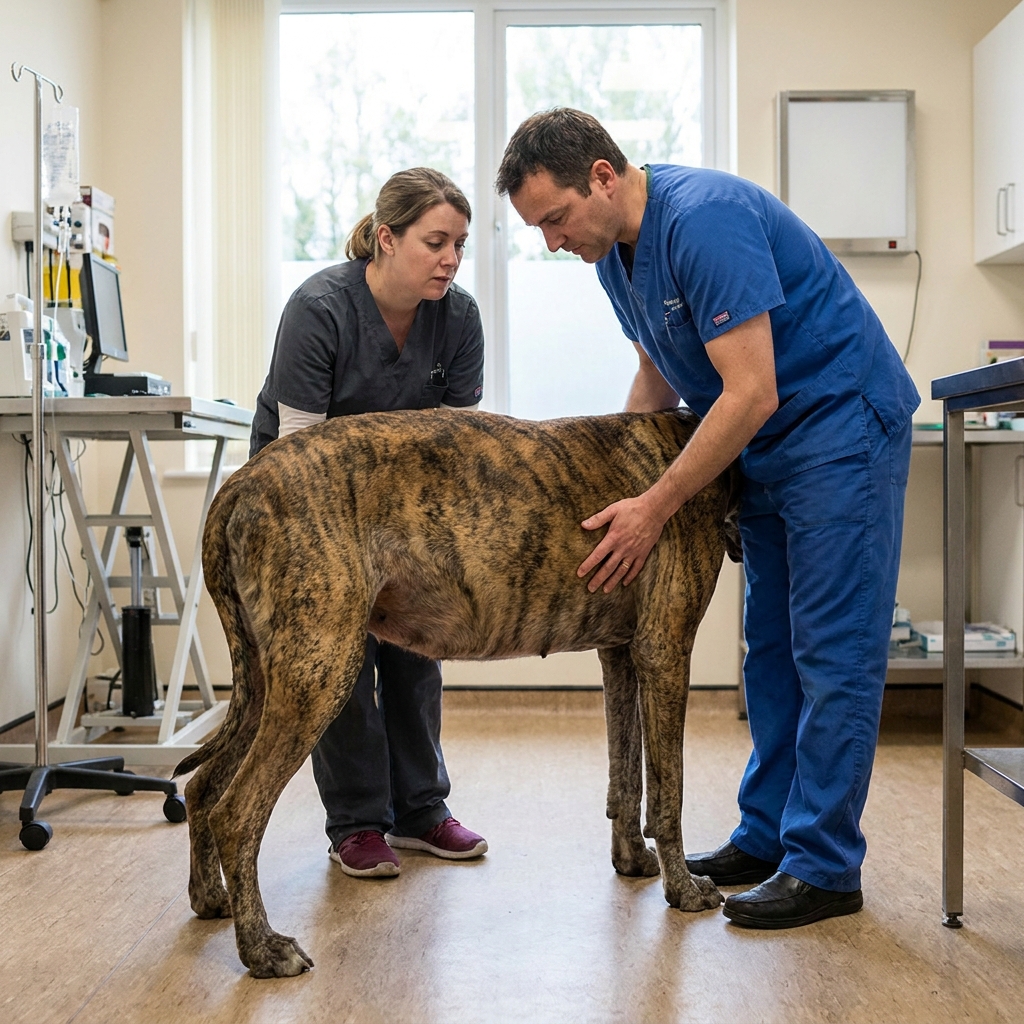
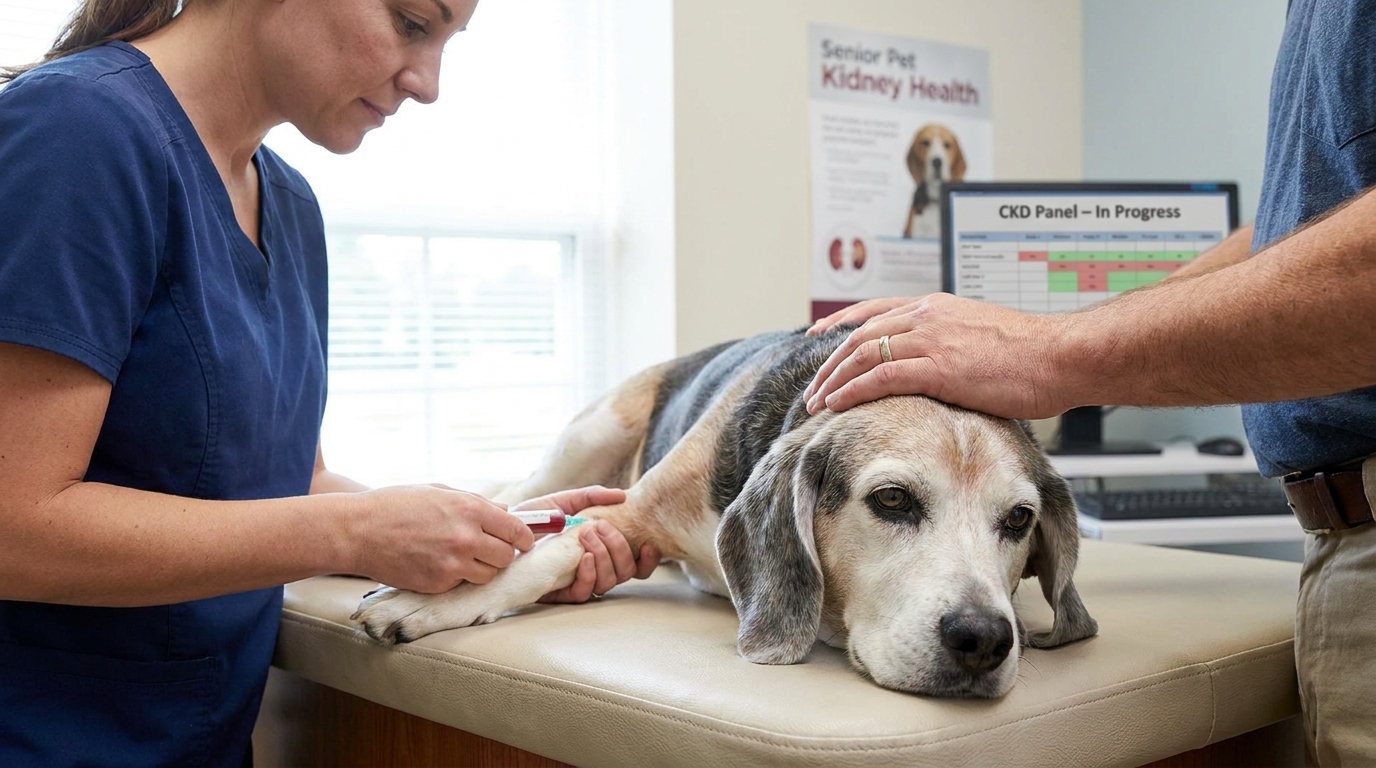
The bloodwork schedule for a dog on a renal diet: at the time of diagnosis, a baseline chemistry, CBC, urinalysis, urine protein:creatinine ratio, and blood pressure. The follow-up: 4-6 weeks after the diet change, repeat the chemistry and urinalysis to confirm the dog is eating the diet and the parameters are stable. Then every 3-4 months for the first year, then every 4-6 months as long as the parameters are stable. The trend is the most important thing. A single bloodwork in the normal range does not confirm the diet is working; a trend of stable creatinine over 6-12 months confirms the diet is slowing the decline.
The blood pressure is the most under-monitored parameter in canine CKD. Hypertension is present in 30-60% of dogs with CKD, and untreated hypertension accelerates the kidney decline. The dog on a renal diet that has not had its blood pressure checked is a dog that may be losing kidney function faster than the diet can protect. The fix: blood pressure at every recheck, with treatment if the systolic is consistently above 160 mmHg.
The one-page summary
A senior dog diagnosed with early CKD should be transitioned to a renal prescription diet over 10-14 days, with appetite monitored at every step. The diet is lower in phosphorus, moderately reduced in protein, and elevated in omega-3s. The treats have to be on the approved list. The bloodwork is monitored every 3-4 months. The blood pressure is monitored at every recheck. The diet is started at the time of diagnosis, not at the time of clinical decline. The owner who follows the protocol is the owner who gives the dog 12-24 months of additional good-quality life. The owner who delays the diet change is the owner who gives the dog 4-8 months.