
Senior dog annual screening checklist: the tests that catch what owners miss
A 9-year-old Labrador comes in for the annual vaccine booster. The owner reports the dog is "fine" — eating well, active, no obvious problems. The physical exam is unremarkable. The vet recommends senior bloodwork. The owner declines, citing cost. Six months later, the dog is lethargic, not eating, and drinking excessively. The bloodwork now shows chronic kidney disease (CKD) at an advanced stage, with creatinine at 6 mg/dL and BUN over 100. The dog is in late-stage renal failure, and the owner is facing a difficult decision within weeks.
This is the case I see most often. The dog was not fine. The dog had subclinical CKD that was progressing silently. The annual screening would have identified the condition 6-12 months earlier, when dietary management and treatment could have added 2-4 years of quality life.
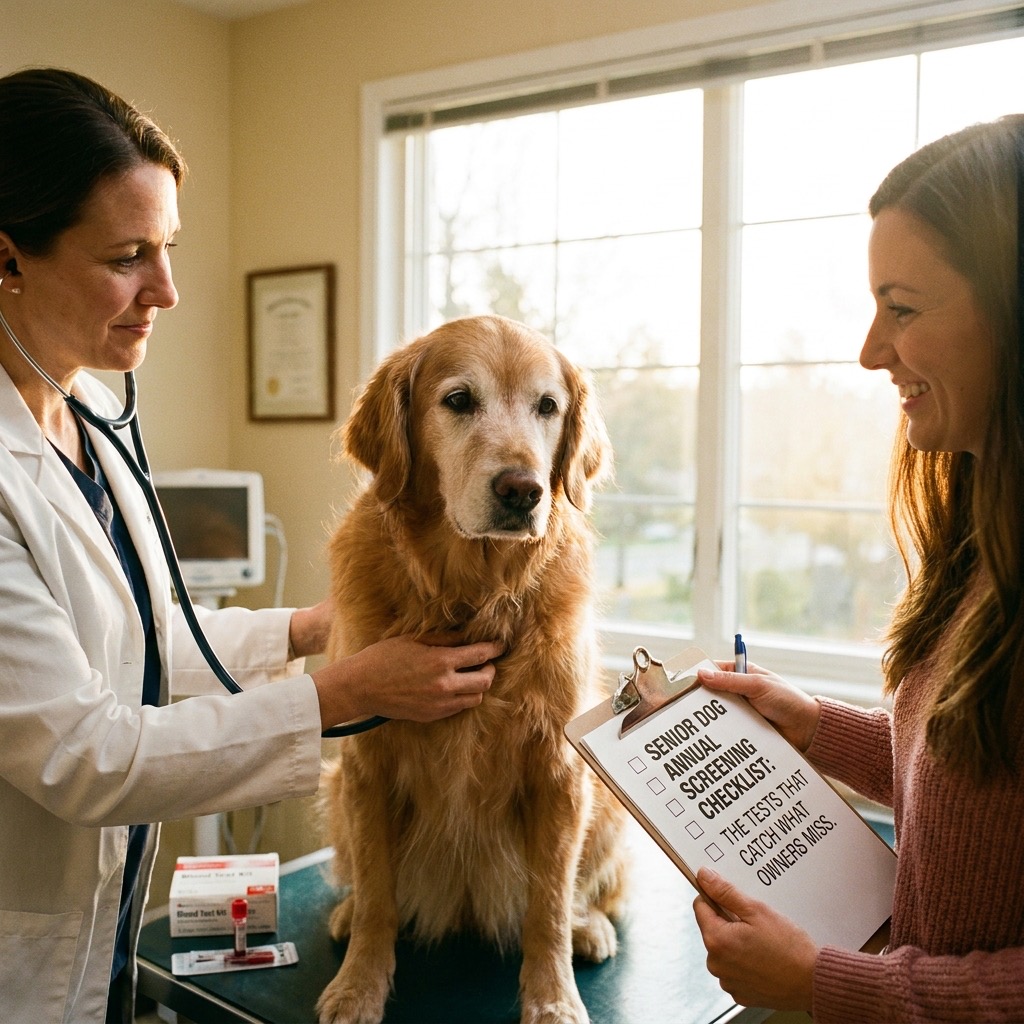
Senior screening is the highest-leverage preventive intervention in small animal medicine. This is what the screening looks like, what it tests for, and how to use the results.
When a dog becomes "senior"
The age at which a dog is considered senior depends on size:
- Small breeds (under 10 kg adult): senior at 10-11 years
- Medium breeds (10-25 kg): senior at 9-10 years
- Large breeds (25-40 kg): senior at 8-9 years
- Giant breeds (over 40 kg): senior at 7-8 years
The larger the breed, the earlier the senior phase begins. A 7-year-old Great Dane is a senior. A 7-year-old Chihuahua is not.
Some breeds are genetically predisposed to specific senior conditions:
- Labrador Retrievers: obesity, joint disease, laryngeal paralysis
- Golden Retrievers: cancer (particularly hemangiosarcoma and lymphoma)
- German Shepherds: hip dysplasia, degenerative myelopathy
- Boxers: cancer (mast cell tumours, heart tumours)
- Cavalier King Charles Spaniels: mitral valve disease
- Dachshunds: intervertebral disc disease
- West Highland White Terriers: inflammatory bowel disease, bladder stones
The breed-specific risks should inform the screening protocol. A Golden Retriever's senior screen is weighted toward cancer markers. A Cavalier's screen is weighted toward cardiac markers.
The full senior screening protocol
A complete senior screening includes the following. The exact tests depend on the dog's age, breed, and risk factors, but this is the comprehensive version.
Physical examination
A thorough physical exam is the foundation. The vet assesses:
- Eyes: cataracts, lens luxation, retinal changes, dry eye
- Ears: infection, masses, hearing loss (the dog may not respond to the vet's call)
- Mouth: dental disease, oral masses, gum colour
- Skin and coat: hair loss, lumps, parasites, skin infections
- Heart: rate, rhythm, murmurs, lung sounds
- Abdomen: organ enlargement, masses, pain
- Lymph nodes: enlargement suggesting infection or cancer
- Musculoskeletal: lameness, joint swelling, muscle atrophy
- Body condition score: ideal, over, or under weight
- Behaviour: cognitive function, anxiety, sleep changes
The physical exam is necessary but not sufficient. Most subclinical conditions don't produce physical exam changes until they're advanced. The lab tests are where the early detection happens.
Complete blood count (CBC)
The CBC evaluates red blood cells, white blood cells, and platelets.
- Anaemia: low red blood cells. Causes include chronic disease, kidney disease, bleeding ulcers, immune-mediated destruction
- Polycythemia: high red blood cells. Less common. Causes include dehydration, kidney tumours producing erythropoietin
- Leukocytosis: high white blood cells. Suggests infection, inflammation, or leukaemia
- Leukopenia: low white blood cells. Suggests viral infection, drug reaction, or bone marrow disease
- Thrombocytopenia: low platelets. Suggests immune-mediated disease, tick-borne disease, or bone marrow issues
- Thrombocytosis: high platelets. Suggests inflammation, iron deficiency, or rarely leukaemia
The CBC provides a broad overview of haematological health. Subtle changes (mild anaemia, mild thrombocytopenia) can be early indicators of conditions that aren't yet symptomatic.
Comprehensive chemistry panel
The chemistry panel evaluates organ function, electrolytes, and metabolic state. The standard senior panel includes:
- Kidney: BUN (blood urea nitrogen), creatinine, SDMA (more sensitive early marker), phosphorus
- Liver: ALT, ALP, GGT, bilirubin, albumin, total protein
- Pancreas: glucose, amylase, lipase (or specific pancreatic lipase immunoreactivity, cPLI/fPLI)
- Electrolytes: sodium, potassium, chloride, ionised calcium
- Protein: total protein, albumin, globulin, A:G ratio
- Other: cholesterol, triglycerides
The chemistry panel is the workhorse of senior screening. Most subclinical conditions show chemistry changes 6-12 months before physical signs. The most important early markers:
- SDMA: a kidney function marker that rises earlier than creatinine. SDMA above 14 μg/dL in a senior dog suggests early kidney disease
- ALT and ALP: liver enzymes. Mild elevations (2-3x normal) in a senior dog are often early indicators of liver disease, medication effects, or Cushing's disease
- Glucose: fasting glucose above 110 mg/dL in a senior dog is concerning for diabetes. Glucose above 180 mg/dL with clinical signs confirms diabetes
- Albumin: low albumin suggests chronic disease, intestinal loss (protein-losing enteropathy), or kidney loss (proteinuria)
- Phosphorus: elevated phosphorus with elevated creatinine suggests advanced kidney disease. Elevated phosphorus with normal creatinine can be early kidney disease or hyperparathyroidism
Urinalysis
The urinalysis is often skipped because it's "inconvenient" (the owner has to collect a sample at home). It's also one of the most informative tests in senior screening.
A complete urinalysis includes:
- Specific gravity: the concentration of the urine. Low specific gravity (below 1.020) in a dog that isn't drinking excessively is an early sign of kidney disease
- Protein: protein in the urine can indicate kidney disease, urinary tract infection, or other issues. The urine protein:creatinine ratio (UPC) quantifies the protein loss
- Glucose: glucose in the urine with normal blood glucose suggests kidney issues. Glucose in urine with elevated blood glucose confirms diabetes
- Sediment: cells, crystals, bacteria, casts. The presence of bacteria confirms infection. The presence of casts suggests kidney damage
- pH: alkaline urine in a dog on a normal diet is unusual. Can suggest infection or specific metabolic issues
- Blood: red blood cells in the urine can indicate infection, stones, or tumours
The single most important urinalysis finding in a senior dog: specific gravity below 1.020 with SDMA above 14 μg/dL. This combination confirms early chronic kidney disease. The owner is now in a position to start dietary management, phosphate binders, and other interventions that can add 2-4 years of quality life.
Thyroid testing
Hypothyroidism is the most common endocrine disease in senior dogs. Signs include weight gain, lethargy, hair loss, skin infections, and cold intolerance. The diagnosis:
- Total T4: a screening test. Low T4 supports hypothyroidism but isn't diagnostic on its own
- Free T4 (by equilibrium dialysis): more accurate than total T4
- TSH (thyroid-stimulating hormone): elevated in primary hypothyroidism
- Thyroid autoantibodies (T4AA, T3AA): positive in autoimmune thyroiditis (the most common cause of hypothyroidism)
The standard senior thyroid panel: total T4, free T4, TSH, and possibly autoantibodies. Treatment is straightforward (levothyroxine supplementation), but only if the diagnosis is confirmed.
Cardiac screening
Cardiac screening is particularly important for breeds at risk (Cavalier King Charles Spaniel, Boxer, Doberman, Great Dane) and for any dog with a heart murmur on physical exam.
- Auscultation: the vet listens to the heart. Murmurs, arrhythmias, and rate abnormalities are noted
- Blood pressure: hypertension is common in senior dogs, particularly with kidney disease or Cushing's
- NT-proBNP: a cardiac biomarker that rises with heart enlargement or failure. Useful screening for occult heart disease
- Cardiac ultrasound (echocardiogram): the gold standard for cardiac evaluation. Identifies valve disease, cardiomyopathy, and congenital defects. Recommended for high-risk breeds and any dog with a murmur
- ECG (electrocardiogram): identifies arrhythmias. Recommended for high-risk breeds (Boxer cardiomyopathy, Doberman cardiomyopathy) and any dog with an irregular rhythm on exam
A senior dog with a heart murmur but no clinical signs: the cardiac ultrasound determines whether the murmur is benign or the early stage of mitral valve disease. The answer determines whether the dog needs cardiac medication or simply monitoring.
Cancer screening
Cancer is the leading cause of death in senior dogs, particularly in certain breeds. The screening:
- Lymph node palpation: enlarged lymph nodes can indicate lymphoma
- Abdominal palpation: organ enlargement, masses
- Thoracic radiographs (chest X-rays): identify lung metastases, primary lung tumours, heart enlargement
- Abdominal ultrasound: identify abdominal masses, organ changes, free fluid. Recommended for senior dogs as a baseline and for any dog with abnormal bloodwork
- Urinalysis with sediment exam: identify bladder tumours (transitional cell carcinoma), particularly in Scottish Terriers, Westies, and Beagles
- Mammary gland palpation: identify mammary tumours in intact females
- Testicular palpation: identify testicular tumours in intact males (uncommon but possible)
- Skin and subcutaneous mass evaluation: any new or changing mass should be aspirated or biopsied
The most aggressive senior cancer screening includes thoracic radiographs, abdominal ultrasound, and fine-needle aspiration of any palpable masses. This is a more expensive protocol but catches the most cancers at an early stage.
Infectious disease screening
For senior dogs, infectious disease screening depends on the lifestyle and geography:
- Heartworm test: annual, even for dogs on prevention. Confirms the prevention is working
- Tick-borne disease panel: Lyme, ehrlichiosis, anaplasmosis. Recommended for dogs in endemic areas
- Leptospirosis: not routinely screened but considered for dogs with kidney or liver issues of unknown cause
- Brucellosis: screening for breeding dogs or dogs exposed to high-risk populations
Vision and hearing
- Vision: ophthalmoscopic exam to identify cataracts, lens luxation, retinal disease. Sudden acquired retinal degeneration (SARDS) is a senior condition
- Hearing: the vet assesses response to sounds. Brainstem auditory evoked response (BAER) testing is the gold standard but rarely done in clinical practice
Cognitive function
Canine cognitive dysfunction (CCD) is the dog equivalent of dementia. The signs:
- Disorientation
- Changes in sleep-wake cycle
- Loss of housetraining
- Decreased interaction with the family
- Anxiety
- Pacing
The vet can assess cognitive function with a questionnaire (the CCDR — Canine Cognitive Dysfunction Rating scale) and a physical exam. There's no specific treatment for CCD, but environmental management, dietary supplements (SAMe, omega-3s, antioxidants), and medications (selegiline, propentofylline) can slow progression.
What the screening catches: the common senior conditions
A list of the most common senior conditions identified by screening:
Chronic kidney disease (CKD)
- Catching tool: SDMA, creatinine, urinalysis specific gravity
- Frequency: very common, particularly in older cats but also in senior dogs
- Outcome: dietary management, phosphate binders, ACE inhibitors can extend life by 2-4 years
Cushing's disease (hyperadrenocorticism)
- Catching tool: ALP elevation on chemistry panel, low-dose dexamethasone suppression test, ACTH stimulation test, abdominal ultrasound
- Frequency: relatively common in senior dogs
- Outcome: treatment with trilostane or mitotane, or surgery for adrenal tumours, can extend life and improve quality
Diabetes mellitus
- Catching tool: fasting glucose, urinalysis glucose
- Frequency: increasingly common in senior dogs, particularly with obesity
- Outcome: insulin therapy, dietary management (high fibre, low fat), exercise. Most diabetic dogs do well with appropriate management
Hypothyroidism
- Catching tool: thyroid panel (T4, free T4, TSH)
- Frequency: relatively common in middle-aged to senior dogs
- Outcome: levothyroxine supplementation, usually lifelong
Heart disease
- Catching tool: cardiac auscultation, NT-proBNP, echocardiogram
- Frequency: very common, particularly in small breeds (mitral valve disease) and large breeds (dilated cardiomyopathy)
- Outcome: ACE inhibitors, pimobendan, diuretics as needed. Early intervention extends life and improves quality
Cancer
- Catching tool: physical exam, abdominal ultrasound, thoracic radiographs, fine-needle aspiration
- Frequency: very common, leading cause of death in senior dogs
- Outcome: depends on the type. Mast cell tumours, lymphoma, hemangiosarcoma, osteosarcoma are the most common. Some are treatable (surgery, chemotherapy, radiation), some are not
Dental disease
- Catching tool: oral exam under anaesthesia (a conscious oral exam is inadequate)
- Frequency: nearly universal in senior dogs
- Outcome: professional dental cleaning, extractions as needed. Dental disease contributes to heart, kidney, and liver issues
Osteoarthritis
- Catching tool: physical exam, owner report
- Frequency: very common, particularly in large breeds
- Outcome: weight management, NSAIDs, joint supplements, physical therapy, environmental modifications
The frequency of screening
For senior dogs, the recommended screening frequency:
- Annual: minimum. Most senior dogs should have a full senior screen every year
- Biannual (twice yearly): for dogs with known conditions (CKD, heart disease, Cushing's) or breeds at high risk for rapid-onset conditions (Goldens, Boxers, Dobermans)
- Quarterly: for dogs with progressive conditions requiring close monitoring
The cost of annual senior screening:
- Physical exam: $50-100
- CBC: $30-50
- Chemistry panel: $50-100
- Urinalysis: $25-50
- Thyroid panel: $50-100
- Heartworm test: $25-40
- Tick-borne panel: $50-100
- Cardiac biomarker (NT-proBNP): $50-75
- Total for the basic panel: $250-450
- Plus cardiac ultrasound ($300-500) and/or abdominal ultrasound ($300-500) if recommended
The cost of not screening: a late-stage diagnosis of CKD, cancer, or heart disease that could have been caught early. The cost difference between treating a stage 2 CKD (years of management) and a stage 4 CKD (weeks of management or euthanasia) is orders of magnitude.
The pre-screening owner preparation
The owner can prepare for the screening visit by:
- Collecting a urine sample at home, first morning (most concentrated), in a clean container
- Fasting the dog for 8-12 hours before the blood draw (water is fine)
- Bringing all medications the dog is taking
- Writing down any observations: changes in appetite, water consumption, energy, sleep, behaviour, weight
- Noting any new lumps or bumps found during grooming or petting
The vet uses the observations, the lab results, and the physical exam findings together. The pre-visit preparation makes the visit more productive.
The "watchful waiting" trap
A common owner response to senior screening recommendations: "Let's wait and see if anything changes." The problem: by the time changes are visible to the owner, the disease is advanced. A dog that has lost 10% of its body weight is in the late stage of whatever disease is causing the weight loss. A dog that is drinking more water is in the middle to late stage of kidney disease or diabetes. A dog that is slowing down is in pain from osteoarthritis.
The screening catches the condition before the owner notices. The "wait and see" approach skips the screening's main benefit.
The "normal for the breed" exception
For some breeds, certain lab values are slightly different. For example:
- Sighthounds (Greyhound, Whippet, Saluki): higher PCV, lower T4, lower ALP. The "normal" range is different for these breeds
- Working sled dogs: higher muscle mass means higher creatinine. The "normal" range is higher
- Young large-breed dogs: lower ALP than adults
The vet should use breed-specific reference ranges when interpreting lab values. This is one reason a vet familiar with the breed is valuable.
The bottom line
Senior dog annual screening is the highest-leverage preventive intervention in small animal medicine. The cost is $250-450 for the basic panel. The benefit is the early detection of CKD, Cushing's, diabetes, hypothyroidism, heart disease, cancer, dental disease, and osteoarthritis — all of which are more manageable when caught early. The dog that is screened annually lives longer and better than the dog that is screened only when symptoms appear. The protocol is established, the tests are accessible, the lab work is reliable. The owner who invests in annual screening is investing in years of quality life for the senior dog. The owner who waits for symptoms is investing in the late-stage management of a disease that could have been caught earlier. The choice is clear: screen early, treat early, extend quality life.
---
About the author: [James Morrison](../James%20Morrison.md) holds a BVSc from the University of Liverpool and has 22 years of small animal general practice, with a focus on preventive medicine and multi-pet household dynamics.