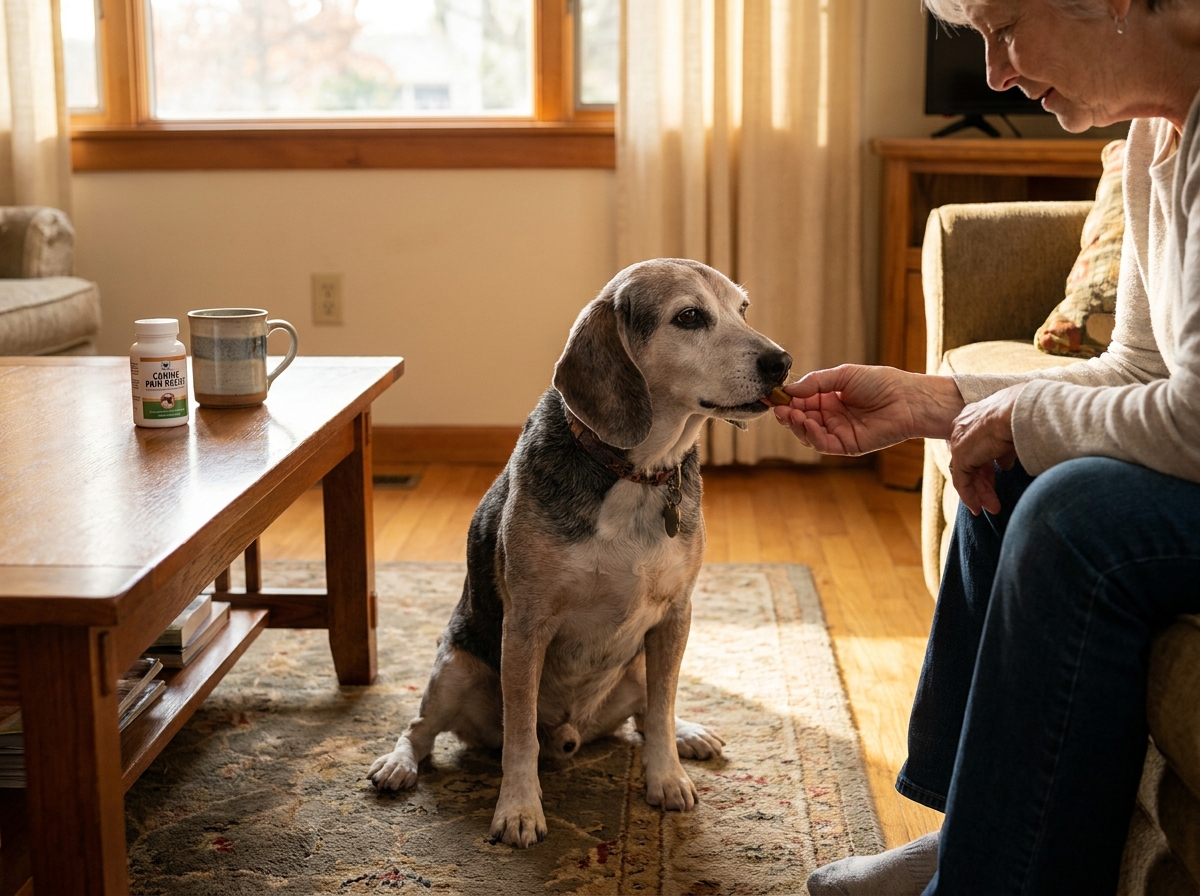


Quality of life scoring: a tool for senior pets that turns emotion into a decision
The hardest decision in veterinary medicine is the one that ends a pet's life. The hardest version of that decision is the one where the pet is not in obvious crisis — the pet is not seizing, not bleeding, not in acute distress. The pet is just slowly, gradually getting older, and the owner is asking "is it time?" and the vet is asking the same question, and neither of them has a way to answer it. The quality of life scale was developed to give both the owner and the vet a structured way to answer. In this article I will walk through what the HHHHHMM scale actually measures, how to apply it weekly to a senior pet, the threshold at which the score should trigger a conversation, and the honest limits of any scoring system in a decision that is fundamentally personal.
What the HHHHHMM scale measures
The HHHHHMM scale was developed by Dr. Alice Villalobos and is now the most widely used quality of life assessment in small animal practice. The acronym stands for the seven domains the scale evaluates, each on a 0-10 scale:
Hurt: Is pain adequately managed? A pet that is panting, restless, reluctant to move, or vocalizing is in uncontrolled pain. Score 0-3 means severe uncontrolled pain. Score 8-10 means pain is well-managed and the pet is comfortable.
Hunger: Is the pet eating enough? A pet that is refusing food entirely, or eating only a few bites, is in a different category than a pet that is eating small meals willingly. A pet that needs hand-feeding to maintain intake is also in a different category than a pet that eats on its own.
Hydration: Is the pet drinking enough, and is hydration being maintained? A pet that is clinically dehydrated (skin tenting, tacky gums) needs subcutaneous or IV fluids. A pet that is drinking on its own and maintaining hydration is in a different category.
Hygiene: Can the pet keep itself clean? A pet that is soiling itself, developing urine scald, or unable to groom is in a different category than a pet that is maintaining its coat and staying clean. The pet that needs regular bathing by the owner to stay clean is between the two.
Happiness: Does the pet express joy, engagement, interest in the family? A pet that still greets the owner, still responds to favorite activities, still shows interest in food and play, is in a different category than a pet that has withdrawn to a corner, no longer responds to the family, and no longer engages with the environment. This is the most subjective of the seven domains and the one that owners most often disagree on.
Mobility: Can the pet move around on its own? A pet that can walk, stand, and reposition without assistance is in a different category than a pet that is falling, unable to stand, or unable to reach the litter box or the yard without help. The pet that needs a sling to walk is between the two.
More good days than bad: A single 0-10 score that asks the owner to estimate, over the past week, whether the pet had more good days than bad. This is the integrative domain. A pet that has more bad days than good is a pet whose overall quality of life is in decline, regardless of how the other six domains are scoring.
The total score is the sum of the seven domains, with a maximum of 70. A score above 35 means the pet's quality of life is acceptable. A score below 35 means it is not. The threshold of 35 is the most commonly used decision point in hospice care.
The weekly assessment protocol
The HHHHHMM scale is not a one-time assessment. It is a weekly log that tracks the pet's quality of life over time and shows the trajectory, not just the snapshot. The protocol: pick a fixed day of the week (Sunday is the common choice) and a fixed time (morning, when the pet is at its most active). Score each of the seven domains. Total the score. Write the score on a log with the date. Repeat weekly.
The log is what produces the decision-grade data. A pet that scores 50 this week and 45 next week and 40 the week after is a pet on a downward trajectory. A pet that scores 50 this week and 55 next week and 60 the week after is a pet on an upward trajectory, or a pet that is stable. The trend matters more than the individual score. A pet that has a sudden single-week drop in score is a pet that needs a medical workup for the cause, not necessarily a pet that is at end of life.
The owner who logs the score weekly is the owner who can make the decision when the time comes with a clear conscience that the decision was based on the data, not on a single bad morning. The owner who never logs and tries to make the decision from memory is the owner who second-guesses the decision for years afterward.
The medical workup that the score should trigger
A drop in any single domain, or a drop in the total score, is a reason to call the vet, not necessarily a reason to consider euthanasia. Many of the HHHHHMM domains have treatable causes. A drop in Hurt is a reason to revisit the pain management plan. A drop in Hunger is a reason to check for dental disease, GI disease, or a medication side effect. A drop in Mobility is a reason to revisit the arthritis plan, consider physical therapy, or add a joint supplement. A drop in Hygiene is a reason to consider assisted grooming or a bedding change. A drop in Happiness can be a sign of cognitive dysfunction, which is itself treatable with medication, diet, and environmental enrichment.
The workup that the score should trigger: a full physical exam, blood work (CBC, chemistry, thyroid, urinalysis), pain assessment, mobility assessment, and cognitive assessment. The workup is what separates the "this is a treatable decline" pet from the "this is an end-of-life pet." Many senior pets who score below 35 on the first assessment score above 35 after a course of treatment, a medication adjustment, or a diet change.
The threshold conversation
The score is a tool, not a verdict. A pet that scores 30 does not have to be euthanized this week. A pet that scores 40 does not have to be kept alive at all costs. The score is the basis for the conversation between the owner and the vet about what the pet's life looks like, what the trajectory is, and what the options are. The conversation covers three options: continue current management, escalate treatment (more medications, more diagnostics, hospitalization), or begin hospice with a defined end point.
The conversation is most productive when the owner has logged the score weekly for at least a month, so the trajectory is visible. The owner who walks into the vet with a 4-week log and says "we were at 45, then 40, then 35, and this week we are at 30" has a different conversation than the owner who walks in with a single bad morning and says "I think it is time." The data lets the vet help the owner see the trajectory, and the trajectory is what makes the decision clearer.
The honest limits
The HHHHHMM scale has limits. The first is that it is a snapshot. A pet that scores 60 on a quiet Sunday afternoon might score 30 on a Monday morning during a pain flare. The weekly log averages out the noise, but it does not eliminate it. The second is that the domains are not equally weighted. A pet that scores 0 on Hurt (uncontrolled severe pain) is in a different category than a pet that scores 0 on Hygiene (cannot keep clean). The scale treats them the same, but the decision weight is different. The third is that the most subjective domain — Happiness — is the one that owners most often disagree on. Two owners of the same pet can score the same domain differently, and the difference is not resolved by the scale.
The fourth limit is the most important: the scale does not make the decision. The scale provides structure, but the decision is the owner's. The owner who knows the pet better than anyone is the one who decides. The vet's role is to provide the medical information, the pain management options, the hospice resources, and the honest assessment of the trajectory. The owner's role is to make the decision, with the information, on behalf of the pet.
The single sentence to remember
The HHHHHMM scale is a weekly log, not a one-time test. The trend is the decision. The threshold is the conversation. The decision is the owner's, made on behalf of the pet, with the information, the vet, and the data that the log provided. The pet that scores 30 for three weeks in a row, despite a full medical workup and treatment escalation, is a pet whose quality of life is in terminal decline. The pet that scores 60 most weeks and 30 in a single bad week is a pet that needs the bad week investigated, not a pet that needs to be euthanized. The data separates the two.