
Large-breed puppy growth: how to feed for slow, controlled growth that protects the joints
The large-breed puppy — the Great Dane, the German Shepherd, the Labrador, the Golden Retriever, the Bernese Mountain Dog, the Rottweiler, the Saint Bernard — is the puppy that is most at risk for developmental orthopedic diseases (DOD) if the puppy is fed incorrectly during the first 12-18 months. The DOD include hip dysplasia, elbow dysplasia, osteochondritis dissecans (OCD), and hypertrophic osteodystrophy (HOD), and the DOD are the most common cause of chronic lameness and chronic pain in the large breeds. The causes of DOD are multifactorial (genetics play a major role, and the DOD-prone breeds should be screened before breeding), but the feeding protocol during the growth period is a major modifiable factor. The large-breed puppy that is fed for slow, controlled growth is the puppy that has the lowest risk of DOD, and the puppy that is fed for maximum growth is the puppy that has the highest risk. In this article I will walk through why slow growth matters, the specific feeding protocol, the monitoring that catches the problems early, the supplements that may help, and the mistakes that produce the DOD.
Why slow growth matters
The growth plates (the areas of cartilage at the ends of the long bones that produce the bone growth) are open during the growth period, and the growth plates are vulnerable to mechanical stress. The growth plate that is subjected to excessive force (from a heavy body on an immature frame) is the growth plate that develops microfractures, that develops inflammation, and that develops abnormal bone growth. The abnormal bone growth produces the dysplasia, the OCD, the HOD, and the other DOD.
The large-breed puppy that is fed for maximum growth is the puppy that grows too fast for the bones to keep up. The body weight increases faster than the bone can support, and the bone fails under the weight. The puppy that is fed for slow, controlled growth is the puppy that grows at the rate that the bones can support, and the bones develop properly under the controlled weight.
The difference in growth rate between a slow-growth protocol and a fast-growth protocol is substantial. A Great Dane puppy fed for slow growth reaches 100 pounds at 8-10 months; a Great Dane puppy fed for fast growth reaches 100 pounds at 5-6 months. The 3-4 month difference in the timing of the weight gain is the difference between the bone that has had time to mature and the bone that is still immature.
The specific feeding protocol
The feeding protocol for slow, controlled growth in the large breeds has four components: the food, the amount, the frequency, and the monitoring.
The food: a complete and balanced large-breed puppy food (labeled "large breed puppy" or "growth for large breeds"). The large-breed puppy food has a lower caloric density than the regular puppy food, a lower fat content, and a controlled calcium and phosphorus level. The controlled calcium level is critical: the calcium excess (more than 1.5% dry matter) has been shown to increase the risk of DOD, particularly in the breeds that are already DOD-prone. The major veterinary diet manufacturers (Purina Pro Plan Large Breed Puppy, Hill's Science Diet Large Breed Puppy, Royal Canin Large Breed Puppy) all have the right calcium, phosphorus, and caloric density for the controlled growth.
The amount: the amount that keeps the puppy at a lean body condition. The puppy should be fed to a body condition score of 4-4.5 on the 9-point scale (a lean puppy with the ribs easily felt, the waist visible, and the tuck visible). The amount is typically 25-30% less than the amount on the food bag label, because the label is calculated for the maximum growth, and the controlled growth requires less food.
The frequency: 3-4 meals per day for the first 4 months, transitioning to 2 meals per day by 6 months. The multiple meals distribute the caloric intake over the day, preventing the post-meal glucose spike that has been associated with the increased risk of DOD. The 2-meal protocol by 6 months is the standard adult feeding protocol.
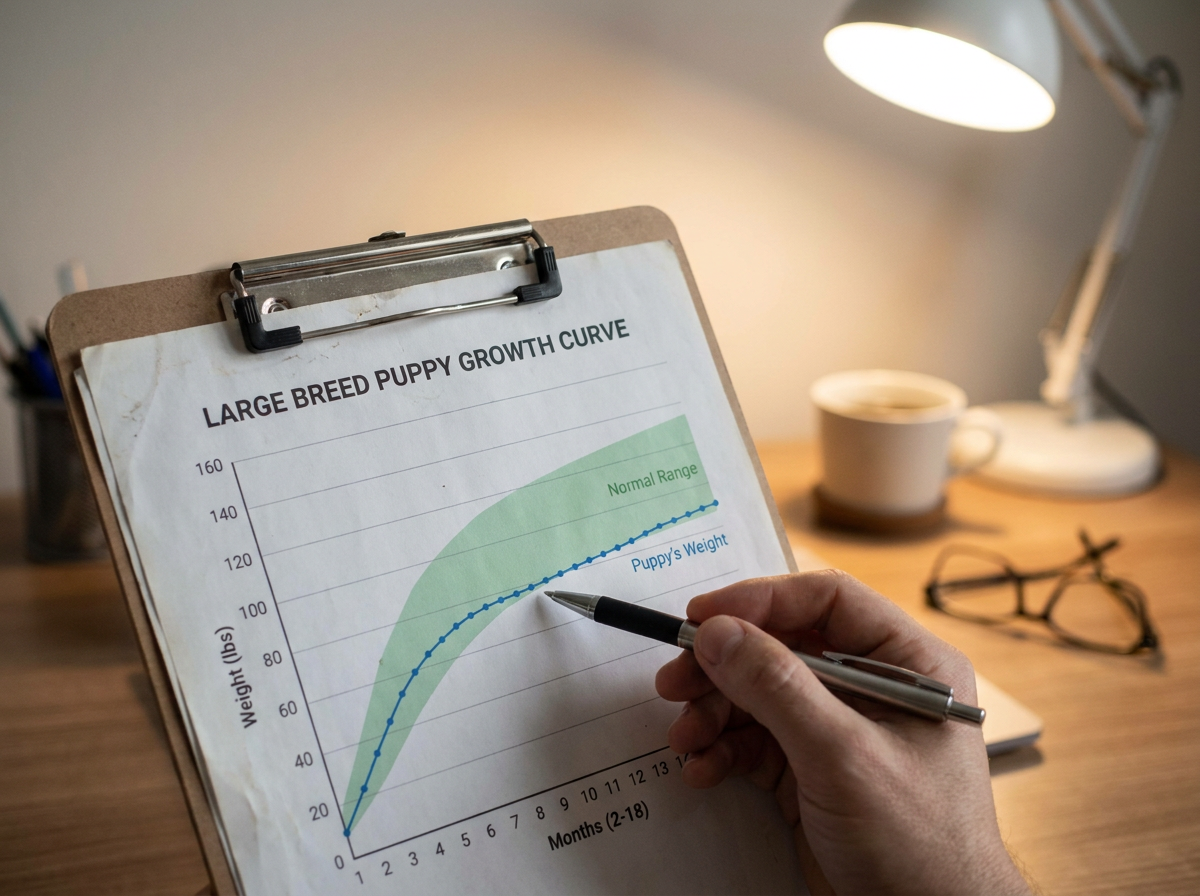
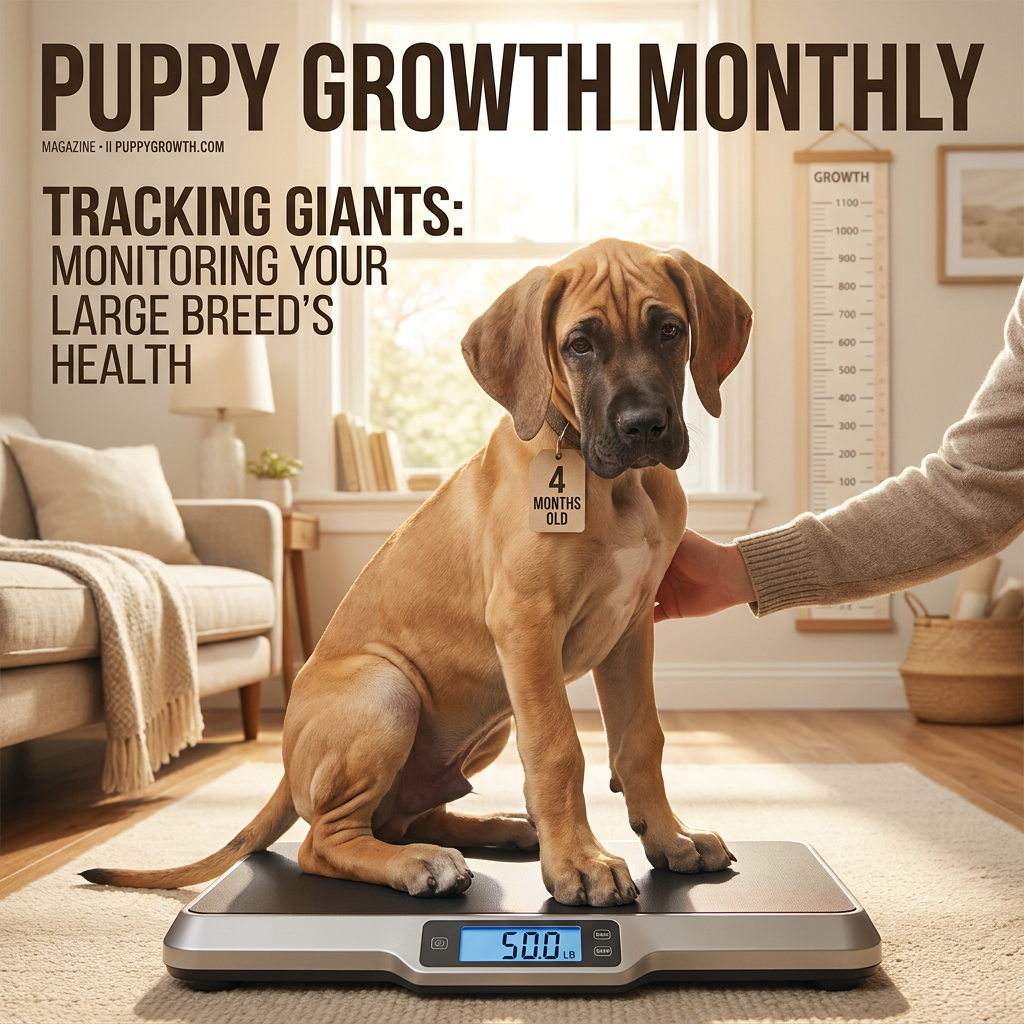
The monitoring: weekly weighing, monthly body condition scoring, and a monthly growth curve. The growth curve for the large-breed puppy should follow the breed-specific curve, with the puppy at the lower end of the normal range (50-75% of the adult weight at 4 months, 80-90% at 8 months, 95% at 12 months). The puppy that is exceeding the curve is the puppy that is growing too fast, and the food amount should be reduced.
The supplements
The supplements that may help: glucosamine and chondroitin (the joint-support nutrients, fed at 25-30 mg/kg of glucosamine per day), omega-3 fatty acids (the anti-inflammatory fatty acids, fed at 50-75 mg/kg of combined EPA and DHA per day), and vitamin C (the antioxidant, fed at 50-100 mg per day for the large-breed puppy). The supplements are not substitutes for the controlled-growth feeding, but the supplements are additions to the controlled-growth feeding that may provide additional joint support.
The supplements that do not help: calcium supplements (the calcium excess increases the DOD risk), high-dose vitamin D (the excess has the same effect as the calcium excess), and "growth formulas" with extra protein or extra calories (the excess energy is what produces the fast growth).
The mistakes
The first mistake: the free-choice feeding. The puppy that is fed free-choice (food available at all times) is the puppy that grows as fast as the food allows, and the fast growth is the puppy that develops the DOD. The fix: the measured feeding, twice or three times per day, with the amount calculated to maintain the lean body condition.
The second mistake: the "all you can eat" feeding. The owner who is told that the puppy is "going through a growth spurt" and who increases the food amount is the owner who is feeding for the fast growth. The fix: the growth spurt is normal, and the puppy that is at the lean body condition during the growth spurt is the puppy that is growing at the right rate. The food amount does not need to be increased.
The third mistake: the "premium" food. The owner who is feeding a "premium" or "high-performance" puppy food is often feeding a food that is too calorie-dense for the controlled growth. The fix: a large-breed specific puppy food from a major manufacturer, with the calorie density appropriate for the controlled growth.
The fourth mistake: the early neuter. The studies have shown that the early neuter (before 12 months in the large breeds) is associated with an increased risk of hip dysplasia and other DOD. The fix: delay the neuter to 12-18 months for the large breeds, or to 18-24 months for the giant breeds. The early neuter is a separate decision from the feeding decision, but the early neuter interacts with the feeding decision to compound the DOD risk.
The monitoring that catches the problems early
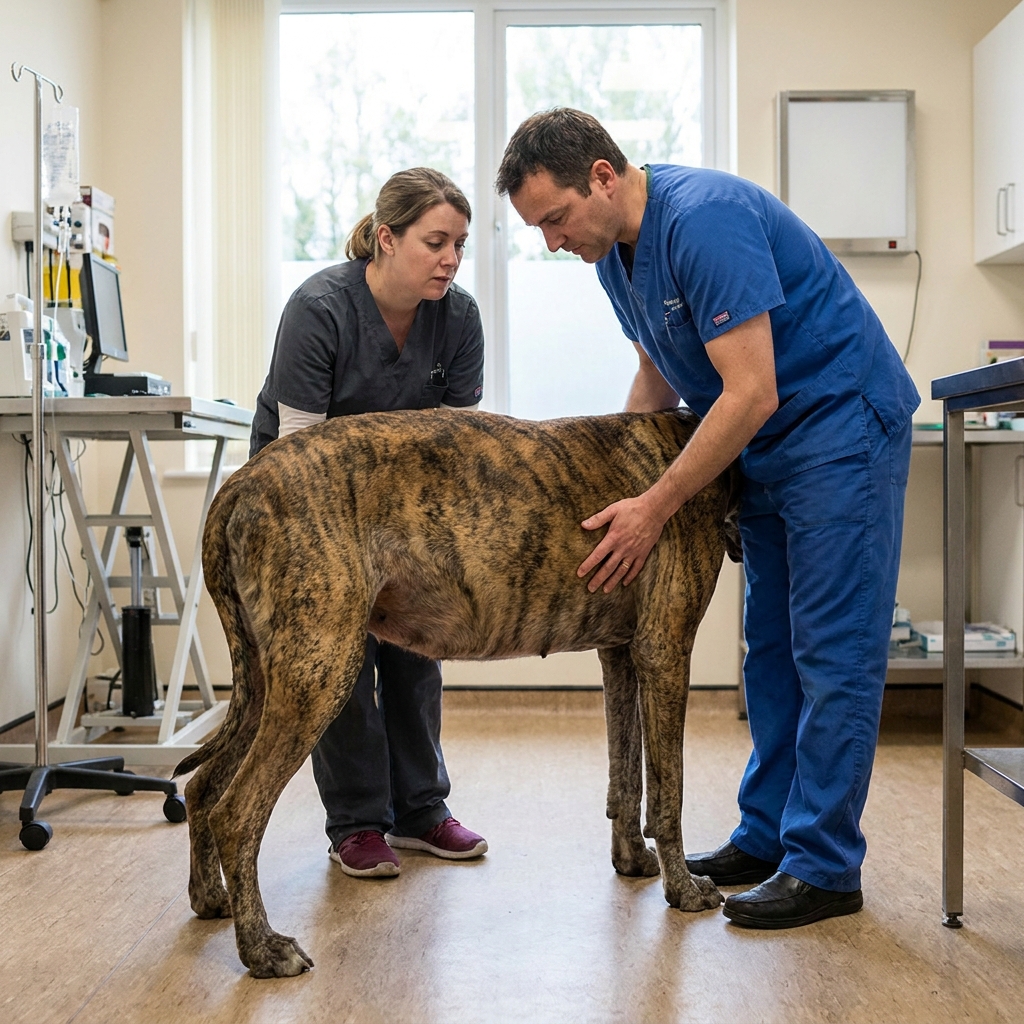
The monthly monitoring: weight, body condition score, and a visual check of the puppy's gait. The puppy that is showing any lameness, any stiffness, any reluctance to move, any abnormal posture is the puppy that should be evaluated by the vet. The vet may take X-rays to evaluate the growth plates, the joint conformation, and the early signs of DOD. The early intervention (rest, pain management, dietary adjustment) can prevent the progression of the DOD.
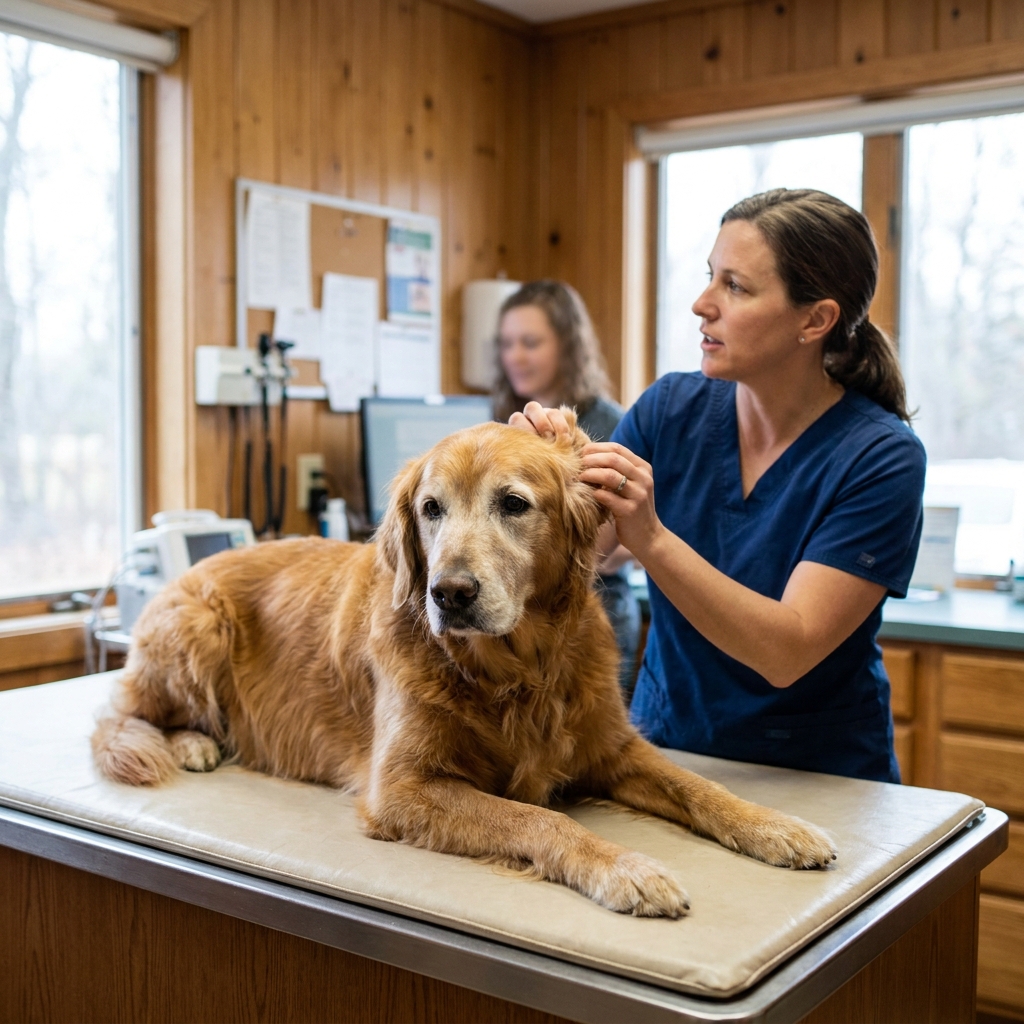
The veterinary evaluation: the large-breed puppy should be evaluated by the vet at 4, 6, 9, and 12 months. The evaluation includes a physical exam, a weight check, a body condition score, and a discussion of the feeding protocol. The puppy that is developing the DOD is the puppy that is showing the early signs, and the early signs are most reliably caught by the vet who is experienced with the large breeds.
The honest summary
The large-breed puppy that is fed for slow, controlled growth is the puppy that has the lowest risk of developmental orthopedic disease. The feeding protocol: a large-breed specific puppy food, fed to lean body condition, 2-3 meals per day, with weekly weight checks and monthly body condition scoring. The supplements: glucosamine, chondroitin, omega-3, vitamin C, all at the recommended doses. The mistakes: free-choice feeding, growth spurt overfeeding, premium food, early neuter. The monitoring: monthly vet checks, with X-rays if any lameness appears. The owner who runs the protocol is the owner who gives the puppy the best chance of a lifetime of healthy joints. The protocol is the work. The protocol is what makes the difference.