
Diet transitions: the 7-day switch-over protocol that prevents GI upset
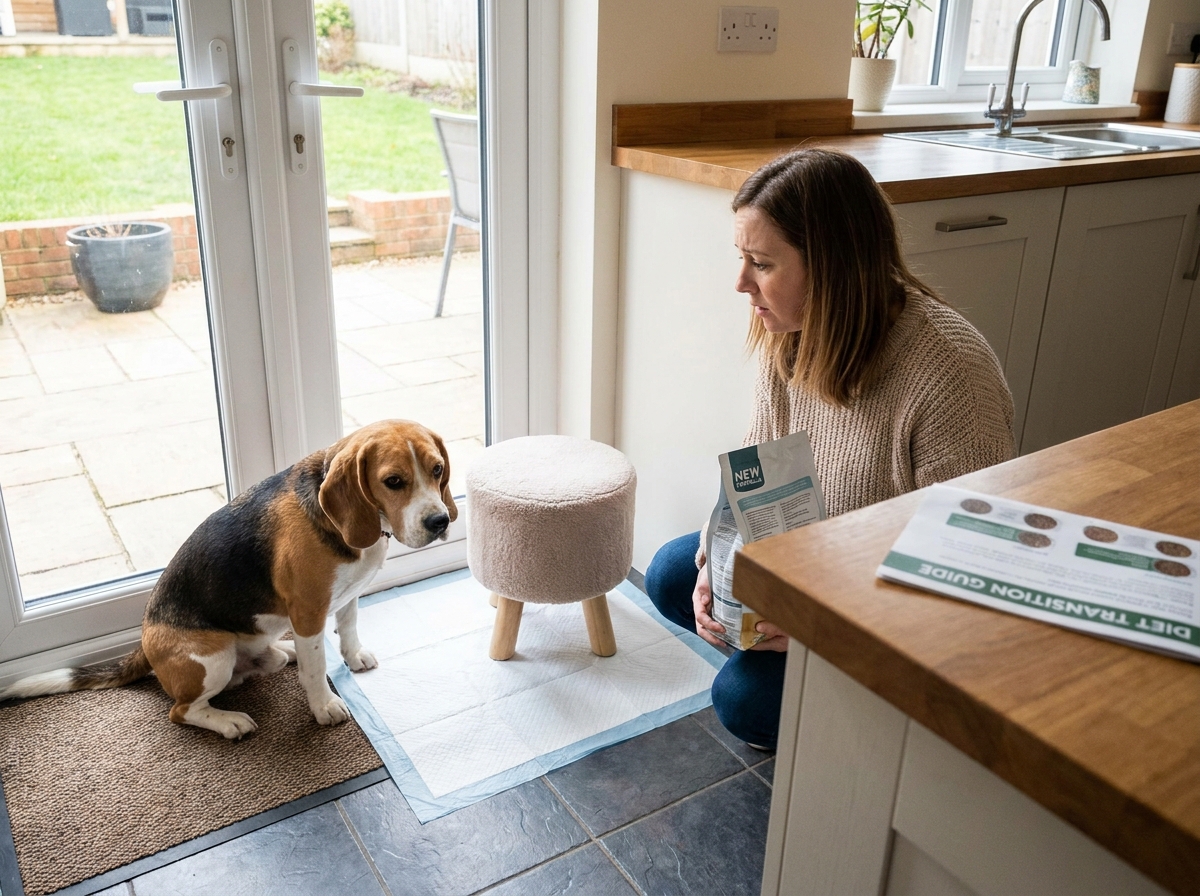
The dog that gets a new food on Monday and has diarrhea by Wednesday is the dog that did not get a transition. The cat that gets a new food and refuses to eat it is the cat that was given the new food as a full swap instead of a gradual transition. The dog or cat that develops a food sensitivity after a diet change is the pet that had the immune system stressed by the sudden change. The 7-day transition protocol is the protocol that prevents all of these problems, and the 7-day transition is the protocol that every dog and cat owner should know. In this article I will walk through why the transition matters at the gut level, the 7-day protocol in detail, the variations for different scenarios (puppy to adult, adult to senior, healthy to prescription, kibble to raw), the signs that the transition is going wrong, and the mistakes that turn a routine diet change into a GI crisis.
Why the transition matters
The gut microbiome is the population of bacteria, yeast, and other microorganisms that live in the gastrointestinal tract. The microbiome is established in early life and is relatively stable in adulthood, but the microbiome is sensitive to changes in the diet. The sudden introduction of a new food — a different protein source, a different carbohydrate source, a different fat source, a different fiber source, a different additive profile — is a shock to the microbiome, and the microbiome responds with a period of disruption.
The disruption: the bacterial species that are adapted to the old food are suddenly exposed to the new food, and the bacterial species cannot efficiently ferment the new substrates. The result is a rapid shift in the bacterial populations, with the species that are adapted to the new food growing rapidly and the species that were adapted to the old food declining. The shift produces gas, loose stool, and in some cases vomiting. The shift also produces a temporary change in the gut immune system, with the gut-associated lymphoid tissue (GALT) reacting to the new proteins in the food. The reaction is usually mild, but in a dog or cat with a sensitive gut or a food sensitivity, the reaction can be severe.
The transition period of 7-10 days allows the microbiome to gradually adapt to the new food. The gradual introduction gives the bacterial species time to grow and to become the dominant species, and the gradual introduction gives the gut immune system time to become tolerant to the new proteins. The result: a smooth transition with no GI upset, no food refusal, and no immune reaction.
The 7-day protocol
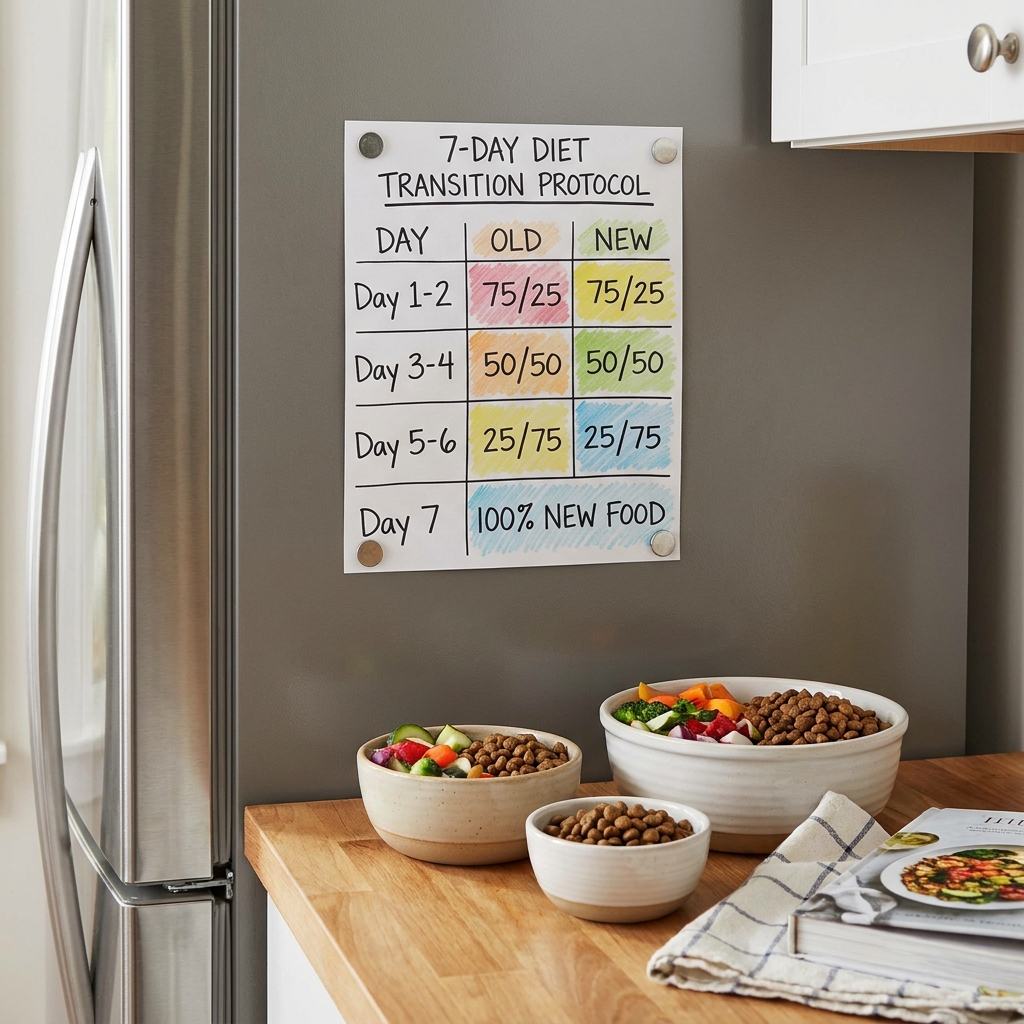
The protocol is straightforward. The 7 days are broken into three phases:
Days 1-2: 75% old food, 25% new food. The new food is introduced as 25% of the total daily intake, with the old food making up the other 75%. The pet eats the mixed food. The owner observes the stool, the appetite, and the overall energy. Most pets show no change during this phase, because the proportion of the new food is too small to cause a significant microbiome shift.
Days 3-4: 50% old food, 50% new food. The new food is increased to 50% of the total daily intake. The owner continues to observe. A small number of pets (5-10%) show mild stool changes during this phase, with slightly softer stool or a slightly increased frequency. The mild changes are a sign that the microbiome is shifting, and the mild changes are not a reason to slow the transition.
Days 5-7: 25% old food, 75% new food. The new food is increased to 75% of the total daily intake. The owner continues to observe. The pets that showed mild changes during the 50/50 phase often normalize during this phase, as the microbiome adapts to the higher proportion of the new food.
Day 8 onwards: 100% new food. The new food is the entire diet. The transition is complete.
The 7-day protocol is the standard, and the standard works for most dogs and cats. The 7-day protocol is too fast for some pets (the senior pet with a sensitive gut, the pet with a history of GI disease, the pet with a food sensitivity), and the 7-day protocol can be extended to 10-14 days for these pets. The 7-day protocol is rarely too slow, and the slow transition is always better than the fast transition.
The variations for different scenarios
Puppy to adult transition. The puppy is transitioned to adult food at 12 months (small and medium breeds) or 18-24 months (large and giant breeds). The transition is the standard 7-day protocol. The puppy that is being switched from a puppy formula to an adult formula for a specific reason (weight management, joint support) should be transitioned over 7-10 days.
Adult to senior transition. The adult is transitioned to a senior formula at 7 years (small and medium breeds), 6 years (large breeds), or 5 years (giant breeds). The transition is the standard 7-day protocol. The senior pet with a sensitive gut may need a 10-14 day transition.
Healthy to prescription transition. The pet with a medical condition that requires a prescription diet is transitioned to the prescription diet over 7-10 days, with close monitoring of the appetite, the stool, and the underlying condition. The pet with a chronic condition (kidney disease, heart disease, urinary disease) may have a reduced appetite, and the transition may need to be slower to allow the pet to accept the new food. The trick for the prescription transition: warm the prescription food slightly, offer it as a small meal multiple times per day, and avoid mixing medications into the food (the medication can change the taste of the food and create a learned aversion).
Kibble to raw transition. The transition from kibble to raw is a more significant change, and the transition should be 10-14 days, with one new protein source introduced at a time. The introduction: start with a single protein (chicken) for 3-5 days, observe the stool and the appetite, then add a second protein (turkey or beef) for another 3-5 days, and so on. The gradual introduction allows the owner to identify the protein that the pet is sensitive to, if any, and the gradual introduction allows the microbiome to adapt.
Kibble to home-cooked transition. The transition should be 7-10 days, with the home-cooked food introduced at 25% of the daily intake and gradually increased. The owner who is switching to home-cooked should also ensure that the home-cooked food is nutritionally complete (formulated by a board-certified veterinary nutritionist), because the home-cooked food is often not as complete as the kibble it is replacing.
The signs that the transition is going wrong
The signs that the transition needs to be slowed or paused: persistent loose stool (more than 24 hours), vomiting (more than once), complete food refusal (refusing all food for more than 24 hours), lethargy, or any sign of abdominal pain. The owner who sees any of these signs should pause the transition at the current ratio, give the gut 2-3 days to stabilize, and then resume the transition at a slower rate.
The pet that has a severe reaction to a diet change is the pet that may have a food sensitivity or allergy, and the pet that has a severe reaction should be evaluated by the vet. The vet can run an elimination diet trial to identify the trigger, and the vet can recommend a prescription diet that is appropriate for the pet's specific needs.
The mistakes
The first mistake: the instant swap. The owner who switches from the old food to the new food overnight is the owner who guarantees a GI upset. The fix: the 7-day transition, no exceptions.
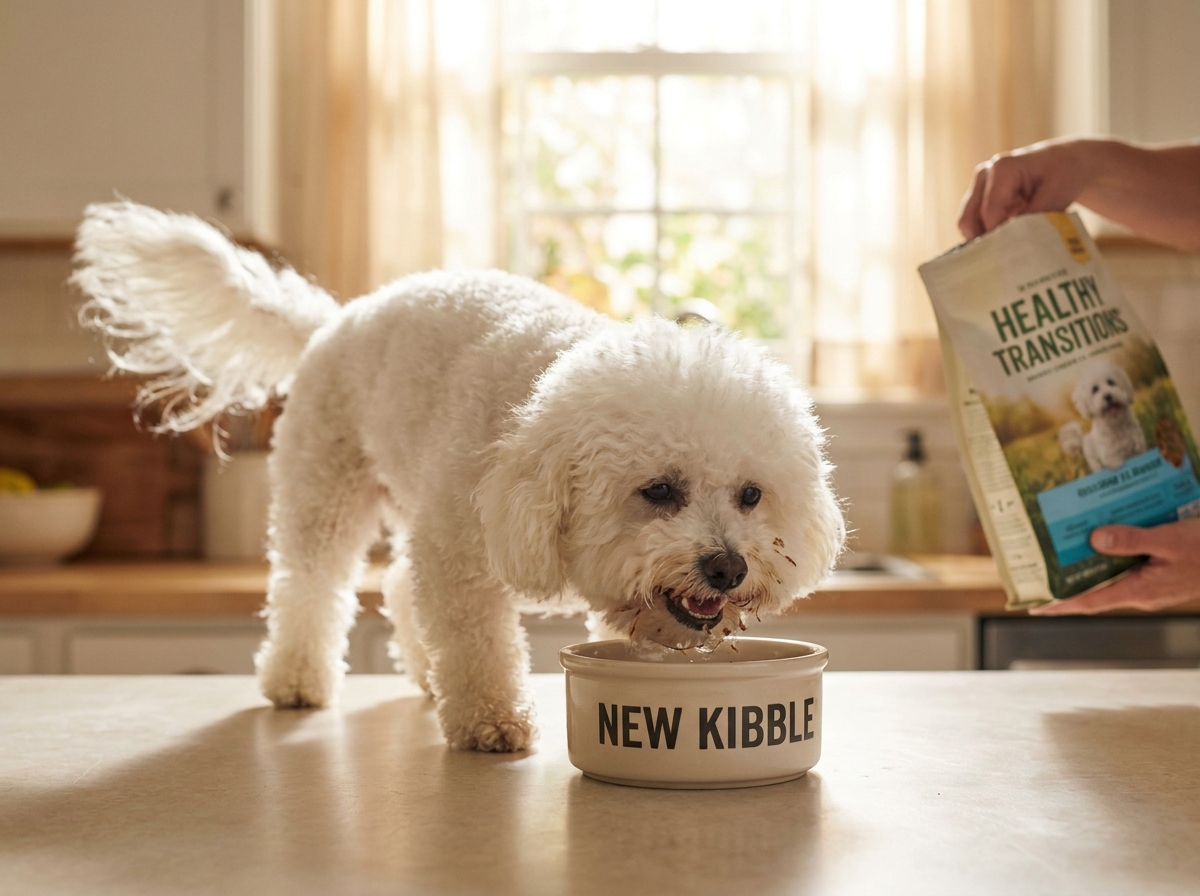
The second mistake: mixing the foods in a way the pet can pick out. The pet that can pick out the new food from the old food is the pet that is not transitioning. The fix: chop the kibble into similar-sized pieces, or use a blender for the wet food, so the pet cannot separate the foods.
The third mistake: continuing the old food as a treat. The owner who gives the old food as a treat during the transition is the owner who is undermining the transition. The old food should be eliminated from the diet during the transition, with the old food treats replaced with the new food treats.
The fourth mistake: not having enough of the old food to complete the transition. The owner who runs out of the old food mid-transition is the owner who has to make a sudden switch. The fix: buy enough of the old food to cover the 7-10 day transition before starting.
The one-page summary
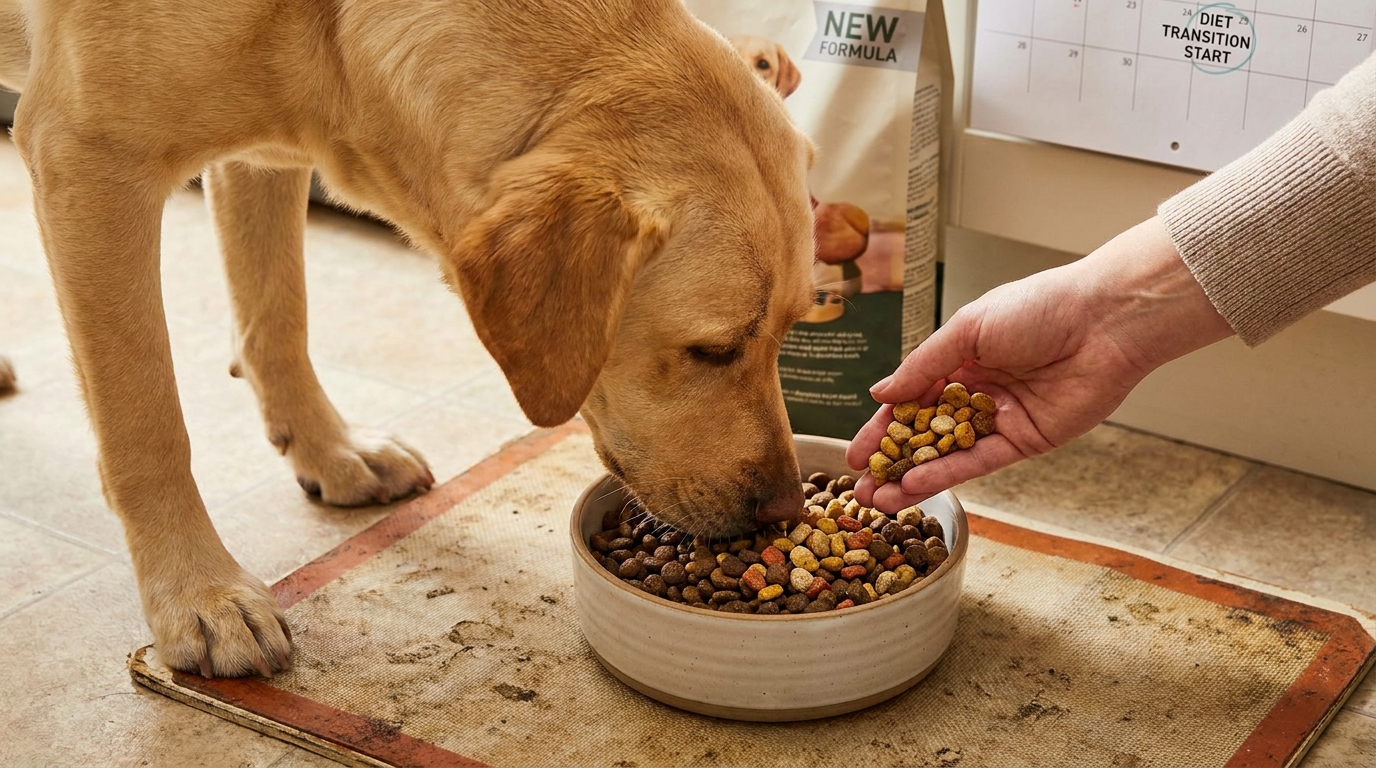
The 7-day transition protocol prevents the GI upset, the food refusal, and the food sensitivity that come with a sudden diet change. The 3 phases: 75/25, 50/50, 25/75, then 100% new. The variations: 10-14 days for sensitive pets, single protein introduction for kibble-to-raw, gradual warming for prescription diets. The signs of a problem: persistent loose stool, vomiting, complete food refusal, lethargy. The mistakes: instant swap, picking out the food, treating with the old food, running out of the old food. The owner who runs the protocol is the owner who has a successful diet change. The owner who does the instant swap is the owner who has a GI crisis. The protocol is the work. The protocol is what produces the change without the upset.