
Diabetic dog: home insulin management without the chaos
A newly diagnosed diabetic dog is overwhelming for the first 72 hours. The owners I see at the recheck are almost always the ones who wrote down a routine — the ones who treated it like a medication schedule rather than a crisis. The protocol below is the same one I draw on the back of a discharge sheet. It is conservative on purpose. Diabetic management is not a place to improvise.
Confirming the diagnosis before any insulin touches the dog
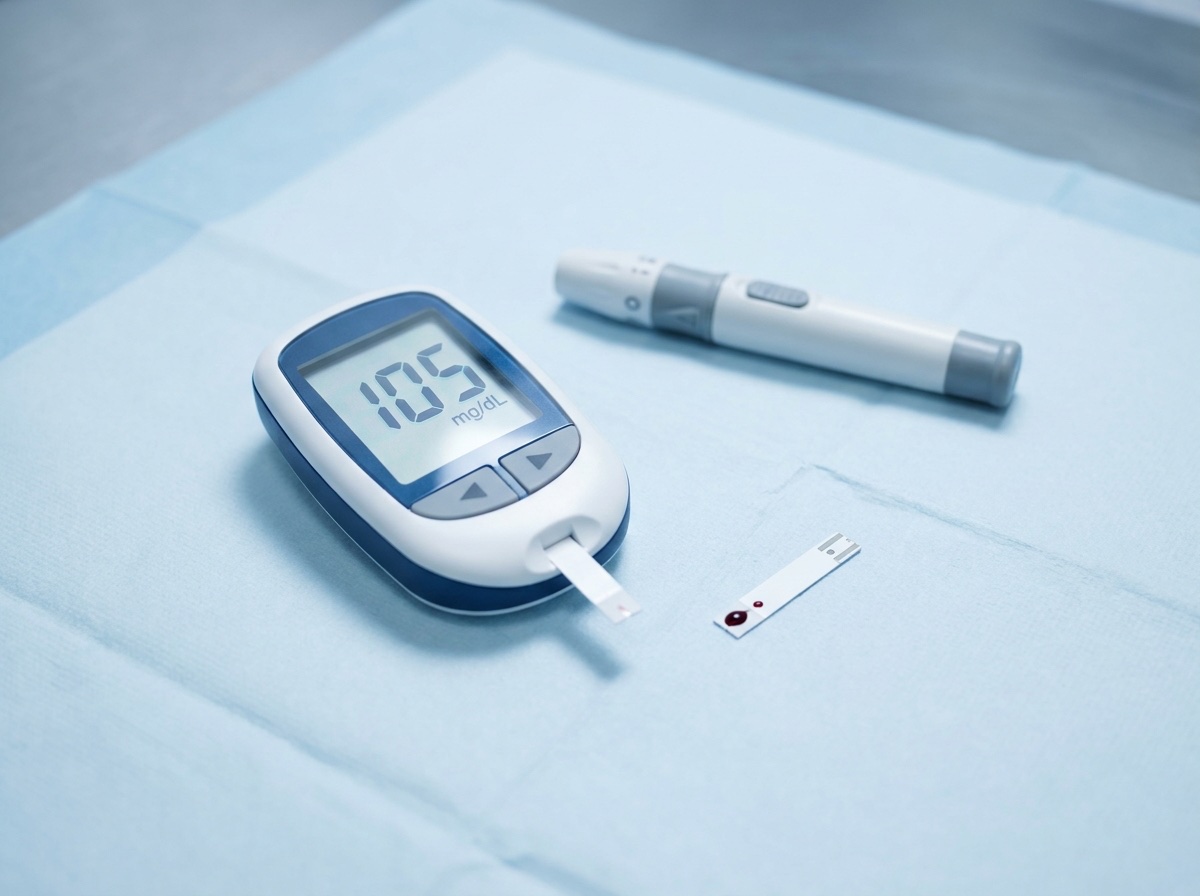
Diabetes in dogs behaves like Type 1 in humans: the pancreas does not produce enough insulin, glucose stays in the bloodstream, and the kidneys spill glucose into urine. The presentation is usually obvious, but the fructosamine test is the test that locks it in. A stressed dog at the clinic can hit 200-300 mg/dL on a single blood draw without being diabetic. Fructosamine averages the last 2-3 weeks and ignores the visit-day spike.
Triage signs that warrant a vet visit this week
Take the dog in within 48-72 hours if you observe two or more of the following for more than a week:
- Drinking more than 80 mL/kg/day (a 10 kg dog drinking more than ~800 mL, or about 3.4 cups, daily)
- Urinating in the house or asking to go out more than once every 4 hours during the day
- Weight loss of 5% or more over 4-8 weeks despite a normal or increased appetite
- Cloudy eyes (diabetic cataracts develop in roughly 75% of dogs within 12 months of diagnosis)
- A dull, unkempt coat with thinning over the rump
- Vomiting or refusing food in a dog with the above — this is a same-day visit, not a wait-and-see
Diagnosis is built on three tests: fasting blood glucose > 200 mg/dL on two samples, fructosamine > 400 μmol/L (lab-dependent), and glucosuria on urinalysis with concurrent hyperglycemia. If all three align, insulin starts the same day or the next.
Insulin choice: the three options I actually use in dogs
Oral hypoglycemics (metformin, glipizide) do not work in dogs. The dog needs injectable insulin. Here is the short list, in the order I reach for them.
Vetsulin / Caninsulin (porcine insulin zinc suspension, Merck)
- Concentration: U-40 (40 units per mL)
- Onset: 1-2 hours; peak: 4-8 hours; duration: 12-14 hours
- Approved for dogs and cats; my first choice in most newly diagnosed dogs
NPH (Humulin N, Novolin N)
- Concentration: U-100
- Onset: 1-2 hours; peak: 4-10 hours; duration: 12-18 hours
- A reasonable second choice; widely available, lower cost
Glargine (Lantus) and Detemir (Levemir)
- Concentration: U-100
- Duration: 18-24 hours, flatter curve
- Reserved for dogs that do poorly on intermediate-acting insulin or have documented Somogyi overswing; more common in cats
**Syringe rule**: U-40 insulin must be drawn with U-40 syringes. U-100 insulin with U-100 syringes. Using a U-100 syringe to draw U-40 Vetsulin delivers **2.5× the intended dose** and is the single most common cause of fatal hypoglycemia I see referred into the practice.
Starting dose: a conservative table
The starting dose is 0.25 U/kg SC every 12 hours for most dogs, with adjustments at the 7-14 day recheck. Lean dogs, dogs with low body condition scores, and dogs with concurrent illness (CKD, pancreatitis, recent surgery) start at the low end. Overweight dogs stay at 0.25 U/kg based on ideal weight, not current weight.
| Body weight | Vetsulin (U-40) starting dose q12h | NPH (U-100) starting dose q12h |
|---|---|---|
| 5 kg (11 lb) | 1.25 U | 1.25 U |
| 10 kg (22 lb) | 2.5 U | 2.5 U |
| 20 kg (44 lb) | 5 U | 5 U |
| 30 kg (66 lb) | 7.5 U | 7.5 U |
| 40 kg (88 lb) | 10 U | 10 U |
Round to the nearest 0.5 U. Doses above 1.0 U/kg at the first recheck are a red flag that the curve was not run correctly or that the dog has an insulin-resistant condition (Cushing's, acromegaly, infection).
The injection: 10 steps, twice a day, for the life of the dog
- Refrigerate the insulin at 2-8°C. Do not freeze. A bottle in use stays at room temperature for up to 42 days; Vetsulin specifically tolerates this.
- Roll, do not shake, the bottle 10-20 times. Cloudy insulin must look uniformly milky before drawing.
- Draw air into the syringe equal to the dose, inject it into the bottle, then invert and draw the dose. Tap out bubbles.
- Confirm the dose with the bottle in front of you. Owners who skip this step are the ones who double-dose.
- Lift a tent of skin over the shoulder, mid-back, or hip. Rotate sites: left shoulder, right shoulder, left hip, right hip, repeating.
- Insert the needle at 30-45° into the tent, bevel up.
- Pull back slightly; if blood appears, withdraw and try a new site.
- Inject slowly over 2-3 seconds.
- Withdraw and reward the dog. Most dogs tolerate this within a week.
- Feed within 30 minutes of the morning injection. A consistent diet and consistent portion matter more than the brand.
If you miss a dose entirely, skip it. Do not double the next dose. Resume the regular schedule at the next 12-hour mark.

Home glucose curves: how to get usable data
A glucose curve is a series of blood glucose readings across one 12-hour dosing interval. The first full curve is run 7-14 days after starting insulin, not on day 1 — the dog needs time to equilibrate.
The two practical methods
Handheld glucometer (AlphaTrak 2, or a calibrated human meter used with caution): prick the inner ear margin or the lip callus. Take readings at 0, 3, 6, 9, and 12 hours post-injection. The 6-hour reading is usually the nadir — the lowest point of the curve — and is the value that drives dose adjustment.
Freestyle Libre 3 (over-the-counter continuous glucose monitor): a sensor is applied to the dorsal neck, lasts 14 days, and gives interstitial glucose every 5 minutes. More expensive upfront, less stressful for the dog, and dramatically better data.
What the numbers mean
| Glucose at the 6-hour mark | Action |
|---|---|
| 80-150 mg/dL | Target. Maintain current dose. |
| 150-250 mg/dL | Increase dose by 10% (e.g., 5 U → 5.5 U). |
| 250-350 mg/dL | Increase dose by 25% (5 U → 6 U or 6.5 U). |
| > 350 mg/dL | Increase by 25% and recheck curve in 5-7 days. Investigate insulin resistance if not improving. |
| < 80 mg/dL | Hold the next dose, feed a meal, recheck in 6 hours. If symptomatic, treat as hypoglycemia (below). |
| < 60 mg/dL | Hypoglycemia event — go to the section below now. |
Adjustments are made in 10-25% increments, never larger. Recheck the curve 5-7 days after every change. Fructosamine is rechecked every 3 months as a long-term control check.
Hypoglycemia: the home reversal protocol
Hypoglycemia is the most common life-threatening complication of insulin therapy and the reason this section matters more than any other.
Threshold and signs
Blood glucose below 60 mg/dL (3.3 mmol/L), with or without signs. Clinical signs in dogs progress in this order: restlessness or hunger, then trembling and weakness, then ataxia (stumbling), then disorientation, then seizures and loss of consciousness.
Home treatment in steps
- Mild (alert dog, glucose 50-70 mg/dL): rub 1 tablespoon of honey or maple syrup on the gums. Recheck in 15 minutes. Feed the regular meal once the dog is willing.
- Moderate (stumbling but conscious): 1-2 tablespoons of honey on the gums, then feed a meal the moment the dog can swallow safely. Recheck in 15-30 minutes.
- Severe (seizure, unconscious, or unable to swallow): do not put anything in the mouth. Go to the ER immediately. Call ahead so the team can prepare IV dextrose (a 0.5-1 g/kg bolus of 50% dextrose diluted 1:4 with saline, then a 2.5-5% dextrose constant-rate infusion).
The single biggest mistake owners make is re-dosing insulin on schedule after a hypoglycemia event. After any confirmed low, skip the next insulin dose entirely, then restart the schedule at 50-75% of the previous dose and recheck a curve in 3-5 days.

Red flags that bypass glucose checks: when to go in today
Some situations need a vet before the next scheduled recheck. Do not wait for morning.
- Refusing food for more than 24 hours in a diabetic dog on insulin. The combination of insulin without food is the most common cause of emergency hypoglycemia I see.
- Vomiting, lethargy, or "not himself" in a diabetic dog — possible diabetic ketoacidosis (DKA). The dog needs blood gas, electrolytes, and likely IV insulin and fluids the same day. Survival in DKA is 60-80% with prompt treatment, much lower with delay.
- Persistent polyuria and polydipsia despite 2 weeks of insulin at 0.5 U/kg — investigate insulin resistance: urinary tract infection, dental disease, Cushing's disease (hyperadrenocorticism), acromegaly, or hypothyroidism.
- Sudden cataracts or sudden vision loss — diabetic cataracts can mature in days. Surgical referral (phacoemulsification with artificial lens implantation) is an option if the retina is still healthy.
- Somogyi overswing: glucose curve shows low at the 4-6 hour mark followed by rebound hyperglycemia > 300 mg/dL at 12 hours. The fix is a 10-25% dose reduction, not an increase. Increasing insulin makes this worse.
Recheck cadence: the rhythm that keeps the dog stable
A stable diabetic dog is one whose owner runs a glucose curve, brings the data, and adjusts in small steps. The cadence I use:
- Day 0: diagnosis, insulin started, owner trained on injection.
- Day 7-14: first recheck, full curve, dose adjustment.
- Day 21-28: second recheck, full curve, dose adjustment.
- Every 3 months: fructosamine, weight, urinalysis, blood pressure.
- Every 6 months: full biochemistry panel once stable.
Most dogs reach a stable dose by week 6. Some take 12 weeks. A small percentage never stabilize below 1.0 U/kg, and those dogs need workup for an underlying cause.
Diabetes in dogs is a daily commitment, not a sentence. The protocol above is the boring middle of the disease — and the boring middle is where dogs live for years.

---
Author: James Morrison, DVM — general practice veterinarian with a clinical focus on preventive care, endocrine disease, and senior pet wellness.
Disclaimer: This article is informational. Insulin doses, monitoring schedules, and emergency thresholds should be confirmed with the treating veterinarian. Doses cited reflect commonly published starting protocols and may not match your dog's individualized plan.