

Kibble vs home-cooked vs raw: an evidence-based comparison of three feeding approaches
The feeding approach debate is one of the loudest and most opinionated in the dog world. Kibble feeders are told they are feeding "processed junk" by raw feeders. Raw feeders are told they are feeding "salmonella risk" by kibble feeders. Home-cooked feeders are told they are feeding "unbalanced" by both. The actual evidence is more nuanced than any of these positions. In this article I will walk through the three feeding approaches, the nutritional completeness of each, the actual risks of each, the published evidence for and against each, and the practical decision framework a dog owner can use to choose the right approach for their specific dog. I will not tell you which approach is best; the right approach depends on the dog, the owner, and the household. I will give you the evidence to make the choice.
Kibble: the commercial extruded dry diet
Kibble is the most common feeding approach in the developed world, and it is the approach that has the strongest evidence base for nutritional completeness and safety. A commercial kibble from a major manufacturer (the WSAVA-recommended brands: Purina, Royal Canin, Hill's, Mars, Eukanuba/Iams) is formulated to meet the AAFCO or FEDIAF nutrient profiles for the dog's life stage, and the formulation is tested through feeding trials before release. The major manufacturer kibble is the only feeding approach that has been continuously tested and refined through published research for the last 60 years.
The pros: nutritional completeness is guaranteed (assuming the kibble is fed as the sole diet and the dog eats the recommended amount), the cost is the lowest of the three approaches, the convenience is the highest (no refrigeration, no preparation, no risk of bacterial contamination), the shelf life is the longest, and the palatability for most dogs is high. The cons: the processing destroys some of the natural enzymes and beneficial bacteria in the original ingredients (though the impact on dog health is debated), the moisture content is low (8-12%) which is suboptimal for dogs that do not drink enough water, and the carbohydrate content is higher than a raw or home-cooked diet (typically 30-50% of dry matter), which is appropriate for most dogs but problematic for diabetic dogs.
The risk profile is the lowest of the three. There is no documented case of a healthy dog becoming ill from a major-manufacturer kibble that has been stored properly and fed before the expiration date. The recalls that do occur (and they occur, with all major manufacturers) are caught quickly and the affected batches are pulled. The risk that the household will introduce a bacterial pathogen from a major-manufacturer kibble is essentially zero.
Home-cooked: the prepared-at-home approach
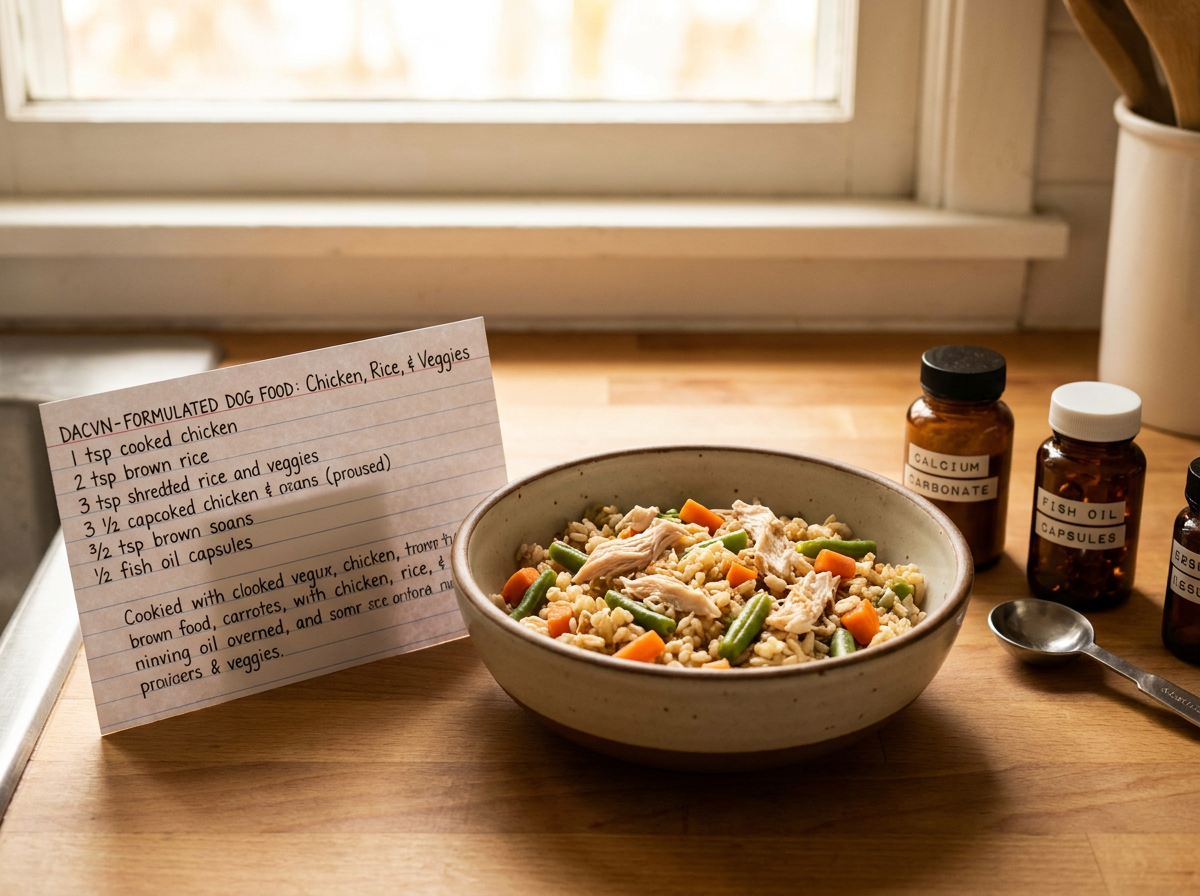
Home-cooked is a broad category that includes a wide range of practices, from the owner who follows a published veterinary nutritionist recipe and prepares the food in batches, to the owner who feeds "chicken and rice" because that is what the breeder recommended. The nutritional outcome of home-cooked is extremely variable, because the recipes are extremely variable. A home-cooked diet that is formulated by a board-certified veterinary nutritionist and followed precisely is nutritionally complete. A home-cooked diet that is "chicken and rice and a multivitamin" is almost never nutritionally complete, because the calcium, the essential fatty acids, the trace minerals, and the vitamin E are typically inadequate.
The pros: the owner has direct control over the ingredients, the protein source is high quality, the moisture content is high (60-80%), the carbohydrate content is low to moderate, and the diet is palatable for most dogs. The cons: the cost is 2-4 times the cost of kibble, the preparation time is significant (1-2 hours per week for batch cooking), the risk of nutritional deficiency is high for unbalanced recipes, and the shelf life is short (3-5 days refrigerated, 2-3 months frozen). The risk profile is moderate. A well-formulated home-cooked diet has essentially no bacterial risk if the food is cooked and handled properly. A poorly formulated home-cooked diet has a real risk of long-term nutritional deficiency, particularly calcium deficiency, which can cause bone disease in puppies and metabolic bone disease in adult dogs.
The published evidence: the most rigorous study of home-cooked diets for dogs (Stockman et al., 2013) evaluated 95 published home-cooked recipes and found that 56% of them had at least one essential nutrient below the AAFCO minimum and 19% had three or more essential nutrients below the minimum. The conclusion of the study was that most home-cooked recipes available to the public are nutritionally inadequate. The fix is a recipe formulated by a board-certified veterinary nutritionist (DACVN) and reviewed at least annually.
Raw: the uncooked meat-based approach
Raw feeding is the most controversial of the three approaches, and it is the one with the most polarized opinions. The strict raw approach (often called BARF — Biologically Appropriate Raw Food — or PMR — Prey Model Raw) consists of uncooked muscle meat, raw bones, organ meat, and a small amount of vegetable matter. The proportion is roughly 80% muscle meat, 10% raw bone, 5% liver, 5% other organ, and a small amount of vegetable and supplement. The modified raw approach uses a commercially prepared raw diet (a frozen or freeze-dried complete raw product) rather than home-assembled ingredients.
The pros: the protein is uncooked and in its natural form, the moisture content is very high (60-75%), the carbohydrate content is very low (typically <10%), the diet is highly palatable for most dogs, and the dog that does well on a raw diet often has excellent coat quality, lean body condition, and small firm stool. The cons: the cost is 2-5 times the cost of kibble, the preparation time is significant, the bacterial risk to the dog and the household is real (Salmonella, E. coli, Campylobacter, Listeria have all been documented in raw pet foods), the risk of nutritional imbalance is real (most published raw diets are not balanced for the long term, and a deficiency in calcium, vitamin D, or vitamin E can take months to manifest), and the risk of fractured teeth or intestinal perforation from raw bone is small but real.
The risk profile is the highest of the three. The FDA and the CDC have both issued statements documenting the public health risk of raw pet food. A 2014 study found Salmonella in 36% of raw chicken-based pet foods tested, and 4% of the dogs fed those foods had positive Salmonella cultures in their stool. A 2018 study documented environmental contamination of the household from raw pet food. The risk to the dog itself is small (most healthy dogs tolerate the bacterial load), but the risk to the household — particularly to young children, elderly adults, immunocompromised individuals, and pregnant women — is real and significant.
The published evidence for the health benefits of raw feeding is weak. The claims of "better coat," "cleaner teeth," "more energy," and "smaller stool" are widely repeated but are not supported by controlled studies. The few controlled studies that have been published (e.g., the Manchester study, 2019) found no significant difference in health outcomes between raw-fed and kibble-fed dogs. The conclusion: the health benefits are plausible but not proven, and the bacterial risk is real.
The decision framework for the individual dog
The owner who is choosing between the three approaches should consider four variables: the dog's life stage, the dog's health status, the owner's lifestyle, and the household's risk tolerance. The decision tree, simplified:
Healthy adult dog, owner wants convenience, household has no immunocompromised individuals: kibble from a major manufacturer. The nutritional completeness is guaranteed, the cost is the lowest, the risk is the lowest. This is the right choice for roughly 70% of dogs.
Healthy adult dog, owner is willing to invest time, owner can afford the cost increase, household has no immunocompromised individuals: home-cooked from a DACVN-formulated recipe, OR commercial raw from a reputable manufacturer with veterinary nutritionist oversight. The health benefits are plausible but not proven. The risk is real but manageable with proper handling.
Dog with a specific medical condition (food allergy, kidney disease, urinary disease, GI disease): the prescription diet from a major manufacturer, formulated for the specific condition. The prescription diet is kibble-based, wet-food-based, or both, and is the only feeding approach with a strong evidence base for disease management. Home-cooked and raw are options in some cases, but only with veterinary nutritionist oversight.
Puppy (under 12 months for small/medium breeds, under 18-24 months for large/giant breeds): the major manufacturer puppy formula, fed to lean body condition. The nutritional demands of growth are the highest of the dog's life, and the margin for nutritional error is the smallest. A puppy fed an unbalanced home-cooked or raw diet is at high risk for developmental orthopedic disease. The puppy should be on a growth-stage kibble or a home-cooked diet formulated specifically for growth by a DACVN.
The most important sentence in this article
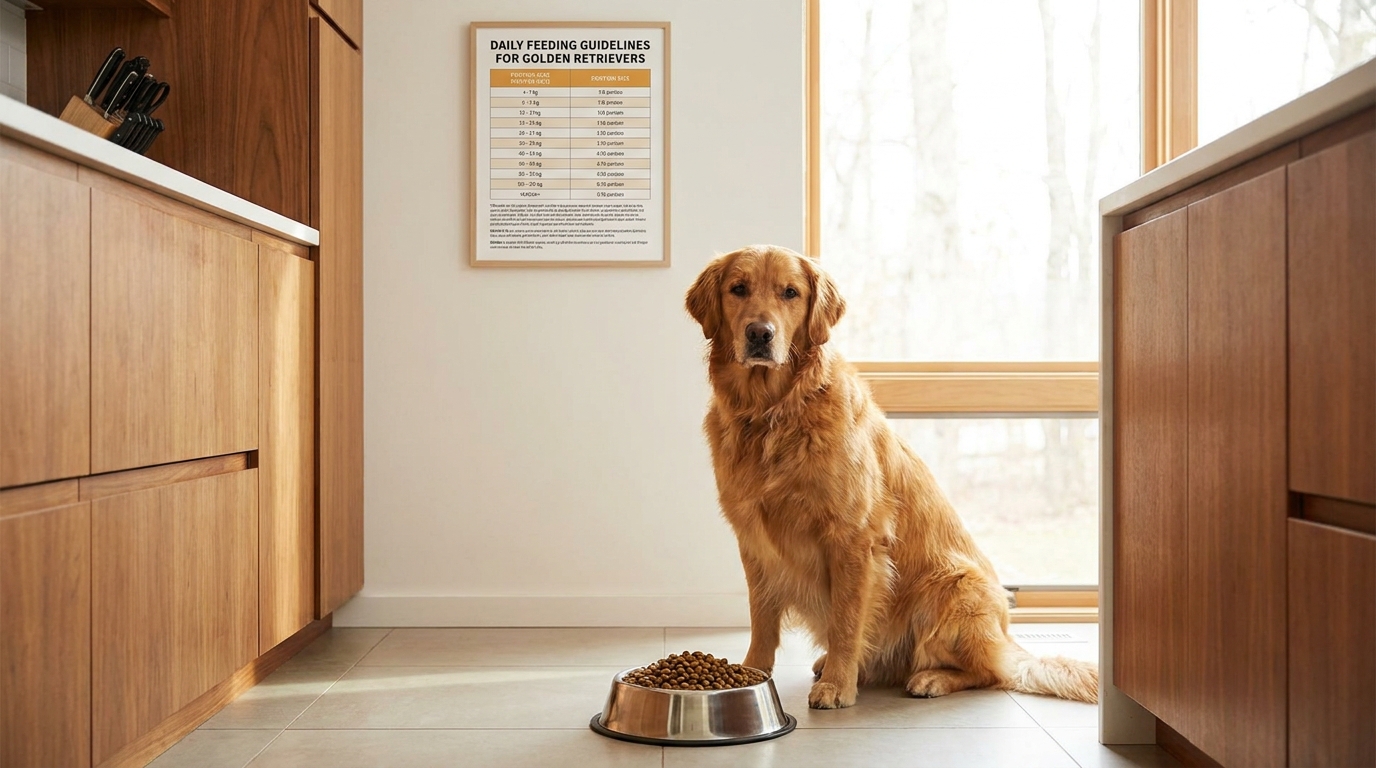
The most important thing about the feeding approach is not the approach itself. It is the nutritional completeness, the appropriate calorie amount, and the consistent body condition. A dog on a major-manufacturer kibble that is overfed to obesity is in worse shape than a dog on a balanced home-cooked diet that is fed to lean body condition. A dog on a raw diet that is nutritionally unbalanced and fed to obesity is in worse shape than a dog on kibble fed to lean body condition. The diet is one variable. The body condition is the more important variable. The owner who maintains lean body condition throughout the dog's life, regardless of the feeding approach, has a dog that is healthier, longer-lived, and at lower risk for the major chronic diseases. The owner who does not maintain lean body condition, regardless of the feeding approach, has a dog that is at risk. The choice of approach matters less than the management of the approach.
The honest summary
The kibble from a major manufacturer is the safest, cheapest, most evidence-based approach for the majority of dogs. The home-cooked diet, formulated by a DACVN and followed precisely, is a valid choice for the owner who is willing to invest the time and the money. The raw diet, whether home-assembled or commercial, has plausible health benefits that are not yet proven, and has a real bacterial risk that the household needs to manage. The choice depends on the dog, the owner, and the household. The body condition is the constant. The diet is the variable. The body condition is the proof that the diet is right.