
Epilepsy at home: a management plan for the dog with recurrent seizures
Idiopathic epilepsy is the most common chronic neurologic condition in dogs, with a prevalence of 0.5-1% in the general population. The dog with idiopathic epilepsy has recurrent seizures with no identifiable underlying cause (no brain lesion, no metabolic disease, no toxin exposure). The diagnosis is made by ruling out the other causes, and the management is a long-term commitment to medication, monitoring, and home safety. The owner who has a management plan is the owner who handles the seizures calmly and gives the dog the best chance of long-term seizure control. The owner who does not have a plan is the owner who panics during a seizure, who adjusts medication without veterinary guidance, and who misses the warning signs that warrant a vet visit. In this article I will walk through what epilepsy actually is, the seizure log that every epileptic dog needs, the medication protocol that produces the best control, the home safety checklist that prevents injury during a seizure, and the emergency decision rules that tell the owner when a seizure is an emergency.
What epilepsy is and what it isn't
Idiopathic epilepsy is a chronic condition characterized by recurrent seizures, with no identifiable underlying cause. The seizures originate from abnormal electrical activity in the brain, and the seizures manifest as the dramatic motor and behavioral signs that the owner observes — the dog that falls on its side, paddles its legs, loses consciousness, and may urinate or defecate involuntarily. The seizure typically lasts 30 seconds to 3 minutes, and the dog recovers over a period of minutes to hours, often with disorientation and exhaustion.
The diagnosis requires ruling out the secondary causes of seizures. The diagnostic workup: a full physical and neurologic exam, a CBC and chemistry to rule out metabolic causes, a bile acid test to rule out liver disease, and an MRI of the brain to rule out structural lesions (brain tumor, inflammation, hydrocephalus). The dog that has a normal exam, normal bloodwork, and a normal MRI is a dog with idiopathic epilepsy by exclusion. The dog that has an abnormality on any of these tests is a dog with secondary epilepsy, which is treated differently (treat the underlying cause) and has a different prognosis.
The most common breeds affected: Border Collies, Australian Shepherds, German Shepherds, Labrador Retrievers, Golden Retrievers, Beagles, and many other breeds. The age of onset is typically 6 months to 6 years, with the peak at 1-3 years. The dog that has a first seizure under 6 months or over 6 years is more likely to have a secondary cause.
The seizure log
The seizure log is the single most valuable tool in the management of canine epilepsy. The log captures the date, time, duration, and character of every seizure, plus the suspected triggers, the medication doses, and any observations about the dog's behavior before and after the seizure. The log is the data that the vet uses to make medication adjustments, and the log is the data that the owner uses to identify patterns.
The format: a notebook, a spreadsheet, or a dedicated app (there are several good ones for canine epilepsy). Each entry includes: date, time the seizure started, time the seizure ended (duration in seconds/minutes), the seizure character (generalized, focal, partial), the dog's behavior immediately before (the "pre-ictal" phase, which may include restlessness, anxiety, or seeking the owner), the dog's behavior during (loss of consciousness, paddling, vocalization, urination, defecation), the dog's behavior after (the "post-ictal" phase, which may include disorientation, pacing, hunger, thirst, or exhaustion), any suspected triggers (stress, weather, sleep deprivation, missed medication), and the medication doses given.
The log is what allows the vet to see the pattern. The seizure that happens every 14 days, the seizure that happens only during thunderstorms, the seizure that happens 12 hours after a missed dose — each pattern suggests a different management adjustment. The vet who has the log data is the vet who can make the right adjustment. The vet who does not have the log data is the vet who is guessing.
The medication protocol
The decision to start medication is based on the frequency and severity of the seizures, not on a single seizure. The dog that has had a single seizure is not started on medication; the dog is monitored with a log and rechecked at 3-6 months. The dog that has had two or more seizures within 6 months, or that has had a single severe or prolonged seizure (over 5 minutes), is started on medication.
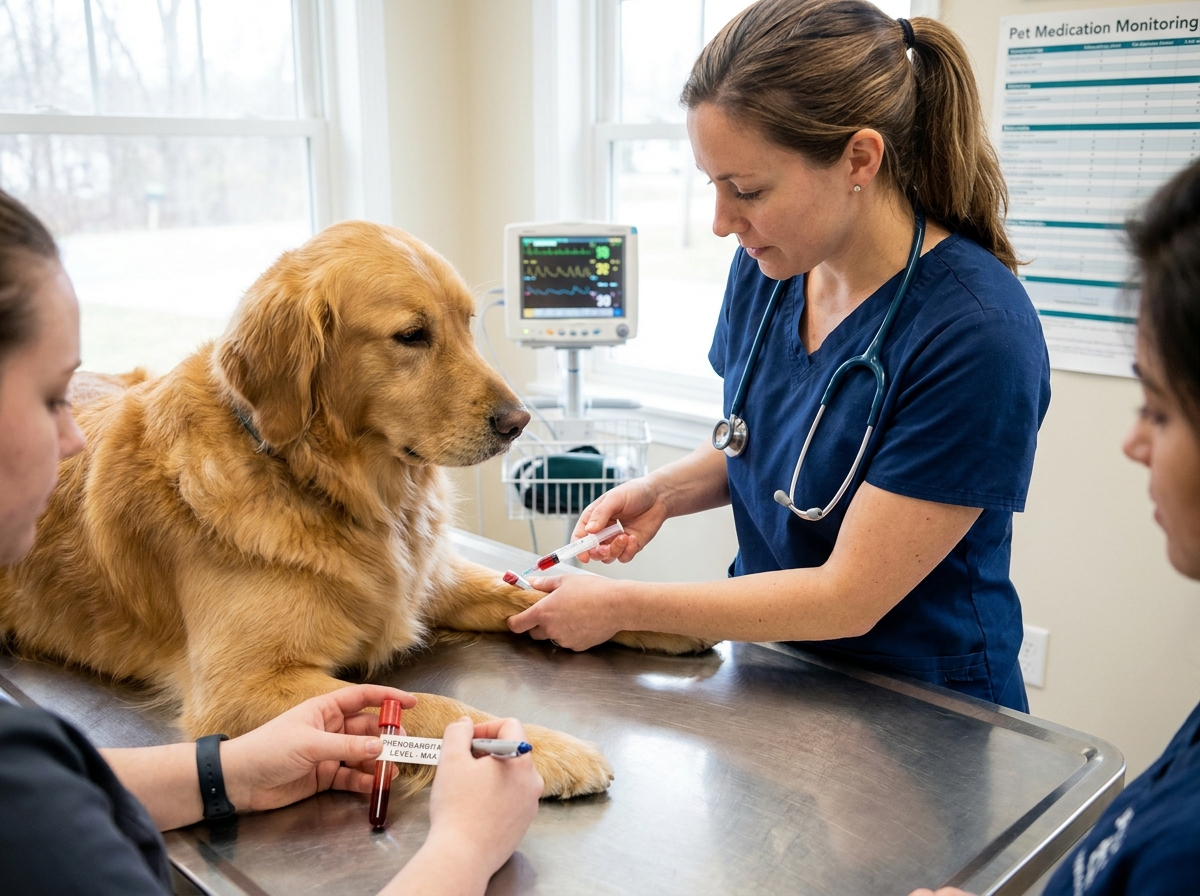
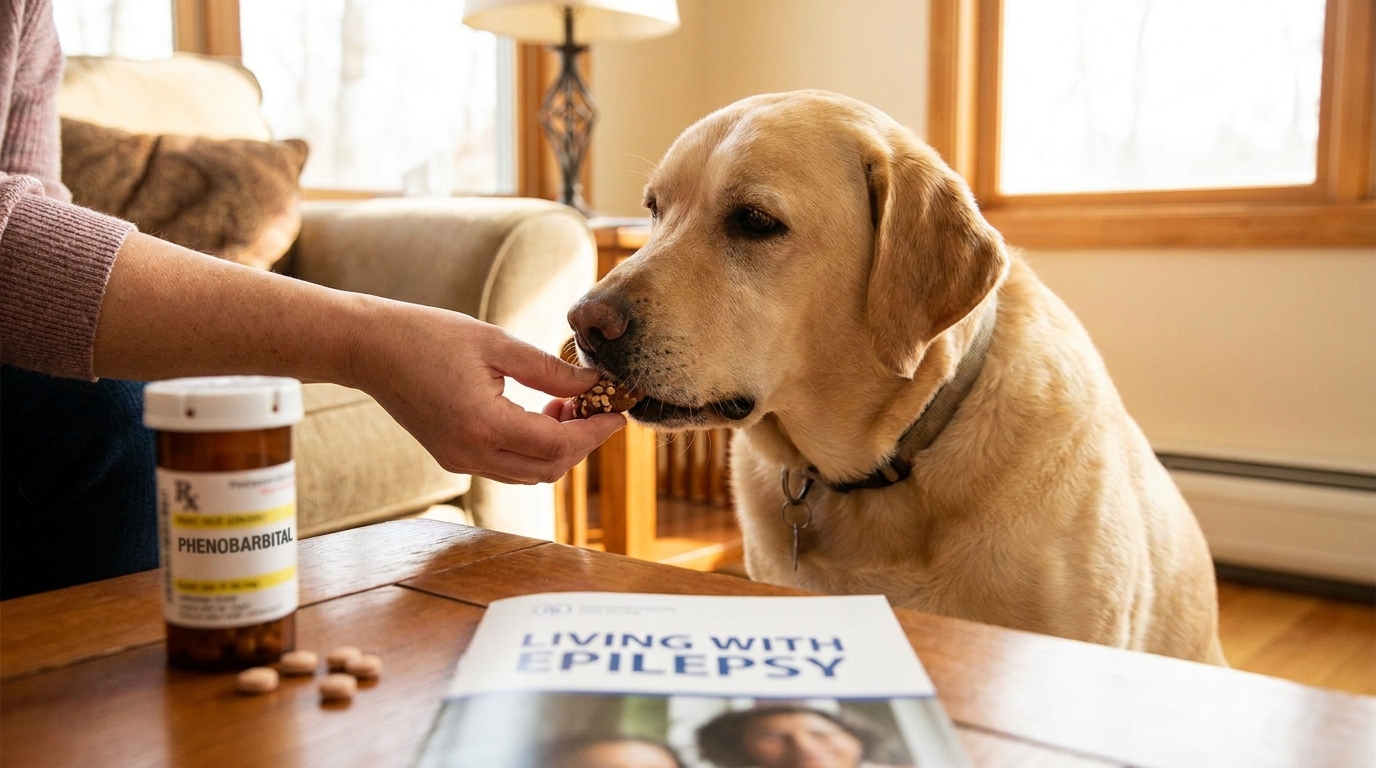
The first-line medication for most dogs with idiopathic epilepsy is phenobarbital, a barbiturate that has been used for canine epilepsy for over 50 years. The starting dose is 2-3 mg/kg orally twice a day, with the dose adjusted based on blood level monitoring. The therapeutic blood level is 20-35 μg/mL; the toxic level is above 40 μg/mL. The blood level is checked 2-3 weeks after starting the medication, then every 6-12 months. The phenobarbital is effective in 60-80% of dogs, with most achieving good seizure control (50% or greater reduction in seizure frequency) at the appropriate dose.
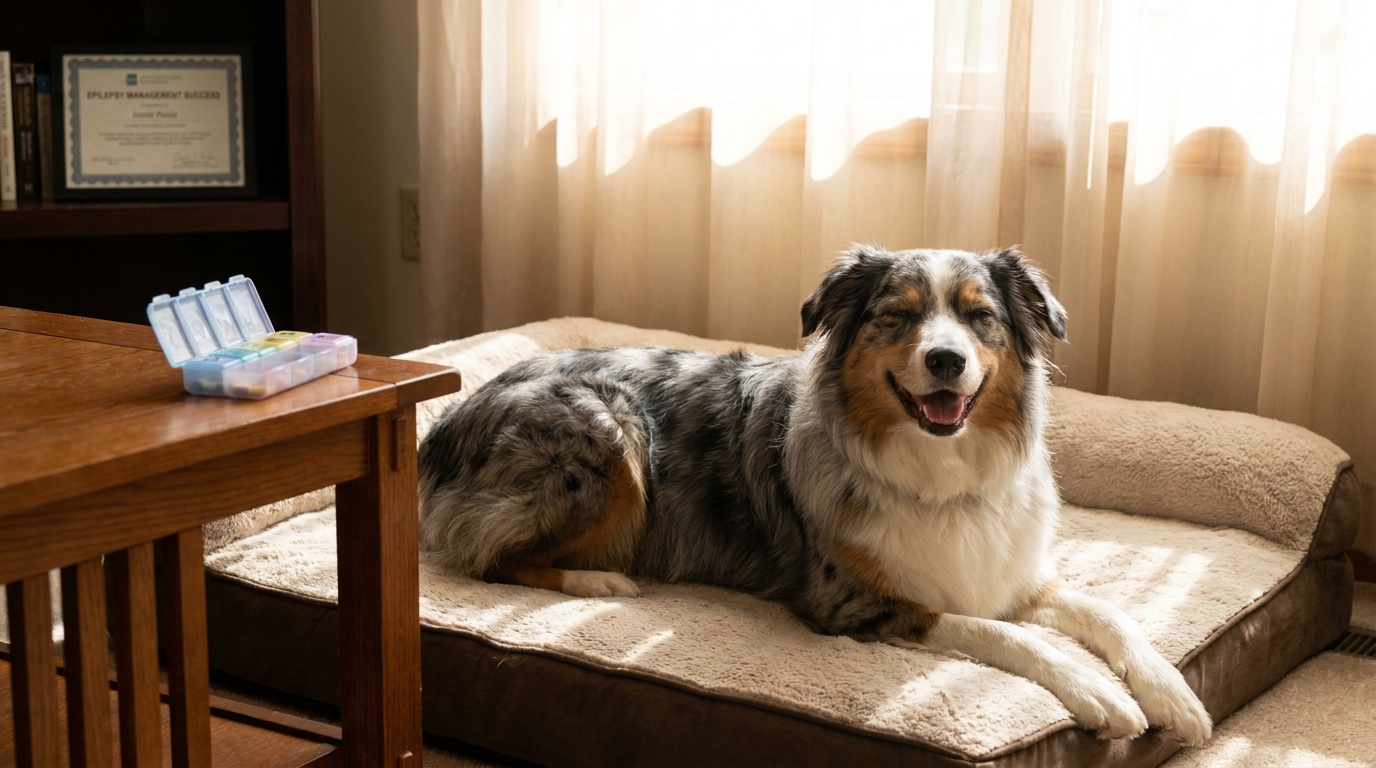
The second-line medication for dogs that do not respond adequately to phenobarbital is potassium bromide, an older anticonvulsant that is added to the phenobarbital or used as a monotherapy. The starting dose is 20-30 mg/kg orally once a day, with a therapeutic blood level of 1-3 mg/mL. The potassium bromide takes 3-4 months to reach steady state, so the dose adjustments are slow.
The newer medications: zonisamide, levetiracetam (Keppra), and pregabalin. These are used as add-on therapies for dogs that do not respond adequately to phenobarbital and potassium bromide, or as monotherapy in dogs with liver disease that cannot tolerate phenobarbital. Levetiracetam is increasingly used as a first-line medication in dogs with mild epilepsy or in dogs that owners are reluctant to start on phenobarbital because of the monitoring requirements.
The medication adjustments: the vet who manages the medication based on the log data, the blood levels, and the dog's clinical response is the vet who produces the best long-term control. The owner who adjusts the medication without veterinary guidance is the owner who risks toxicity, breakthrough seizures, and status epilepticus.
The home safety checklist
The dog that has frequent seizures is the dog that needs a home safety plan. The goal is to prevent the dog from injuring itself during a seizure, and to make the seizure episode manageable for the owner. The checklist:
- A clear, safe area. The dog that has a seizure in a cluttered room is the dog that can hit furniture, fall down stairs, or get caught in cords. The safe area is a clear space with no sharp corners, no stairs, no water hazards. The kitchen with a baby gate to keep the dog out during a seizure is a safer environment than the open living room.
- No overhead obstacles. The dog that has a seizure and falls to the side can hit a coffee table, a chair leg, or a wall corner. The safe area has the furniture pushed back, the sharp edges padded, and the obstacles removed.
- No water access during a seizure. The dog that has a seizure near a pool, a bathtub, or a water bowl is the dog that can drown. The dog should not be left unsupervised near water if the dog has frequent seizures.
- A seizure alert. The dog that is home alone when a seizure happens is the dog that may not be discovered for hours. A pet camera with motion detection, or a service that alerts the owner to unusual activity, is a useful tool for the dog that has frequent seizures.
What to do during a seizure
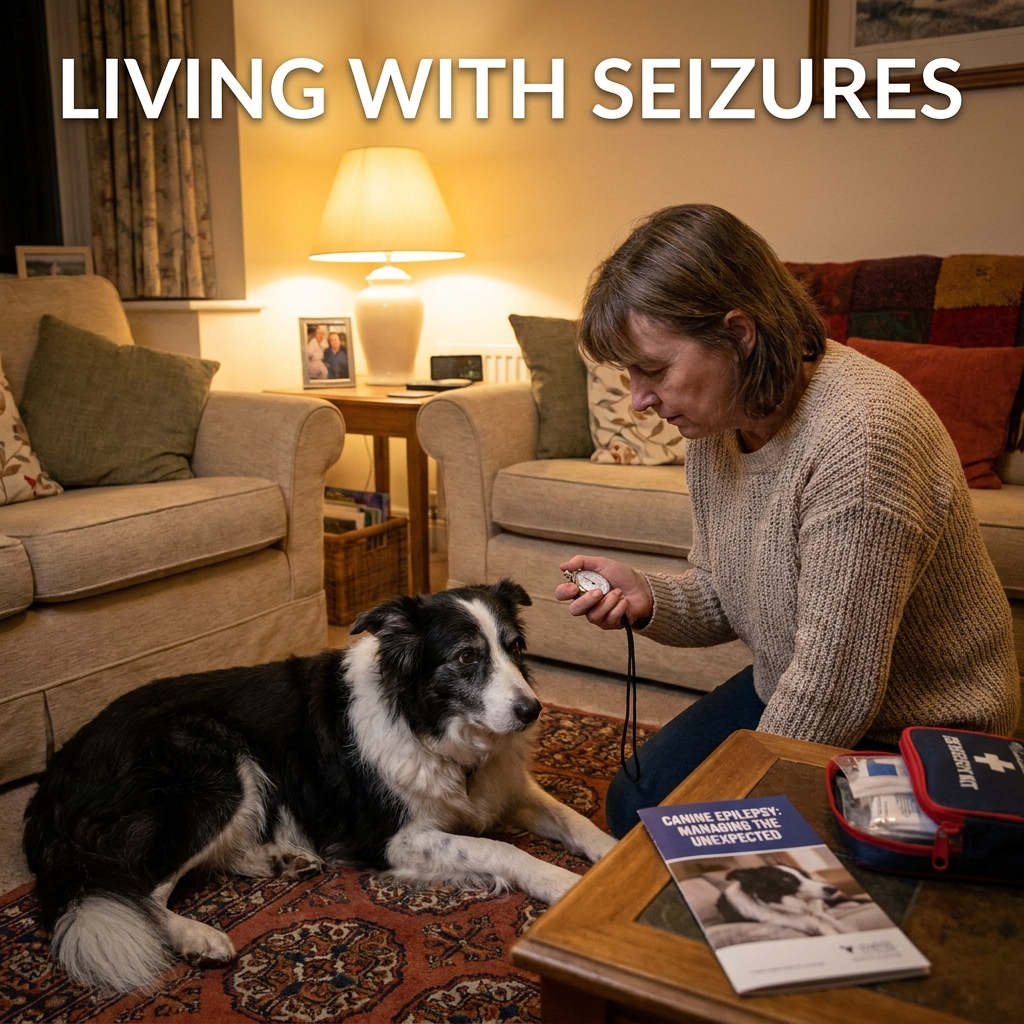
The dog that is having a seizure needs the owner to stay calm, keep the dog safe, and time the seizure. The steps: move furniture away from the dog, do not restrain the dog, do not put anything in the dog's mouth (the dog cannot swallow its tongue, despite the myth), speak softly to the dog, time the seizure. After the seizure, keep the dog calm and quiet in a darkened room, offer water, and contact the vet if the seizure was over 5 minutes or if the dog had multiple seizures in a row.
The owner who panics during a seizure is the owner who makes the situation worse. The owner who stays calm is the owner who can time the seizure accurately, keep the dog safe, and provide the information the vet needs.
The emergency decision rules
The seizure that is an emergency: a seizure lasting over 5 minutes (status epilepticus), a cluster of seizures without recovery in between, a seizure in a dog that has not had seizures before, a seizure in a dog that is on medication and the medication has been recently changed, or a seizure in a dog that is not recovering normally (the post-ictal phase is lasting over 24 hours). Each of these situations warrants an immediate vet visit, and the status epilepticus warrants an emergency vet visit (the seizure is doing damage to the brain the longer it continues).
The seizure that is not an emergency but warrants a vet call: a seizure in a dog that is already on medication, the seizure was the typical character and duration, the dog is recovering normally. The owner calls the vet within 24 hours, logs the seizure, and continues the medication as prescribed.
The seizure that warrants a medication adjustment: an increase in seizure frequency, an increase in seizure severity or duration, or the appearance of new seizure types. Each of these is reported to the vet, and the vet adjusts the medication based on the log data and the blood levels.
The one-page summary
Epilepsy is a chronic, manageable condition. The seizure log is the data that drives the management. The medication is the tool that produces the control. The home safety is the prevention of injury during a seizure. The emergency decision rules are the trigger for vet intervention. The owner who has the plan is the owner who handles the seizures calmly and gives the dog the best chance of long-term control. The owner who does not have the plan is the owner who panics and who misses the warning signs. The plan is the work. The plan is what makes the difference.