
Pet obesity: the epidemiology and the health impact that is shortening dogs and cats by 2 years
Pet obesity is the most common medical condition in dogs and cats in the developed world, and the most under-recognized. More than 50% of dogs and 55% of cats in the United States are overweight or obese, according to the most recent surveys from the Association for Pet Obesity Prevention. The condition is associated with a 2-year reduction in median lifespan, with increased incidence of arthritis, diabetes, urinary disease, skin disease, and several types of cancer, and with a measurable reduction in quality of life. Despite the data, the condition is rarely the reason a pet is brought to the vet. The reason is "the dog is slowing down," "the cat is not jumping as high," "the dog has arthritis," "the cat has diabetes" — and the underlying cause of all of these is the body condition score that the vet documents at every visit but rarely addresses as a primary problem. In this article I will walk through the data, the mechanisms by which excess fat damages multiple organ systems, the cost-benefit math of the weight-loss intervention, and the realistic timeline a pet owner should expect.
The data
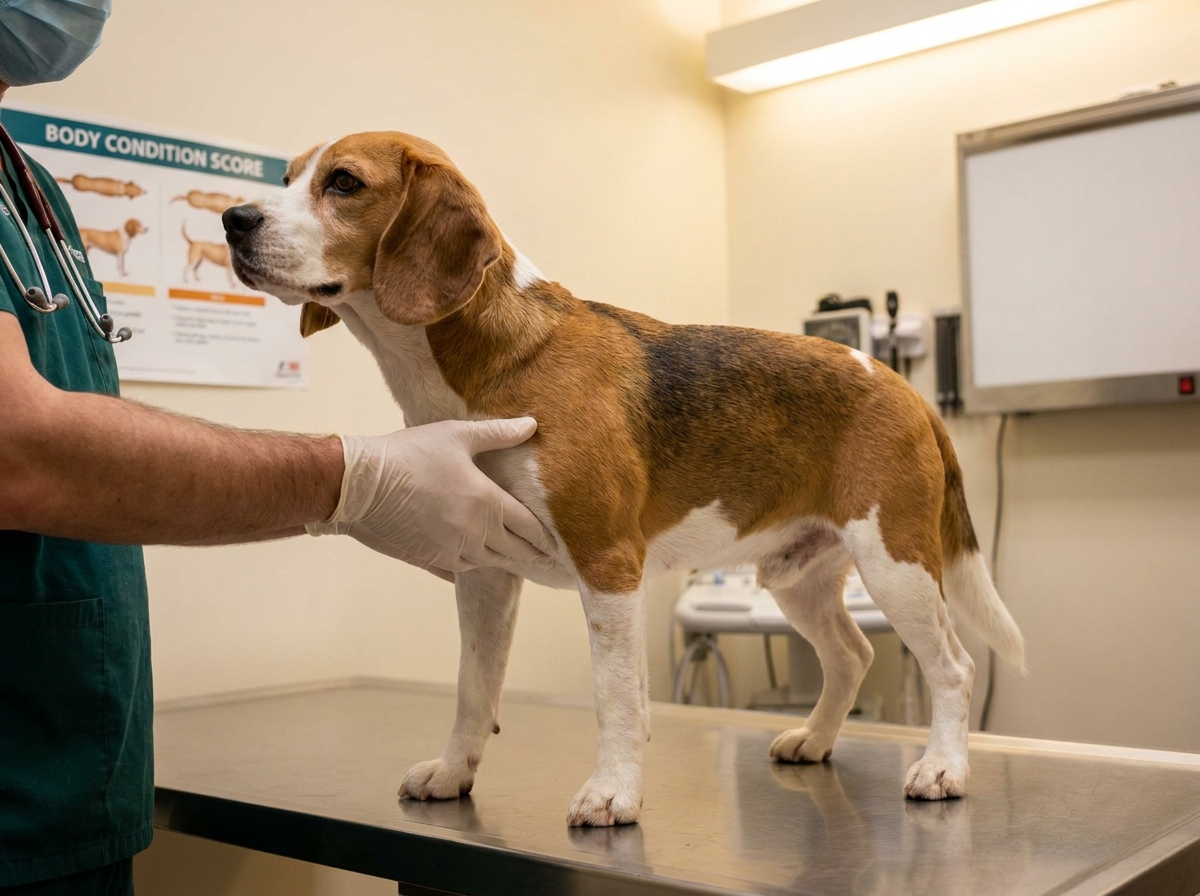
The Association for Pet Obesity Prevention's most recent clinical survey (2022) found that 59% of dogs and 61% of cats in the United States are classified as overweight or obese by their veterinarians. The classification is based on the 9-point body condition score (BCS), with a score of 4-5 considered ideal, 6-7 considered overweight, and 8-9 considered obese. The data has been consistent for the last decade — the prevalence of pet obesity is not decreasing, and is increasing slightly in some demographic categories.
The prevalence varies by demographic. The dog that lives in a single-pet household with an owner who works full-time is at higher risk than the dog that lives in a multi-pet household. The cat that is strictly indoor is at higher risk than the cat that has outdoor access. The dog or cat that is fed free-choice (food available at all times) is at higher risk than the dog or cat that is fed measured meals twice a day. The owner who is overweight is at higher risk of having an overweight pet, because the owner's feeding behavior and exercise behavior are correlated with the pet's.
The breed distribution is also revealing. Some breeds have higher rates of obesity than others. Labrador Retrievers, Beagles, Cocker Spaniels, Basset Hounds, and Dachshunds are among the dog breeds with the highest prevalence. Among cats, the domestic shorthair and the domestic longhair have the highest prevalence, with no clear breed predisposition. The breeds with the highest prevalence share certain characteristics: a moderate to high food drive, a low to moderate activity level, and a genetic predisposition to weight gain on standard maintenance diets.
The mechanisms of damage
The excess adipose tissue is not inert. It is an active endocrine organ that produces hormones and inflammatory cytokines. The dog or cat with 30% excess body fat is the dog or cat with 30% more inflammatory signaling than the dog or cat at ideal body condition. The chronic low-grade inflammation affects every organ system. The most commonly affected:
Joints. The dog or cat at BCS 7-9 is carrying 30-50% more body weight than the dog or cat at BCS 5. The increased load on the joints accelerates the cartilage wear that leads to osteoarthritis. The dog that develops arthritis at age 8 would have developed it at age 11 if it had maintained ideal body condition. The cat that develops arthritis at age 10 would have developed it at age 13 if it had maintained ideal body condition. The 2-3 year delay in arthritis onset is one of the most consistent findings in the obesity research.
Pancreas. The dog or cat with chronic excess caloric intake develops insulin resistance over time. The pancreas produces more insulin to maintain normal blood glucose, and the chronic overproduction eventually exhausts the pancreatic beta cells. The result: diabetes mellitus. The cat is particularly susceptible — the prevalence of diabetes in obese cats is 4 times the prevalence in lean cats. The dog is less susceptible (the prevalence is 2-3 times higher in obese dogs), but the effect is still significant.
Urinary tract. The cat with obesity is at increased risk for feline lower urinary tract disease (FLUTD), including cystitis, urethral obstruction, and struvite or calcium oxalate urolithiasis. The mechanism is multifactorial — decreased activity, decreased water intake, altered urine pH — but the consistent finding across studies is that obese cats have a higher incidence of urinary issues than lean cats.
Skin. The dog or cat with obesity has increased skin folds, decreased grooming efficiency, and increased moisture in the skin folds. The result: increased incidence of bacterial and yeast dermatitis, particularly in the facial folds, the axillary region, and the perineal area. The dog with chronic skin infections is often a dog that is also overweight, and the chronic infections resolve when the weight is lost.
Cancer. The dog or cat with chronic inflammation from obesity has a higher incidence of several types of cancer, particularly mast cell tumors, mammary carcinoma (in dogs and cats), and transitional cell carcinoma of the bladder. The mechanism is the chronic inflammation, which drives cellular changes that lead to malignancy. The risk increase is 30-50% in obese dogs and cats compared to lean animals.
The cost-benefit math
The cost of the weight-loss intervention: a measured amount of a weight-loss diet, fed for 6-12 months, with regular weigh-ins. The cost of the prescription weight-loss diet is roughly $50-100 per month for a medium-sized dog, $30-60 per month for a cat. The cost of the regular weigh-ins is $20-50 per visit, with 4-6 visits over the 6-12 month intervention. The total cost is $400-900 for a medium dog, $200-500 for a cat.
The cost of NOT doing the weight-loss intervention: the dog or cat develops arthritis at age 8 instead of age 11, requiring NSAIDs for the rest of its life ($50-150 per month for 3-4 years, total $1800-7200). The dog or cat develops diabetes, requiring insulin and monitoring ($100-200 per month for life). The dog or cat develops urinary disease, requiring prescription diet and possibly surgery ($500-3000 per episode). The dog or cat develops cancer, requiring surgery, chemotherapy, or palliative care ($2000-10000). The cumulative cost of NOT doing the weight-loss intervention is $5000-20000 over the rest of the pet's life, plus the 2-year reduction in lifespan.
The math is unambiguous. The weight-loss intervention costs $200-900 and adds 2 years of life. The non-intervention costs $5000-20000 and subtracts 2 years of life. The return on investment is both financial and emotional. The owner who does the intervention is the owner who has a healthier pet for longer, at lower cumulative cost.
The realistic timeline
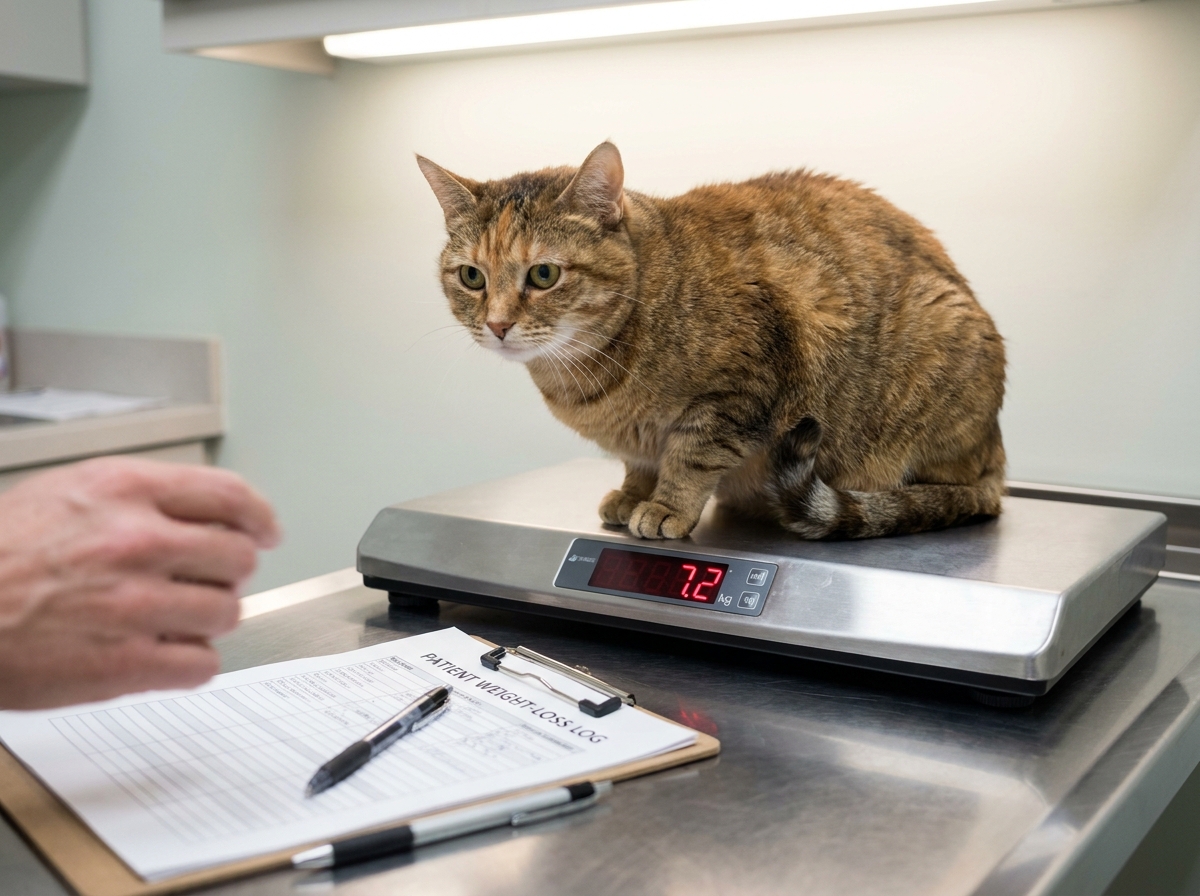
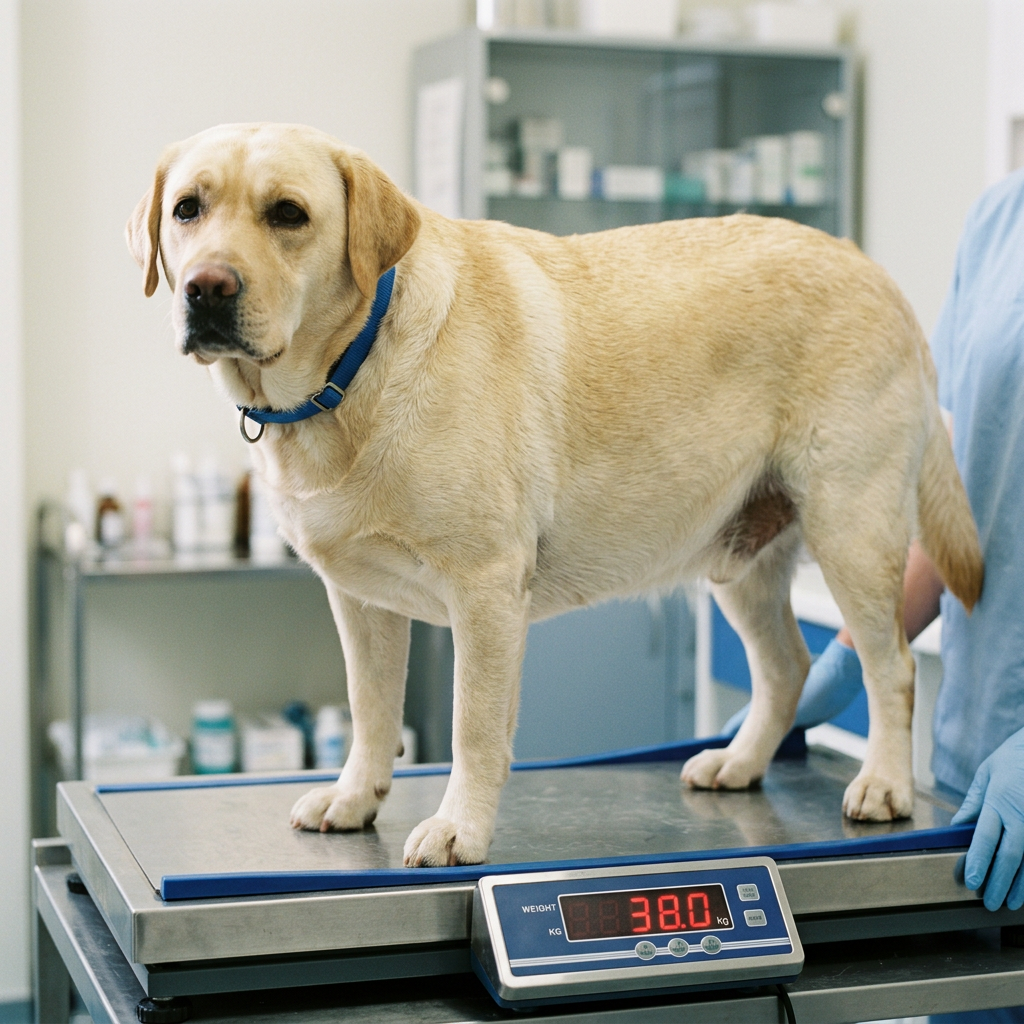
The weight-loss intervention for a dog that is BCS 7 (30% overweight) and needs to lose to BCS 5: the safe rate of weight loss is 1-2% of body weight per week. A 40-kilogram dog needs to lose 12 kilograms to reach BCS 5. At 1-2% per week, that is 400-800 grams per week, or 15-30 weeks (4-7 months). A 6-kilogram cat that needs to lose 2 kilograms needs 60-120 weeks at 1-2% per week, but cats should lose closer to 1% per week to avoid hepatic lipidosis, so 33-66 weeks (8-16 months). The timeline is real and the timeline is months, not weeks.
The owner who expects the weight to come off in 4 weeks is an owner who will give up the intervention. The owner who understands the 4-7 month timeline for a dog, or the 8-16 month timeline for a cat, is an owner who will maintain the intervention to completion. The weight check at 4 weeks should show a small but measurable loss (0.5-1% of body weight). The weight check at 12 weeks should show a clear loss (5-10% of body weight). The weight check at 24 weeks should show the target loss within reach. The trajectory is the confirmation. The intervention is working if the weight is trending down at the expected rate. The intervention is failing if the weight is not trending down, and the failure is usually due to dietary indiscretion (table scraps, treats, other pets' food) or to a calorie calculation that is too generous.
The maintenance phase
The dog or cat that has reached the target weight enters the maintenance phase, which is the longer and arguably more important phase. The maintenance is the daily measured feeding of a maintenance diet at the calorie level that maintains the target weight. The maintenance is monthly weight checks, with adjustments to the calorie level if the weight drifts up or down. The maintenance is for the rest of the pet's life. The owner who returns to free-choice feeding or to "a bit of extra" after the weight-loss intervention is the owner whose pet regains the weight within 6-12 months, and the owner who has to start the intervention over.
The maintenance is also the part that the vet supports with regular weigh-ins and body condition assessments. The vet who checks the BCS at every visit, who flags a 0.5-point increase in BCS as a concern, and who recommends an immediate calorie adjustment is the vet who is supporting the maintenance effectively. The vet who documents the BCS but does not act on a 0.5-point increase is the vet who allows the maintenance to drift.
The one-page summary
More than 50% of dogs and 55% of cats are overweight or obese. The excess body fat is an active endocrine organ that produces chronic inflammation, which damages joints, the pancreas, the urinary tract, the skin, and increases cancer risk. The lifespan reduction is 2 years. The cost of the weight-loss intervention is $200-900; the cost of the non-intervention is $5000-20000 over the rest of the pet's life. The weight-loss timeline is 4-7 months for a dog, 8-16 months for a cat. The maintenance phase is for the rest of the pet's life. The owner who does the intervention is the owner who gives the pet 2 additional years of healthy life. The owner who does not do the intervention is the owner who accepts the 2-year reduction in lifespan as inevitable. It is not inevitable. The intervention works. The math is clear. The pet deserves the intervention.