
Dental disease: home care that actually works between the cleanings
Dental disease is the most common chronic condition in dogs and cats, with a prevalence of 80% in dogs and 70% in cats over the age of 3. The dental cleaning under anesthesia, performed by the vet, is the reset — it removes the calculus, evaluates the teeth, and treats any disease. The home care, performed by the owner, is what keeps the teeth clean between the cleanings. The dog or cat that has regular dental cleanings without home care is the dog or cat that re-accumulates calculus within 6-12 months and that requires another cleaning. The dog or cat that has regular dental cleanings with effective home care is the dog or cat that extends the interval between cleanings to 18-36 months, with the cost savings and the anesthesia risk reduction. In this article I will walk through what dental disease is, the home care options that actually work, the home care options that do not work, the daily and weekly routine that produces the cleanest teeth, and the species-specific considerations for dogs and cats.
What dental disease is
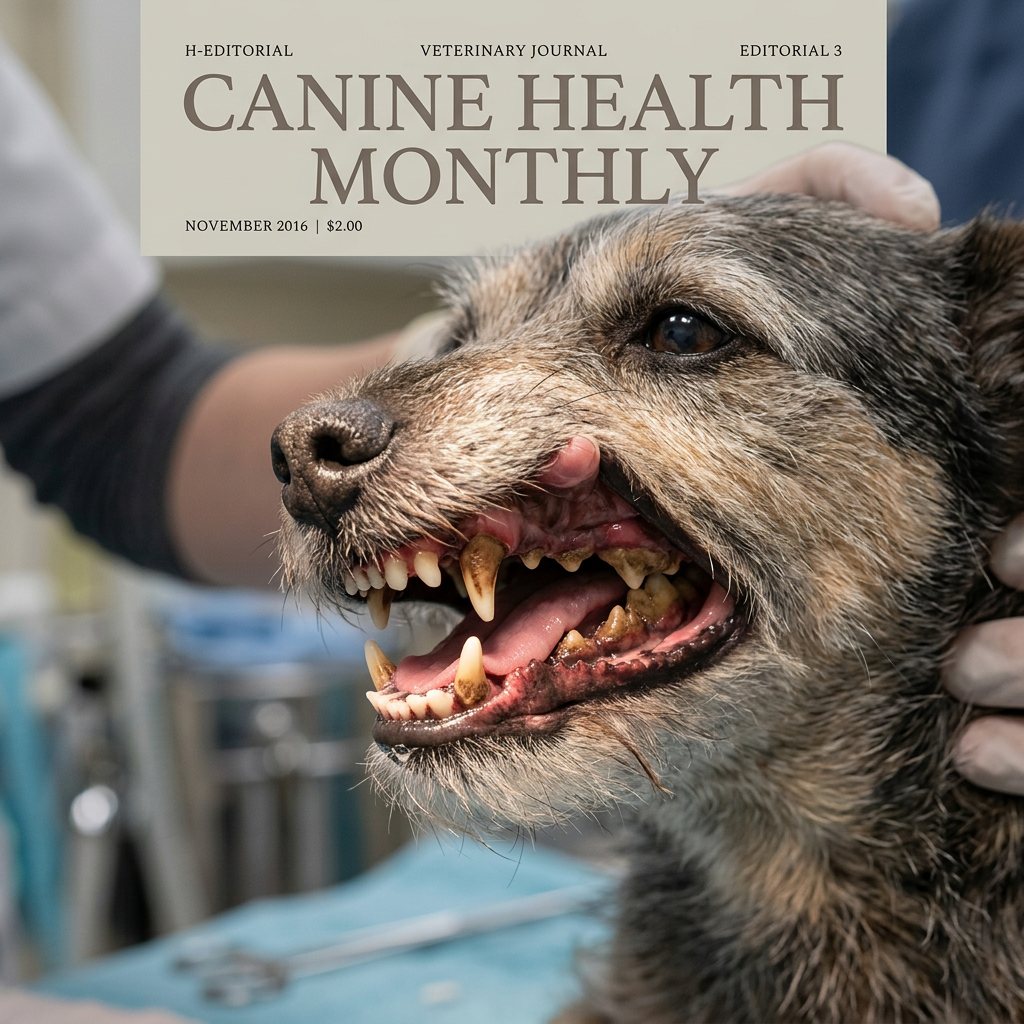
Dental disease in dogs and cats is most commonly periodontal disease, which is the inflammatory disease of the structures that support the teeth — the gingiva (gum), the periodontal ligament, and the alveolar bone. The disease starts with the accumulation of plaque (a sticky film of bacteria) on the tooth surface, particularly at the gum line. The plaque that is not removed within 24-48 hours mineralizes into calculus (tartar), which is a hard, brownish deposit that adheres to the tooth. The calculus provides a rough surface for more plaque to accumulate, and the plaque triggers an inflammatory response in the gingiva. The inflammation (gingivitis) progresses to inflammation of the deeper structures (periodontitis), with the destruction of the periodontal ligament, the loss of alveolar bone, and eventually the loss of the tooth.
The progression is silent in the early stages. The dog or cat with gingivitis shows mild redness at the gum line but no pain. The dog or cat with early periodontitis shows redness, swelling, and possibly mild bleeding on chewing or brushing, but no pain. The dog or cat with advanced periodontitis shows severe redness, recession of the gum, exposure of the tooth root, mobility of the tooth, and pain. The pain is often the first sign the owner notices, in the form of difficulty eating, dropping food, pawing at the mouth, or a change in behavior.
The home care options that actually work
The home care options that have evidence supporting their effectiveness, ranked from most to least effective:
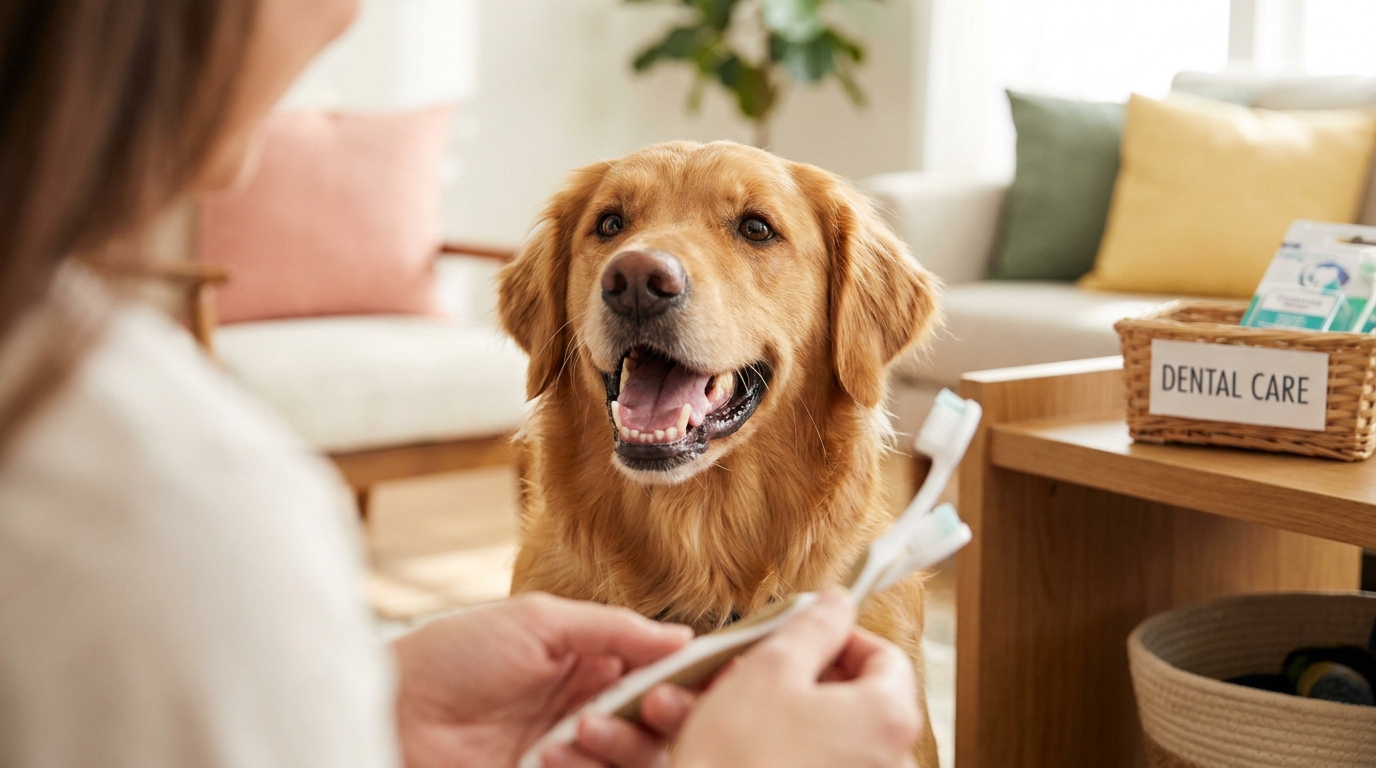
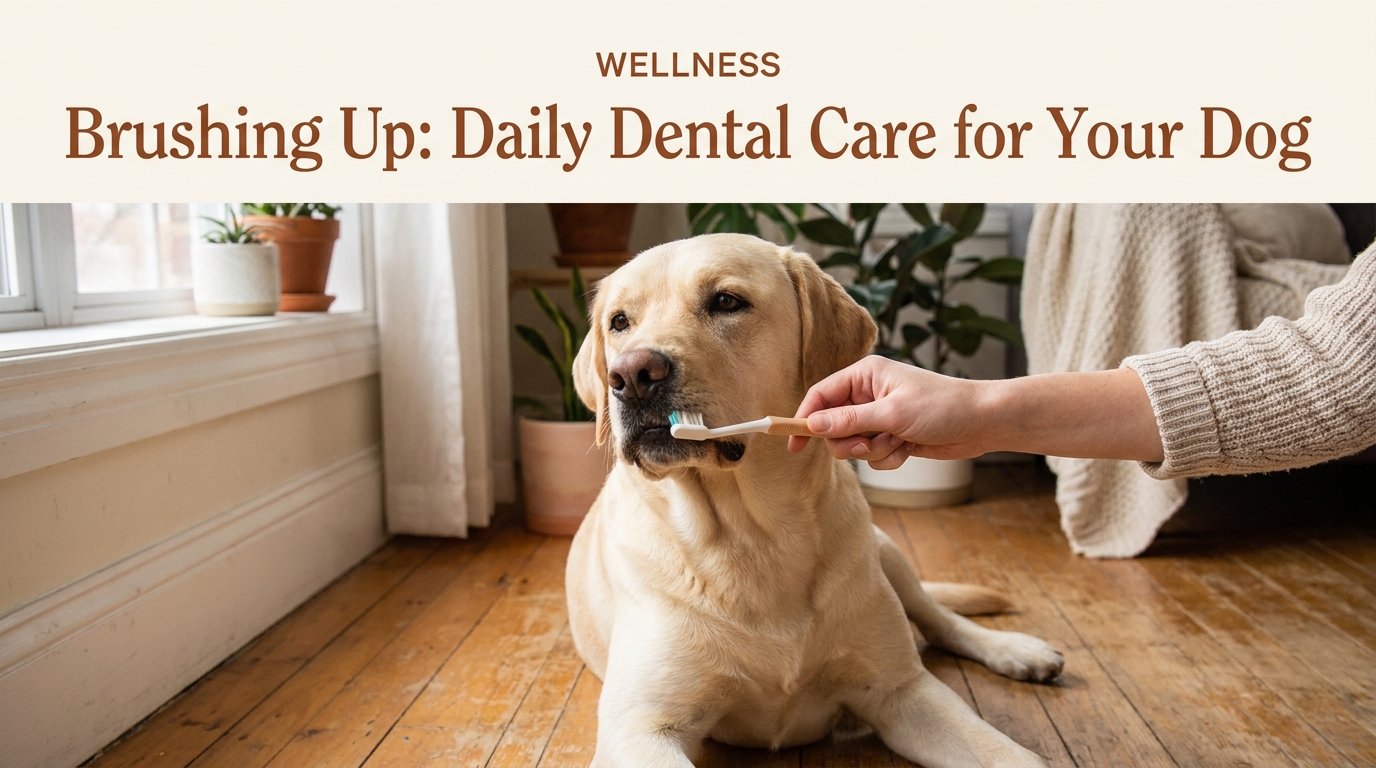
Tooth brushing with a pet-safe enzymatic toothpaste. The gold standard of home dental care. The mechanical action of the brush removes the plaque, and the enzymatic action of the toothpaste (typically containing glucose oxidase and lactoferrin) inhibits the bacteria. The brushing should be done daily, ideally at the same time each day, with a small toothbrush designed for pets (a finger brush works for small dogs and cats, a soft-bristled brush for larger dogs). The toothpaste should be pet-safe (do not use human toothpaste, which contains fluoride that is toxic if swallowed). The brushing takes 30-60 seconds per side. The daily brushing reduces plaque accumulation by 70-80% compared to no brushing.
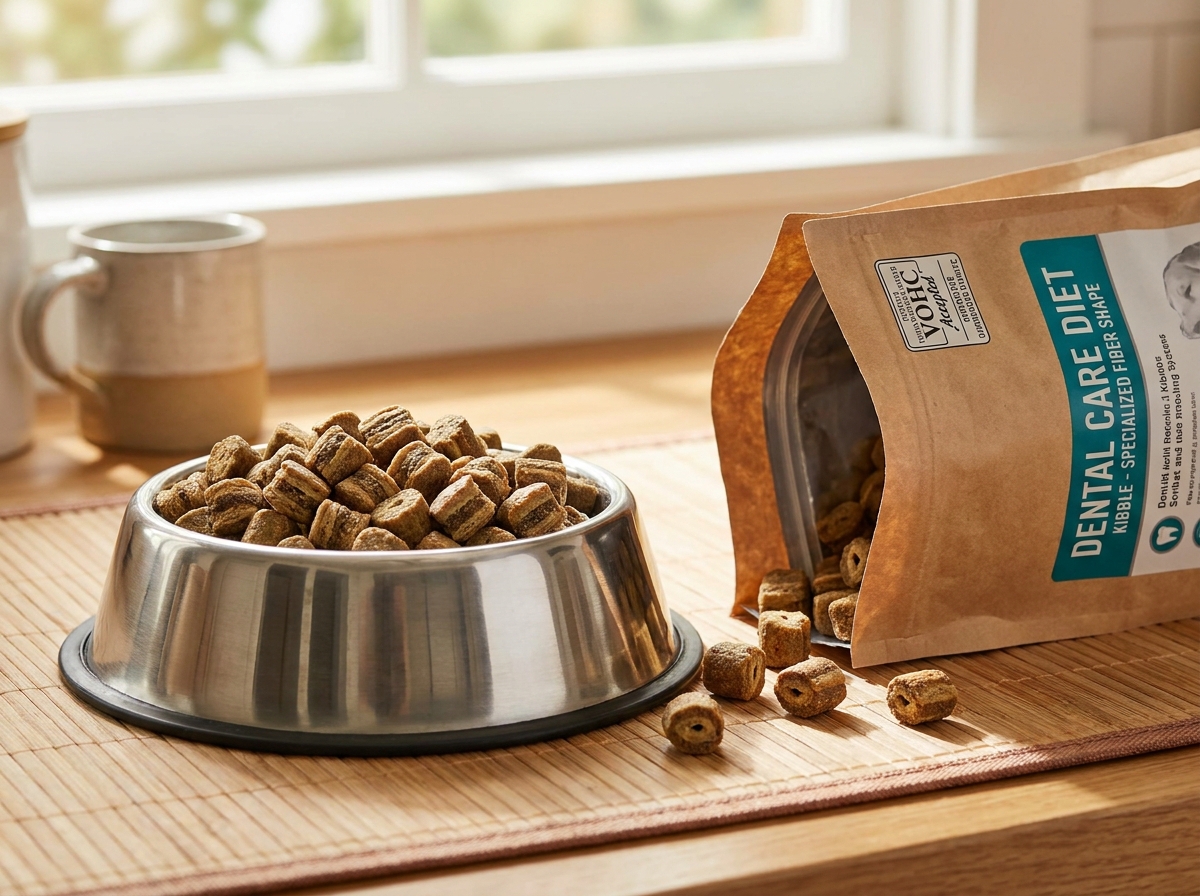
Dental diets with VOHC seal. The Veterinary Oral Health Council (VOHC) awards the VOHC seal to products that have demonstrated plaque and calculus reduction in clinical trials. The dental diets with the VOHC seal (Hill's Prescription Diet t/d, Royal Canin Dental, Purina Pro Plan Veterinary Diets Dental Chewz) work through a combination of mechanical action (the kibble is engineered to scrub the tooth as the dog or cat chews) and chemical action (the kibble contains ingredients that inhibit the plaque mineralization). The dental diets are most effective for the chewing surfaces of the molars and premolars, less effective for the incisors and canines. The dental diets should be the primary diet for the dog or cat that accepts them.
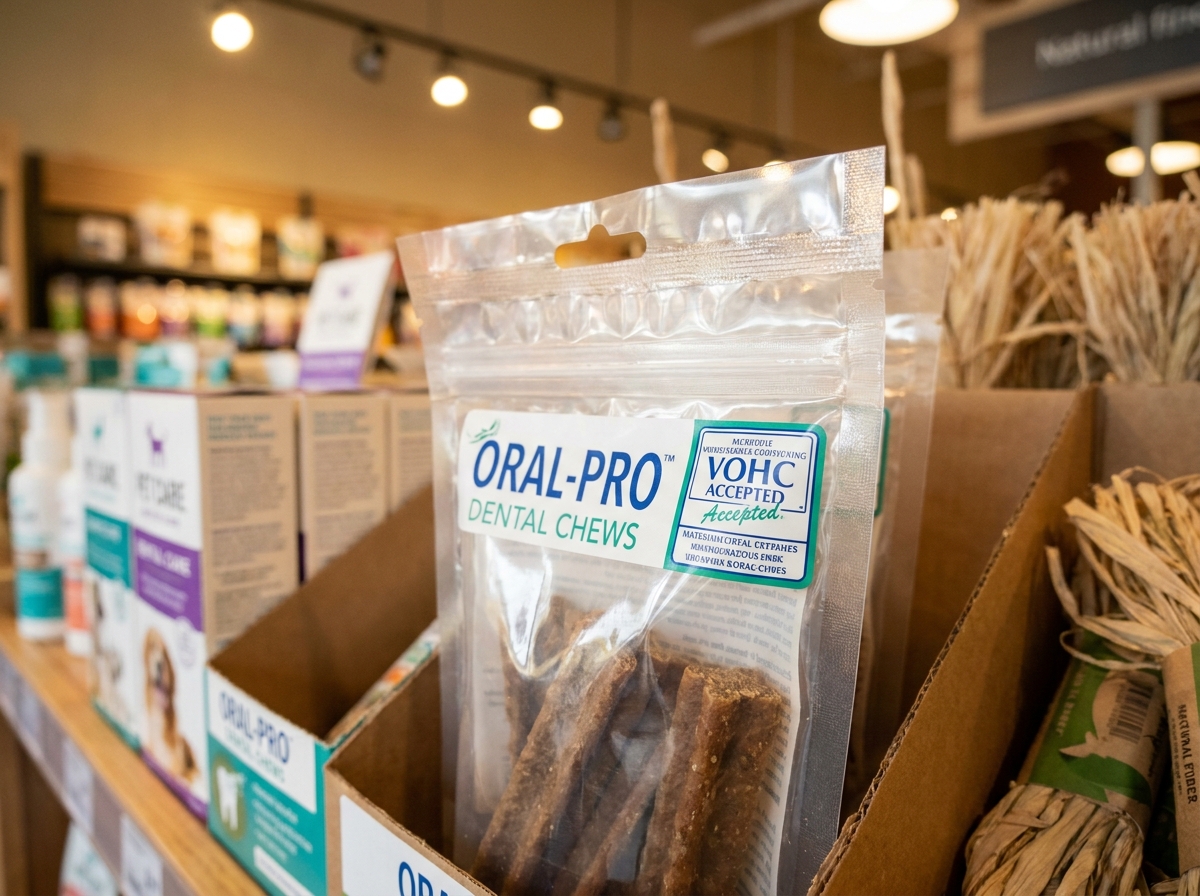
Dental chews with VOHC seal. The dental chews with the VOHC seal (Greenies, C.E.T. HEXtra Chews, Oravet Dental Chews, Milk-Bone Brushing Chews) work through the mechanical action of chewing. The dog chews the chew, the chew scrapes against the tooth surface, and the plaque is removed. The dental chews are not a substitute for tooth brushing, but the dental chews are a useful addition to the home care routine. The chews should be given daily, after the last meal, and the size of the chew should be appropriate for the dog (too small a chew is swallowed whole, too large a chew is given up on).
Water additives with VOHC seal. The water additives with the VOHC seal (C.E.T. Aquadent, Healthy Mouth) work through the chemical action of the active ingredients (typically chlorhexidine or zinc ascorbate) that inhibit the bacteria. The water additives are easy to use (just add to the water bowl) and are well-accepted by most pets. The water additives are not a substitute for tooth brushing, but the water additives are a useful addition.
Dental wipes with VOHC seal. The dental wipes with the VOHC seal work through the mechanical action of wiping the tooth surface. The wipes are easier to use than the toothbrush for some pets, particularly the cats and the small dogs that resist the brush. The wipes are less effective than the brush because the wipes do not reach the area under the gum line.
The home care options that do not work
Raw bones. The raw bone is often recommended for dental health, but the raw bone has significant risks. The raw bone can fracture the tooth (particularly the carnassial teeth in dogs, which are designed for crushing but can fracture on hard bones). The raw bone can cause intestinal obstruction or perforation if swallowed whole. The raw bone can carry bacterial pathogens (Salmonella, E. coli) that affect the household. The dental benefits of the raw bone are not worth the risks. The VOHC does not award the seal to raw bones.
Antlers. The antler is similar to the raw bone in dental action and risks. The antler is very hard, and the antler can fracture the tooth. The antler is not awarded the VOHC seal.
Nylon chew toys. The hard nylon chew toy (Nylabone, for example) is often recommended for dental health, but the hard nylon can also fracture the tooth, particularly in the dogs that chew aggressively. The VOHC seal is awarded to some specific nylon products, but the owner should check the seal before assuming the toy is safe.
Dry food alone. The dry food is often assumed to be better for the teeth than the wet food, because the dry food requires more chewing. The assumption is partially correct for some kibble designs, but the standard kibble does not have a dental benefit. The dental benefit requires the specific kibble design (the larger size, the fibrous texture, the unique shape) that is engineered for the dental action. The VOHC seal is awarded to specific dental kibbles, not to all dry food.
The daily and weekly routine
The daily routine: brush the teeth once per day, ideally after the last meal. The brushing should be done in a calm environment, with the pet relaxed. The brushing should be introduced gradually, with the pet acclimating to the brush, the toothpaste, and the handling of the mouth. The brushing should be rewarded with praise and a treat after each session.
The weekly routine: in addition to the daily brushing, the weekly routine includes the use of the dental chews (1-2 per week, depending on the size of the dog), the water additive (added to the water at the recommended concentration), and the inspection of the mouth (looking for any changes in the gums, the teeth, or the breath).
The monthly routine: the monthly weight check (the dental chews add calories, and the weight check is what catches the weight gain), the monthly brushing of the dental diet (if the dog or cat is on a dental diet, the monthly verification that the diet is being accepted), and the monthly evaluation of the home care (what is working, what is not, what needs to be adjusted).
The species-specific considerations
Dogs. The home care is generally easier in dogs than in cats. The dog accepts the tooth brushing more readily, the dog accepts the dental chews more readily, and the dog is more cooperative with the mouth handling. The home care routine is the daily brushing, the daily or weekly dental chew, the water additive, and the dental diet. The dental cleanings under anesthesia are typically every 12-24 months in the dog on effective home care.
Cats. The home care is more difficult in cats than in dogs. The cat is less accepting of the tooth brushing, the cat is less accepting of the dental chews, and the cat is less cooperative with the mouth handling. The home care routine for the cat is the water additive (the easiest to use in cats), the dental wipes (often the only option for the cat that resists the brush), the dental diet (if the cat accepts it), and the dental treats (if the cat accepts them). The dental cleanings under anesthesia are typically every 12-18 months in the cat on effective home care, and the home care is essential for the cat to extend the interval.
The realistic expectations
The home care is what extends the interval between the dental cleanings. The dog or cat on effective home care has the cleanings every 18-36 months, compared to every 6-12 months without home care. The home care is not a substitute for the dental cleaning — the home care is what keeps the teeth clean between the cleanings, and the cleaning is what addresses the disease that the home care cannot reach (the calculus under the gum line, the tooth root disease, the oral masses).
The owner who starts the home care on the young dog or cat is the owner who has the cleanest teeth throughout the pet's life. The owner who starts the home care on the older dog or cat with existing disease is the owner who slows the progression of the disease and who extends the interval between the cleanings. The home care is most effective when started early, but the home care is effective at any age.
The one-page summary
Dental disease is the most common chronic condition in dogs and cats. The dental cleaning is the reset, and the home care is what keeps the teeth clean between the cleanings. The home care that works: daily tooth brushing, VOHC dental diets, VOHC dental chews, VOHC water additives, and VOHC dental wipes. The home care that does not work: raw bones, antlers, hard nylon toys, and standard dry food. The daily routine: brush, water additive, dental chew. The weekly routine: dental chews 1-2 per week, mouth inspection. The owner who runs the home care is the owner whose pet has the cleanest teeth and the longest intervals between the cleanings. The home care is the work. The home care is what makes the difference.