
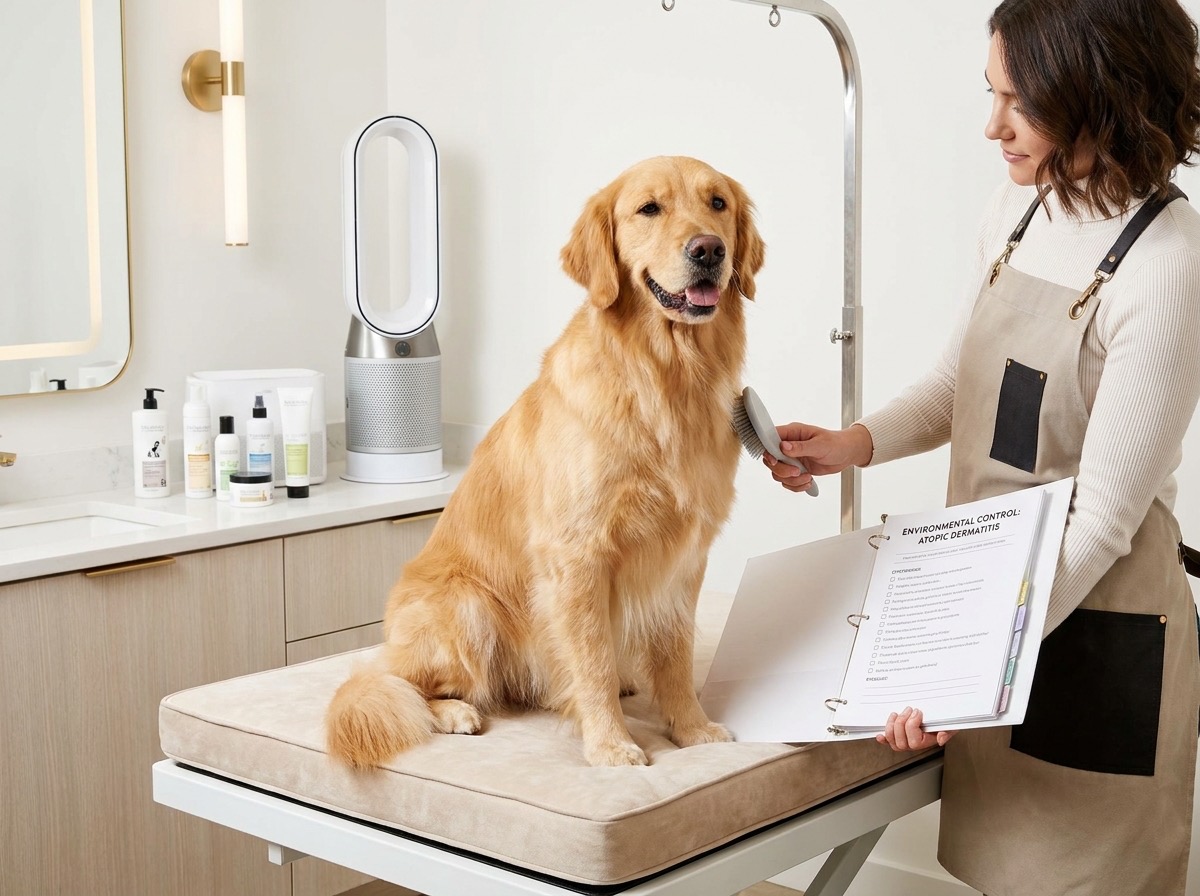
Canine atopic dermatitis: an environmental control checklist that actually reduces flare frequency
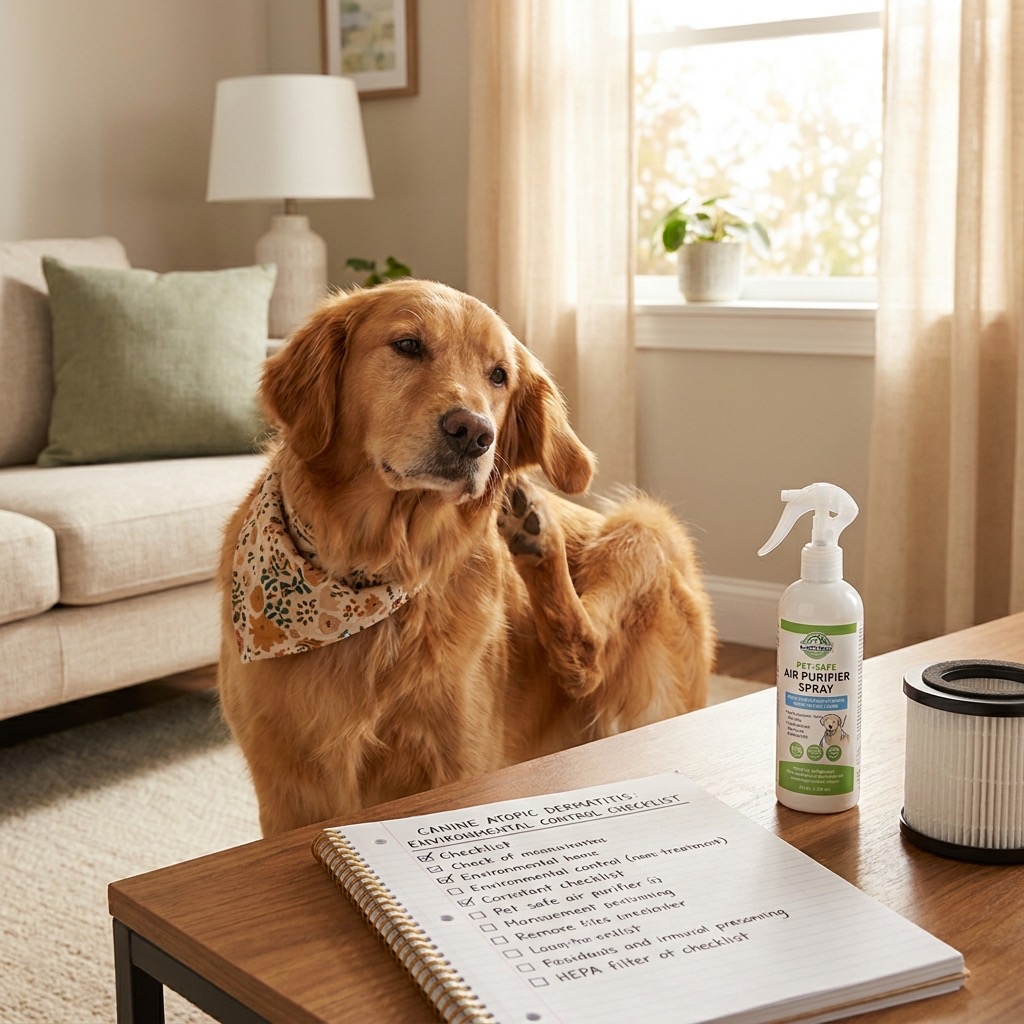
A dog with atopic dermatitis doesn't get relief from a single intervention. The combination of oclacitinib, cyclosporine, monoclonal antibody therapy, allergen-specific immunotherapy, prescription diets, and topical care works in layers. The layer that owners have the most control over — and the layer that most underperforms in practice — is the environmental allergen control at home.
When a home environment is set up correctly for an atopic dog, the medication burden drops. When it is set up incorrectly, no amount of oclacitinib or Apoquel will keep the itch suppressed. The dog's skin and the dog's environment are constantly talking to each other. The question is whether the conversation is happening with dust mites and storage mites and airborne pollens, or with a tightly controlled indoor microclimate.
This is the checklist I walk my own clients through, room by room, allergen by allergen.
The four indoor allergen categories
A dog with atopic dermatitis is reacting to a mix of environmental allergens. The biggest contributors inside the home are:
House dust mites (Dermatophagoides farinae, D. pteronyssinus)
The most important indoor allergen for atopic dogs. Dust mites live in soft furnishings, bedding, carpets, and fabric toys. They feed on human and animal skin flakes. The major allergens (Der f 1, Der p 1) accumulate in dust.
The home load of dust mite allergen is the single biggest controllable factor in canine atopic dermatitis. Reducing it 50% or more usually drops flare frequency noticeably.
Storage mites (Tyrophagus putrescentiae, Lepidoglyphus destructor)
Common in homes with stored dry food, pet treats, or grain-based products. Storage mites thrive in warm, humid kitchens, pantries, and food storage areas. They are an under-recognised trigger for atopic dogs.
Indoor moulds (Alternaria, Cladosporium, Aspergillus, Penicillium)
Found in damp areas, basements, bathrooms, kitchens, houseplant soil, and air conditioning units. Mould spore allergens are particularly aggravating for dogs with concurrent mould sensitisation.
Indoor pollens (rare but possible)
Tree and grass pollens drift inside through open windows, on clothing, and on the dog after outdoor walks. The dog brings them in on its coat, and they accumulate in soft furnishings.
A complete environmental control plan targets all four categories, not just the obvious ones.
The bedroom: highest priority
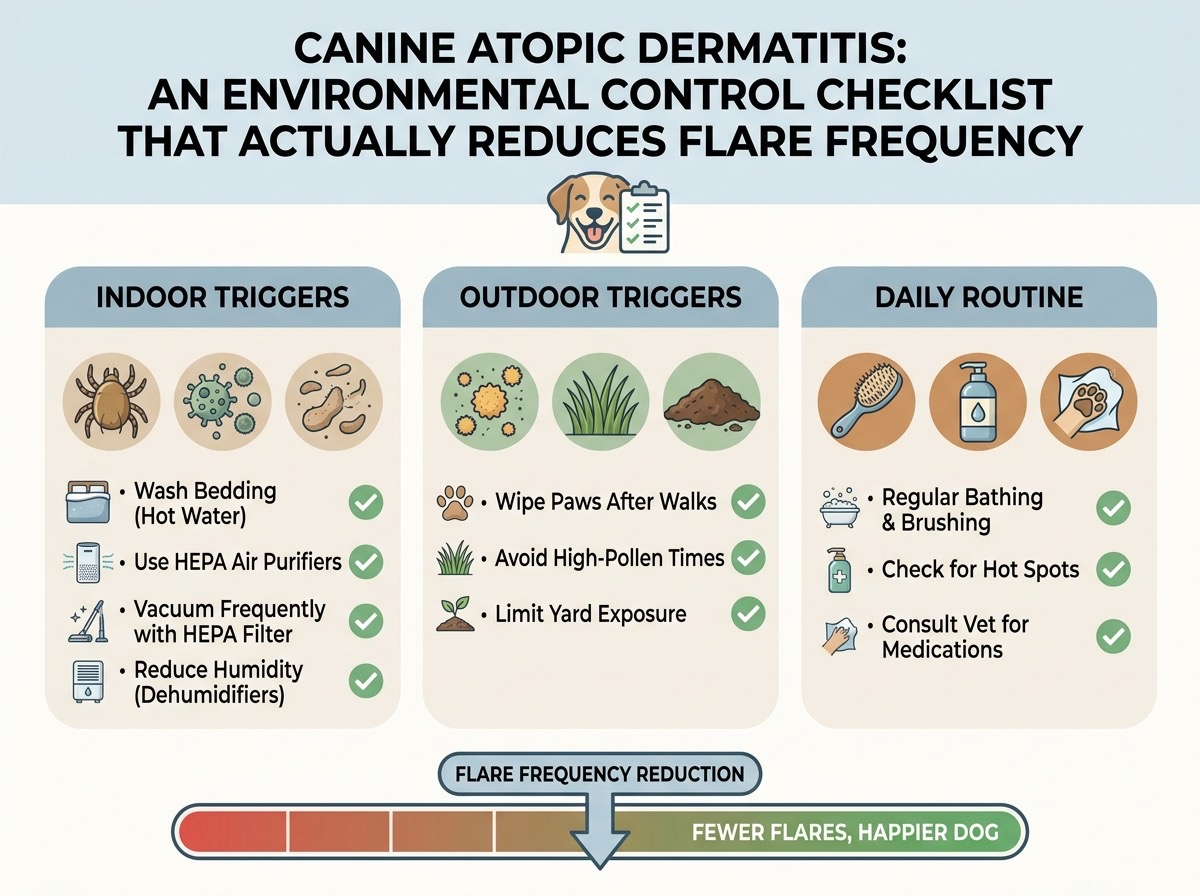
The dog sleeps 10–14 hours a day. Whatever allergens are in the bedding accumulate against the dog's largest organ (the skin) for half the day. This is why the bedroom is the highest-priority room.
Bedding protocol
- Washable, allergen-impermeable covers on the dog's bed. Use zippered covers that fully encase the mattress of the bed. Woven covers that allow airflow but block dust mites. Avoid plastic covers, which trap moisture
- Wash the dog's bed weekly at 60°C (130°F) or higher. Lower temperatures do not kill dust mites
- Wash the dog's blankets weekly at the same temperature
- Replace fabric beds every 12–18 months — even with regular washing, allergen accumulates in foam
- Use vinyl or wipeable beds for the worst cases — they don't harbour dust mites at all, and they're easy to clean
Air control in the bedroom
- HEPA air purifier running continuously. Choose a unit with a true HEPA filter (H13 or H14 grade) sized appropriately for the room. CADR (clean air delivery rate) above 200 for the bedroom
- Keep humidity below 50% — dust mites and storage mites need humidity above 50% to thrive. A dehumidifier or air conditioner in humid climates is essential
- Vacuum weekly with a HEPA-equipped vacuum — ordinary vacuums redistribute dust mite allergen into the air. HEPA vacuums capture it
- No carpet in the bedroom if possible — hard flooring is far easier to keep allergen-free. If carpet is unavoidable, low-pile with regular deep cleaning
Windows and natural ventilation
- Keep windows closed during high pollen seasons (spring tree pollen, late summer grass pollen) — peak pollen hours are 5–10 AM
- If ventilation is needed: use a HEPA-filtered intake rather than open windows
- Window treatments: washable curtains or wipeable blinds. Avoid heavy fabric drapes that trap dust
The living room: second priority
The dog spends most of its waking time here. Similar principles to the bedroom, with some additions:
- Fabric furniture is a dust mite reservoir. Wipeable leather or vinyl is ideal for atopic dogs. If the family won't give up fabric sofas, use allergen-impermeable sofa covers and wash weekly
- Throw blankets and decorative pillows are dust mite havens. Wash weekly or remove
- Carpet: ideally remove, especially wall-to-wall. If not removable, vacuum twice weekly with HEPA vacuum, and steam clean quarterly
- HEPA air purifier in the living room
- Humidity control — same 50% target
The kitchen: storage mite control
The kitchen is the most undertreated allergen zone for atopic dogs. Storage mites love dry food.
Dry food handling
- Store dry food in airtight containers — plastic or metal bins with tight-fitting lids. Avoid leaving the original bag open or loosely folded
- Buy smaller bags that are consumed within 2–3 weeks of opening. Large bags that sit open for months accumulate storage mites
- Clean the storage container monthly with hot soapy water
- Discard food that smells musty or has visible mites — atopic dogs can react to allergens in contaminated food even if the food looks fine
- Consider refrigerated storage of opened bags for highly atopic dogs
- Use stainless steel or ceramic bowls — plastic bowls develop micro-cuts that harbour bacteria. Ceramic or steel is more hygienic
Kitchen air
- Range hood ventilation when cooking — reduces moisture and food particle accumulation
- Wipe down counters daily with a damp cloth (not dry, which stirs allergens)
- Mop floors weekly with hot water
- Check for mould under the sink, behind the fridge, and around the dishwasher — any water leak creates a mould reservoir
- Houseplant soil is a major mould source — limit houseplants or top-dress the soil with decorative gravel to reduce spore release
The bathroom: mould control
The bathroom is the highest-humidity room in most homes and the most common site for hidden mould.
- Run the bathroom exhaust fan during and for 30 minutes after showers
- Squeegee shower walls after use
- Wash bath mats weekly at 60°C
- Check for mould around the shower, tub, and toilet base — clean any visible mould with a mould-specific cleaner
- Keep humidity below 50% — bathroom humidity after a shower can exceed 80%
- No damp towels on the floor — hang to dry immediately
Outdoor allergens: how to keep them outside
Even a tightly controlled indoor environment fails if the dog brings outdoor allergens in on its coat after every walk.
Post-walk routine
- Wipe the dog down with a damp microfiber cloth or hypoallergenic pet wipe after every walk. Focus on the belly, legs, paws, and face
- Wash the paws in a paw bath (shallow container of water) or rinse with a hose. The paws carry the most allergen
- Brush the coat outside before coming in, to remove loose pollen
- Bathe every 1–2 weeks with a gentle, hypoallergenic shampoo — not more often (over-bathing dries the skin)
- Change clothes — if a household member is also allergic, change clothes after being outside during high pollen seasons
Outdoor time
- Walk early morning or late evening during peak pollen season — pollen counts are highest midday
- Avoid freshly mowed grass — freshly mowed grass releases enormous amounts of pollen and mould spores
- Avoid wooded areas during tree pollen season
- Check pollen counts — apps like Pollen.com or local weather services give daily counts. Plan walks for low-pollen days
Heating and air conditioning
HVAC systems can either help or hurt an atopic dog.
Filters
- Use MERV 11–13 filters in the HVAC system. MERV 8 (the default in most homes) does not capture small allergen particles. MERV 14+ may restrict airflow in residential systems
- Change filters every 60–90 days — a dirty filter becomes a mould reservoir
- Consider a whole-house HEPA filter for severely affected dogs — installed in the return air duct
Humidity
- Whole-house dehumidifier if the home stays above 50% humidity in summer
- Humidifier in winter if indoor humidity drops below 30% — very dry air irritates the skin barrier. Target 40–50%
Duct cleaning
- Professional duct cleaning every 3–5 years — ducts accumulate dust that gets redistributed every time the system runs
The dog's own grooming routine
The dog's skin and coat are the interface with the environment. Good grooming is half the battle.
Bathing
- Frequency: every 1–2 weeks for most atopic dogs. Weekly for moderate-severe. Twice weekly for the worst cases
- Shampoo: hypoallergenic, fragrance-free, ideally containing ceramides or lipids to repair the skin barrier
- Water temperature: lukewarm. Hot water strips oils from the skin
- Contact time: lather, leave for 5–10 minutes, rinse thoroughly. The contact time is what makes the bath therapeutic
- Conditioner: leave-on moisturiser after the bath. Critical for skin barrier repair
- No human shampoo — even "mild" baby shampoo is too alkaline for dog skin
Between baths
- Medicated wipes on hotspots or areas the dog licks frequently
- Topical steroid sprays (hydrocortisone) for early flare signs, used as directed
- Omega-3 fatty acid supplementation in the diet — 50-100 mg/kg EPA+DHA per day. Reduces inflammatory skin response. Takes 6–8 weeks to show full effect
Paw care
- Wipe paws after every walk (see outdoor allergens above)
- Paw balm to protect the paw pads — barrier against allergens
- Trim hair between paw pads — reduces allergen collection in the paw webbing
What the vet visit still requires
Environmental control is a foundational layer, not a replacement for medical care. The dog still needs:
- Allergy testing (serum or intradermal) to identify the specific allergens driving the disease
- Allergen-specific immunotherapy (ASIT) — the only disease-modifying treatment. 70-80% of dogs respond over 12 months
- Anti-itch medication during flares — oclacitinib (Apoquel), lokivetmab (Cytopoint), or cyclosporine (Atopica)
- Infection treatment — bacterial pyoderma and yeast (Malassezia) overgrowth commonly complicate atopic skin
- Dietary management — elimination diet trial if food allergy is suspected (about 25% of atopic dogs have concurrent food allergy)
Environmental control works alongside these, not instead of them.
Realistic expectations: what to expect in 4-12 weeks
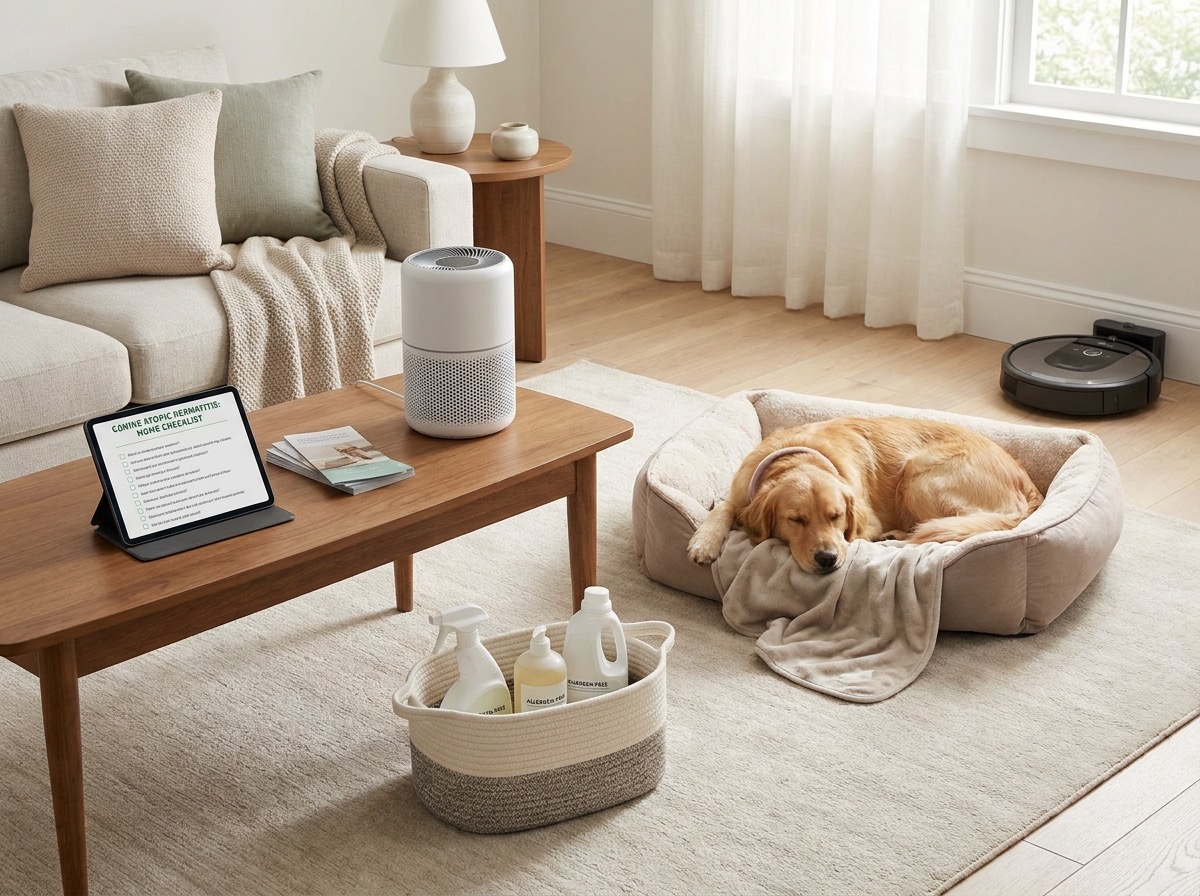
A newly implemented environmental control plan shows results in this timeline:
Weeks 1-2: visible reduction in dust mite load
- Air purifiers, bedding changes, and humidity control show immediate air-quality improvement
- The dog may not show clinical improvement yet
- Owners often notice fewer dust surfaces in the home
Weeks 2-4: reduced flare intensity
- Existing flares may resolve faster
- New flares, if they happen, are less severe
- Skin appears slightly less red and inflamed
- Less scratching, especially at night
Weeks 4-8: reduced flare frequency
- Flare interval lengthens — the dog goes 4-6 weeks between flares instead of 1-2 weeks
- The medication dose can often be reduced (in consultation with the vet)
- The skin barrier measurably improves on vet exam
Months 3-6: stabilisation
- Flares are rare (once every 2-3 months or less) or absent
- Medication can be tapered to the lowest effective dose
- The dog is visibly more comfortable: less scratching, more restful sleep, more play
The dogs that don't improve are usually the ones where the plan is half-implemented — HEPA filter in the bedroom but storage mites uncontrolled in the kitchen, or air purifier running but carpet not removed. Environmental control is a holistic intervention. The gaps matter.
Common mistakes
A few well-intentioned things that don't work:
Air purifier in the corner
An undersized purifier in a large room is essentially a placebo. Size the unit to the room (most manufacturers specify square footage coverage). Run it continuously — turning it off at night defeats the purpose.
"Hypoallergenic" dog beds
There is no such thing. Any fabric bed harbours dust mites within weeks. The properties that matter are washable, allergen-impermeable covers, and weekly 60°C washing.
Bathing too often
Weekly bathing is therapeutic. Daily bathing destroys the skin barrier. Twice weekly is the upper limit for most atopic dogs.
Fragrance-free dryer sheets
"Fragrance-free" doesn't mean "allergen-free". The cationic surfactants in dryer sheets can still irritate atopic dog skin if the dog lies on a washed blanket. Skip the dryer sheet, use a fragrance-free detergent, and dry on medium heat.
Bathing the dog less to "preserve natural oils"
This is the opposite of correct. The inflammatory skin of an atopic dog benefits from regular cleansing to remove surface allergens. The barrier function is supported by moisturising after the bath, not by skipping the bath.
Closing off the bedroom
The atopic dog sleeps in the bedroom with the family, not in a separate closed room. Closing off the bedroom isolates the dog from the family and concentrates allergens in the rest of the house.
When to escalate the medical management
If environmental control at 8-12 weeks hasn't reduced flare frequency, the next steps are usually:
- Allergy testing to identify specific allergens, allowing for targeted ASIT
- Medication review — adding lokivetmab (Cytopoint) or adjusting oclacitinib dosing
- Diet trial — 8-week elimination diet with novel or hydrolyzed protein
- Skin biopsy for refractory cases — rules out less common conditions (cutaneous T-cell lymphoma, autoimmune skin disease)
The environmental foundation makes all of these work better. A dog on oclacitinib in a dust-mite-laden home still flares. A dog on the same drug in a tightly controlled home has dramatically fewer flares.
---
The bottom line
Environmental control isn't optional in canine atopic dermatitis. It's a co-equal pillar of treatment alongside medication, diet, and immunotherapy. The dogs that do well are the ones whose owners commit to the whole checklist — bedroom, kitchen, bathroom, living room, HVAC, grooming. It's a lot of work upfront, but it pays back in fewer flares, less medication, less cost, and a more comfortable dog. Start with the bedroom (highest allergen exposure), expand outward. Within 4-8 weeks, you should see the difference.
---
About the author: [Hannah Kim](../Hannah%20Kim.md) holds a DVM from Seoul National University and a PhD from UC Davis, with 14 years of clinical nutrition and dermatology research, and is a Diplomate of the American College of Veterinary Dermatology.