
Omega-3 fatty acids for skin: dosing, product choice, and the evidence that actually moves the needle
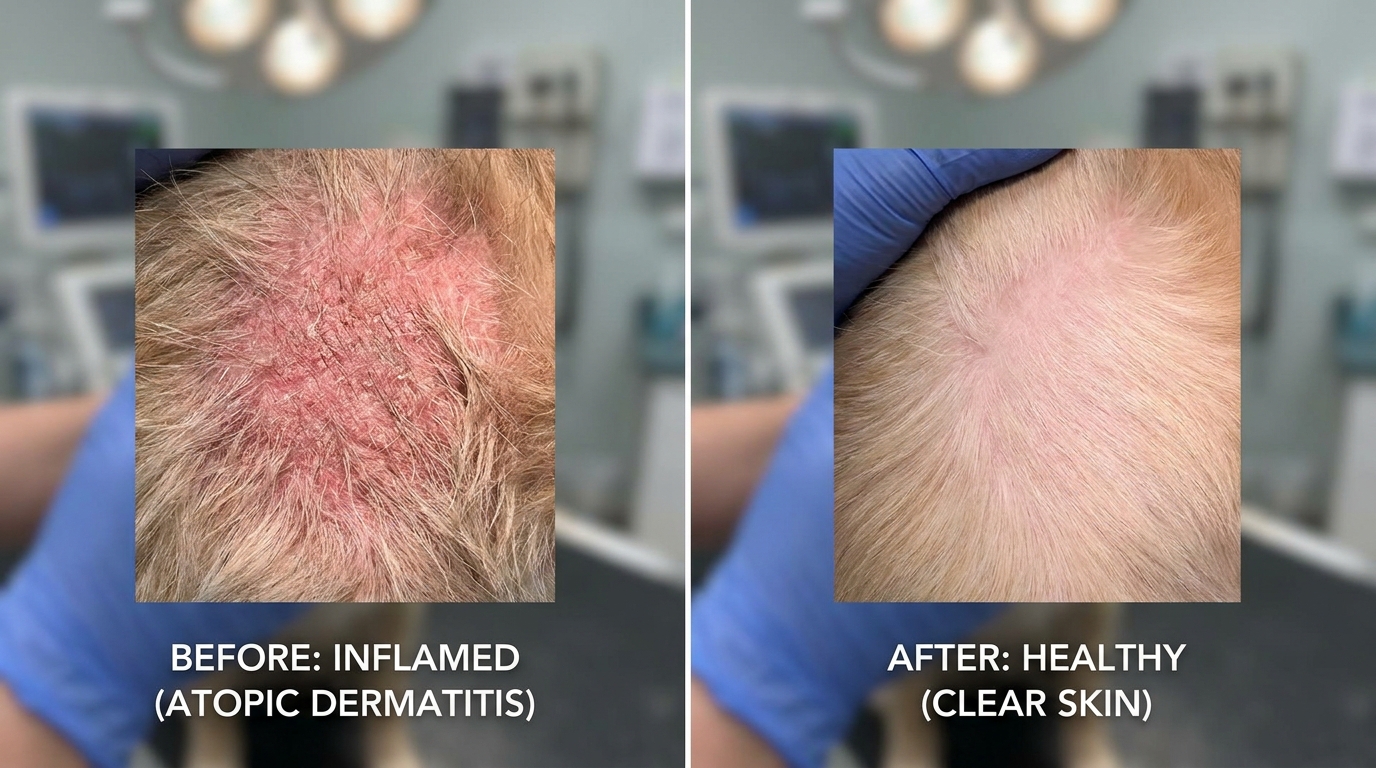
Omega-3 fatty acid supplementation is the single most evidence-backed nutritional intervention for atopic dermatitis in dogs and cats. Multiple randomized controlled trials have shown that high-dose omega-3 supplementation reduces pruritus, improves coat quality, reduces the need for anti-inflammatory medications, and improves the skin barrier. The catch — and the reason that most owners do not see the benefit — is that the dosing in most published studies is far higher than the dosing on the label of most commercial pet supplements, and the product quality varies wildly. The owner who gives the dog the recommended dose on a low-quality product is the owner who does not see the benefit, and the owner who concludes that "omega-3 does not work" is the owner who has given up on a real intervention. In this article I will walk through the actual evidence, the dose that produces the clinical effect, the product characteristics that matter, the timeline for the benefit, and the cases where omega-3 is the wrong intervention.
The actual evidence
The published evidence for omega-3 in canine atopic dermatitis is robust. A 2016 systematic review identified 9 randomized controlled trials evaluating omega-3 supplementation in dogs with atopic dermatitis, with 7 of the 9 showing a statistically significant improvement in pruritus and coat quality. The typical effect size: a 25-40% reduction in pruritus scores over 8-12 weeks, and a 30-50% reduction in the need for rescue anti-inflammatory medications. The evidence in cats is more limited but consistent: the studies that have been done show a similar magnitude of effect.
The mechanism: the omega-3 fatty acids EPA (eicosapentaenoic acid) and DHA (docosahexaenoic acid) are incorporated into the cell membranes of inflammatory cells, where they are metabolized into less inflammatory eicosanoids (Series 3 prostaglandins and Series 5 leukotrienes) than the omega-6-derived eicosanoids. The result is a less inflammatory response to the allergens that drive atopic dermatitis. The omega-3 also supports the skin barrier by improving the lipid composition of the stratum corneum, reducing transepidermal water loss, and improving the skin's defense against environmental allergens.
The omega-6 to omega-3 ratio matters. The typical commercial dog food has an omega-6 to omega-3 ratio of 15:1 to 30:1, which is pro-inflammatory. The dog on a high-dose omega-3 supplement has the ratio shifted toward 5:1 to 10:1, which is less inflammatory. The shift in ratio is the mechanism by which the supplement produces the clinical effect.
The dose that produces the effect
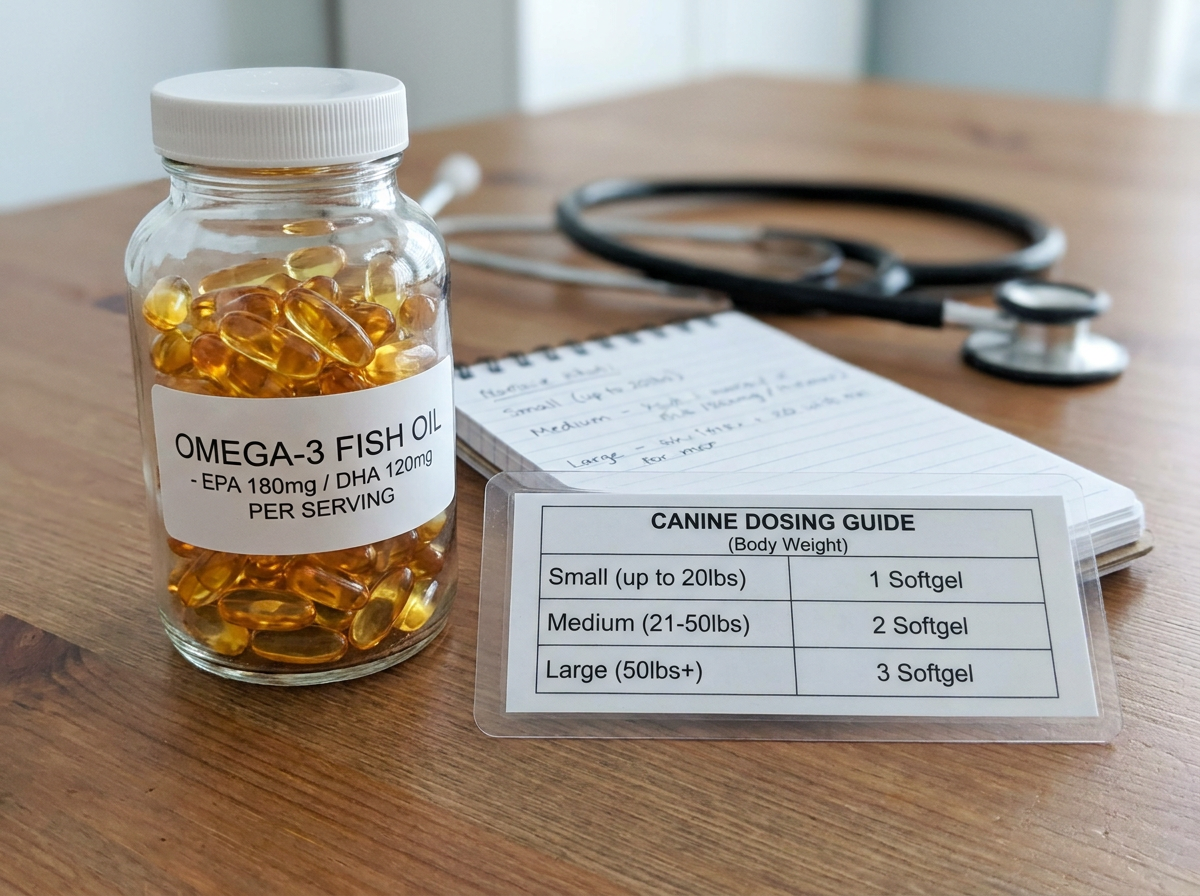
The published effective dose is 50-75 mg/kg of combined EPA and DHA per day. For a 20-kilogram dog, that is 1000-1500 mg of EPA+DHA per day. For a 5-kilogram cat, that is 250-375 mg per day. This dose is significantly higher than the dose listed on most commercial pet supplements, which is typically 100-300 mg of combined EPA+DHA per softgel or per pump. The owner who gives the dog one softgel per day is the owner who is giving 10-20% of the effective dose, and the dog is not going to respond.
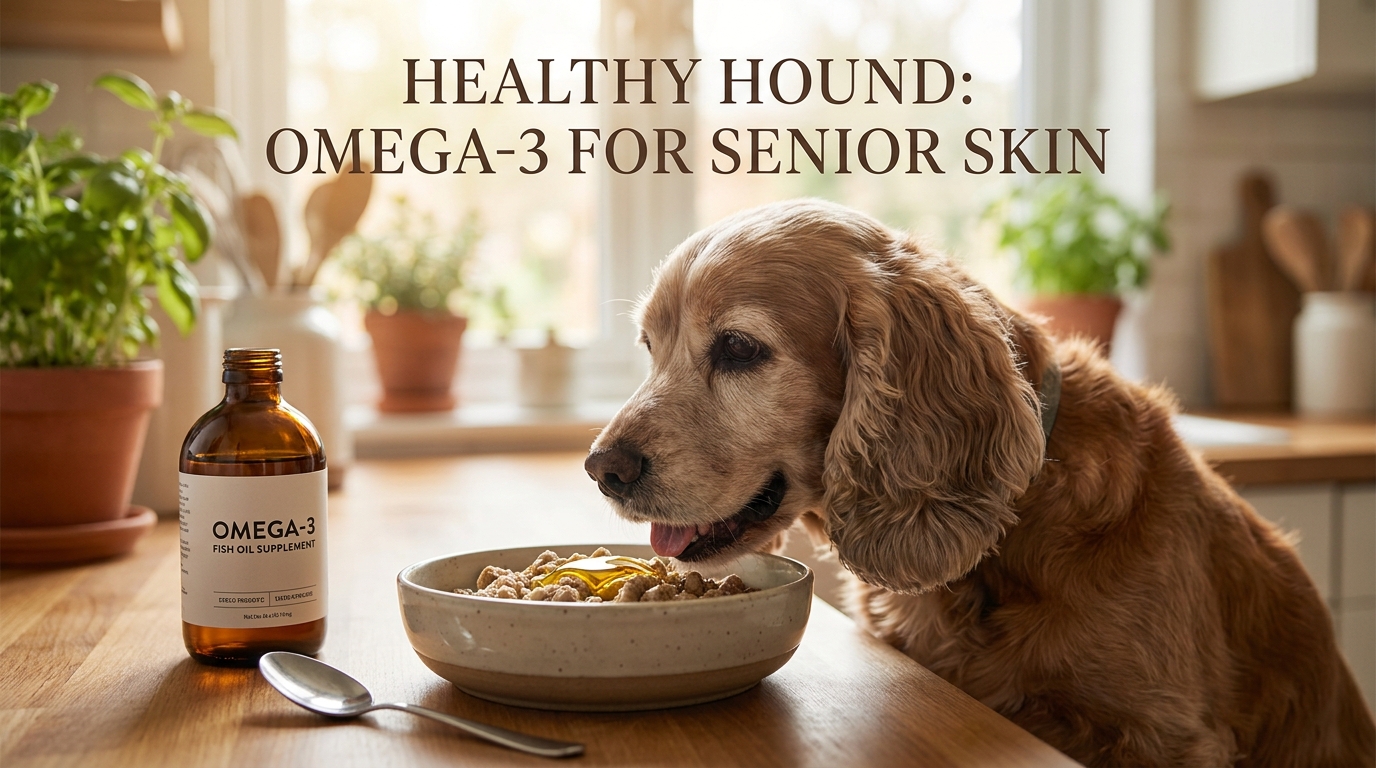
The dose can be achieved in two ways. The first is fish oil softgels. A standard 1000 mg fish oil softgel contains roughly 300 mg of EPA+DHA (the rest is other fish oil components). A 20-kilogram dog needs 3-5 softgels per day to reach the effective dose. A 5-kilogram cat needs 1 softgel per day. The second is liquid fish oil, dosed by milliliter. The concentration varies by product, but a high-quality liquid fish oil contains roughly 500-1000 mg of EPA+DHA per teaspoon. A 20-kilogram dog needs 1-2 teaspoons per day, depending on concentration. The owner who uses a low-concentration product is the owner who has to give large volumes to reach the effective dose.
The dose is the variable that most often gets wrong. The owner who follows the label of a low-concentration product is the owner who is under-dosing by 3-5x. The owner who reads the EPA+DHA content on the label and calculates the dose based on the dog's body weight is the owner who reaches the effective dose.
The product characteristics that matter
Not all omega-3 products are equivalent. The variables that determine the quality and the effect: the source of the oil, the concentration of EPA+DHA, the ratio of EPA to DHA, the presence of contaminants, the freshness of the oil, and the form (softgel vs liquid).
The source: marine-source omega-3 (fish oil, krill oil, algal oil) is the most bioavailable and the most studied. Plant-source omega-3 (flaxseed, chia) is poorly converted to EPA and DHA in dogs and cats, and is not a substitute. The dog or cat on a flaxseed supplement is the dog or cat that is not getting the benefit. The fix: marine-source only.
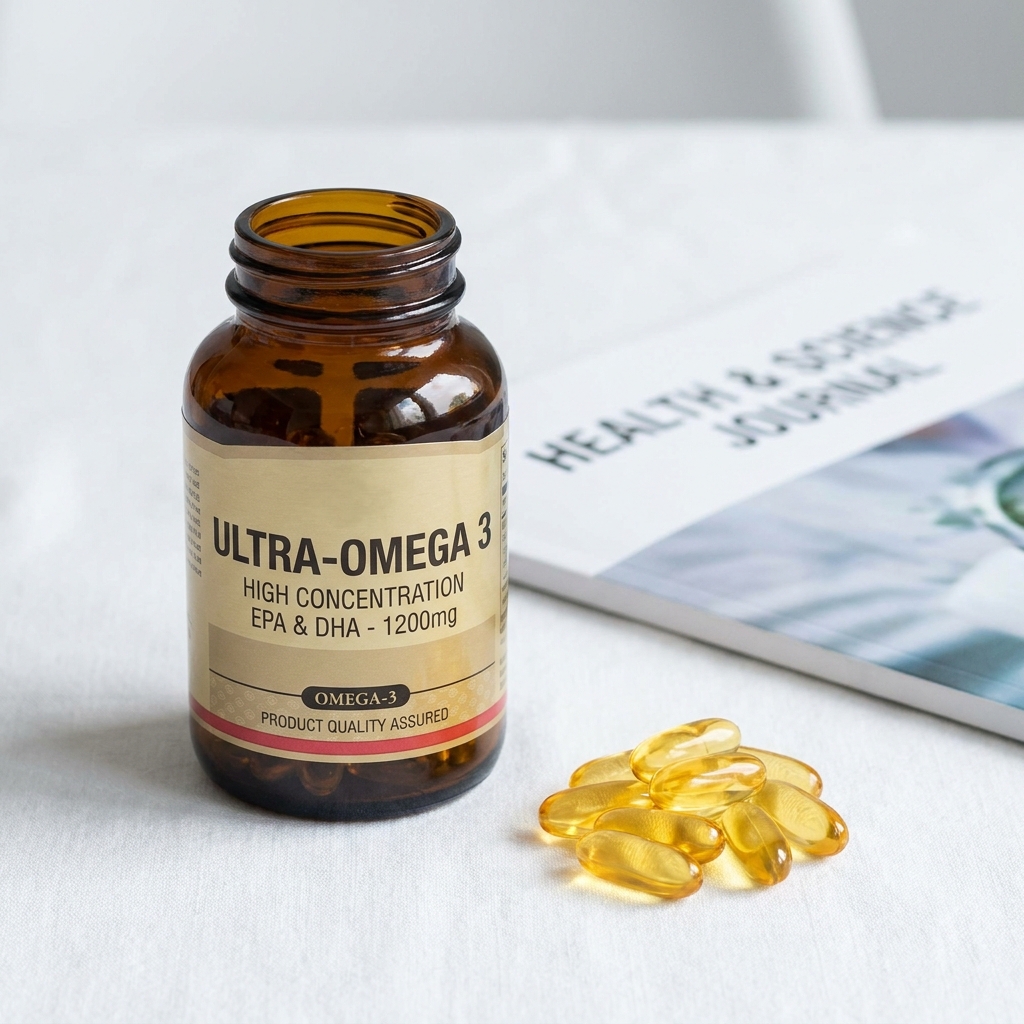
The concentration: a high-concentration product (60%+ EPA+DHA by weight) is the product that allows a reasonable volume of oil to deliver the effective dose. A low-concentration product (30% EPA+DHA) requires 2-3x the volume. The label should state the EPA and DHA content per softgel or per milliliter, not just the fish oil content.
The EPA to DHA ratio: a product with a 2:1 EPA to DHA ratio is more anti-inflammatory than a product with a 1:1 ratio. The anti-inflammatory effect is driven primarily by EPA; DHA is more important for the skin barrier. A product with more EPA than DHA is a product that is optimized for the anti-inflammatory effect.
The contaminants: heavy metals (mercury, lead), PCBs, and dioxins are contaminants that are present in some fish oils. A high-quality product is tested by a third-party lab and the certificate of analysis is available. The owner who buys the cheapest fish oil at the discount store is the owner who is potentially giving the dog mercury along with the omega-3.
The freshness: fish oil oxidizes over time, and oxidized fish oil is less effective and potentially harmful. A high-quality product has an antioxidant (vitamin E, rosemary extract) added and is packaged in a dark bottle. The owner who buys the giant bottle of fish oil on sale is the owner who may be giving the dog oxidized oil by the end of the bottle. The fix: smaller bottles, used within 3-4 months of opening, stored in the refrigerator.
The timeline for the benefit
The omega-3 fatty acids are incorporated into the cell membranes gradually, and the clinical benefit appears gradually. The timeline: 2-4 weeks for the first measurable change (slight reduction in itching), 6-8 weeks for the more substantial change (visible improvement in coat quality, significant reduction in itching), 12 weeks for the full effect. The owner who tries the supplement for 2 weeks and concludes "it does not work" is the owner who has not given the supplement the time it needs. The fix: commit to 12 weeks of supplementation at the effective dose, with a re-evaluation at the 12-week mark.
The benefit is also dose-dependent. The owner who gives the dog half the effective dose is the owner who will see partial benefit at 12 weeks. The owner who gives the full effective dose is the owner who will see the full benefit. The owner who gives the dog the dose on the label of a low-concentration product is the owner who will see no benefit at 12 weeks, and the owner who will conclude that the supplement does not work.
The interaction with other interventions
The omega-3 supplement is not a substitute for the other interventions in the atopic dermatitis management plan. The omega-3 supports the skin barrier and reduces inflammation, but the omega-3 does not eliminate the allergens, does not treat the secondary infections, and does not replace the anti-inflammatory medications that some dogs need during flare-ups. The omega-3 is a layer in the management plan, not a replacement for the other layers.
The omega-3 does, however, allow a reduction in the dose of the other medications. The dog that is on a high dose of oclacitinib during flare season can often be reduced to a lower dose or to intermittent use when the omega-3 is at the effective dose. The reduction in medication is the secondary benefit that often makes the omega-3 supplementation cost-effective over the long term.
The cases where omega-3 is the wrong intervention
The dog or cat with a fish allergy is an obvious case — the dog or cat that is allergic to fish is the dog or cat that cannot be on a fish oil supplement. The alternative is an algal oil, which is plant-source DHA that does not contain EPA. The alternative is less effective than fish oil, but it is the right choice for the fish-allergic pet.
The dog or cat that is already on a high-dose omega-3 diet (a veterinary therapeutic diet formulated for skin health) is a dog or cat that does not need additional supplementation. The therapeutic diet is already at the effective dose, and adding a supplement on top is redundant and potentially harmful (the dog that gets too much omega-3 can develop loose stool, fat-soluble vitamin imbalances, and immune suppression).
The dog or cat that is being supplemented with cod liver oil is a dog or cat that is getting too much vitamin A. Cod liver oil is high in vitamin A, and chronic high-dose cod liver oil supplementation can cause vitamin A toxicity. The fix: use a fish oil that is not cod liver oil, and do not exceed the recommended dose.
The one-page summary
Omega-3 supplementation is the most evidence-backed nutritional intervention for atopic skin disease. The effective dose is 50-75 mg/kg of combined EPA and DHA per day, which is significantly higher than the dose on most product labels. The product must be marine-source, high-concentration, with more EPA than DHA, third-party tested for contaminants, and fresh. The benefit appears at 2-4 weeks, peaks at 12 weeks, and is sustained with continued supplementation. The owner who calculates the dose based on the dog's body weight and the EPA+DHA content of the product is the owner who gets the benefit. The owner who follows the label of a low-concentration product is the owner who is not getting the benefit and is the owner who concludes that the supplement does not work.