
Aggression: a danger-level classification and what to do at each level
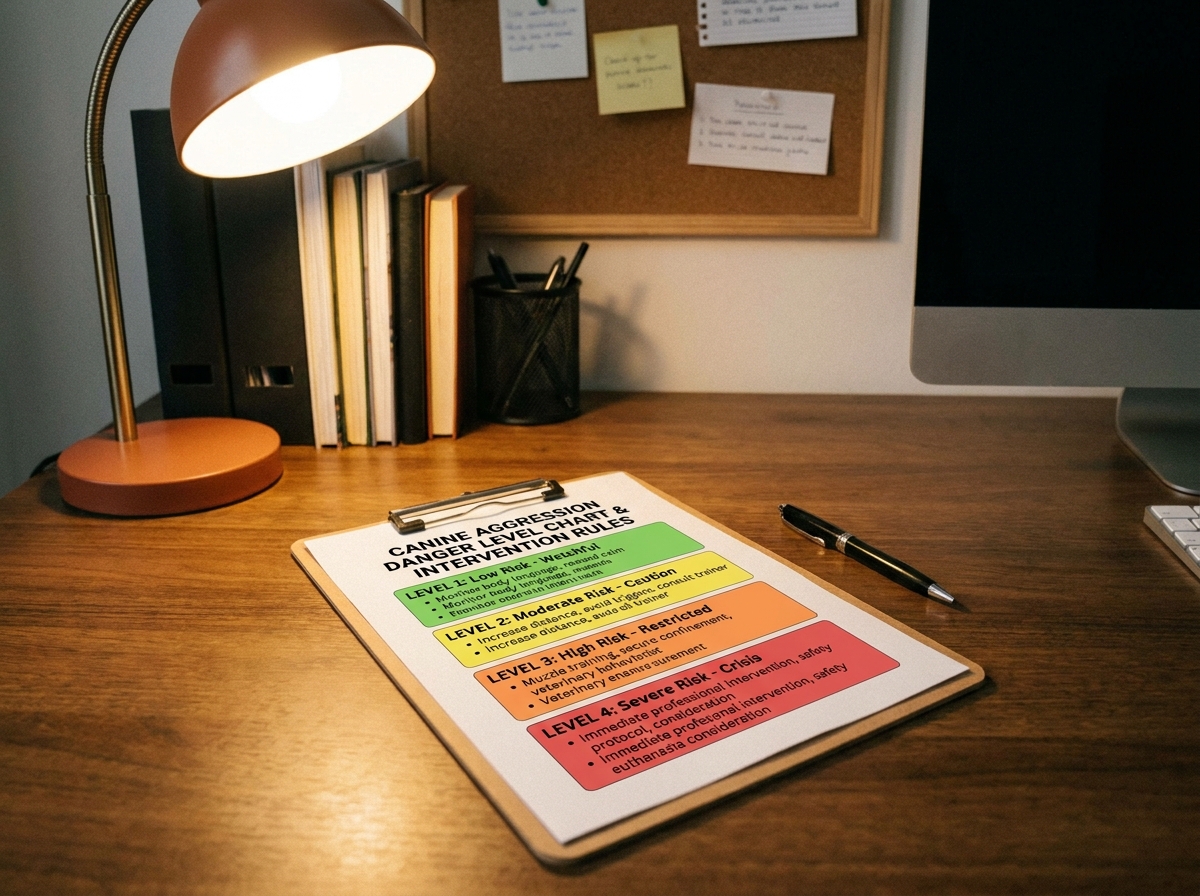
Aggression is the most common behavior problem I see in clinical practice, and it is also the behavior problem that is most often mishandled. The owner who responds to a growl with punishment produces a dog that does not growl before it bites. The owner who responds to a bite with reassurance produces a dog that bites more often. The owner who does not classify the aggression by danger level is the owner who applies the wrong intervention, and the wrong intervention makes the aggression worse. In this article I will walk through the four-level danger classification I use for every aggression case, the safety rules that apply at each level, the intervention that is appropriate at each level, and the two cases where the classification itself is the most important thing the owner learns.
Why a classification matters
The first thing I tell every owner of an aggressive dog is that aggression is not one behavior. Aggression is at least four different behaviors, with different motivations, different warning signs, different safety implications, and different interventions. The growl that is a distance-increasing signal (the dog wants the trigger to go away) is not the bite that is a predatory sequence completion (the dog has decided to attack). The growl that is a fear response (the dog is scared) is not the bite that is a resource guard (the dog is protecting something). Each type has a different prognosis, a different training plan, and a different safety profile.
The classification does three things for the owner. It separates the warning signs from the actual bites, so the owner can intervene before the bite. It identifies the motivation, so the training can target the cause and not the symptom. It sets the safety level, so the owner knows when the dog is safe around people, when the dog requires management, and when the dog is dangerous and the right answer is rehoming or euthanasia.
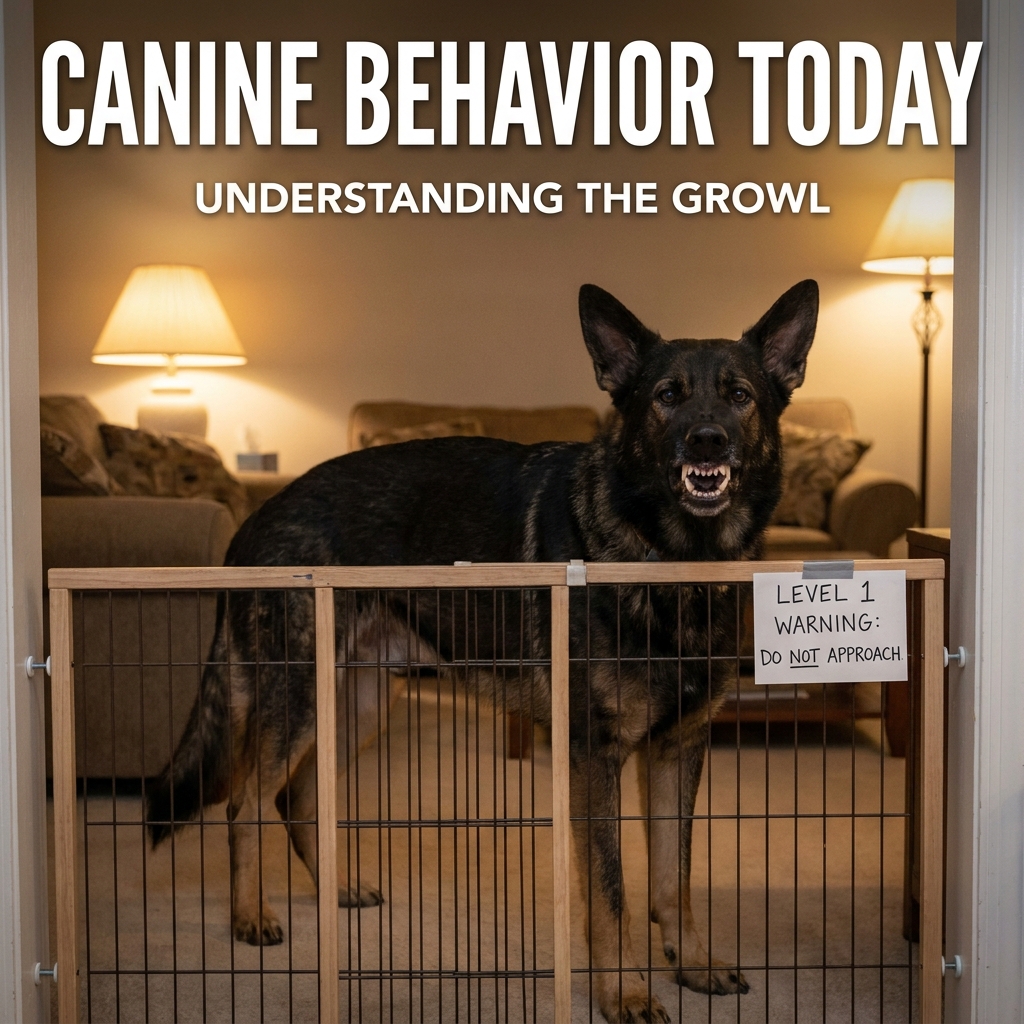
Level 1: warning signs with no contact
The Level 1 dog growls, snarls, snaps at the air, or shows teeth, but does not make contact. The growl is the distance-increasing signal. The dog is communicating "I want this to stop, go away." The growl is a good sign — the dog is using the warning, and the warning is the owner's opportunity to intervene. The dog that skips the growl and goes straight to the bite is a dog that has learned the growl does not work.
The safety rules at Level 1: respect the growl. The owner who punishes the growl (yelling, hitting, jerking the leash) teaches the dog that the growl is not an effective warning, and the dog escalates to the bite. The owner who respects the growl and removes the trigger (steps away from the other dog, stops reaching for the food bowl, stops the hug) confirms that the growl works, and the dog continues to use the growl. The intervention at Level 1: identify the trigger, manage the environment to prevent the trigger, and begin a behavior modification protocol that teaches the dog a new way to respond to the trigger.
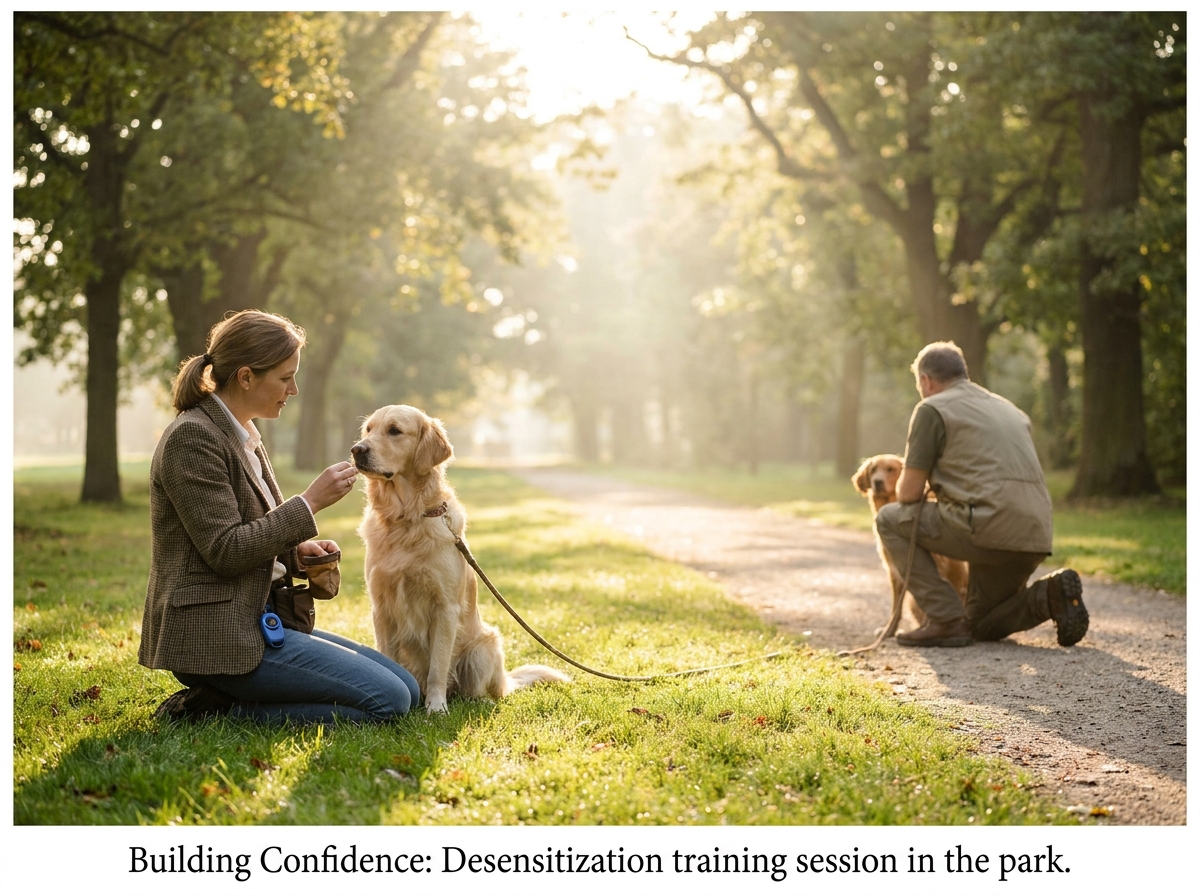
The protocol at Level 1 is the desensitization and counterconditioning (DSCC) protocol. The dog is exposed to the trigger at a low intensity (far enough away, small enough dose) that the dog does not growl. The dog is rewarded for calm behavior. The intensity is gradually increased. The dog learns that the trigger predicts a reward, and the dog's emotional response to the trigger shifts from "I need to make this go away" to "this is good, I want this to keep happening." The protocol takes 4-12 weeks, depending on the trigger and the dog. The owner who runs the protocol is the owner who reduces the Level 1 incidents by 70-90% in 3-6 months.
Level 2: contact with inhibited bite
The Level 2 dog has made contact. The contact is a bite, but the bite is inhibited — the bite does not break the skin, or breaks the skin superficially. The inhibited bite is the dog's escalation when the growl did not work. The dog that is at Level 2 has been punished for growling at some point in its life, or has learned that the growl alone does not make the trigger go away.
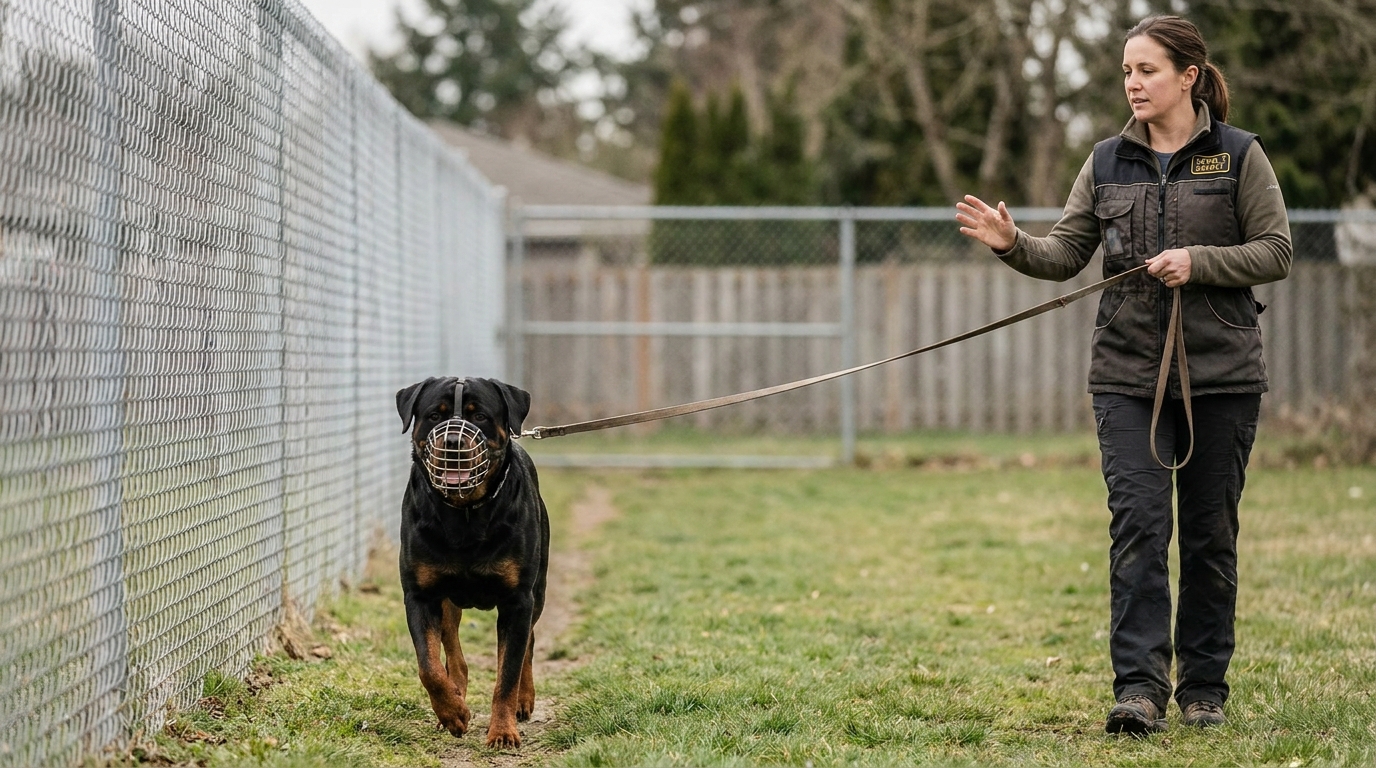
The safety rules at Level 2: the dog is now a managed-aggression case. The dog cannot be left unsupervised with the trigger category (children, other dogs, strangers, whatever the trigger is). The dog is on a leash in public, with a front-clip harness or a head halter, and the handler is at all times within arm's reach of the dog. The dog is crated or in a separate room when guests are in the house, when children are visiting, or when other dogs are present. The owner has a plan for every scenario in which the dog could encounter the trigger.
The intervention at Level 2: the same DSCC protocol as Level 1, with a higher bar for success. The dog has to learn that the growl works (no punishment for growling), that the bite is not needed, and that the trigger predicts a reward. The protocol is the same, but the timeline is longer (6-12 months is realistic), and the supervision is permanent. The dog that responds to the protocol at Level 2 is the dog that goes back to Level 1 within 6-12 months. The dog that does not respond is a dog that requires permanent management and is not safe in the original home.
Level 3: contact with uninhibited bite
The Level 3 dog has made contact with an uninhibited bite — the bite breaks the skin, the bite causes bruising, the bite requires medical attention. The Level 3 dog has escalated past the inhibited bite, and the dog is now a serious safety risk. The dog that has bitten at Level 3 is a dog that has caused real harm, and the next bite is likely to be worse.
The safety rules at Level 3: the dog is now a dangerous-dog case. The owner is legally liable for any bite the dog inflicts. The owner has to notify the local animal control, the homeowner's insurance, and the landlord (if applicable) of the bite history. The dog cannot be in any situation where the trigger is present, ever. The dog is crated, muzzled, or in a separate room at all times when the trigger category could be present. The owner has to be honest with themselves about whether they can maintain this level of management for the rest of the dog's life.
The intervention at Level 3: a board-certified veterinary behaviorist (DACVB) is the right professional, not a general trainer. The behaviorist will assess the dog, identify the motivation, design a treatment protocol, and provide a prognosis. The treatment protocol is more aggressive than the Level 1-2 protocol — medications (typically a combination of an SSRI and a situational anxiolytic), a strict behavior modification plan, and ongoing monitoring. The prognosis is variable. Some Level 3 dogs respond to treatment and return to Level 1. Some remain at Level 3 despite treatment. The honest assessment is required before the owner commits to keeping the dog.
Level 4: severe attack with multiple bites
The Level 4 dog has inflicted a severe attack — multiple bites, deep tissue damage, a child or a vulnerable adult sent to the emergency room. The Level 4 dog is a dog that has caused severe harm, and the Level 4 dog is the dog for which the right answer is often behavioral euthanasia. The decision is not made by the owner alone; the decision is made with the behaviorist, the vet, and often a mental health professional (because the trauma of a Level 4 bite can be severe for the family). The dog that bites at Level 4 is a dog that is unlikely to be safely managed in a home, unlikely to be safely rehomed, and a dog whose next bite is likely to be worse.
The honest answer at Level 4 is that behavioral euthanasia is the kindest option for the dog and the safest option for the community. The owner who is considering a Level 4 case has a heavy decision to make, and the decision is not a sign of failure. The decision is the responsible choice for a dog that cannot safely live in a human community. The owner who makes the decision with the support of the behaviorist and the vet is the owner who is putting the dog's welfare and the community's safety first.
The two cases where the classification is the most important
The first is the dog that is suddenly aggressive with no warning. The dog that has always been friendly and suddenly growls at a family member, or the dog that has never bitten and suddenly bites a child. The sudden change in behavior is a medical red flag. Pain (dental disease, arthritis, abdominal pain), endocrine disease (hypothyroidism, Cushing's), neurological disease (cognitive dysfunction in senior dogs, brain tumor in any age dog), and acute anxiety are all possible causes. The dog that is suddenly aggressive needs a full medical workup before any behavior classification is meaningful. The aggression may be entirely reversible with treatment of the underlying medical cause.
The second is the dog that has been classified as Level 2 or 3 and is not responding to the behavior modification protocol. The dog that is still biting at the same frequency 6 months into the protocol is a dog for which the prognosis is poor. The owner has to be honest with themselves about whether they can maintain the level of management required for the rest of the dog's life, and the answer is often no. The decision to rehome (only to a home that is fully informed of the risk and has the resources to manage it), to maintain permanent management, or to consider behavioral euthanasia is a decision that the owner makes with the support of the behaviorist.
The honest summary
Aggression is not one behavior. It is at least four, with different motivations, different warning signs, and different interventions. The classification is the first step in any aggression case. The intervention is the second. The safety rules are not optional, and the safety rules change as the classification changes. The dog that is at Level 1 is a dog that can be helped with a standard behavior modification protocol. The dog that is at Level 3 is a dog that needs a behaviorist, a medication protocol, and a permanent management plan. The dog that is at Level 4 is a dog whose welfare and the community's safety are best served by behavioral euthanasia. The classification is the work. The classification is what produces the right decision.