
Triploid fish: applications, trade-offs, and when the sterility actually matters
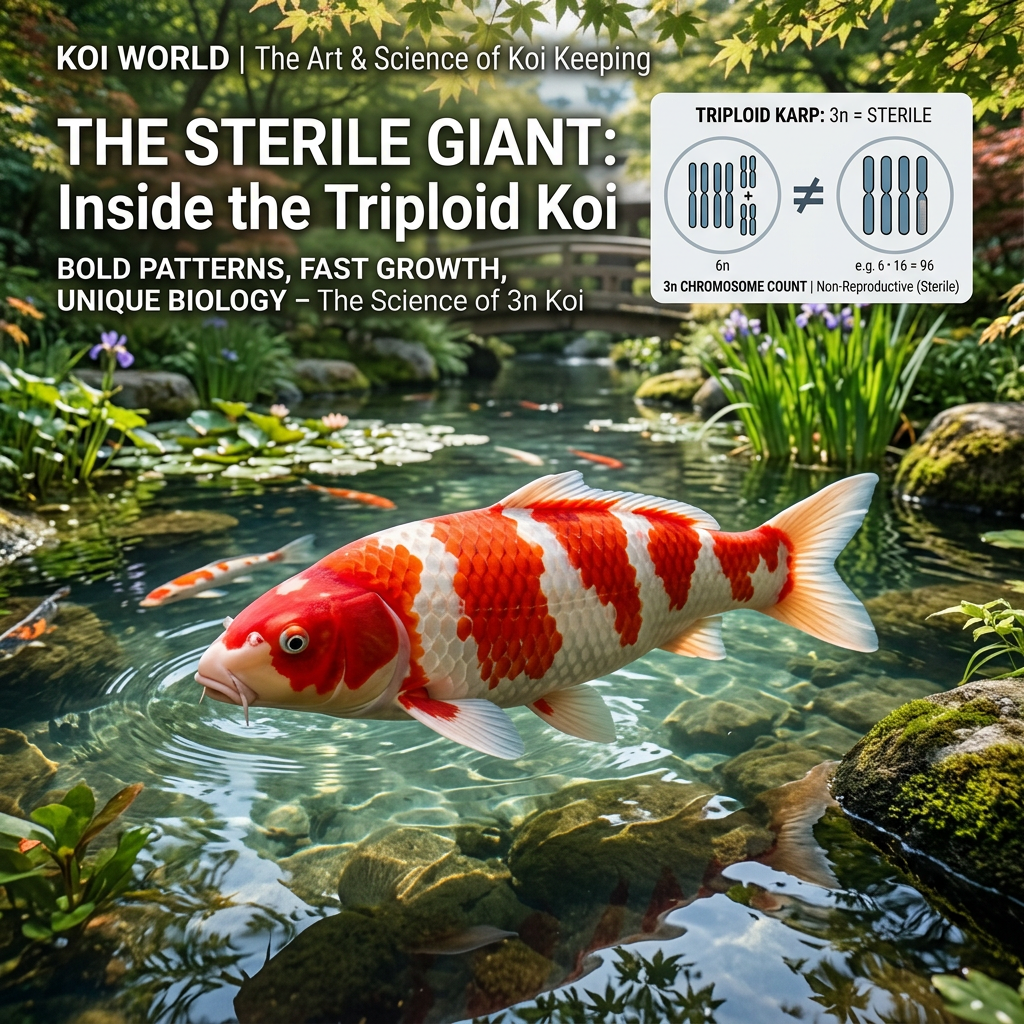
Triploid fish are fish that have three sets of chromosomes instead of the normal two. The third set is added by exposing the fertilized egg to a pressure shock, a temperature shock, or a chemical treatment shortly after fertilization. The result is a fish that is sterile — the fish cannot produce viable gametes (eggs or sperm) because the odd chromosome number prevents proper meiosis. The sterility is the headline feature, but the sterility is not the only feature, and the sterility is not always the right reason to choose a triploid. In this article I will walk through what triploidy actually is, the four reasons the sterility matters in ornamental and aquaculture contexts, the trade-offs that the breeder or hobbyist should be aware of, the visual identification challenges, and the species where triploidy is well-established versus the species where it is experimental.
What triploidy actually is
Every cell in a normal diploid fish has two sets of chromosomes — one from the mother, one from the father. When the fish produces gametes, the gametes have one set of chromosomes each (haploid), and the union of egg and sperm restores the diploid state in the offspring. The triploid fish has three sets of chromosomes — usually two from the mother and one from the father (the most common production method), or two from the father and one from the mother. The gametes that the triploid tries to produce have non-viable chromosome numbers (1.5 sets, or an uneven distribution), and the result is sterile fish.
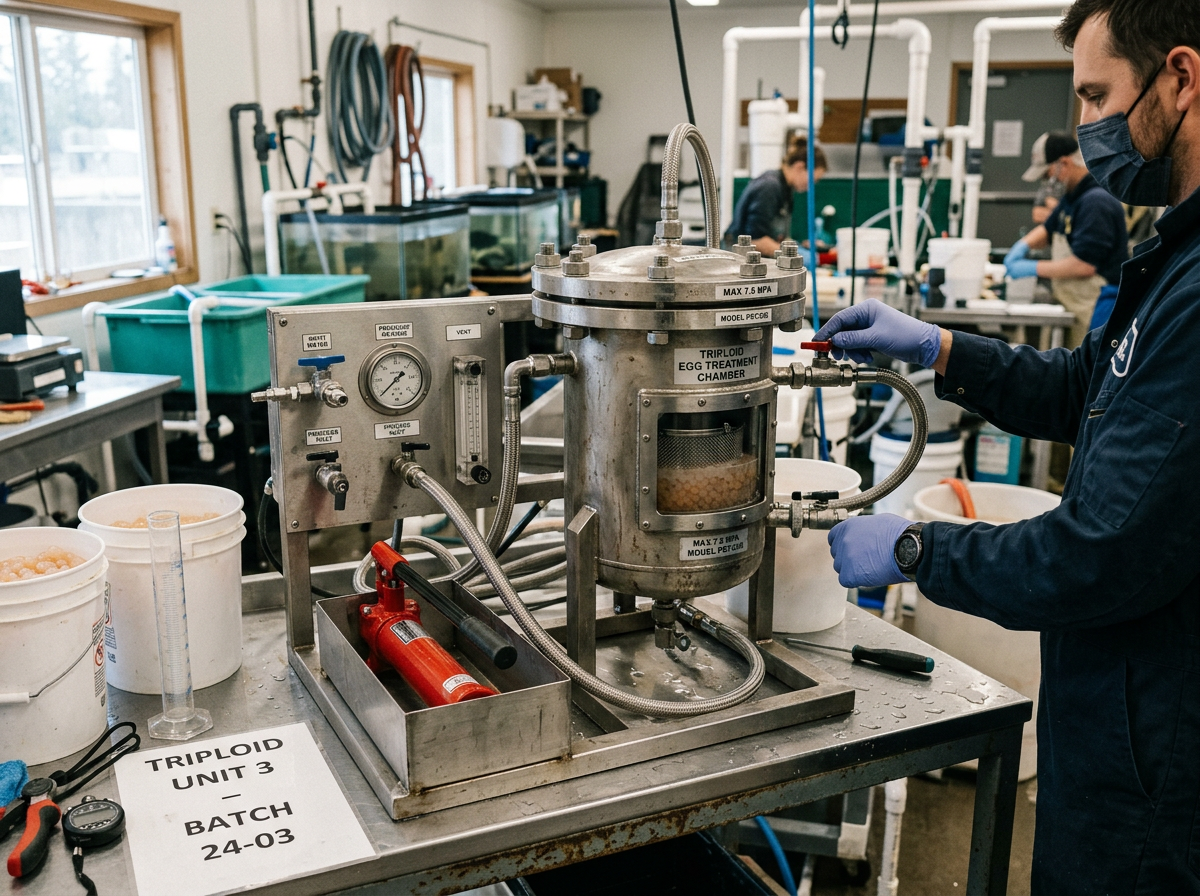
The production of triploids in aquaculture and ornamental fish is well-established. The standard method is a pressure shock of 7000 psi applied to the fertilized egg for 5-10 minutes, starting 4-6 minutes after fertilization and lasting until the egg reaches the 2-cell stage (about 30-40 minutes after fertilization). The pressure shock prevents the second polar body from being extruded, which leaves the egg with two sets of maternal chromosomes and one set of paternal chromosomes. The result is a triploid zygote that develops into a triploid fish.
The pressure shock is a precision operation. The timing has to be right, the pressure has to be correct, and the duration has to be calibrated for the species and the egg stage. The breeder or hatchery that produces triploids commercially has the equipment and the expertise to do this reliably. The breeder who attempts triploid production without the equipment and the expertise is the breeder who gets a low percentage of true triploids and a high percentage of deformed or non-viable fish.
The four reasons the sterility matters
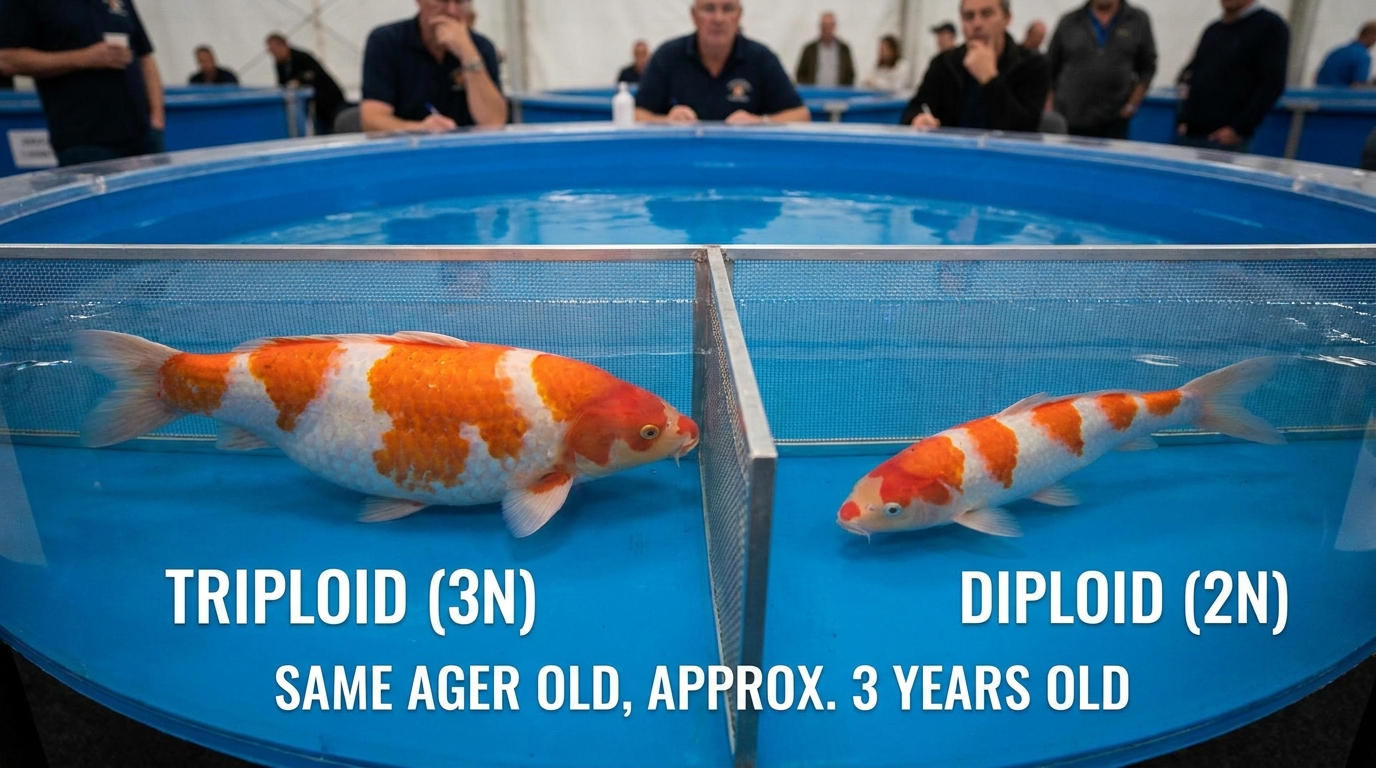
The first reason is growth rate. Triploid fish do not allocate energy to gonad development. The diploid fish that reaches sexual maturity diverts a significant fraction of its energy budget to producing eggs or sperm, and the diversion slows growth. The triploid fish does not have the diversion, and the triploid fish grows faster, larger, and more uniformly than the diploid fish of the same age. The difference is most pronounced in species that reach sexual maturity at a small size and produce large gonads relative to body size (koi, goldfish, rainbow trout, Pacific salmon). The koi breeder who wants the largest possible fish at the end of the growing season is the koi breeder who considers triploids.
The second reason is population control. The koi or goldfish owner who releases a fish into a pond and is concerned about overpopulation is the owner who considers triploids. The triploid cannot reproduce with another triploid (no viable gametes), and the triploid cannot produce viable offspring with a diploid. The triploid is a genetic dead end. The pond owner who wants a koi or goldfish that will not overpopulate the pond is the pond owner who chooses triploids.
The third reason is color stability. The koi or goldfish that is a hybrid (the result of crossing two different species or varieties) may be fertile, and the offspring of the hybrid may not show the same color pattern as the parent. The triploid hybrid is sterile, and the triploid hybrid reliably shows the color pattern of the parent. The koi breeder who wants to produce a specific color pattern (the metallic Ogon, the Doitsu scale pattern, the specific Kohaku pattern) and who does not want the pattern diluted by hybridization is the koi breeder who uses triploids.
The fourth reason is biosecurity. The ornamental fish that is released into a natural waterway (intentionally or accidentally) is a biosecurity risk — the fish may carry parasites, diseases, or genetic material that threatens native fish populations. The triploid fish, if released, cannot reproduce in the wild and does not establish a breeding population. The release of triploids is a recognized biosecurity measure in some jurisdictions, and is required for certain species in certain regions (the U.S. Fish and Wildlife Service requires triploid grass carp for vegetation control in some states, for example).
The trade-offs
The first trade-off is cost. Triploid eggs or fry are more expensive than diploid eggs or fry. The pressure-shock treatment adds equipment, labor, and a small mortality rate (typically 10-20% of the treated eggs do not survive to hatching). The breeder who produces triploids passes the cost on, and the buyer pays a premium of 30-100% over the diploid price. The cost is recoverable in commercial operations, but the cost is a meaningful consideration for the hobbyist.
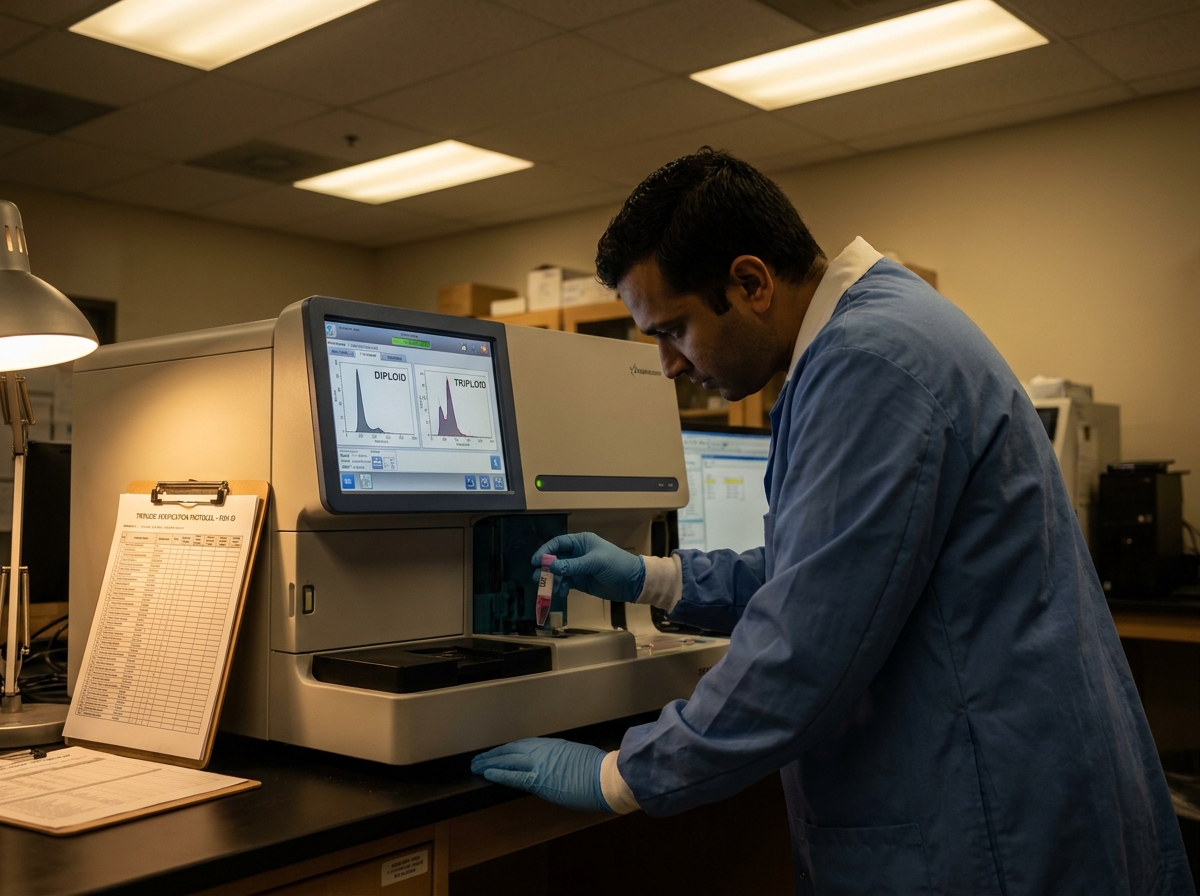
The second trade-off is identification. Triploid fish are not visually distinguishable from diploid fish at the fingerling stage. The fish has to be identified by a lab test (typically a flow cytometry test on a small blood sample, or a karyotype test). The cost of the lab test is $5-20 per fish, and the test has to be done on a sample of the population. The buyer of triploids is the buyer who trusts the seller's identification process, or who pays for the lab test to confirm the triploid status.
The third trade-off is the small but real health risk. Triploid fish have a slightly higher rate of certain deformities (skeletal deformities, gill deformities) than diploid fish. The rate is low (1-5% in well-managed commercial operations), but the rate is not zero. The buyer of triploids is the buyer who accepts the slightly higher deformity rate in exchange for the sterility and the growth rate.
The fourth trade-off is the failure mode if the triploid production is not done correctly. A batch of fish that is labeled "triploid" but is actually a mix of triploids and diploids is a batch that will have some fertile fish, and the fertile fish will reproduce. The buyer who is paying for triploids is the buyer who is paying for the assurance that the fish will not reproduce. The breeder or hatchery that has a robust identification process (lab testing, pressure-shock protocol, records) is the source that provides the assurance.
The species where triploidy is well-established
Rainbow trout (Oncorhynchus mykiss). The most commercially produced triploid in the world. Triploid rainbow trout are used in aquaculture for food production, in recreational fishing (sterile fish survive catch-and-release better), and in aquatic vegetation control. The production is well-established, the identification is reliable, and the market is large.
Atlantic salmon (Salmo salar). Triploid Atlantic salmon are produced in Scotland, Norway, and Canada, primarily for the food market. The triploids grow faster, are sterile (no genetic interaction with wild salmon if escape occurs), and have similar flesh quality to diploids.
Grass carp (Ctenopharyngodon idella). Triploid grass carp are used for aquatic vegetation control in ponds and lakes. The sterility ensures that the fish do not reproduce and become invasive. Required by law in some U.S. states.
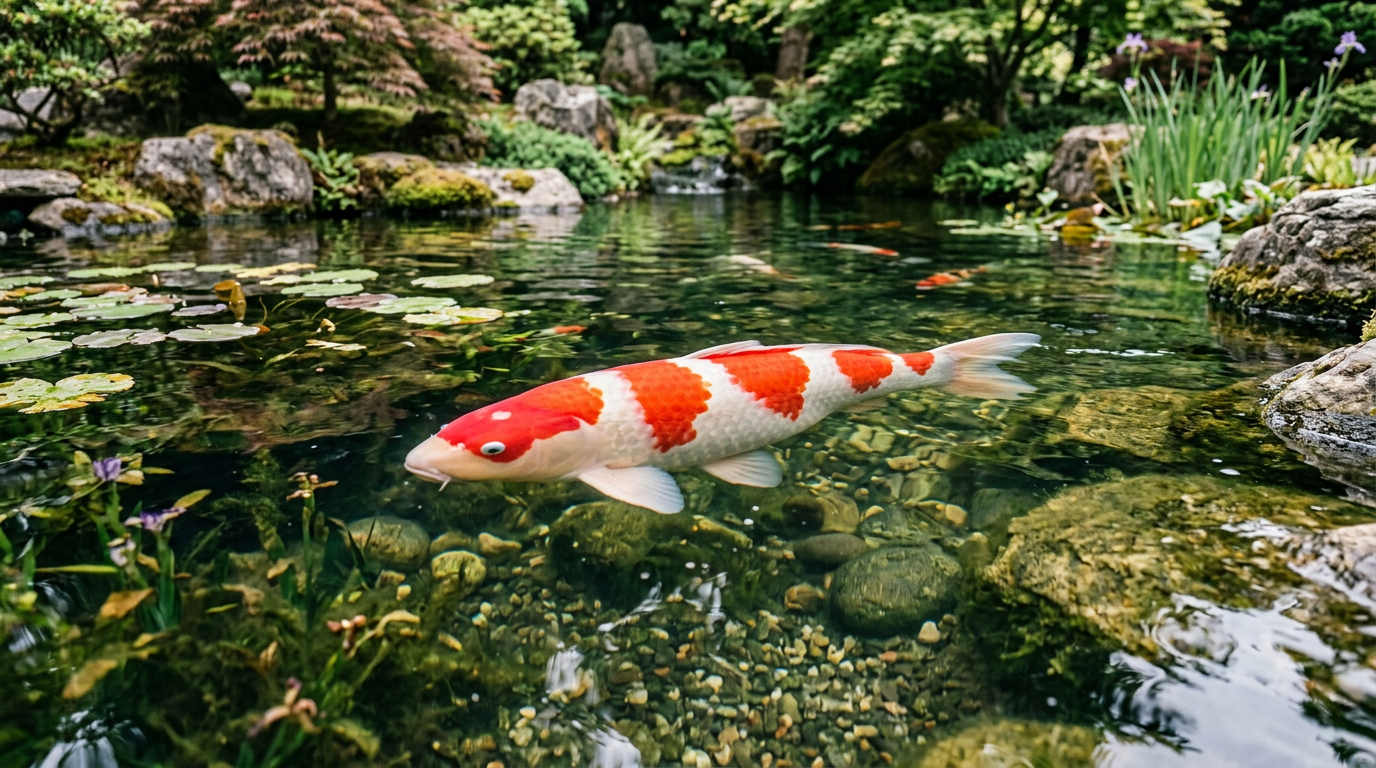
Koi and goldfish. Triploid koi and goldfish are produced by specialist breeders, primarily in Japan. The triploids grow larger, do not reproduce in ponds, and are favored by koi enthusiasts who want the largest possible fish. The identification is more variable than for the commercial aquaculture species, and the buyer should source from a breeder with a reputation for reliable triploid production.
The species where triploidy is experimental
Most ornamental fish species have not been commercially triploidized. The technical challenges of producing triploids reliably are species-specific, and the economic incentive has not been present for most ornamental species. The breeder who wants to try triploid production in an experimental species should be prepared for high egg mortality, low percentages of true triploids, and a multi-year learning curve.
The honest summary
Triploidy is a real tool with real applications. The sterility is the headline, but the growth rate, the color stability, and the biosecurity are equally important features in different contexts. The cost is higher, the identification is more complex, and the deformity rate is slightly higher. The species where triploidy is well-established (rainbow trout, Atlantic salmon, grass carp, koi, goldfish) are the species where the technology is reliable. The species where triploidy is experimental are the species where the breeder should expect a learning curve. The breeder or buyer who understands the trade-offs is the breeder or buyer who makes the right choice for the specific context.
The single sentence to remember
Triploid fish are sterile, grow faster, and are more expensive. The sterility is the right answer for population control, color stability, and biosecurity. The sterility is the wrong answer for the hobbyist who wants to breed the fish. The right answer depends on the goal, and the goal determines whether the premium is worth paying.