
Taisho Sanke koi: stabilizing the red pattern across generations
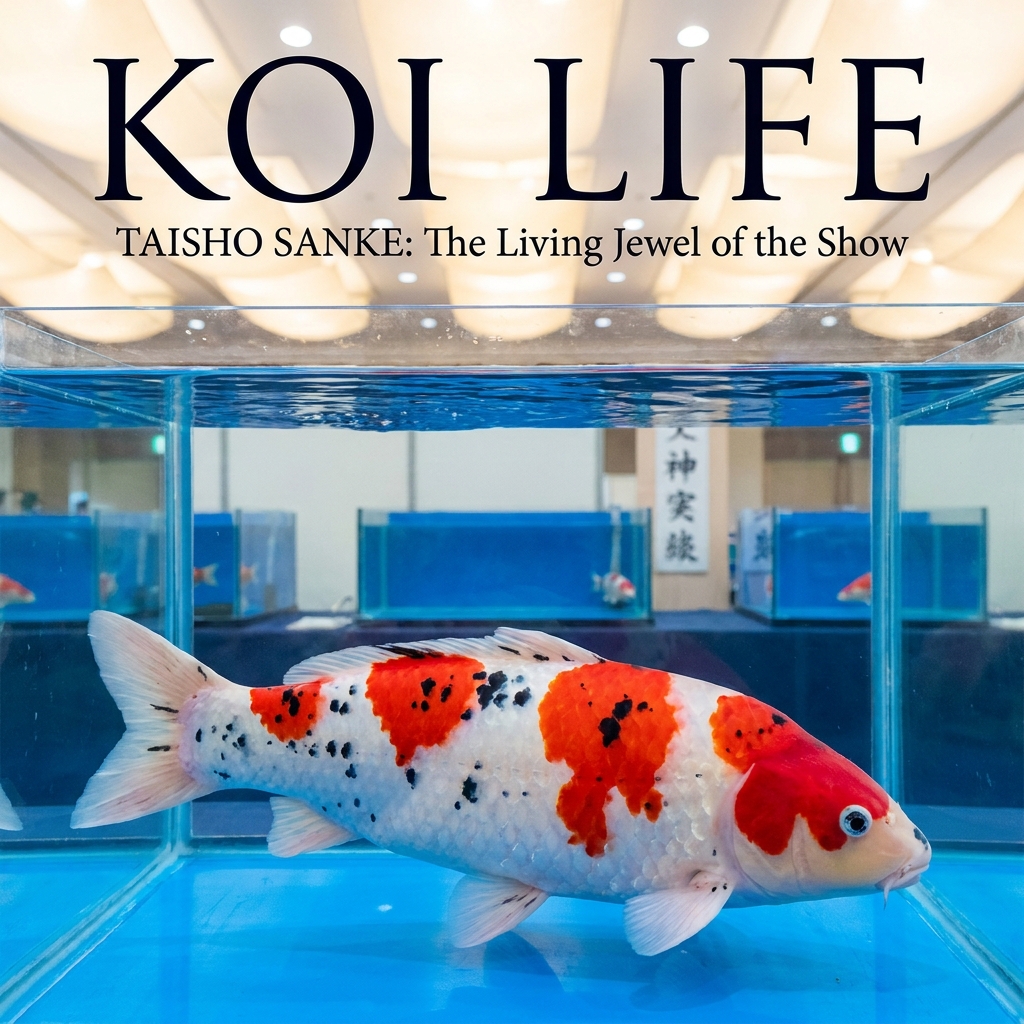
The Taisho Sanke is one of the three classic Gosanke varieties, and the Sanke is a white-based koi with red (hi) and black (sumi) markings. The Sanke is named for the Taisho era in Japan (1912-1926), and the Sanke has been developed for over a century into a stable variety with predictable color patterns. The red is the most difficult of the three colors to stabilize, because the red is the most variable in intensity, the most prone to fading with age, and the most responsive to environmental conditions. The Sanke breeder who wants to produce consistent red patterns across generations has to understand the red genetics, the red development, the red management, and the culling decisions. In this article I will walk through the red genetics, the red development from fry to adult, the red management in the pond, the culling decisions at each age, and the line breeding protocol that produces the consistent Sanke.
The red genetics
The red in the Sanke is determined by multiple genes, and the genetics are not fully understood. The main genes known to influence the red: the "hi" gene (the primary red gene, with multiple alleles that produce different shades of red), the "moderator" genes that influence the depth and the spread of the red, and the "shiroji" (white) genes that determine where the red can and cannot appear. The Sanke that has the best red has the right combination of the hi allele (typically the deep red allele), the right moderator genes, and the right shiroji background (typically pure white).
The inheritance of the red: the red is influenced by both parents, and the offspring of two high-red parents will produce a higher proportion of high-red offspring than the offspring of one high-red and one average-red parent. The breeder who is breeding for the deep red should select the breeding stock from the offspring that show the deepest red at 1-2 years of age.
The red development
The red in the Sanke develops in stages, and the red looks different at each stage. The stages:
- 0-3 months: the fry show a faint orange or pink coloration in the areas that will develop the red. The areas are not yet defined, and the orange is more of a tint than a true color.
- 3-6 months: the orange deepens to a true red, and the boundaries of the red areas become more defined. The red is still lighter than the adult red, and the red may shift in tone as the koi grows.
- 6-12 months: the red deepens, and the boundaries become more clear. The first culling decisions can be made at this stage, with the koi that has the deepest red and the cleanest white being kept for the breeding program.
- 1-2 years: the red continues to deepen, and the boundaries become more defined. The second culling decisions can be made at this stage, with the koi that has the deepest red, the cleanest white, and the best-balanced pattern being kept.
- 2-3 years: the red reaches its full depth, and the final pattern is established. The third culling decisions can be made at this stage, with the koi that meets the show standard being kept for the breeding program.
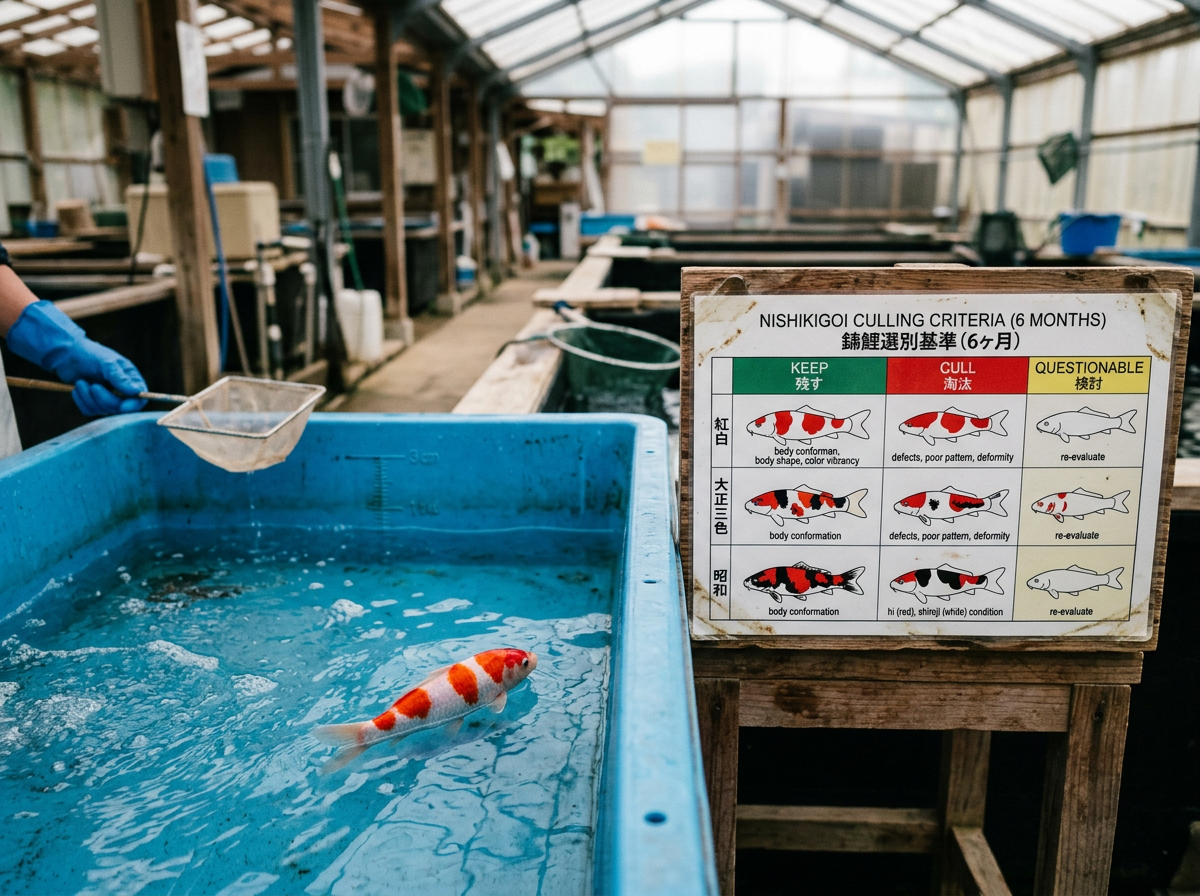
The culling at each stage is critical. The cull rate at the 6-month stage is typically 60-70%. The cull rate at the 1-year stage is 50-60% of those that remain. The cull rate at the 2-year stage is 30-40% of those that remain. The overall cull rate from fry to breeding stock is 90-95%.
The red management in the pond
The red in the Sanke is influenced by the pond conditions, and the red management is the part of the Sanke keeping that produces the best red. The factors:
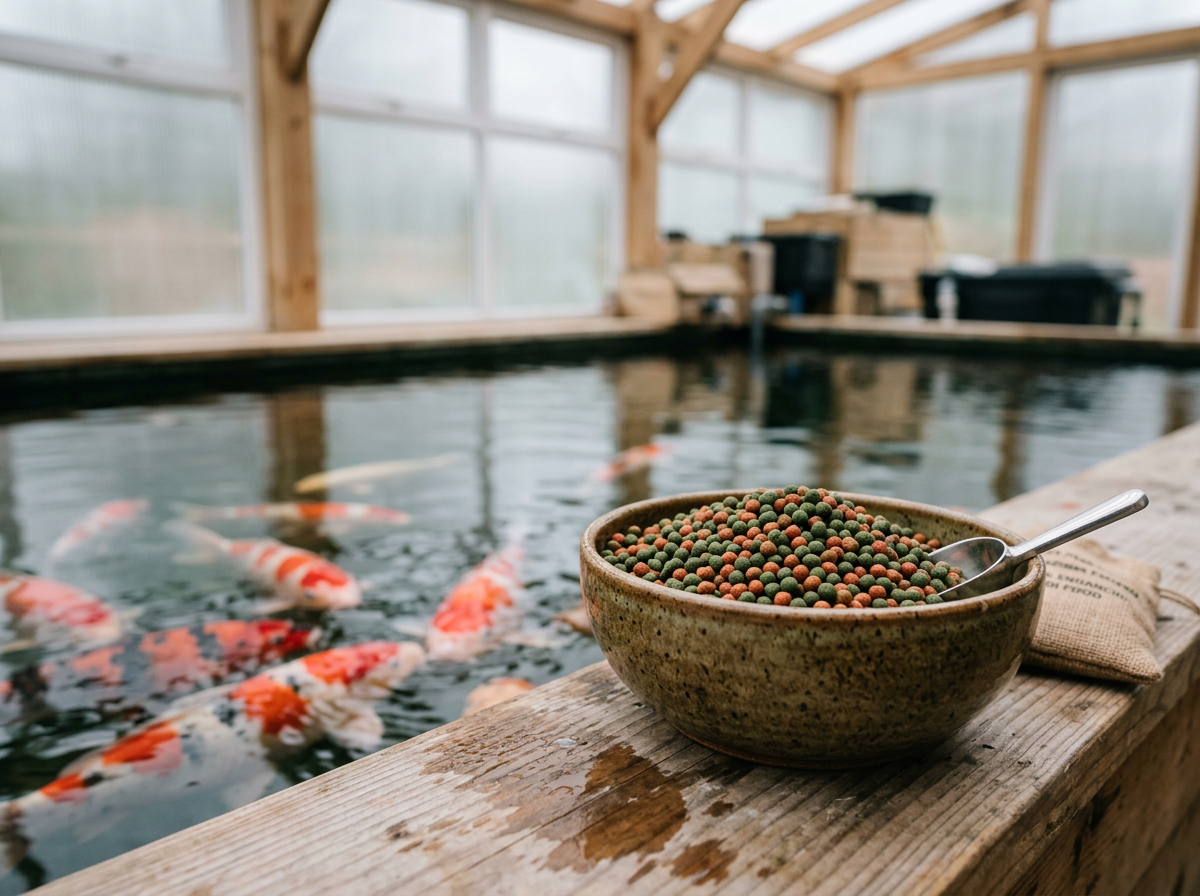
- Diet: the diet that is high in spirulina, in astaxanthin, and in other natural color enhancers produces the deepest red. The major koi food manufacturers offer a "color enhancing" formula that is designed to bring out the red. The formula is fed during the active growth period (spring and summer) and is reduced during the cold period (fall and winter).
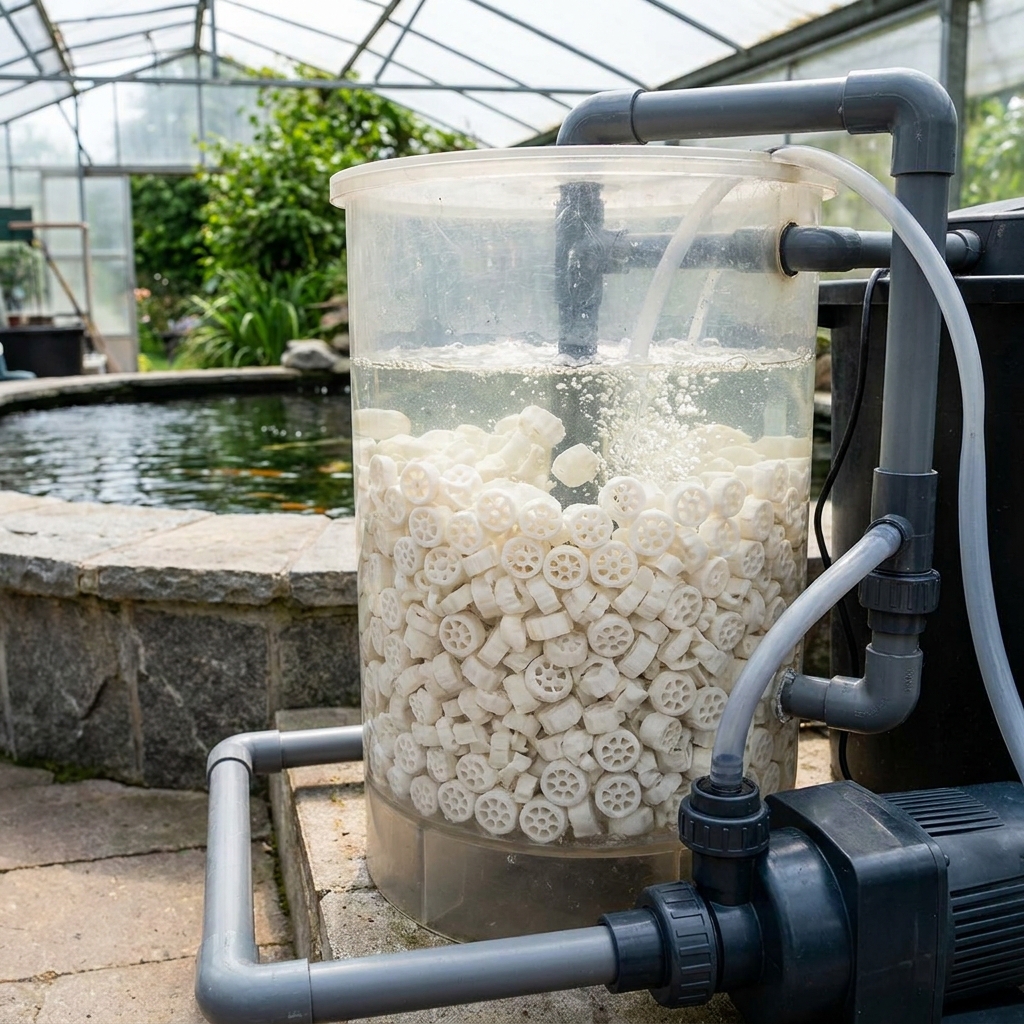
- Water quality: the water that is high in nitrate produces a duller red. The water that is low in nitrate and high in dissolved oxygen produces a brighter, deeper red. The Sanke pond should be well-filtered, with regular water changes to keep the nitrate below 20 ppm.
- Sun exposure: the Sanke that is raised in full sun develops a deeper red than the Sanke that is raised in partial shade. The full sun also helps the white stay pure, by reducing the algae that would stain the white. The Sanke pond should be in a sunny location, with 6-8 hours of direct sun per day.
- Substrate: the light-colored substrate (light gravel, smooth rocks) reflects light back up to the Sanke and enhances the red. The dark substrate absorbs light and dulls the red. The Sanke pond should have a light-colored substrate.
The culling decisions
The culling at the 6-month stage: keep the koi that has the cleanest white, the deepest red, and the most balanced pattern. The koi that has a yellow or muddy white is culled, regardless of the red. The koi that has a thin or pale red is culled, regardless of the pattern. The koi that has an unbalanced pattern is culled, regardless of the red and the white.
The culling at the 1-year stage: keep the koi that has maintained the depth of the red, that has kept the white pure, and that has developed a balanced pattern. The koi that has lost red intensity is culled (the koi that is "going orange" or "going pale"). The koi that has developed yellow in the white is culled.
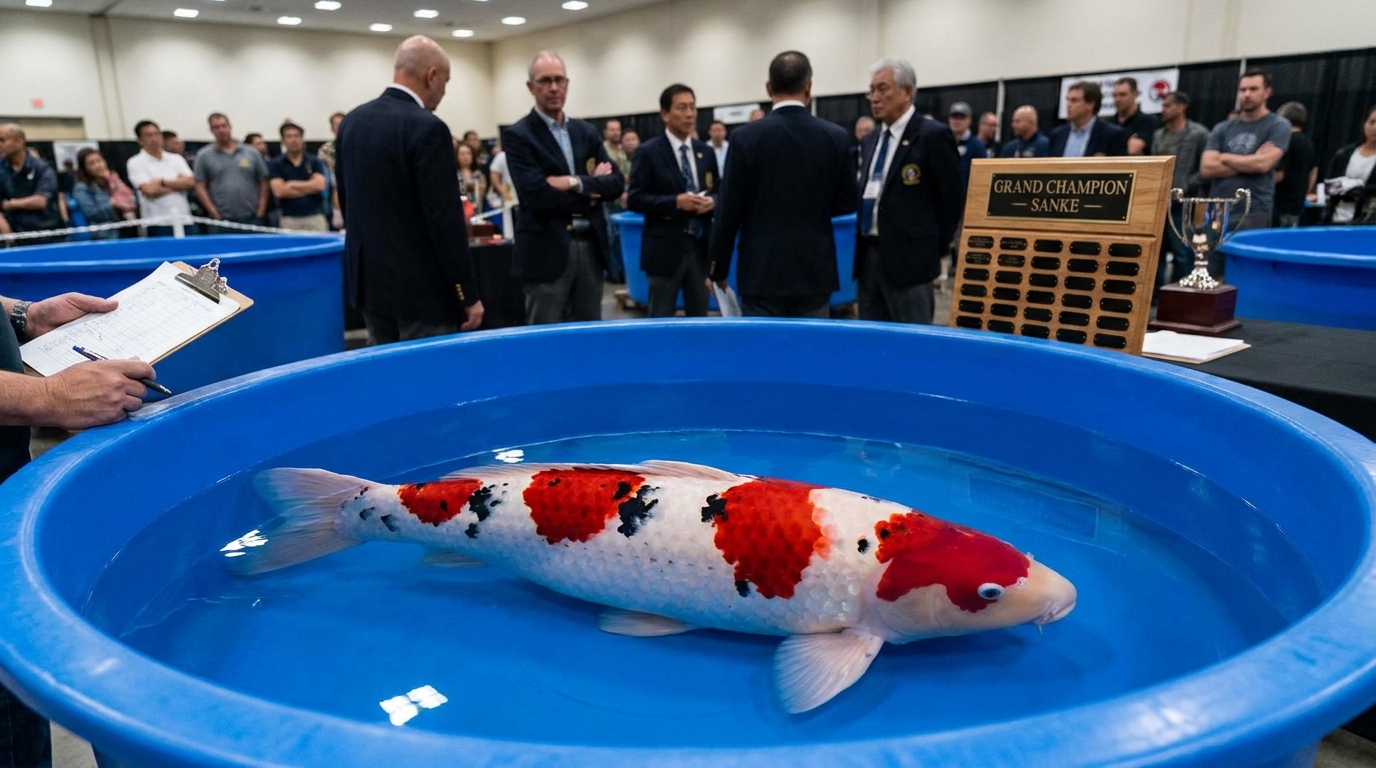
The culling at the 2-year stage: keep the koi that has reached the show standard. The koi that has a deeper, more defined, more balanced red than the 1-year stage is the koi that meets the show standard. The koi that has stayed the same or has deteriorated is culled.
The line breeding protocol
The line breeding protocol for the consistent red: select the koi that has the deepest red at 1-2 years of age, breed the selected koi to other selected koi from the same line, and continue the selection over multiple generations. The line that has been selected for the deep red over 5-10 generations is the line that produces the consistent red in the offspring.
The line breeding protocol has to balance the red selection with the other traits (the white and the black). The Sanke that has a deep red but a poor white is not a good Sanke. The Sanke that has a deep red and a pure white but a poor black is not a good Sanke. The selection has to be for the whole Sanke, not just for the red.
The culling is the most important part of the line breeding. The breeder who is willing to cull 90-95% of the offspring is the breeder who produces the consistent Sanke. The breeder who is reluctant to cull and who keeps the marginal offspring is the breeder who produces the inconsistent Sanke.
The honest summary
The Sanke red is the most difficult of the three Gosanke colors to stabilize. The red genetics are complex, the red development is variable, the red management is critical, and the culling is the most important part of the breeding. The Sanke breeder who understands the red genetics, who manages the red through diet and water quality, who culls heavily at each stage, and who line breeds over multiple generations is the breeder who produces the consistent, deep red Sanke. The Sanke breeder who does not cull heavily, who does not manage the red, and who breeds randomly is the breeder who produces the inconsistent, fading red Sanke. The red is the work. The red is what makes the difference.