

Lionhead, tigerhead, oranda: a line history of the fancy goldfish head-growth breeds
The lionhead, the tigerhead, and the oranda are the three fancy goldfish breeds that share the head-growth trait — the fleshy, raspberry-like growth on the the head that is called the "wen" in Chinese, the "hood" or "crown" in English, and the "raspberry" in the hobby vernacular. The three breeds are often confused by beginners, who assume that any goldfish with a head growth is a lionhead. The three breeds are actually distinct, with different histories, different body shapes, different hood structures, and different care requirements. The breeder who is interested in producing one of these breeds needs to know the differences, the breeder who is buying one of these breeds needs to know the differences, and the hobbyist who is keeping one of these breeds needs to know the differences. In this article I will walk through the history of each breed, the body shape and the hood structure, the breeding challenges, the care requirements, and the breed that is the right choice for the right keeper.
The shared trait: the wen
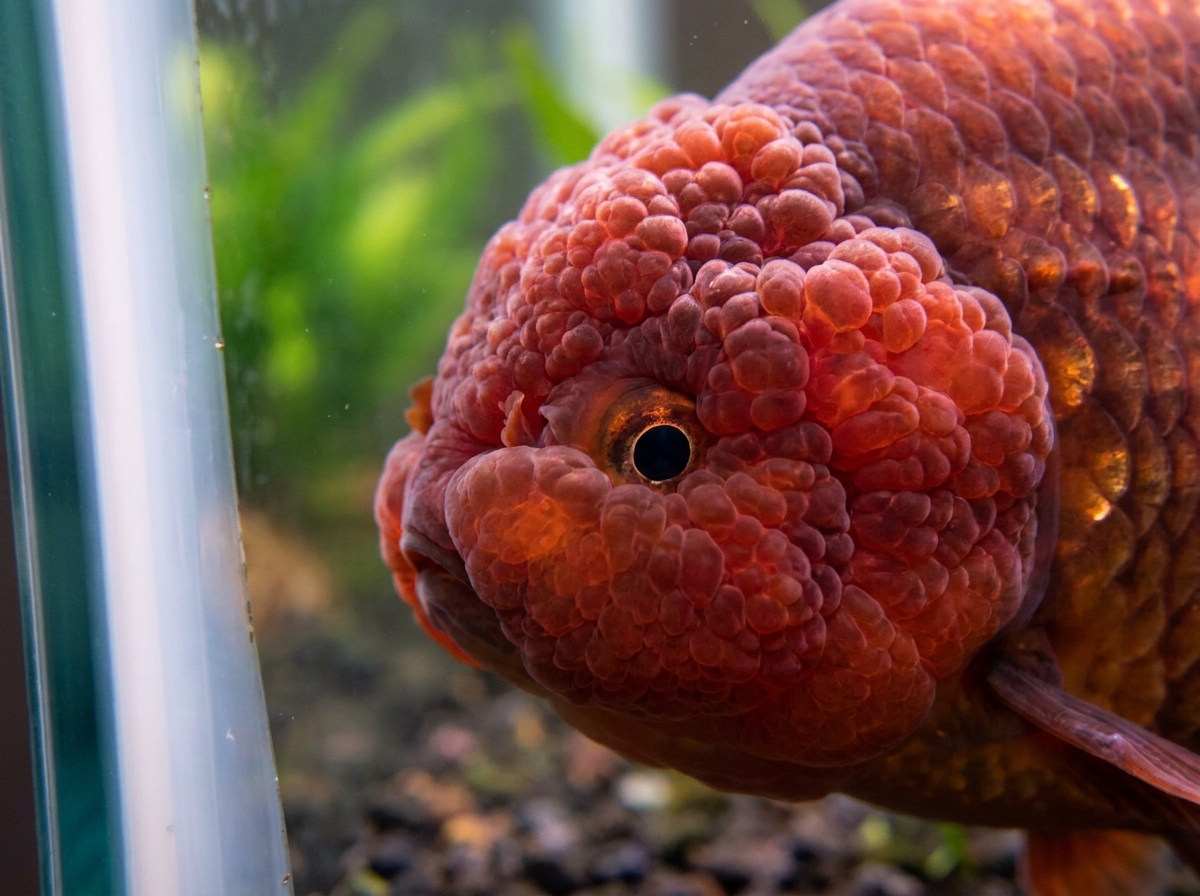
The wen is the fleshy outgrowth that develops on the head of the goldfish, starting at 3-6 months of age and continuing to develop for 2-3 years. The wen is composed of connective tissue and skin, and the wen is highly variable in size, shape, and coverage. The wen can be small and confined to the top of the head, large and covering the entire head including the cheeks and gill covers, or anywhere in between.
The wen is a trait that has been selectively bred for centuries in China and Japan, and the wen is the most distinctive feature of the head-growth breeds. The wen is also the source of the most common health problem in the head-growth breeds: the wen can grow over the eyes, impairing the vision; the wen can grow over the gill covers, impairing the respiration; the wen can develop bacterial infections in the folds of the tissue. The breeding of the head-growth breeds is a balance between producing a wen that is large and impressive and producing a wen that does not impair the fish's quality of life.
The lionhead: the oldest head-growth breed
The lionhead is the oldest of the three head-growth breeds, with a documented history going back to the Ming Dynasty (16th century) in China. The lionhead was developed by selecting for a full, robust wen that covers the entire head, including the cheeks, the gill covers, and the top of the head. The "lionhead" name comes from the resemblance of the fully developed wen to a lion's mane.
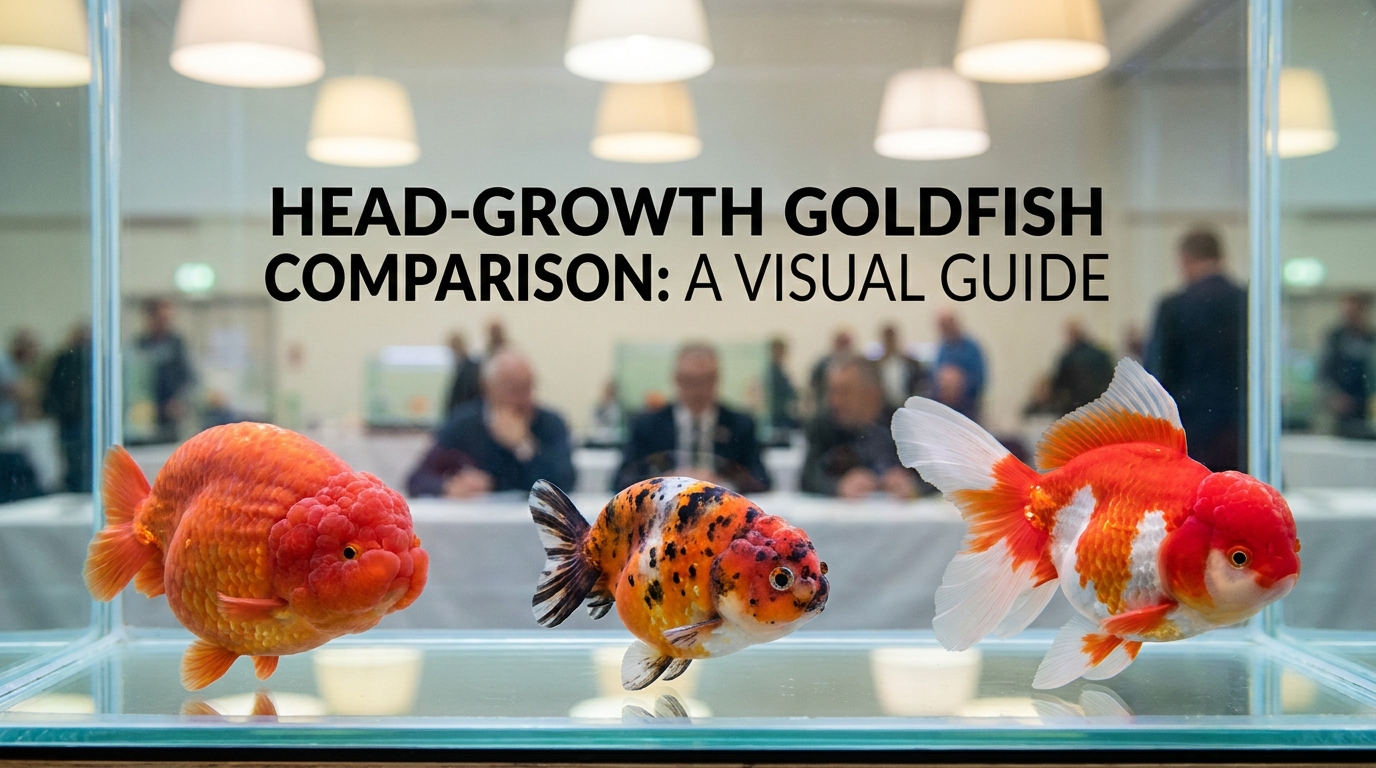
The body shape: the lionhead has a short, deep, rounded body, with a pronounced hump behind the head. The body is wider than it is tall, and the body shape gives the lionhead a "chunky" appearance. The dorsal fin is absent in the show-quality lionhead (a key breed standard), and the other fins are short and rounded. The caudal fin is short and split, held in an upright position.
The hood structure: the lionhead has the most extensive hood of the three breeds, with the wen covering the entire head including the cheeks and the gill covers. The hood is symmetrical and should be fully developed by 2 years of age. The hood is also the most prone to bacterial infections, because the extensive folds provide a place for bacteria to grow.
The breeding challenges: the lionhead is a difficult breed to produce to show quality. The hood development is variable, the body shape is difficult to maintain, and the dorsal-less standard is a recessive trait that requires careful breeding. The serious lionhead breeder maintains a breeding program over multiple years, with careful selection of the breeding stock and culling of the offspring that do not meet the standard.
The tigerhead: the show-quality variation
The tigerhead is sometimes considered a variation of the lionhead, and sometimes considered a separate breed. The distinction is debated in the hobby, but the practical distinction is in the head structure and the body shape. The tigerhead has a more pronounced, more defined hood than the lionhead, and the tigerhead has a more compact, more rounded body. The "tigerhead" name comes from the resemblance of the hood to a tiger's facial markings.
The body shape: the tigerhead has a very short, very deep, very rounded body, with the body wider than the lionhead's. The dorsal fin is absent, and the other fins are very short. The caudal fin is short and held in an upright position, often split into two distinct lobes.
The hood structure: the tigerhead has a hood that is more compact and more defined than the lionhead's, with the hood often forming distinct "cheeks" and a pronounced top growth. The hood should be symmetrical and should not extend over the eyes.
The breeding challenges: the tigerhead is even more difficult to produce to show quality than the lionhead. The very compact body is a challenge to maintain, the very defined hood is a challenge to select for, and the dorsal-less standard is a recessive trait. The tigerhead breeder typically has a smaller breeding program than the lionhead breeder, and the show-quality tigerhead is a rare fish.
The oranda: the most popular head-growth breed
The oranda is the most popular of the three head-growth breeds, both in the hobby and in the market. The oranda was developed in China (or possibly Japan) in the 17th-18th century, and the oranda has become the most recognizable fancy goldfish in the world. The oranda is the goldfish that is most often sold in pet stores under the name "lionhead," which contributes to the confusion between the breeds.
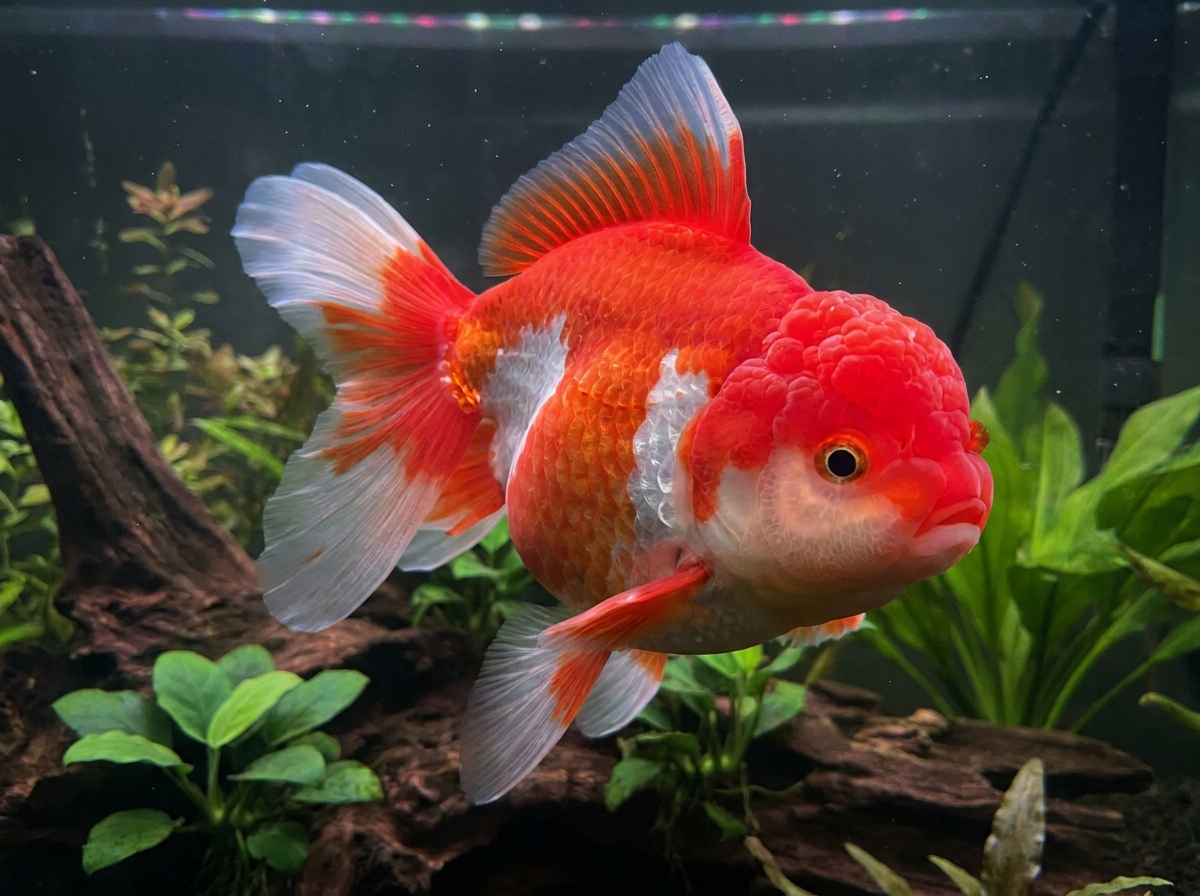
The body shape: the oranda has a moderately short, moderately deep, rounded body, with a slight hump behind the head. The dorsal fin is present (a key distinction from the lionhead and the tigerhead), and the dorsal fin is held upright. The other fins are moderately long and flowing, and the caudal fin is long and split, often held in a flowing position.
The hood structure: the oranda has a hood that is confined to the top of the head, often forming a distinctive "cranial bump" or "crown." The hood does not extend to the cheeks or the gill covers (a key distinction from the lionhead and the tigerhead). The hood is the "crown" that gives the oranda its name, and the hood is what the oranda breeder selects for. The hood should be symmetrical, well-defined, and not too large.
The breeding challenges: the oranda is easier to breed than the lionhead or the tigerhead, because the oranda has a dorsal fin (a dominant trait) and a more moderate body shape (less extreme than the lionhead). The oranda breeder still has to select for the hood, but the selection is more achievable. The oranda is also more commercially viable, because the oranda is more popular with hobbyists and the show-quality oranda is less rare.
The color varieties
The three head-growth breeds come in a variety of colors. The most common: red, red-and-white, orange, orange-and-white, black, chocolate, blue, and calico. The red-and-white oranda (often called the "red-cap oranda" when the hood is red and the body is white) is the most popular color variety, and the red-cap oranda is the goldfish that is most often sold as a "lionhead" in pet stores.
The color genetics in the head-growth breeds are complex, with multiple genes influencing the color, the pattern, and the metallic/scaled traits. The serious breeder uses the genetic calculators to plan the breeding pairs, and the serious breeder maintains a color line over multiple generations.
The care requirements
The three breeds have similar care requirements, with the lionhead and the tigerhead being slightly more demanding than the oranda because of the more extensive hood. The care requirements:
- Water quality. The head-growth breeds are sensitive to poor water quality, with bacterial infections of the hood being the most common problem. The water should be clean, well-filtered, and changed regularly.
- Tank size. The minimum tank size for a single head-growth goldfish is 20 gallons, with an additional 10 gallons per additional fish. The head-growth breeds are not suitable for bowls or small tanks.
- Substrate. The substrate should be smooth sand or fine gravel, not sharp gravel that can damage the wen.
- Decorations. The decorations should be smooth, with no sharp edges that can damage the wen. The plastic plants with sharp leaves should be avoided; the silk plants or the live plants are safer.
- Tankmates. The head-growth breeds are slow swimmers, with impaired vision (the wen often covers the eyes). The tankmates should be other slow-swimming fancy goldfish, not fast-swimming single-tail goldfish or tropical fish that outcompete the head-growth breeds for food.
- Feeding. The head-growth breeds are prone to swim bladder issues because of the compact body shape. The diet should be high-quality, with a mix of sinking pellets (to prevent the air gulping that causes swim bladder issues) and fresh vegetables.
The right breed for the right keeper
The lionhead: for the keeper who wants the most traditional head-growth breed, the keeper who has the experience to manage the extensive hood, and the keeper who is interested in breeding for the show standard.
The tigerhead: for the keeper who wants the most extreme head-growth breed, the keeper who has the experience to manage the very compact body and the very defined hood, and the keeper who is interested in producing a rare show-quality fish.
The oranda: for the keeper who wants the most popular and most manageable head-growth breed, the keeper who is interested in breeding for the commercial market or for the hobbyist market, and the keeper who is willing to maintain the more moderate body and the more manageable hood.
Each breed is a beautiful and rewarding fish, and each breed requires a serious commitment to the care and the breeding. The keeper who chooses the breed that matches the keeper's experience and the keeper's goals is the keeper who has a successful experience with the head-growth fancy goldfish.
The honest summary
The lionhead, the tigerhead, and the oranda are the three head-growth fancy goldfish breeds. The lionhead is the oldest and the most extensively hooded. The tigerhead is the most extreme and the most rare. The oranda is the most popular and the most manageable. The body shape, the hood structure, and the care requirements differ between the three, and the breed that matches the keeper's experience and goals is the breed that the keeper should choose. The serious breeder maintains a breeding program over multiple years, with careful selection and culling. The serious keeper provides the water quality, the tank size, the substrate, and the feeding that the head-growth breed requires. The breed is the work. The breed is what makes the difference.