
Sexing juveniles: when and how to identify male vs female in ornamental fish
Sexing juvenile ornamental fish is one of the most common challenges in the breeding program. The adult fish that is showing clear sexual dimorphism (the male guppy with the colorful tail, the male betta with the long fins, the female koi with the rounder body) is easy to sex. The juvenile that has not yet developed the adult dimorphism is a fish that the breeder cannot sex by visual cues alone. The breeder who needs to know the sex of the juvenile (for separate grow-out, for culling the wrong sex, for setting up the breeding pair) is the breeder who has to use one of the sexing methods that work on juveniles. In this article I will walk through the visual, the behavioral, the morphological, and the genetic methods of sexing juveniles, the species each method works for, the age at which each method becomes reliable, and the accuracy to expect.
The visual method: sexual dimorphism
The visual method is the most straightforward: the juvenile is examined for the sexual dimorphism that the species will develop. The dimorphism is the differences in body shape, fin shape, color, or other features that are present in adult males and adult females. The juvenile that is just beginning to develop the dimorphism is the juvenile that is starting to be sexable.
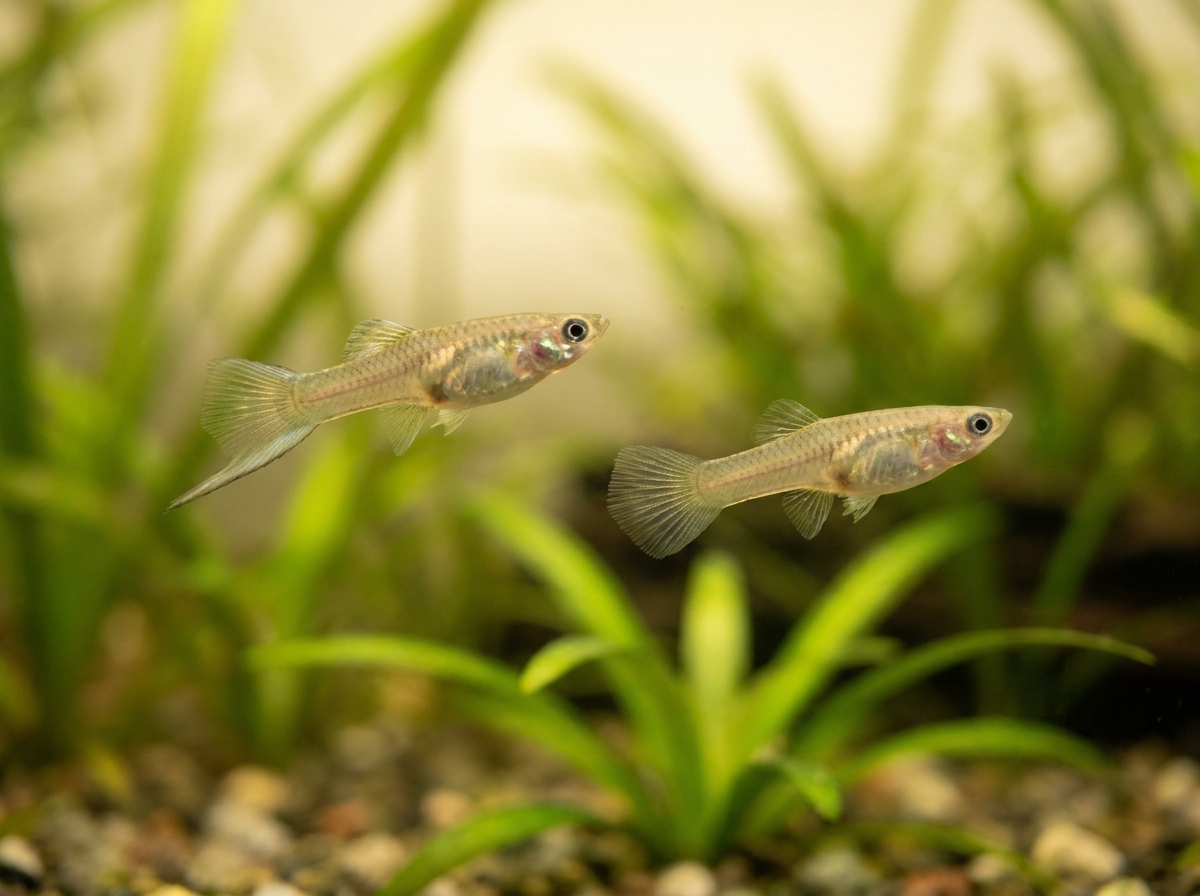
The species where the visual method works on young juveniles: the guppy, the betta, the swordtail, the platy, the molly. The males of these livebearers develop the gonopodium (the modified anal fin) within 3-4 weeks of birth, and the gonopodium is the most reliable visual marker. The male guppy at 4 weeks of age has a visible gonopodium; the female guppy at 4 weeks of age does not. The breeder who is sexing guppies at 4 weeks can use the gonopodium with 99% accuracy.
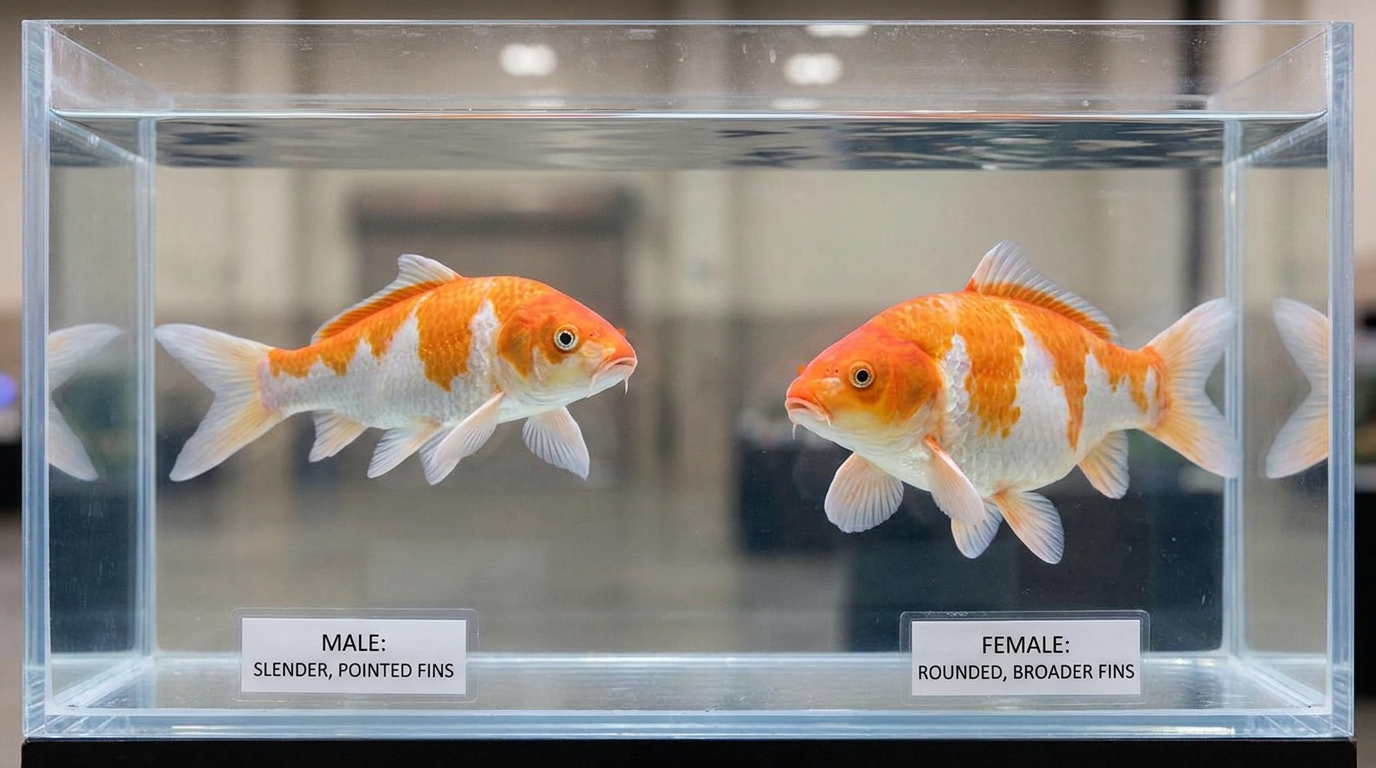
The species where the visual method works on older juveniles: the koi, the goldfish, the discus, the angelfish. The males of these species develop the body shape and the fin shape at 4-6 months of age, and the dimorphism becomes more pronounced at 8-12 months. The koi male at 6 months has a slightly more slender body and a more pointed pectoral fin than the female; the female koi at 6 months has a rounder body and a rounder pectoral fin. The accuracy at 6 months is roughly 70-80%, and the accuracy at 12 months is 90%+.
The species where the visual method does not work on juveniles: the guppy's close relatives (endlers, mosquito fish), the betta's close relatives (other Betta species), most tetras, most barbs, most rasboras, most danios. These species are sexually monomorphic — the males and females look identical even as adults. The visual method cannot be used on these species, and another method must be used.
The behavioral method: spawning behavior
The behavioral method is the observation of the spawning behavior. The male that is courting the female, the male that is displaying to the male, the female that is laying eggs — each of these behaviors is a sex marker. The behavioral method works on most species, but the behavioral method requires the fish to be sexually mature and to be in a spawning-ready state.
The behavioral method on adult fish: a male guppy will continuously court females and display to other males. The male guppy that is actively pursuing a female is a male. The female guppy that is being pursued is a female. The accuracy is 100% for adult guppies.
The behavioral method on juvenile fish: the juvenile that is too young to display adult spawning behavior is the juvenile that cannot be sexed behaviorally. The behavioral method is not useful for juveniles, because the spawning behavior develops at sexual maturity, not before.
The morphological method: vent examination
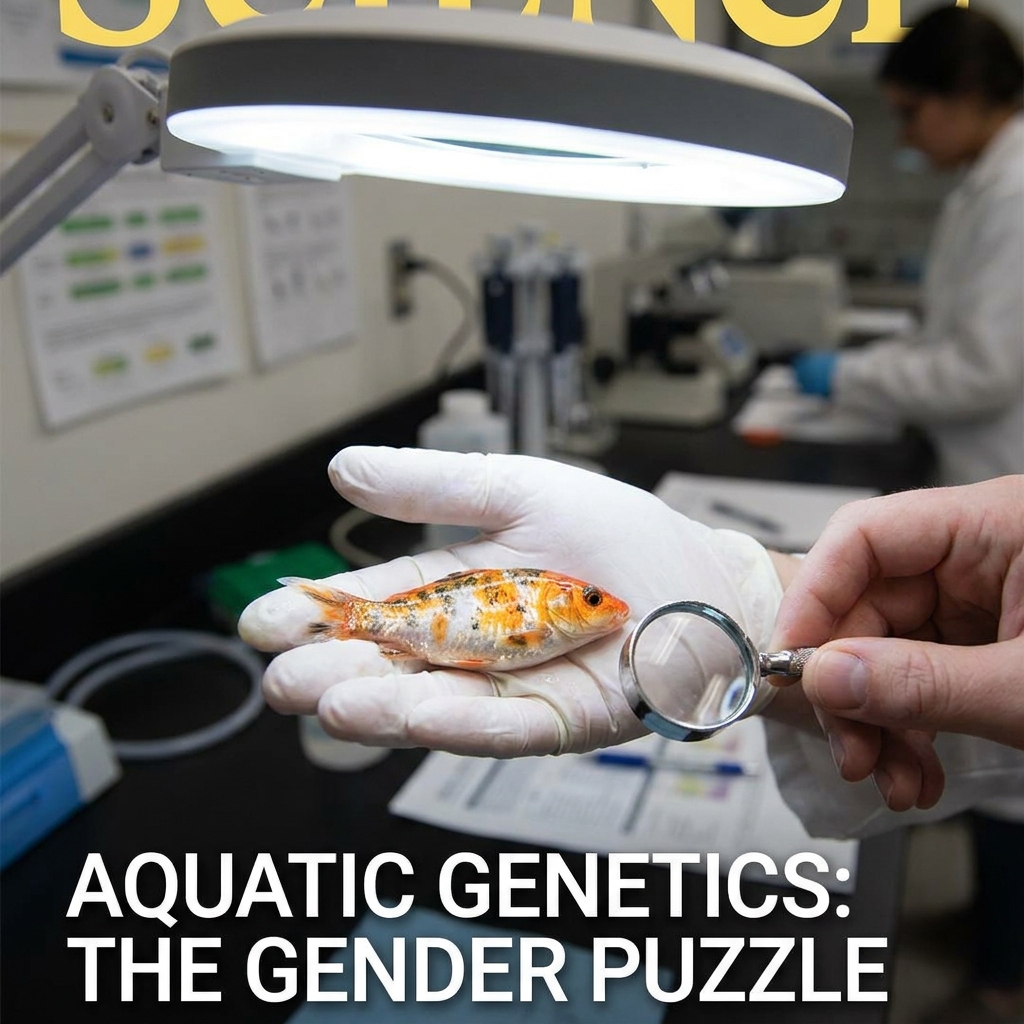
The morphological method is the examination of the vent (the urogenital opening) of the fish. The vent in male fish is typically smaller and more recessed than the vent in female fish, and the difference is visible in juveniles of some species. The morphological method requires a magnifying glass or a low-power microscope, and the morphological method requires some practice to interpret correctly.
The species where the morphological method works on juveniles: the koi, the goldfish, the discus, the angelfish, the cichlids (African and South American). The koi male at 2-3 months of age has a slightly concave vent; the koi female at 2-3 months has a slightly convex vent. The accuracy with an experienced examiner is 80-90% at 2-3 months, and the accuracy is 95%+ at 6 months.
The species where the morphological method does not work on juveniles: the small tetras, the small barbs, the small rasboras. The vent is too small to see the difference, and the magnification needed is beyond practical reach. Another method must be used.
The technique: the fish is held gently but firmly, with the ventral side up, and the vent is examined with a magnifying glass or a low-power loupe. The light source is from the side, to create shadows in the vent area. The male vent is a small, narrow opening; the female vent is a larger, rounder opening with a visible papilla. The technique requires practice, and the technique should be learned on adult fish of known sex before being applied to juveniles.
The genetic method: DNA sexing
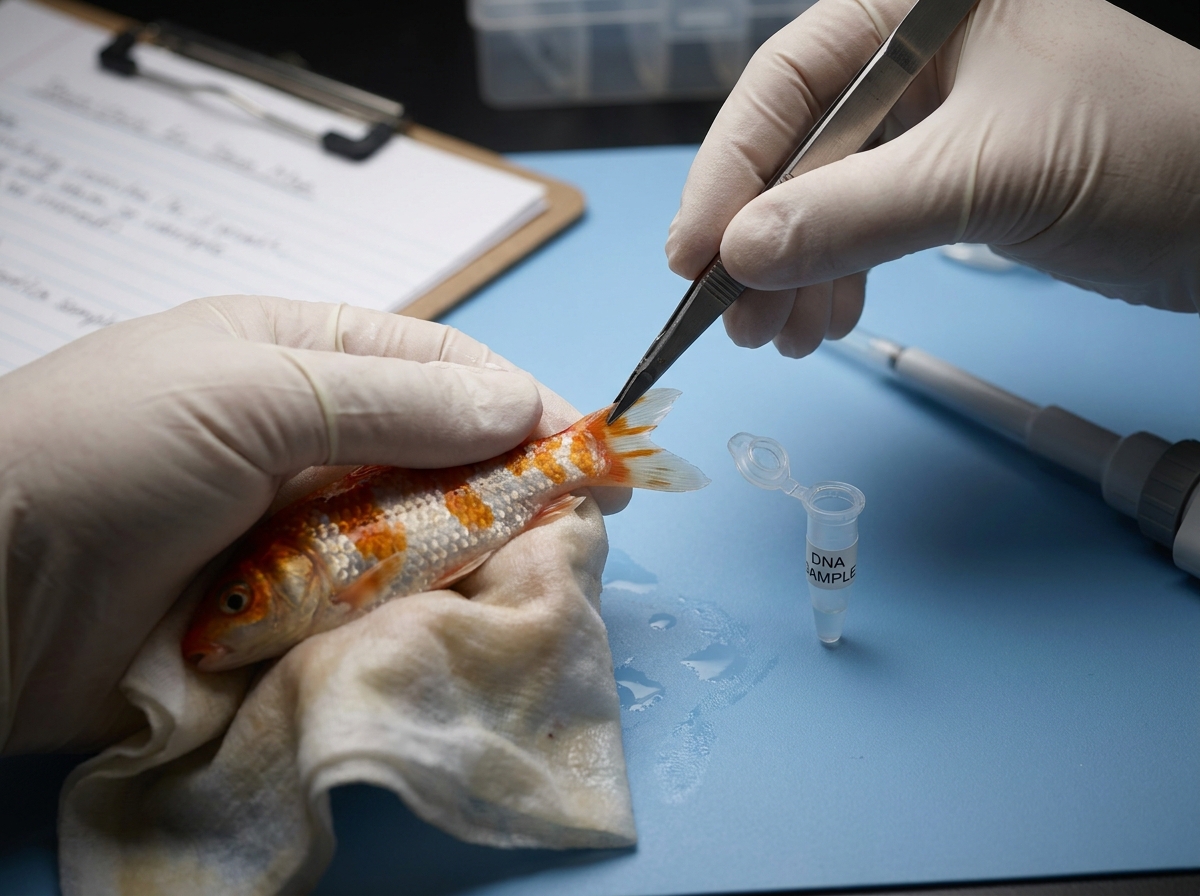
The genetic method is the only method that works on every species, at every age, with 100% accuracy. The method: a small fin clip is taken from the fish, the DNA is extracted, and the DNA is analyzed for the sex-specific markers. The most common marker: the DMRT1 gene on the Y chromosome, or a sex-specific marker like the SDY gene in salmonids. The lab test is a PCR amplification of the marker, and the result is a clear "male" or "female."
The genetic method works on: every species, every age, every individual. The only limitation: the method requires a lab, the lab charges a fee, and the lab turnaround is 1-2 weeks. The cost is $5-20 per fish, depending on the lab and the species.
The technique: a small fin clip (1-2 mm square) is taken from the caudal or pectoral fin, the fish is recovered in a separate tank for a few days, and the fin clip is sent to the lab. The lab extracts the DNA, runs the PCR, and reports the result. The fish is not harmed by the fin clip, and the fish can be re-clipped if the first sample is lost.
The genetic method is the right choice for: high-value fish (koi, discus, premium goldfish) where the accuracy is critical, monomorphic species where the visual and morphological methods do not work, and breeding programs where the wrong sex in the breeding pair is a significant economic loss.
The age at which each method becomes reliable
The visual method on dimorphic species: 3-4 weeks for guppies, bettas, swordtails; 4-6 months for koi, goldfish, discus, angelfish.
The morphological method on sexable species: 2-3 months for koi, goldfish, discus, angelfish; the accuracy increases with age.
The genetic method: any age, any species.
The behavioral method: at sexual maturity, which varies by species (4 weeks for guppies, 6-12 months for koi, 1-2 years for discus).
The sexing program
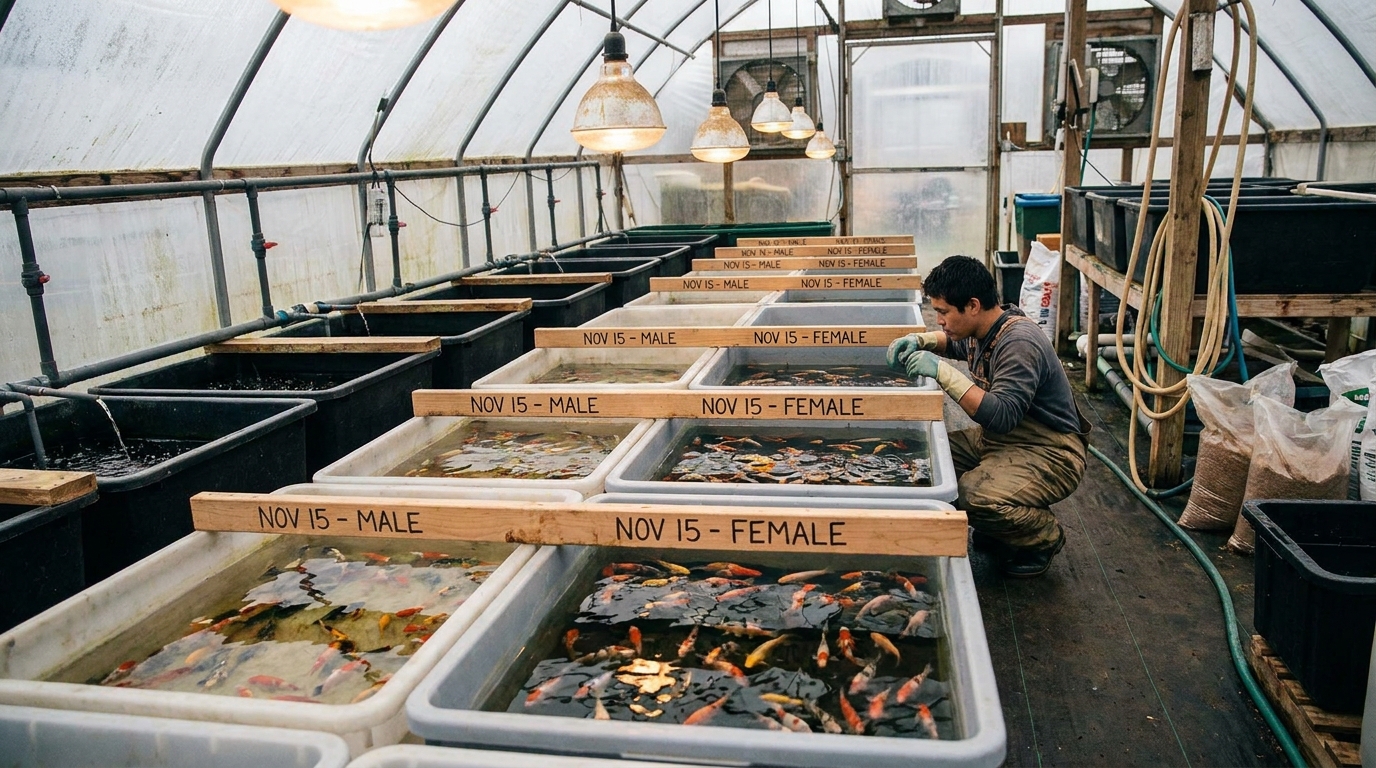
The sexing program for a serious breeding operation: use the visual method on the dimorphic species at the earliest age, use the morphological method on the sexable species at 2-3 months, and use the genetic method on the high-value fish and the monomorphic species. The program separates the males and the females at the appropriate age, and the program places each fish in the correct grow-out tank, the correct breeding pair, or the correct culling group.
The breeder who does not have a sexing program is the breeder who is guessing the sex of the fish, who is producing mixed-sex grow-out tanks with the resulting aggression and unwanted spawning, and who is putting the wrong-sex fish into the breeding pairs. The fix: a sexing program, with the methods matched to the species and the age.
The one-page summary
Sexing juveniles is harder than sexing adults, but the methods exist. The visual method works on dimorphic species at 3-6 months. The morphological method works on sexable species at 2-3 months. The behavioral method works at sexual maturity. The genetic method works at any age, on any species, with 100% accuracy. The sexing program is matched to the species and the age, and the program produces the correct separation of males and females for grow-out, breeding, and culling. The breeder who has a sexing program is the breeder who knows the sex of every fish. The breeder who does not is the breeder who is guessing.