
Hybrid vigor vs hybrid breakdown: when crossing two lines actually improves the offspring
The cross of two unrelated lines can produce offspring that are dramatically better than either parent — or dramatically worse. The positive outcome is hybrid vigor, also called heterosis, and the negative outcome is hybrid breakdown. Both are real, both are common in ornamental fish breeding, and the difference between them is in the specific lines being crossed and the specific traits being measured. The breeder who understands the difference is the breeder who uses line crossing as a tool. The breeder who does not understand the difference is the breeder who produces offspring that are disappointing or are unmarketable. In this article I will walk through what hybrid vigor and hybrid breakdown actually are at the genetic level, the traits that show hybrid vigor, the traits that show hybrid breakdown, the breeding strategies that maximize the positive outcomes, and the cases where line crossing is the wrong choice.
What hybrid vigor and hybrid breakdown are
Hybrid vigor (heterosis) is the phenomenon in which the offspring of two unrelated lines show improved performance compared to the average of the two parental lines. The improvement can be in growth rate, survival, fertility, disease resistance, or any other trait that has a genetic component. The mechanism: many important traits in fish are influenced by multiple genes, and the genes at each locus have different versions (alleles) that produce different effects. The alleles that produce the best performance are often recessive or partially recessive, and the alleles that produce poorer performance are often dominant or partially dominant. The inbred line has a high frequency of the poorer-performance alleles at many loci. The cross of two unrelated lines produces offspring that are heterozygous at many loci — they have one allele from each parent, and the combination often masks the poorer-performance alleles and reveals the better-performance alleles. The result is improved performance.
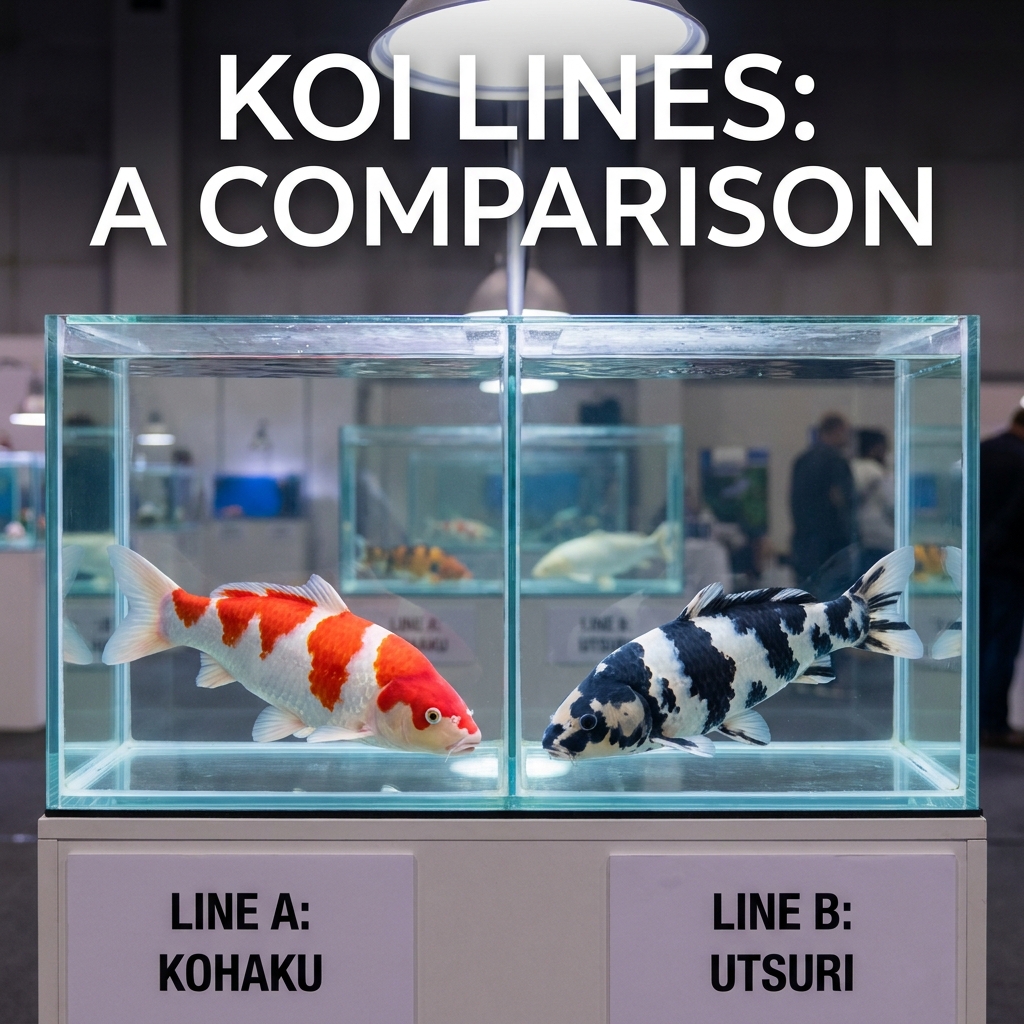
The classic example: two inbred lines of koi, line A and line B, each with a 10% inbreeding coefficient and each with a growth rate that is 10% below the population average. The cross of A and B produces offspring that are 0% inbred (no common ancestors), and the offspring show a growth rate that is 15-20% above the population average. The 15-20% improvement is the hybrid vigor. The improvement is not because the offspring are genetically "better" in any absolute sense; the improvement is because the offspring are heterozygous at many loci where the parents were homozygous.
Hybrid breakdown is the opposite phenomenon, in which the offspring of two unrelated lines show worse performance compared to the average of the two parental lines. The mechanism: some traits are influenced by epistatic interactions — the effect of an allele at one locus depends on the alleles at other loci. The inbred line has a specific combination of alleles that interact well together (the combination is "coadapted"). The cross of two unrelated lines breaks up the coadapted combination, and the offspring have a mixture of alleles from both parents that do not interact well together. The result is worse performance.
The classic example: two inbred lines of guppies, line A and line B, each with a bright color pattern and each with a high fertility. The cross of A and B produces offspring that have intermediate color (less bright than either parent) and lower fertility. The breakdown is not because the alleles are bad; the breakdown is because the alleles that produced the bright color in line A do not interact well with the alleles that produced the bright color in line B, and the combination produces a duller color.
The traits that show hybrid vigor
The traits that show hybrid vigor are the traits that are influenced by many genes, where the poor-performance alleles tend to be recessive or partially recessive. The list: growth rate, survival to adulthood, disease resistance, fertility, fecundity (number of eggs or fry per spawning), and feed conversion efficiency. These are the traits that are most improved by line crossing, and these are the traits that the commercial koi and goldfish breeders most often target.
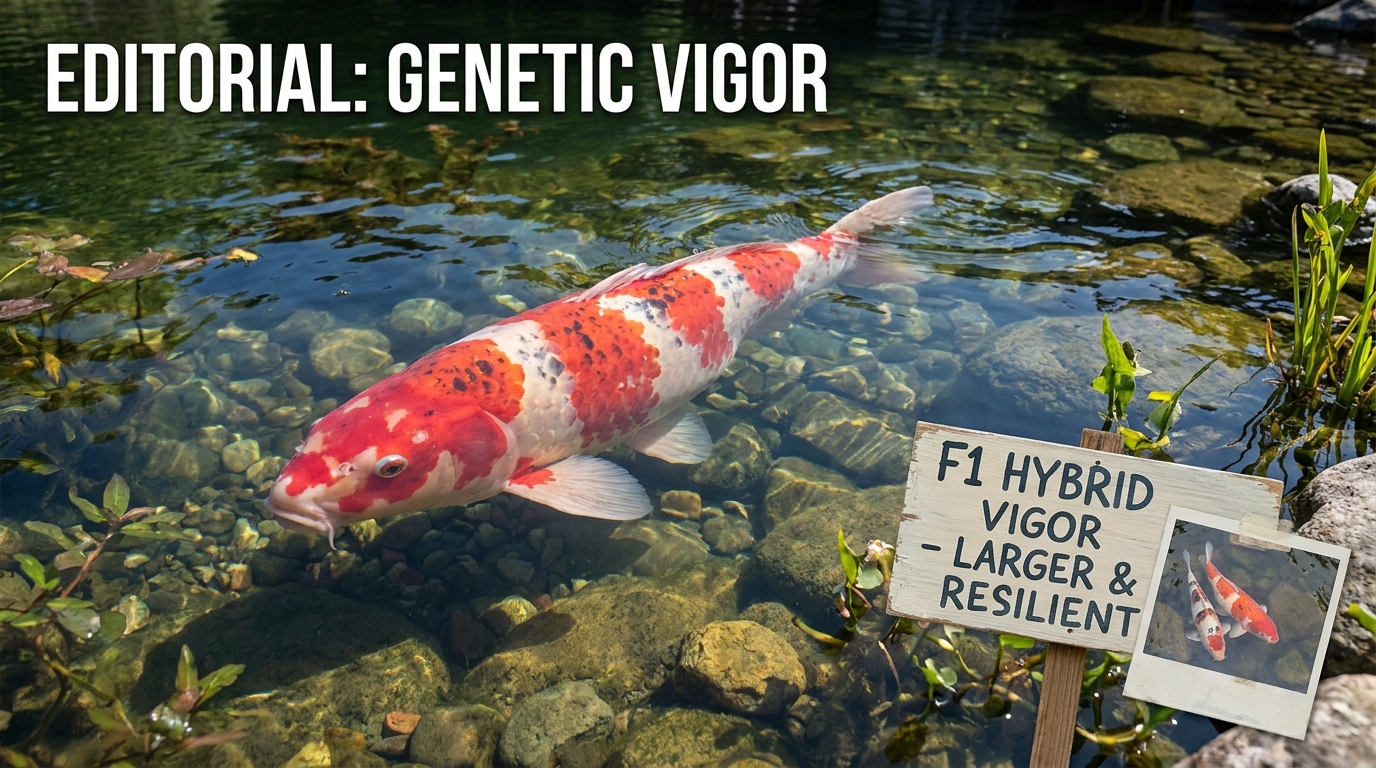
The trait that is most often improved in ornamental fish: growth rate. A cross of two unrelated koi lines can produce offspring that grow 15-25% faster than either parent line. The improvement is substantial enough that commercial koi breeders use line crossing specifically to improve growth, while still maintaining the desired color pattern through careful selection in subsequent generations.
The trait that is most improved in commercial food fish (salmon, trout, tilapia): disease resistance. The cross of two lines that have been selected for different diseases produces offspring that are resistant to both. The improvement can be 30-50% in survival during disease outbreaks. The mechanism: the alleles that confer resistance to disease A in line A and the alleles that confer resistance to disease B in line B are both present in the offspring, and the offspring are resistant to both diseases.
The traits that show hybrid breakdown
The traits that show hybrid breakdown are the traits that are influenced by epistatic interactions, where the specific combination of alleles at multiple loci produces the desired phenotype. The list: color pattern, fin shape, body conformation, deportment (the way the fish carries itself in the water), and behavior. These are the traits that are most damaged by line crossing, and these are the traits that the ornamental fish breeder most often wants to preserve.
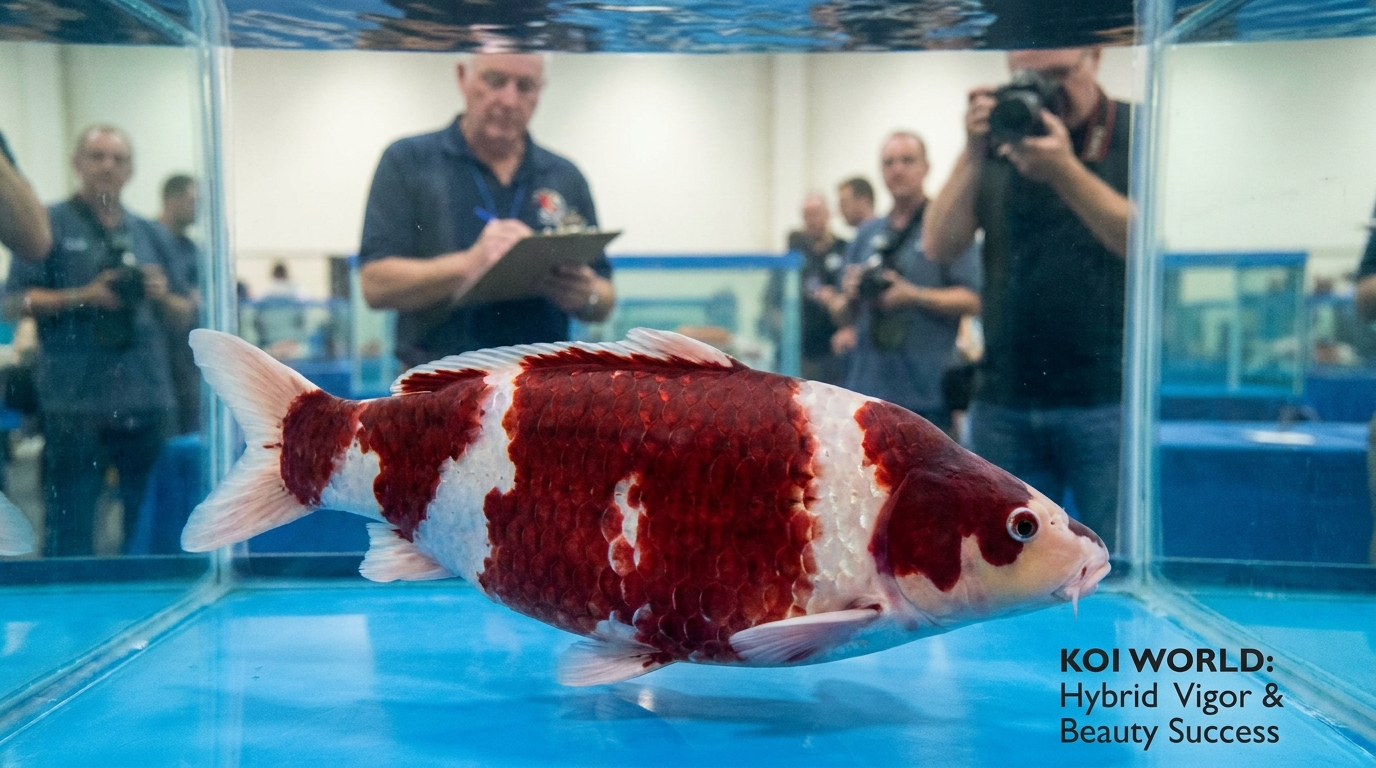
The trait that is most often damaged in ornamental fish: color pattern. A cross of two unrelated koi lines with different color patterns often produces offspring with intermediate or muddied color patterns. The Kohaku line (white with red) crossed with the Showa line (black, white, and red) produces offspring that may have all three colors but in patterns that do not match either parent. The intermediate patterns are not what either breeder was selecting for, and the offspring are not as marketable as either parent line.
The other trait that is often damaged: deportment. The koi that swims with a particular grace, with fins held just so, with body carriage that signals health and vitality — the deportment is a trait that is influenced by many genes, and the deportment is damaged by line crossing. The cross of two unrelated lines produces offspring that may be healthy and well-colored, but the deportment is often less impressive than either parent line.
The breeding strategies that maximize hybrid vigor
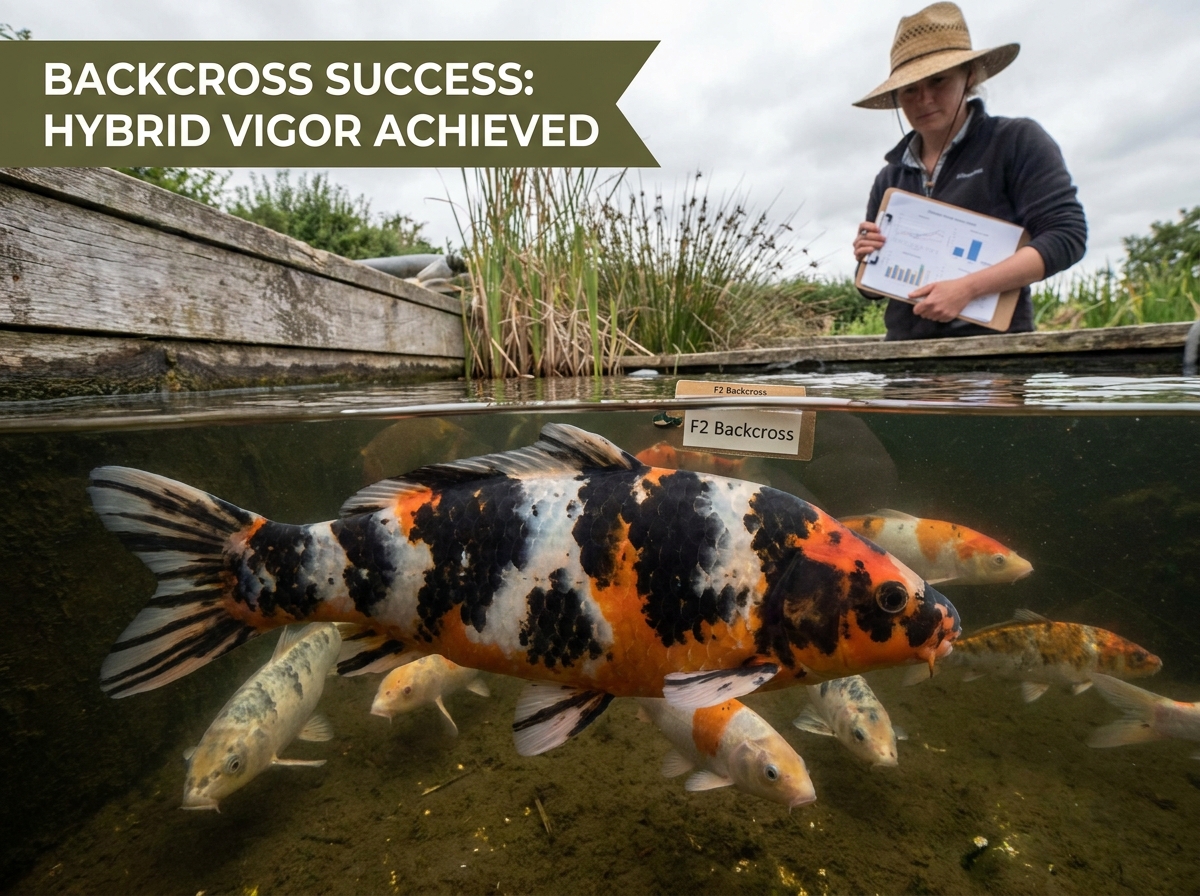
The breeding strategy that maximizes hybrid vigor while preserving the desired traits: a controlled cross of two closely-related lines that have been selected for the desired trait, with a backcross to the desired-trait line in the F1 or F2 generation. The protocol: cross A and B to produce F1. The F1 shows hybrid vigor (growth, survival, disease resistance) and intermediate traits (color, deportment). The F1 is backcrossed to the line that has the better color pattern (say, A). The F2 shows 50% of the genes from A and 25% from B and 25% from the F1 cross. The F2 is selected for the desired trait (color), and the F2 fish that have the best color are kept. The F2 shows most of the hybrid vigor of the F1, with most of the color of line A.
The strategy is called the "F1 cross, F2 backcross" strategy, and it is the standard protocol for using line crossing in ornamental fish. The strategy is well-established in koi breeding, goldfish breeding, and guppy breeding. The breeder who uses the strategy produces offspring that have most of the hybrid vigor of the F1 and most of the desired traits of the backcross parent.
The cases where line crossing is the wrong choice
The first case: the line that is the result of many generations of selection for a specific trait, where the trait is highly dependent on epistatic interactions. The goldfish breed that has been developed over 20+ generations for a specific body shape (the Ranchu, the Lionhead, the Oranda) is the goldfish breed where the trait is highly coadapted. The cross of the goldfish breed with an unrelated line produces offspring that lose the body shape. The line crossing is the wrong choice for these breeds.
The second case: the breeder who is producing a line that is intended to be reproduced true. The koi breeder who is producing a specific Kohaku line, where the line is the product of many generations of selection, and where the offspring are expected to look like the parents — the line crossing is the wrong choice. The line crossing breaks the consistency of the line.
The third case: the line that is already a hybrid. The koi or goldfish that is already a cross of two species or two established varieties is the koi or goldfish where the line crossing may not produce additional hybrid vigor. The benefit of line crossing is the recovery of inbreeding depression; the inbred line that is already a hybrid is the line that does not have the inbreeding depression to recover from.
The honest summary
Hybrid vigor is a real phenomenon, and line crossing can produce offspring that are dramatically better than either parent in growth, survival, and disease resistance. Hybrid breakdown is also a real phenomenon, and line crossing can produce offspring that are dramatically worse in color, pattern, deportment, and other ornamental traits. The difference is in the specific lines being crossed and the specific traits being measured. The breeder who understands the difference uses line crossing as a tool, with the F1 cross, F2 backcross strategy. The breeder who does not understand the difference produces offspring that are disappointing or are unmarketable. The tool is real. The tool is also dangerous. The breeder who uses the tool wisely is the breeder who produces both vigor and beauty.