

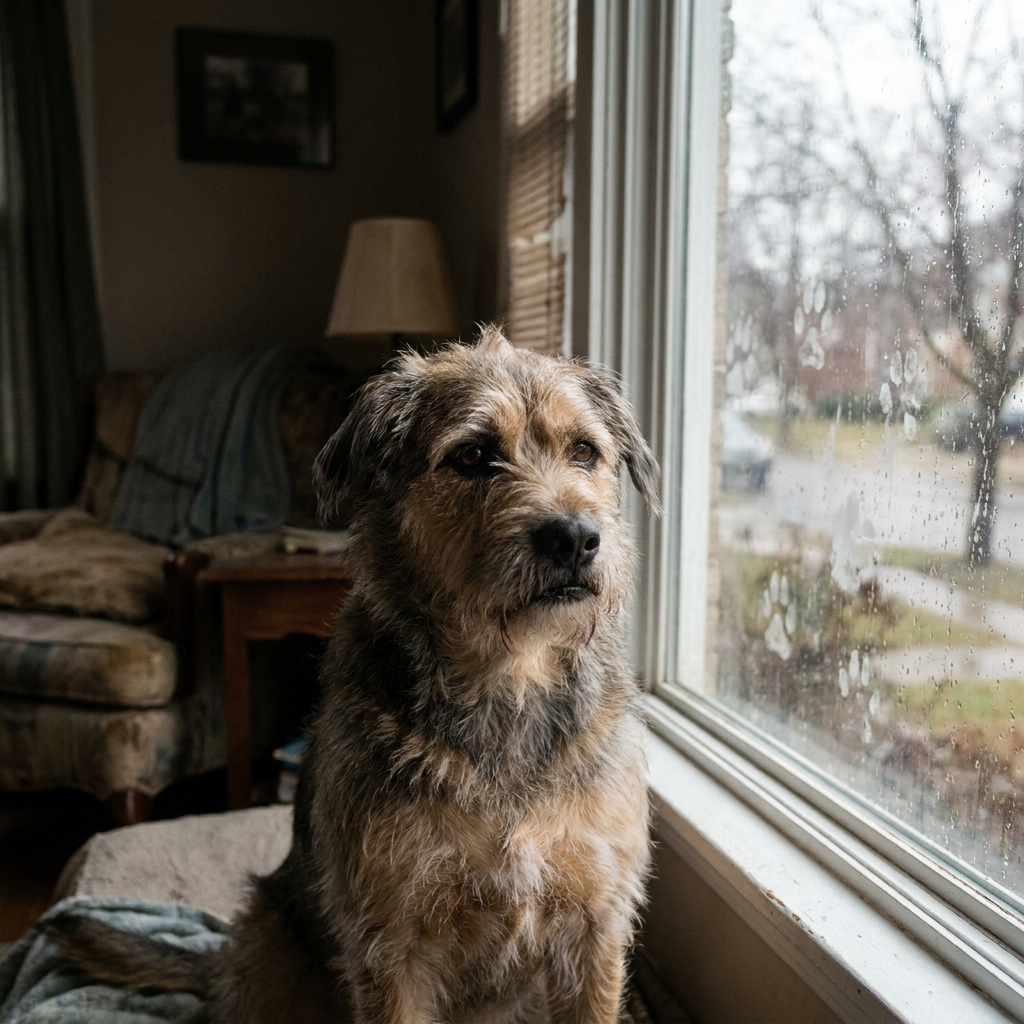
Separation anxiety: 7 early warning signs and a step-by-step correction plan
Most dogs do not have separation anxiety. Most dogs have either poor crate training, unmet exercise needs, or a normal puppy adjustment period that owners mistake for anxiety. The dogs that actually do have separation anxiety are a smaller group, but their behavior is so dramatic that they get all the attention - chewed doors, broken teeth, broken crates, neighbors complaining, and owners at their wits' end.
The reason this matters is that the fix is different for true separation anxiety than for any of the other things it gets confused with. A dog with separation anxiety needs a desensitization program, not more exercise. A dog that is just under-exercised needs more exercise, not a behavior modification plan. Conflating the two wastes months and burns out the owner.
The seven signs of true separation anxiety
A dog with genuine separation anxiety shows at least several of these consistently, only when left alone or anticipating being left alone, and the behavior starts within the first 20 minutes of the owner's departure:
- Vocalization: barking, howling, or whining that starts shortly after the owner leaves and continues intermittently. Not the "I want to go out with you" bark at the door, but the sustained, distressed vocalization once the dog realizes the owner is gone.
- Destructive behavior focused on exit points: chewing or scratching at the door the owner left through, window frames, crate doors. Not chewing a shoe - chewing the door itself.
- Self-injury: broken teeth, broken nails, scraped nose, lacerated gums. The dog was trying to escape, not just being destructive.
- Salivation and drooling: excessive drool pooled on the floor, wet paw prints from pawing, sometimes whole-body sweating visible on the chest.
- Elimination indoors: a house-trained dog that urinates or defecates only when left alone. If the dog is also eliminating when the owner is home, the cause is medical or incomplete housetraining, not separation anxiety.
- Escape attempts: broken crates, damaged doors, broken windows. This is the dog-equivalent of a panic attack.
- Pre-departure anxiety: the dog starts showing these signs when the owner is putting on shoes, picking up keys, putting on a coat. The dog has learned to predict departure.
A dog that only does one or two of these occasionally, or that does them when the owner is home, is not in this category. The combination matters.
The plan: six weeks of desensitization
This is the protocol I use with my own clients. It requires 20-30 minutes a day, six days a week, for six weeks. The first week is the hardest because it looks like nothing is happening.
Week 1: Build a calm baseline
You are teaching the dog that being alone in a specific space is not a problem. Pick a single room or a crate. Make it comfortable - bed, water, a stuffed Kong, soft music or a podcast at low volume. The dog goes in this space with you present and relaxed. You sit. You read. You do not interact with the dog. You are just there.
When the dog settles (lies down, sighs, relaxes), click or say "yes" and reward. When the dog gets up, you wait. Settle again, reward. The first session should be 20 minutes. The dog may take 15 of those to settle. That is fine.
Week 2: Add micro-absences
The dog is now comfortable in the space with you. Add tiny absences. Step out of the room for 5 seconds. Come back. Reward if calm. Repeat 10 times in a session. Gradually extend the time out - 10 seconds, 30 seconds, 1 minute. The dog needs to learn that you leaving the space does not mean you are gone forever.
Do not progress faster than the dog can handle. If the dog starts showing anxiety at 30 seconds, drop back to 10 seconds for a few days. The point is success, not speed.
Week 3: Real departures
Now practice actually leaving the house. Put on shoes, pick up keys, walk to the door, walk out, close the door, return after 1 minute. Repeat. Build up to 5 minutes, 10 minutes, 30 minutes. Each session, vary the duration - do not always extend. A 5-minute absence after a 30-minute one is fine.
This is also when the stuffed Kong becomes important. The dog gets the Kong when you leave, and the Kong is taken away when you return. The dog learns that the magic treat appears only when you are gone, and the treat's disappearance signals your return.
Week 4: Longer absences and real-life simulation
Leave for 1 hour, then 2 hours, then 4 hours. If possible, vary the exit cues so the dog does not lock onto a single signal. Sometimes put on shoes but do not leave. Sometimes pick up keys and put them in a different pocket. Sometimes leave through a different door.
Week 5: Test under real conditions
Go to a coffee shop for 2 hours. Go to a store for 30 minutes. Leave the dog alone and have a friend or a pet camera monitor. The first few real absences often show mild regression. That is normal. Go back to the previous week's protocol for a few days, then continue.
Week 6: Maintenance
By the end of week 5, the dog should be able to handle 4-hour absences without anxiety. Continue the practice at least 3 times a week to maintain the training. If the dog has a setback (a thunderstorm, a hospitalization, a move), restart from week 3 of the protocol.
What does not work
A few things I see recommended that do not help true separation anxiety:
- Another dog as a companion. The dog is not lonely for another dog. The dog is panicking because the specific human is gone. Adding a dog does not fix this and may make it worse.
- Punishment for destruction when you return. The dog was in a panic state, not making a choice. Punishment increases the panic and makes the next absence worse.
- Crate confinement as a solution. Some dogs with separation anxiety injure themselves in crates. Forced crating can escalate to severe injury. If the dog is anxious in the crate, work on crate training first, separately, and do not assume the crate is the right management tool.
- Anti-anxiety medication alone. Medication can be a useful adjunct but does not replace the desensitization program. Most cases need both.
When to bring in a professional
If the dog is injuring itself, the neighbors are complaining, or you are six weeks into the protocol with no progress, bring in a Certified Applied Animal Behaviorist (CAAB) or a veterinary behaviorist. The former is a non-veterinary specialist, the latter is a vet with additional behavior training. Either can assess whether medication is appropriate and can troubleshoot cases that are not responding.
The bottom line
True separation anxiety is fixable in 80% of cases with a structured desensitization program. The protocol is not complicated, but it is consistent. Most owners give up at week 2 because nothing visible has changed. The change is internal - the dog's emotional response to your absence - and it does not show in the dog's behavior until week 3 or 4. Push through.
About the author
Marcus Whitfield is a certified dog behavior consultant based in Austin, Texas, with a background in animal behavior science from UC Davis. He has worked with hundreds of separation anxiety cases over 12 years in private practice and is a member of the International Association of Animal Behavior Consultants. See his full profile at [authors/Marcus Whitfield/](../Marcus%20Whitfield.md).