
Reef water changes: cadence, volume, and the math that drives nutrient export
The reef water change is the single most effective tool for nutrient export in a closed reef system. The protein skimmer removes dissolved organic compounds before they break down into nitrate. The algae scrubber or refugium exports nutrients as plant biomass. The carbon and GFO remove specific compounds. But the water change is the only tool that exports the accumulated nitrate and phosphate in a single step, while also replenishing the trace elements that the corals and the invertebrates have consumed. The water change done at the right cadence and the right volume is the water change that keeps the reef tank stable. The water change done at the wrong cadence or the wrong volume is the water change that produces the algae blooms, the coral recession, and the instability that drive the reefer to seek help. In this article I will walk through the math that determines the right cadence and volume, the variables that change the calculation, the mixing protocol that produces consistent replacement water, and the mistakes that the most common water change protocols make.
The math that drives nutrient export
The reef tank is a closed system. The fish produce waste, the food introduces nutrients, the corals release organic compounds, and all of these eventually break down into nitrate and phosphate. The only ways to remove nitrate and phosphate from a closed system are: the water change (export in solution), the protein skimmer (export of dissolved organics before they become nitrate), the algae scrubber or refugium (export as plant biomass), the carbon and GFO (export of specific compounds), and the denitrification reactor (conversion of nitrate to nitrogen gas). The water change is the most reliable and the most controllable of these.
The math: a 100-gallon reef tank with a fish load that produces 10 ppm of nitrate per week between water changes needs a water change that exports the 10 ppm. A 20% water change (20 gallons) replaces 20% of the tank water with nitrate-free saltwater, which dilutes the 10 ppm to 8 ppm. A 50% water change (50 gallons) dilutes the 10 ppm to 5 ppm. The percentage of the nitrate that is exported by a single water change is equal to the percentage of the water that is changed. The remaining nitrate stays in the tank until the next water change.
The cadence of the water change determines the steady-state nitrate level. The fish load that produces 10 ppm of nitrate per week, with a 20% water change weekly, produces a steady-state nitrate of 8-10 ppm. The same fish load, with a 10% water change weekly, produces a steady-state nitrate of 18-20 ppm. The same fish load, with a 50% water change weekly, produces a steady-state nitrate of 4-5 ppm. The reefer who wants a low-nitrate tank is the reefer who does larger or more frequent water changes. The reefer who wants a high-nutrient tank (for a fish-only or soft coral system) is the reefer who does smaller or less frequent water changes.
The variables that change the calculation
The fish load. The reef tank with 10 small fish produces less waste than the reef tank with 10 large fish. The fish load is the primary driver of the weekly nitrate production. The reefer who has a heavily stocked tank needs more water change than the reefer who has a lightly stocked tank.
The feeding rate. The fish that is fed twice a day produces more waste than the fish that is fed once a day. The fish that is fed a high-protein diet produces more waste than the fish that is fed a lower-protein diet. The reefer who feeds heavily needs more water change than the reefer who feeds lightly.
The coral load. The corals produce organic waste as a byproduct of their metabolism, and the heavy coral load produces more waste than the light coral load. The coral-dominated tank (SPS-dominated) is a high-nutrient tank, particularly for phosphate. The reefer who has a heavy coral load needs more water change than the reefer who has a light coral load.
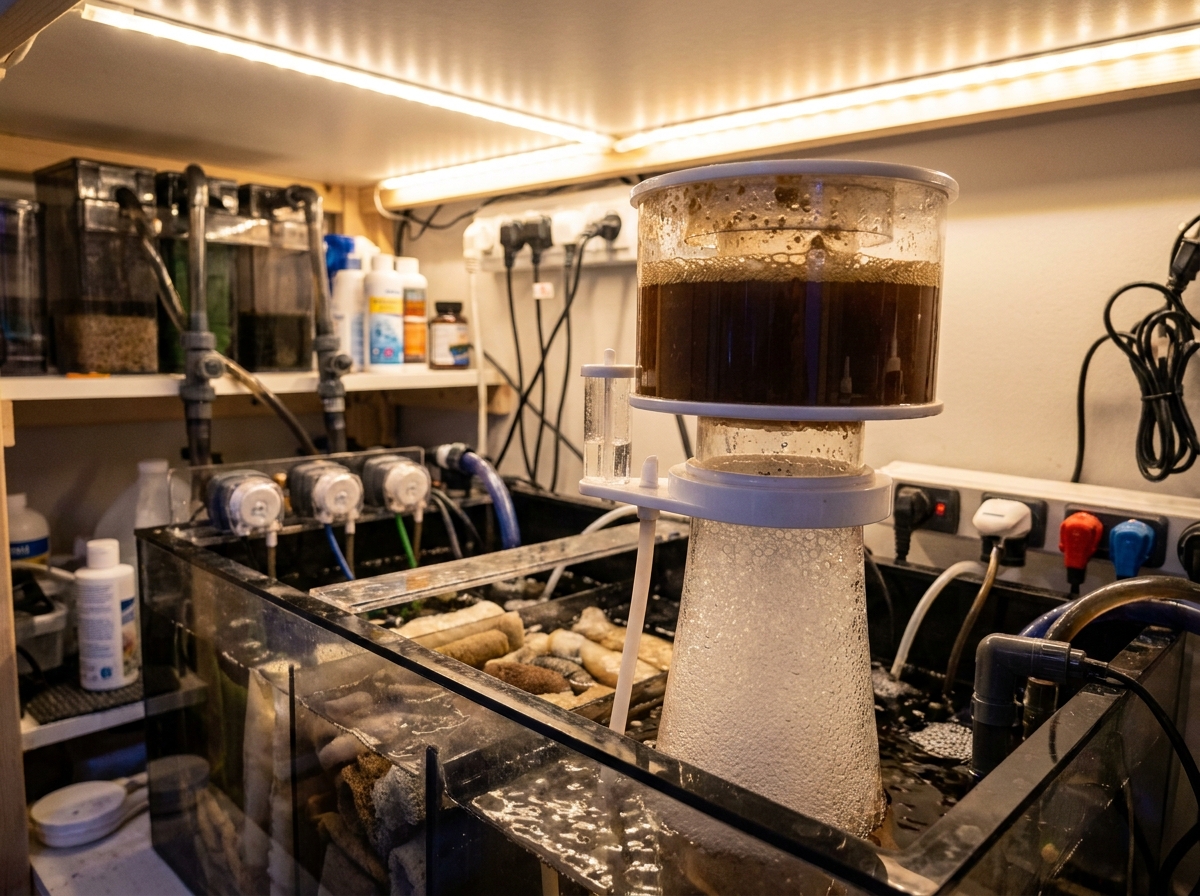
The protein skimmer performance. The protein skimmer that is well-tuned and producing 1-2 cups of dark skimmate per week is exporting a significant amount of dissolved organics before they break down into nitrate. The skimmer that is producing thin, watery skimmate or no skimmate is not exporting much, and the tank needs more water change to compensate. The reefer who has a well-tuned skimmer can do smaller water changes than the reefer who has a poorly tuned skimmer.
The refugium or algae scrubber. The refugium that is producing a heavy macroalgae growth (Chaetomorpha, Caulerpa) is exporting nutrients as biomass. The refugium that is not producing much growth is not exporting much. The reefer who has a productive refugium can do smaller water changes than the reefer who does not.
The standard protocol for a mixed reef
The standard protocol for a 100-gallon mixed reef with a moderate fish load, a moderate coral load, and a well-tuned protein skimmer: 10-20% water change weekly. The protocol produces a steady-state nitrate of 5-15 ppm and a steady-state phosphate of 0.03-0.10 ppm, which is the range that supports healthy coral growth and color without producing nuisance algae.
The standard protocol for a 100-gallon SPS-dominated reef with a moderate fish load, a heavy coral load, and a well-tuned protein skimmer: 15-25% water change weekly, with a refugium that is producing 1-2 cups of macroalgae biomass per week for harvest. The protocol produces a steady-state nitrate of 2-5 ppm and a steady-state phosphate of 0.01-0.03 ppm, which is the lower-nutrient range that supports SPS color and growth.
The standard protocol for a 100-gallon fish-only or soft coral reef with a moderate fish load, a light coral load, and a well-tuned protein skimmer: 5-10% water change weekly or 10-20% biweekly. The protocol produces a steady-state nitrate of 10-20 ppm, which is acceptable for fish-only and soft coral systems but is too high for SPS.
The mixing protocol
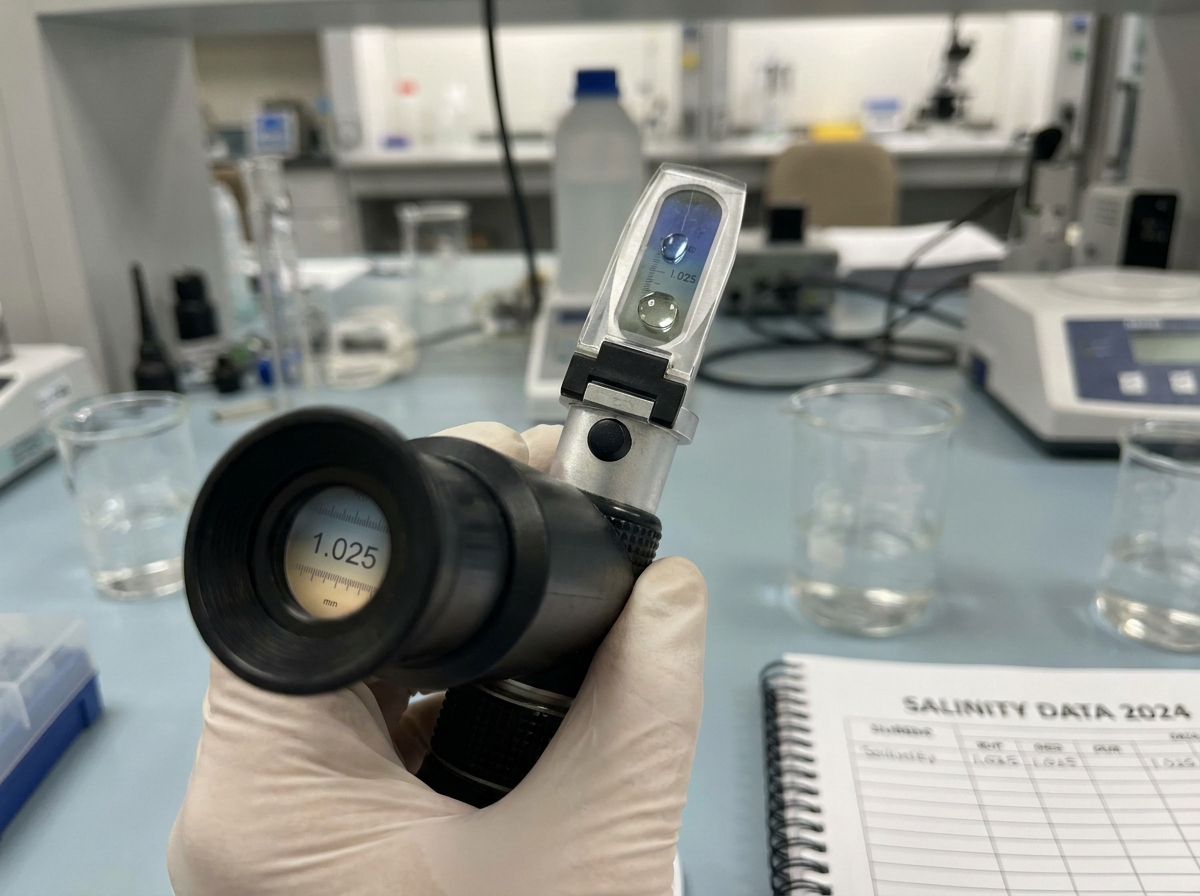
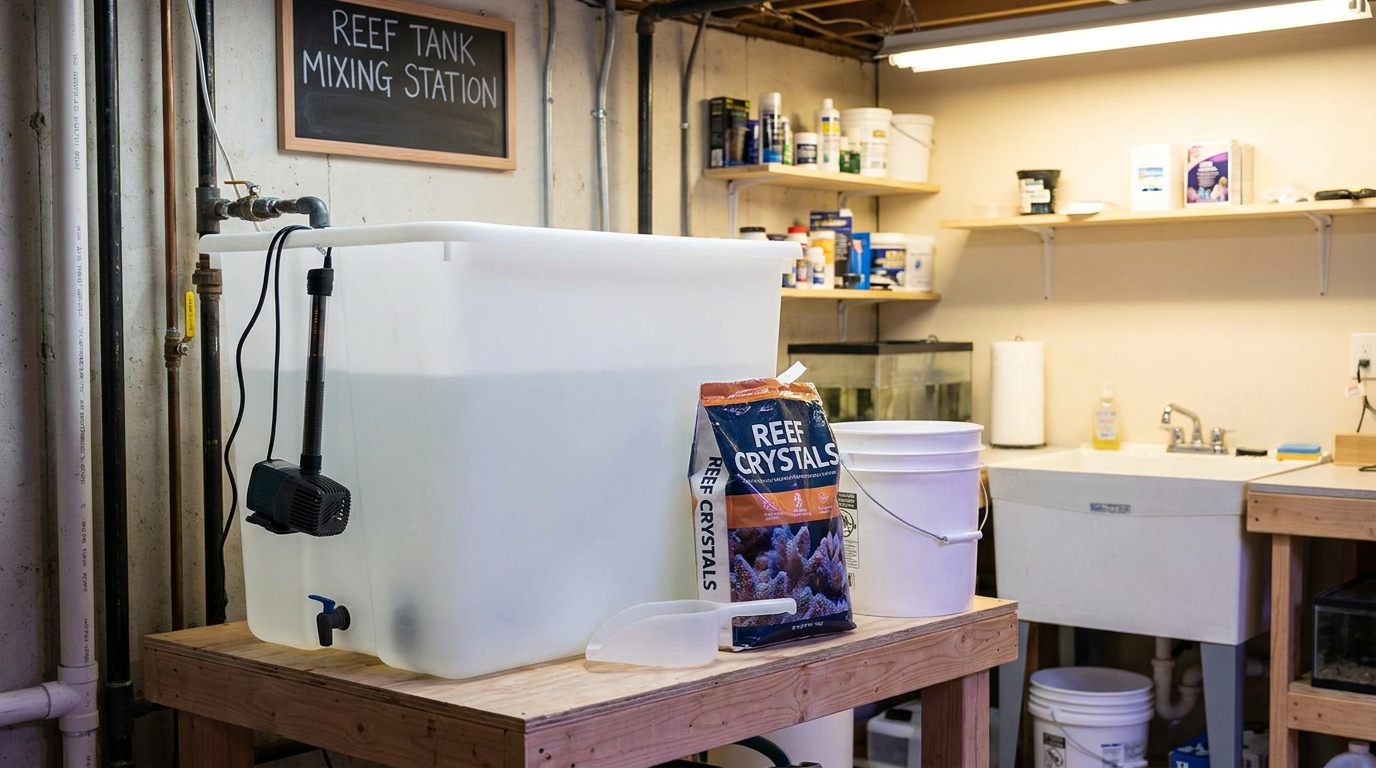
The replacement water for a reef water change has to be mixed fresh, at the correct salinity, the correct temperature, and the correct parameters. The mixing protocol: a clean food-grade container, RO/DI water (or distilled), reef salt mix (the major brands are all reliable; the choice depends on the target parameters), a powerhead or circulation pump for mixing, a heater, and a thermometer. The salt is added to the water, the water is mixed thoroughly for 15-30 minutes, the salinity is checked with a refractometer (target 1.025-1.026 at 78°F), the temperature is checked (target within 1°F of the tank), and the water is ready for use.
The mixing container should be dedicated to reef use. The container that has been used for paint, for fertilizer, for any household chemical, is the container that should not be used for reef water. The reefer who mixes in a clean, dedicated container is the reefer who has consistent water change water. The reefer who mixes in a questionable container is the reefer who is risking contamination.
The salt mix choice. The major brands (Instant Ocean, Reef Crystals, Tropic Marin, Red Sea) all produce a salt mix that, when mixed at the recommended ratio, produces a balanced saltwater. The minor differences between brands are in the trace element profiles and the alkalinity, calcium, and magnesium targets. The reefer who has a specific alkalinity target (the LPS-dominated tank at 8-9 dKH, the SPS-dominated tank at 7-8 dKH) should choose the salt mix that matches. The reefer who is changing salt mix should not change and test parameters at the same time; the change should be made at a time when the parameters can be monitored and adjusted.
The mistakes
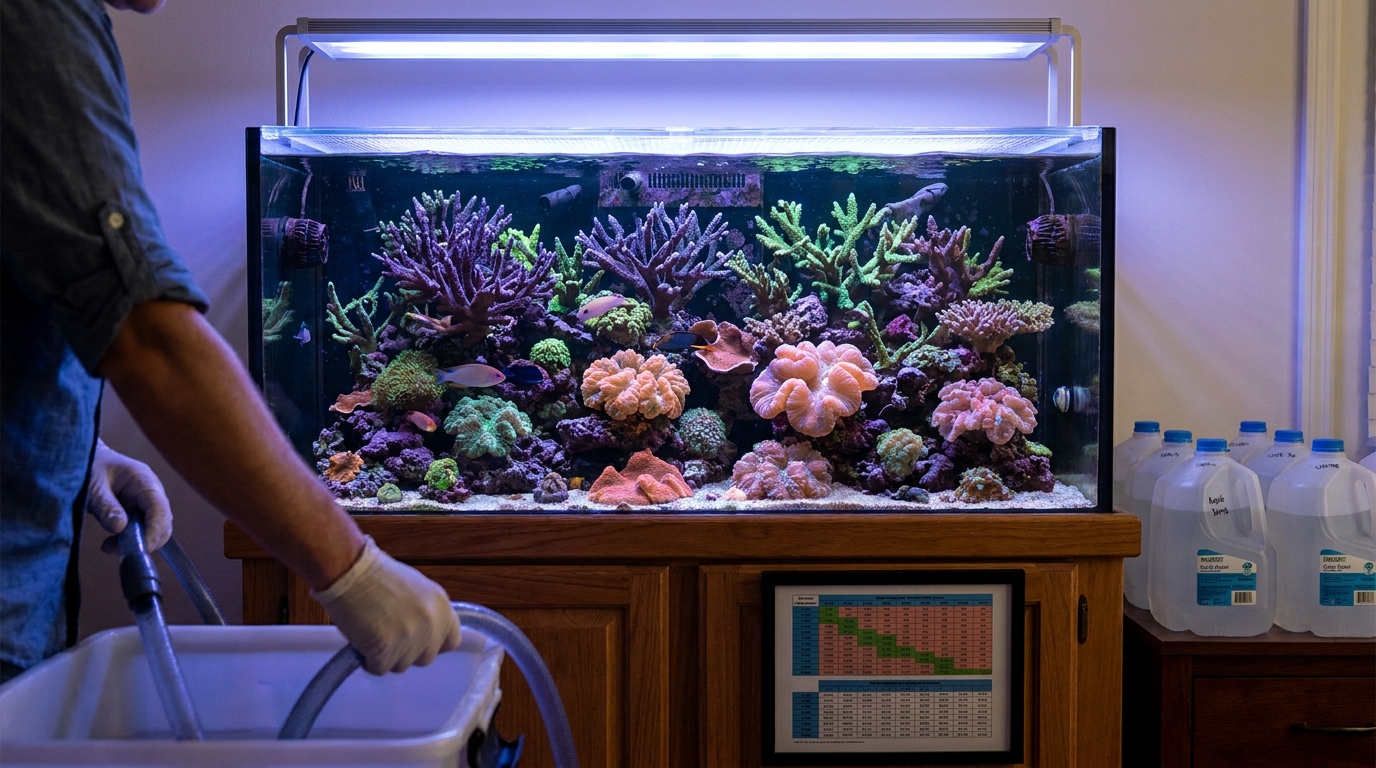
The first mistake is the too-large water change. The reefer who does a 50% water change once a month to "reset" the tank is the reefer who is shocking the corals and the beneficial bacteria with a massive parameter swing. The 50% water change replaces half the water, but the new water is not exactly the same as the old water (different alkalinity, calcium, magnesium, trace elements, temperature, pH), and the swing stresses the corals. The corals can recover from a single 50% change, but the corals that are repeatedly shocked with 50% changes are the corals that decline. The fix: smaller, more frequent changes. 10-20% weekly is much better than 50% monthly.
The second mistake is the not-matched water. The reefer who mixes the replacement water at a different salinity, different temperature, or different parameters from the tank is the reefer who is shocking the corals with each change. The fix: match the salinity to within 0.001 specific gravity, match the temperature to within 1°F, and let the replacement water mix for at least 15-30 minutes before the change.
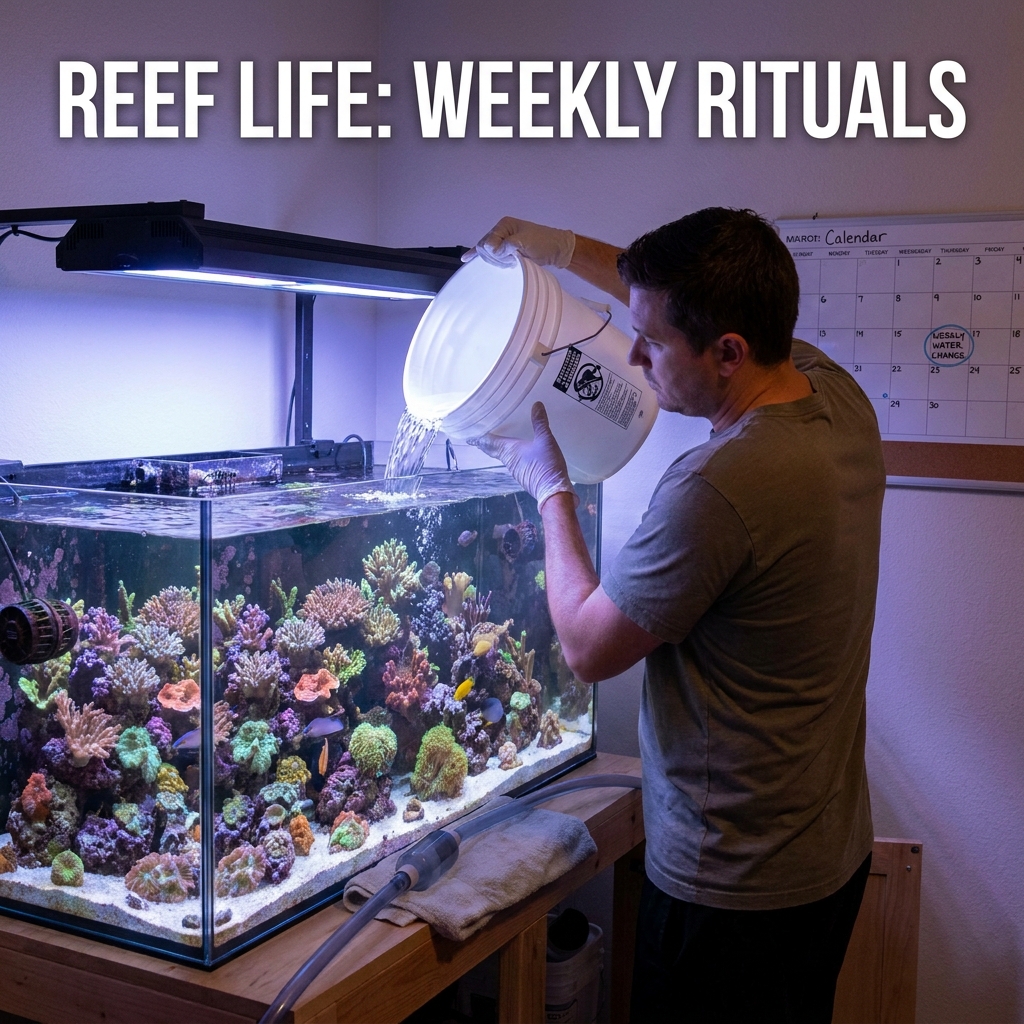
The third mistake is the forgotten water change. The reefer who does a water change every 4-6 weeks, or who does not have a scheduled water change, is the reefer whose tank drifts toward higher nutrients and lower stability. The fix: a scheduled weekly water change, on the same day each week, that is part of the maintenance routine.
The one-page summary
The reef water change is the most reliable tool for nutrient export. The cadence and the volume determine the steady-state nitrate and phosphate. The standard protocol is 10-20% weekly for a mixed reef, 15-25% weekly for an SPS-dominated reef, 5-10% weekly for a soft coral or fish-only system. The replacement water has to be mixed at the correct salinity, temperature, and parameters. The mistakes are the too-large change, the not-matched water, and the forgotten change. The reefer who runs the standard protocol is the reefer whose tank stays stable. The reefer who does not is the reefer whose tank drifts.