Pregnancy and lactation: foods to strictly avoid in a breeding bitch
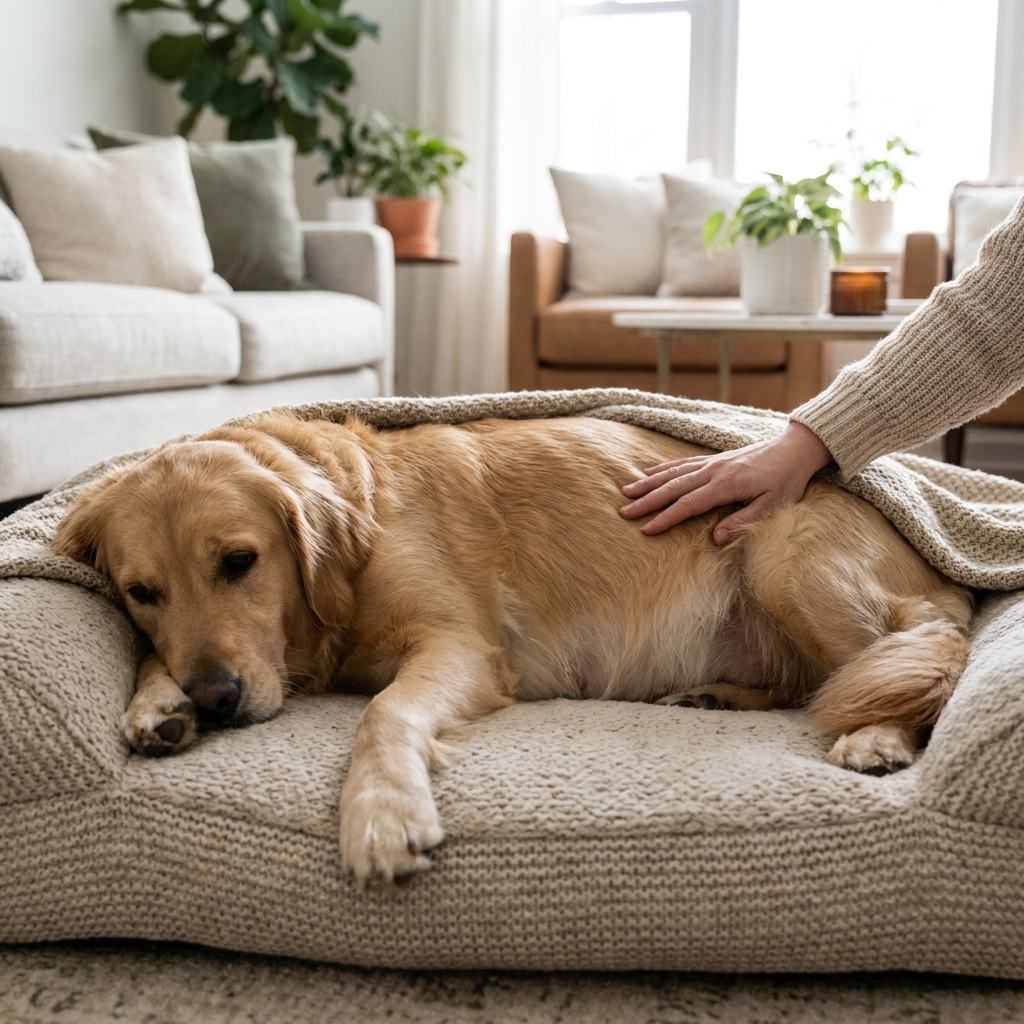
Pregnancy and lactation is the highest-risk nutritional window in a healthy adult dog's life. The body is doing something metabolically extreme - growing multiple fetuses, building a placenta, producing milk that can be 3-4 times the dam's maintenance energy needs. Foods and substances that are tolerable in a normal adult can become unsafe in this window. Some are unsafe for the puppies, some for the mother, some for both.
This is not a complete list of what to feed a pregnant or lactating dog. It is a focused list of what to keep out of reach. The flip side - what to actively feed, the high-calorie dense puppy diets, the calcium adjustments, the feeding frequency - is its own article. This one is about the things people accidentally expose their breeding dogs to.
Raw fish and the thiaminase problem
Raw salmon, raw trout, raw carp, raw herring - these contain an enzyme called thiaminase that breaks down thiamine (vitamin B1). In a normal adult dog eating raw fish occasionally, this is rarely a problem. In a pregnant dog, thiamine deficiency during fetal neural development can cause congenital neurological defects in the puppies that may not be visible at birth but show up as movement disorders, seizures, or training difficulties as the dog matures.
The fix is straightforward: cook the fish. Cooking destroys thiaminase. Smoked salmon is borderline - the smoking does not reliably destroy the enzyme. If you want to feed fish to a pregnant or lactating bitch, cook it to an internal temperature of 63°C and feed it boneless. Limit to 10% of total calories.
High-mercury fish
This is the flip side. Cooked white fish like cod and haddock are fine. Cooked tuna, swordfish, king mackerel, and shark are not - they concentrate mercury, which crosses the placenta and accumulates in fetal brain tissue. Mercury exposure in utero is associated with neurological deficits in puppies. Limit these species during pregnancy and lactation. A 30-gram portion once a month is a reasonable upper bound; once a week is too much.
Liver in large quantities
Liver is a nutritional powerhouse and most raw and home-cooked diets include it. But liver is extremely high in vitamin A. Hypervitaminosis A in pregnant dogs causes congenital defects including cleft palate, heart malformations, and skeletal abnormalities.
The safe upper limit for liver in a pregnant dog's diet is about 5% of total calories. A pregnant 25 kg dog eating 1500 kcal per day should get no more than 75 kcal from liver - roughly 30 grams of raw liver or 20 grams of cooked liver per day. Most raw diets that include 10-15% liver by weight are over this limit for pregnancy. Switch to a lower-liver formulation or a prenatal-specific recipe.
Raw egg whites in excess
Raw egg whites contain avidin, which binds biotin and can cause biotin deficiency. A single raw egg once a week is not a problem. A dozen raw eggs a week as a "pregnancy superfood" is a problem. Cook the eggs to destroy avidin if you are feeding eggs as a major protein source. Biotin deficiency in late pregnancy and lactation causes hair loss, scaly skin, and poor milk production.
Onion, garlic, leek, chives, shallots
These all belong to the Allium family and contain organosulfur compounds that damage red blood cells and cause Heinz body anemia. The effect is cumulative - small amounts over time cause more damage than a single large dose. Pregnant and lactating dogs are particularly susceptible because the red cell turnover is already higher than normal.
The toxic dose is about 5 grams of onion per kg of body weight for an acute single dose, but chronic exposure at much lower levels causes problems. A small amount of garlic as a "natural flea preventative" is not safe in this window. Skip it. Many prepared human foods (soups, stews, baby foods) contain onion or garlic powder - read labels.
Grapes and raisins
The toxic component in grapes and raisins is not fully identified, but the effect is acute kidney injury. A small handful of grapes can cause kidney failure in a medium-sized dog. There is no safe dose established. In a pregnant or lactating dog, the kidney is already working at elevated capacity - a grape or raisin exposure that a non-pregnant dog might survive with supportive care can be fatal. Keep grapes, raisins, currants, and sultanas completely out of reach. This includes the trail mix in your backpack, the raisin bread on the counter, and the grape vine in the garden.
Macadamia nuts
The toxic mechanism in dogs is not fully understood, but the clinical effect is weakness, vomiting, hyperthermia, and inability to walk. The toxic dose is about 2 grams per kg. Macadamia nuts are a common ingredient in cookies, trail mixes, and baked goods. A 25 kg dog eating 50 grams of macadamia nuts will likely show clinical signs. This is true for any dog but particularly dangerous in pregnancy when the dog may be lying down and unable to get up safely, or when weakness is mistaken for the normal slowing of late pregnancy.
Xylitol
Xylitol is a sugar alcohol used in sugar-free gum, sugar-free peanut butter, sugar-free baked goods, and some toothpastes. In dogs, xylitol causes a rapid release of insulin, leading to severe hypoglycemia, and at higher doses, acute liver failure.
For a pregnant or lactating dog, the hypoglycemia risk is particularly dangerous because the puppies are relying on stable maternal blood glucose. Xylitol exposure at doses that a normal adult dog might survive can cause severe hypoglycemia in a pregnant dog and result in fetal distress or loss.
The fix is to read every label. Sugar-free peanut butter is the most common accidental exposure - many brands now contain xylitol. Stick to peanut butter brands that explicitly state "no xylitol" on the label and call the manufacturer if you are not sure.
Foods contaminated with Listeria or Salmonella
Pregnant women are warned about Listeria in deli meats and soft cheeses. Pregnant dogs are at similar risk. Listeria and Salmonella both cross the placenta and can cause fetal loss, stillbirth, or weak puppies that die in the first week.
Avoid feeding raw or undercooked:
- Deli meats
- Hot dogs
- Soft cheeses (brie, camembert, feta, blue cheese)
- Raw milk and unpasteurized dairy
- Smoked fish (lox, nova, etc.)
- Raw or undercooked eggs
Cook all meats to a minimum internal temperature of 74°C. Use a food thermometer. The "looks done" test is not reliable for these pathogens.
Bones
This is not pregnancy-specific but it is more dangerous in this window. Pregnant and lactating dogs have higher calcium demands and will actively seek out bones. Cooked bones splinter and can perforate the intestine. Raw bones can cause constipation in late pregnancy when the uterus is compressing the colon. A constipated pregnant dog is at risk of straining-induced uterine prolapse.
If you feed raw bones, stick to soft, edible bones (chicken necks, chicken backs) in moderation. Avoid weight-bearing bones of large animals (femurs, knuckle bones). Supervise every bone feeding. Remove the bone after 15-20 minutes.
Medications and supplements
This is the most important section. Human medications and many supplements are not safe in pregnancy and lactation.
- NSAIDs (ibuprofen, naproxen): toxic to fetuses, cause kidney and cardiac defects.
- Vitamin A supplements beyond dietary levels: teratogenic above 10,000 IU per day.
- Calcitriol or other vitamin D supplements beyond the dietary requirement: cause fetal hypercalcemia.
- Herbal preparations: many common herbs (black cohosh, blue cohosh, dong quai, pennyroyal) are abortifacient or teratogenic. Do not give any herbal preparation to a pregnant dog without specific veterinary guidance.
- Essential oils: many are toxic to dogs at concentrations that are safe for humans. Diffuse in well-ventilated areas or skip entirely.
- Topical flea and tick products: some are not labeled for use in pregnant or lactating dogs. Check the label carefully. Oral products are generally safer than topical ones in this window.
The bottom line
Most of these are uncommon exposures. The most common accidental exposures in my own clients are:
- Sugar-free peanut butter with xylitol
- Grapes dropped by children
- Allium-family leftovers in human food
- Raw fish in home-prepared raw diets
The fix is to communicate the rules to every person in the household, read every label, and during the pregnancy and lactation window, restrict the dog's environment to foods you have specifically approved. It is annoying. It is also the difference between a healthy litter and an emergency vet visit at 2 AM.
About the author
Sarah Chen is a canine nutrition scientist based in Melbourne with a PhD in veterinary nutrition from the University of Sydney. She has worked with breeding kennels, guide dog organizations, and individual breeding clients to manage nutritional risk during pregnancy, lactation, and puppyhood, and has published peer-reviewed work on the topic. See her full profile at [authors/Sarah Chen/](../Sarah%20Chen.md).