
Night-time yowling in cats: 6 root causes and matching fixes
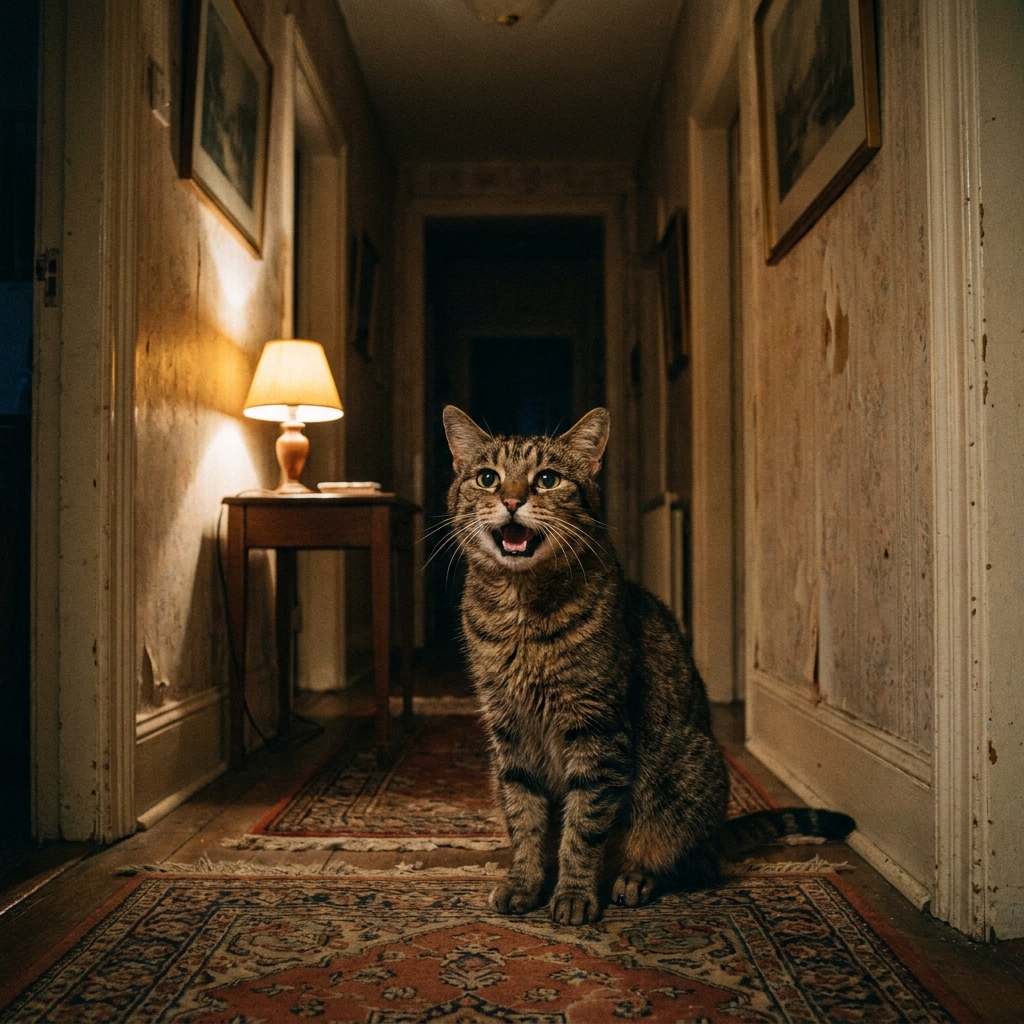
The first thing I want to say to anyone reading this at 3 a.m. with a cat in the hallway: your cat is not being naughty. A cat that yowls at night is a cat communicating something — to you, to another cat, or to itself — and the noise is almost always a clue, not a complaint. Three nights of broken sleep and a person stops seeing their cat as a beloved animal and starts seeing them as a small, furry problem to be solved. The yowling is not the problem. The yowling is a question. There are six common answers, and each has a different fix. Before we change the cat, we change the room.
The crepuscular reality: biology before behaviour
Cats are crepuscular. Most active at dawn and dusk. This is hardwired — a legacy of hunting in the cooler, low-light hours when rodent prey is moving but raptors are not. A house cat that has spent the day alone, asleep, and under-stimulated will wake at 1 a.m. fully rested and with no outlet. The yowling is not misbehaviour. It is the cat trying to start the day it never got to have.
The fix is to front-load the day before the night happens:
- A 20-minute wand-toy play session one to two hours before your bedtime, ending in a small meal
- A second meal right before you go to sleep
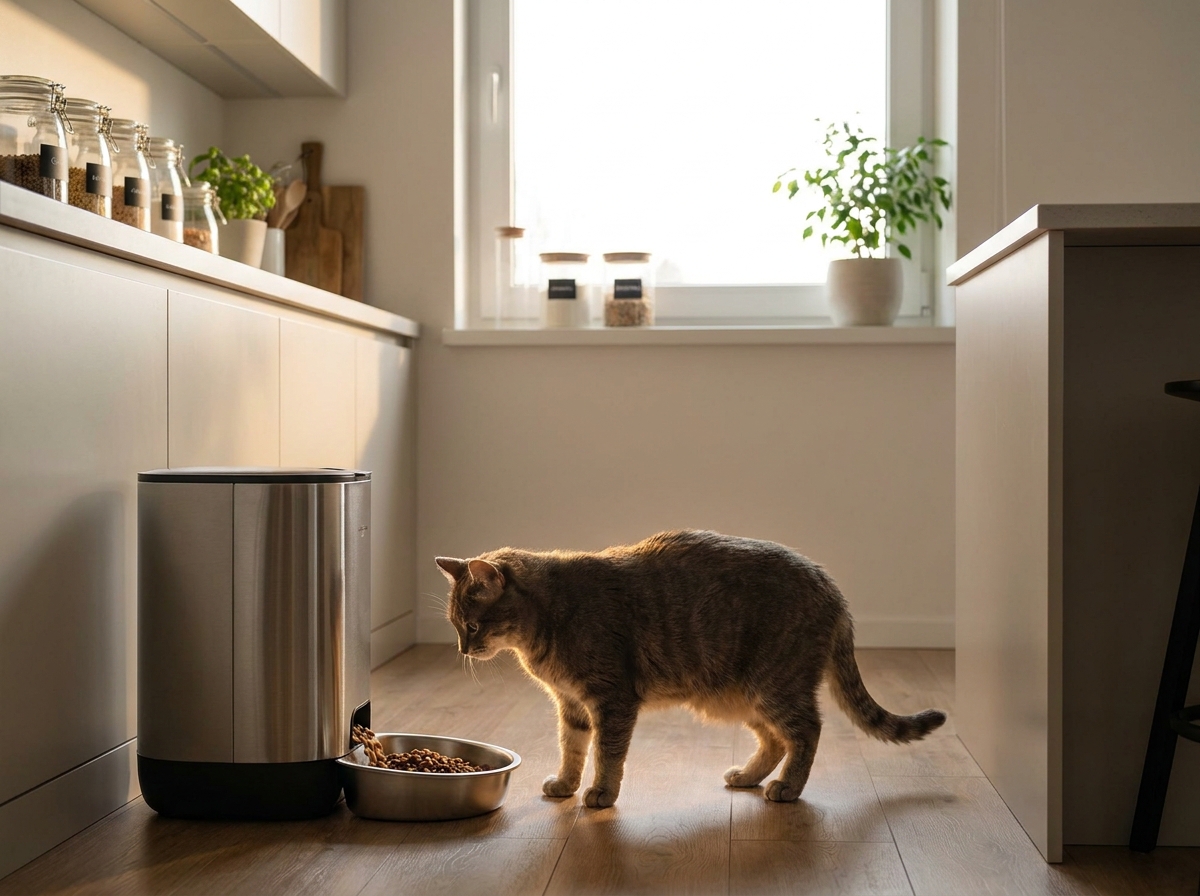
- A timed automatic feeder for a 4 a.m. snack
- A puzzle feeder in a different room, available all night
This recreates the catch-eat-groom-sleep cycle the indoor cat has been missing. Most "4 a.m. wake-up" cases improve in seven to ten days.
When the yowl is medical: senior cats and the non-negotiable vet visit
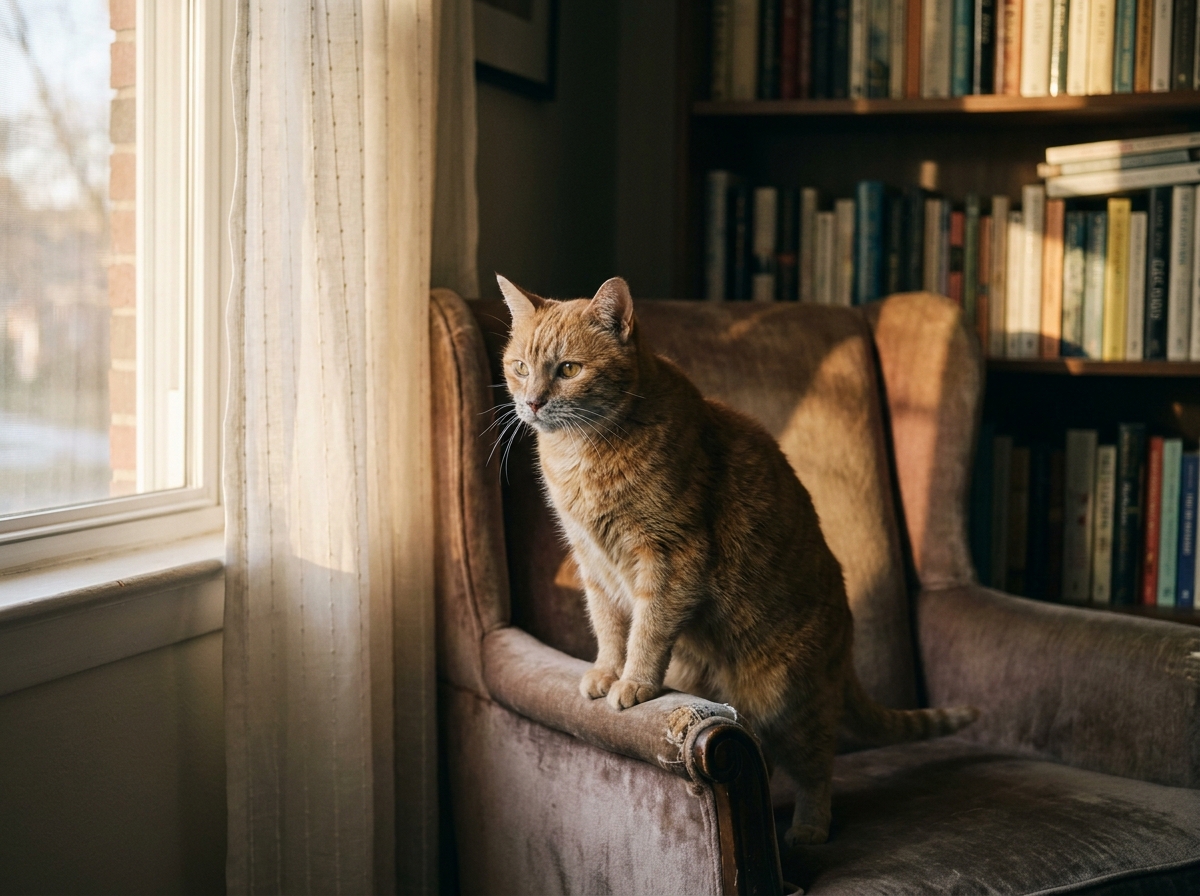
I have to say this first, even though it interrupts the environmental work: if your cat is over ten and the night yowling started recently, the vet visit is the first step, not the last. Behavioural work on a hyperthyroid cat is wasted effort. Behavioural work on a cat in pain is unkind. Common medical drivers:
- Hyperthyroidism — increased vocalisation, increased appetite, weight loss. This is the one I see most often, and it is the one owners least expect because the cat still seems "bright"
- Chronic kidney disease — malaise and disorientation that gets worse as the night deepens
- Hypertension — often secondary to kidney or thyroid disease; often silent until measured
- Pain — arthritis in the hips or spine, dental disease, urinary discomfort. A cat who jumps down from the bed and yowls once before walking stiffly to the water bowl is not being dramatic
- Cognitive dysfunction syndrome — the dementia chapter of senior cats; night confusion is a hallmark
A senior cat with new night vocalisation needs a physical exam, blood pressure, bloodwork (CBC, chemistry, T4), urinalysis, and a pain assessment. No exceptions. I have watched owners spend three months training a quiet night, while the cat's kidneys quietly failed. The training worked. The cat got worse. The two things were not connected, and that was the problem.
The empty-day cat: under-stimulation looks like defiance
Indoor cats without enrichment sleep badly. Sleep is shallow, fragmented, unsatisfying. They wake, they yowl, they wake the household, the household gives attention, the yowl becomes a learned behaviour in about a week. The owner concludes the cat is "demanding" or "spoiled." The cat is, more accurately, bored out of its mind.
What actually helps (and is not a new toy that gets ignored by Tuesday):
- Vertical space — cat trees, shelves, the tops of bookcases. Cats watch their territory from height
- Window perches — especially near a bird feeder, even a small one outside the kitchen window
- Puzzle feeders — three around the house, rotated weekly
- A rotating toy box — five to seven toys out at a time, swapped every seven to ten days
- Cat grass or silver vine — for cats who will chew
- A second cat — sometimes the right answer, sometimes the cause of the next problem
The cat who has things to do during the day is the cat who sleeps at night. This is not a hypothesis. It is the most consistent finding in my case notes. The cat needs several things, changed often.
Multi-cat homes: when one cat is the pressure valve
In multi-cat households I have watched night-time yowling disappear almost overnight once we audited the resources. The yowling cat is often the subordinate one — displaced from a perch, a litter box, a corridor — and finally blowing off steam at 2 a.m. when the dominant cat is asleep. The cues to look for during the day, before the night ever starts:
- The hallway block. One cat sits at a doorway. The other waits. The blocked cat does not look scared. The blocked cat looks patient. Patience is the giveaway.
- The bowl hover. One cat eats, walks away. The other approaches only after the first is two rooms gone.
- The perch swap. The dominant cat claims the cat tree. The other cat sleeps on the sofa arm, the floor — anywhere except the perch it would actually prefer.
- The displaced litter box. A cat who cannot reach the upstairs box at the right moment invents a new bathroom — your bed, your laundry, the bath mat. The bladder is fine. The box is occupied.

A real home I worked with last autumn: three cats in a 70-square-metre flat, two litter boxes both in the same bathroom, one cat tree in the living room. Fifi (two, female, confident) owned the tree. Boris (six, male, anxious) owned the hallway. Misha (eleven, female, dignified) owned the bedroom door and yowled outside it at 2 a.m. every night. Misha was not confused. Misha was locked out of the bedroom by Fifi, who slept on the bed. Boris's presence in the hallway meant Misha could not retreat to the second litter box without passing him. The owners assumed Misha was senile. Misha was frustrated.
The fix was N+1 applied across every resource: a third litter box in the laundry room, a second cat tree in the bedroom, two water stations, a second food station on the kitchen counter, and a low-entry bed on the floor for Fifi so she did not have to displace Misha to win. The yowling stopped inside ten days. Misha is thirteen now. Misha is still dignified. Misha no longer yells.
Cognitive dysfunction: when the brain is the cause
For senior cats, feline cognitive dysfunction syndrome (CDS) is real and under-diagnosed. A cat with CDS may stare at walls, forget the litter box at night, vocalise more after sunset, reverse the sleep-wake cycle, or lose interest in play. If a senior cat shows two or more of these, ask the vet about CDS. Treatment is multi-pronged: an antioxidant-enriched diet (Hill's b/d, Purina Pro Plan Neurocare), omega-3 supplementation, environmental predictability, and a low night-light in the corridor. Selegiline is sometimes prescribed. None of this is a cure, but the difference between a CDS cat who is supported and one who is not, is the difference between a household that manages and one at the end of its rope. These cases need a vet, not just a behaviour consultant.
The learned cycle: when the yowl works
Finally, the cause that is the easiest to recognise and the hardest to fix. The cycle is:
cat yowls → owner gets up, talks, feeds, plays → cat learns "yowl = outcome"
The cat has trained the owner. The owner is convinced the cat is in distress. Both are wrong about the other. The fix is to completely ignore the yowling for seven to fourteen days. No eye contact. No talking. No getting out of bed. No feeding. Earplugs are not a failure of patience. They are a tool. The behaviour will get worse before it gets better. This is called an extinction burst and it lasts three to seven days. The owner who gives in on day four has taught the cat that louder yowling works.
In parallel, reinforce quiet: when the cat is calm at night, mark it with a treat tossed from the bed, or a quiet "good cat" the next morning. The new pattern replaces the old one in about three weeks.
The 3-week night protocol
If you don't know which cause is yours, work them in this order:
Week 1 — vet first. If your cat is over ten, or the yowling started suddenly, get a senior blood panel and a blood pressure check. Rule out pain, hyperthyroidism, kidney disease, hypertension. Behavioural work on a sick cat is wasted.
Week 2 — change the day. Front-load play, meals, and enrichment. Add vertical space, a puzzle feeder, a window perch. Move dinner to two hours before bedtime and add a timed feeder for 4 a.m. Walk away from the cat when the yowl starts. Do not look, do not speak.
Week 3 — audit resources. If you have more than one cat, count litter boxes, food stations, water stations, perches, hiding spots. Each should be N+1, in different rooms, with sight-line-free paths between them. In single-cat homes the audit is simpler, but the principle holds: a cat who cannot reach the litter box, the food, the perch, or the bed without obstruction will eventually tell you about it. At night. Loudly.
When to escalate. If the yowling continues after the vet clears the cat and the protocol is followed for three weeks, book an in-person feline behaviour consultant. There is usually a cause that is specific to the household. That is the case for working together, in the room, with the cats.
The cat at the end of the hallway is not the enemy. The cat is a question. Most nights, the answer is in the room, not in the cat.