

Feline urinary obstruction: emergency signs that the male cat cannot pee and needs help now
Feline urinary obstruction is the most common life-threatening emergency I see in male cats. The male cat that is straining in the litter box, producing nothing, crying out in pain, hiding under the bed, and becoming progressively more lethargic is the cat that is 24-48 hours from death. The obstruction is a plug of mucus, crystals, and cellular debris that lodges in the narrow urethra of the male cat, blocking the flow of urine. The bladder fills, the kidneys cannot drain, the potassium builds up in the blood, the heart rhythm becomes abnormal, and the cat dies. The progression from first signs to death can be 24-72 hours, and the cat that is seen by a vet within 12 hours of the first signs has a 95% survival rate. The cat that is not seen until the cat is comatose has a 25-50% survival rate. The difference is the owner's recognition of the signs. In this article I will walk through what the obstruction is, the seven signs the owner should watch for, the first response at home, the in-hospital protocol that unblocks the cat, and the post-obstruction care that prevents recurrence.
What the obstruction is
The male cat's urethra is long, narrow, and curved. The urethra is the tube that carries urine from the bladder to the outside. The narrowest part of the urethra, called the penile urethra, is approximately 1 mm in diameter in a typical adult male cat. The plug that causes the obstruction is a combination of mucus (produced by the bladder in response to inflammation), crystals (struvite or calcium oxalate, depending on the urine pH), and cellular debris (inflammatory cells and bladder lining cells). The plug forms in the bladder and lodges in the narrow urethra, blocking the flow of urine.
The factors that predispose the male cat to obstruction: idiopathic cystitis (the most common underlying cause, an inflammatory condition of the bladder with no identifiable cause), urinary stones (struvite or calcium oxalate), urethral strictures (from previous obstruction or trauma), and anatomical abnormalities (rare). The most common demographic: overweight, middle-aged, indoor-only male cat. The stress of the household, the diet (typically dry kibble, often with high mineral content), and the low water intake all contribute to the inflammation and crystal formation.
The progression once the obstruction is in place: the bladder fills to capacity, the bladder wall stretches, the cat feels the urge to urinate, the cat strains in the litter box, the cat produces no urine (or a few drops of bloody urine), the cat's pain increases, the cat hides, the cat stops eating, the cat becomes lethargic. Within 24-48 hours, the cat's blood potassium rises (hyperkalemia), the heart rhythm becomes abnormal, the cat becomes weak, the cat becomes comatose, the cat dies.
The seven signs the owner should watch for
The signs, in order of how commonly they appear:
- Straining in the litter box. The cat is in the litter box, in the posture to urinate, and the cat is straining, but the cat is producing no urine or only a few drops.
- Frequent trips to the litter box. The cat is going to the litter box every 10-30 minutes, staying a few minutes, and leaving without producing urine.
- Crying out in the litter box. The cat that is vocalizing while straining is the cat that is in pain from the obstruction.
- Bloody urine. The cat that is producing a few drops of pink or red urine is the cat that has bladder inflammation and possibly partial obstruction. The bloody urine is a sign that requires a vet visit, even if the cat is producing some urine.
- Hiding. The cat that has retreated to a hiding spot and is not coming out is the cat that is in pain and is starting to feel the effects of the obstruction.
- Lethargy. The cat that is not moving, not eating, not interested in anything is the cat that is becoming systemically ill from the obstruction.
- Vomiting. The cat that is vomiting and is also showing any of the signs above is the cat that is in the late stages of the obstruction. The vomiting is a sign of the metabolic derangement (hyperkalemia, uremia) that is occurring.
Any of the first three signs in a male cat is an emergency. Any of the later signs (hiding, lethargy, vomiting) is a critical emergency — the cat needs to be seen by a vet within the hour.
The first response at home
The first response is recognition. The owner who sees the signs and recognizes the emergency is the owner who brings the cat to the vet quickly. The owner who assumes the cat is "just constipated" or "just having a bladder problem" is the owner who loses the 12-hour window.
The first response actions: do not wait, do not try home remedies, do not attempt to palpate the bladder aggressively (a full bladder is fragile and can rupture). Call the emergency vet immediately and describe the signs. The emergency vet will tell the owner to come in immediately.
The transport: the cat that is in pain is the cat that may bite or scratch. The owner should use a carrier, not loose in the car. The carrier should be covered with a towel to reduce stimulation. The drive should be calm and quiet.
The in-hospital protocol
The in-hospital protocol for feline urinary obstruction has four steps: stabilization, unblocking, hospitalization, and prevention planning.
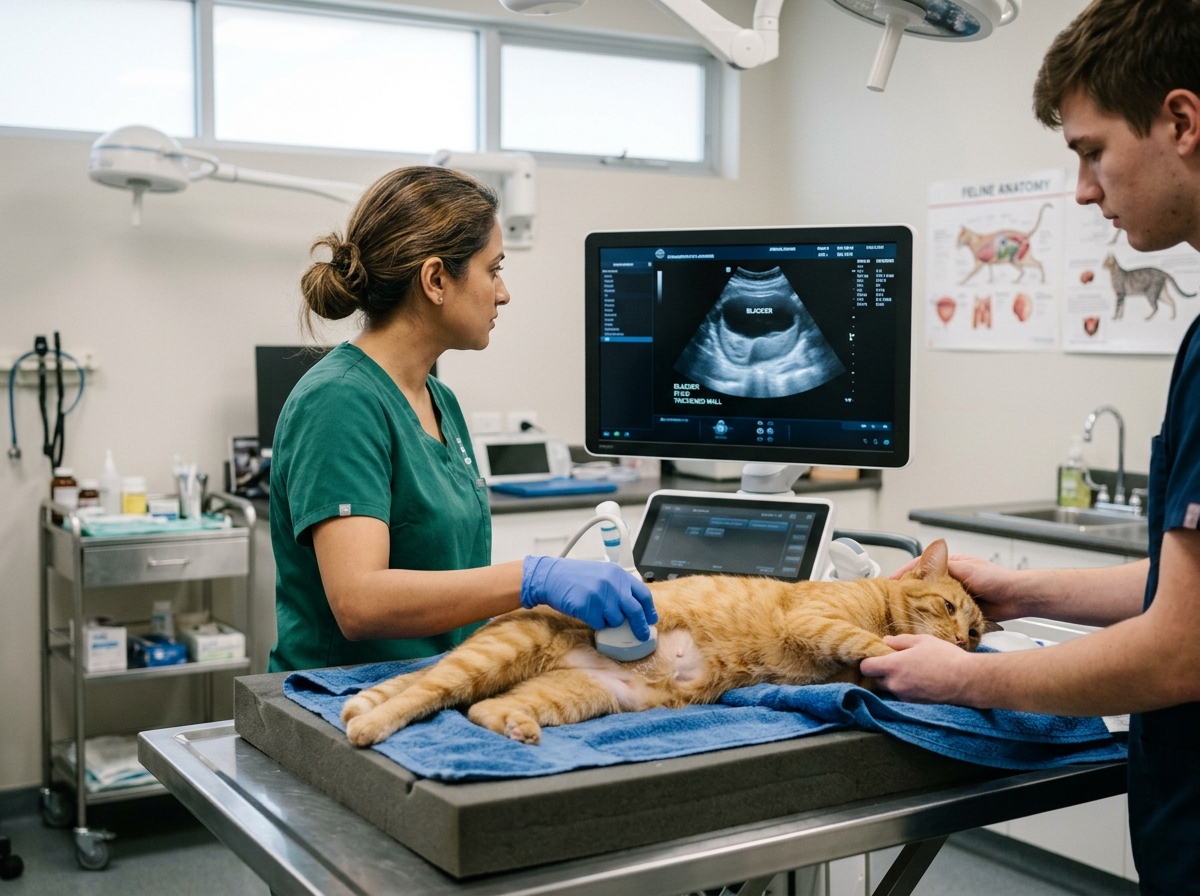
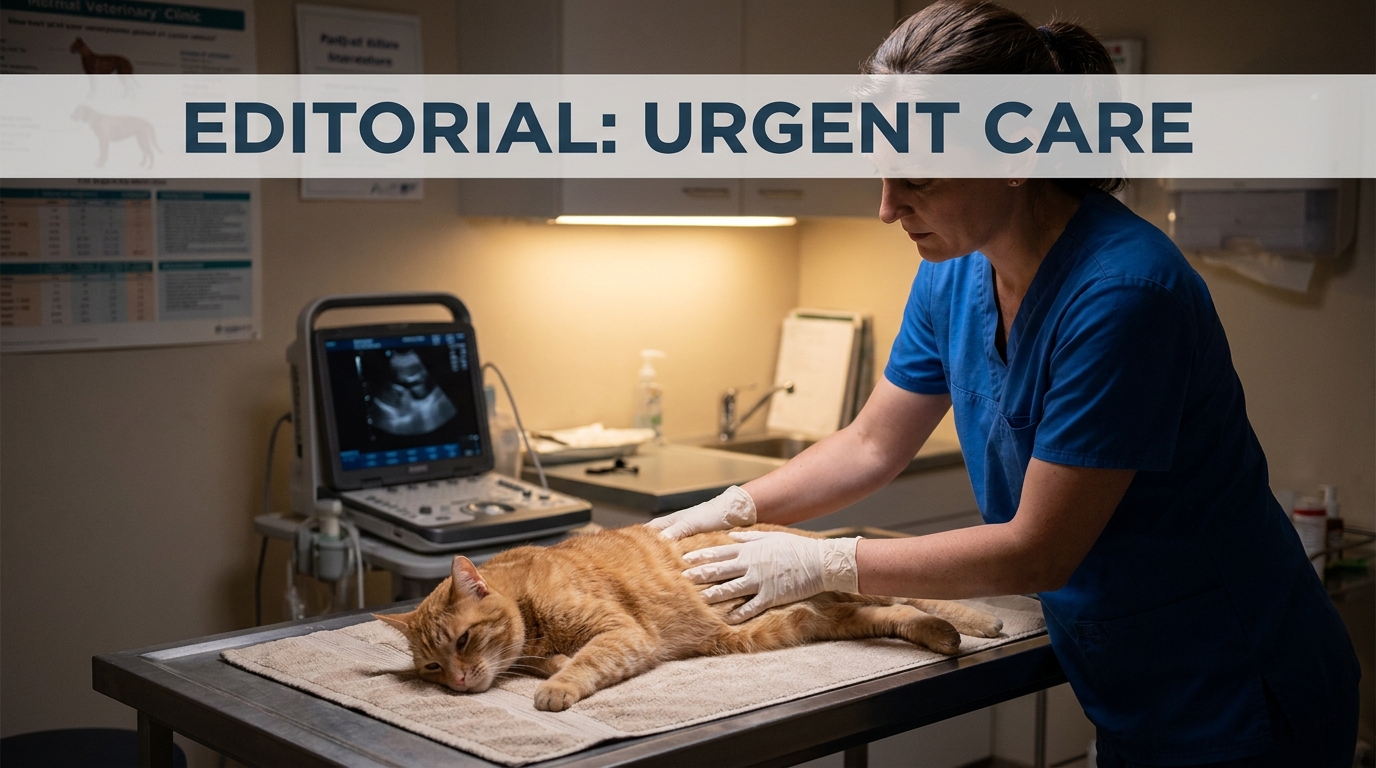
Stabilization. The vet confirms the obstruction by palpating a large, firm, often painful bladder that cannot be expressed. The blood work confirms the metabolic derangement — elevated BUN, creatinine, phosphorus, and potassium. The cat is given IV fluids, a pain medication (usually an opioid like buprenorphine), and a medication to lower the potassium if the potassium is dangerously high. The stabilization takes 30-60 minutes, and the cat is often visibly better by the end of the stabilization.
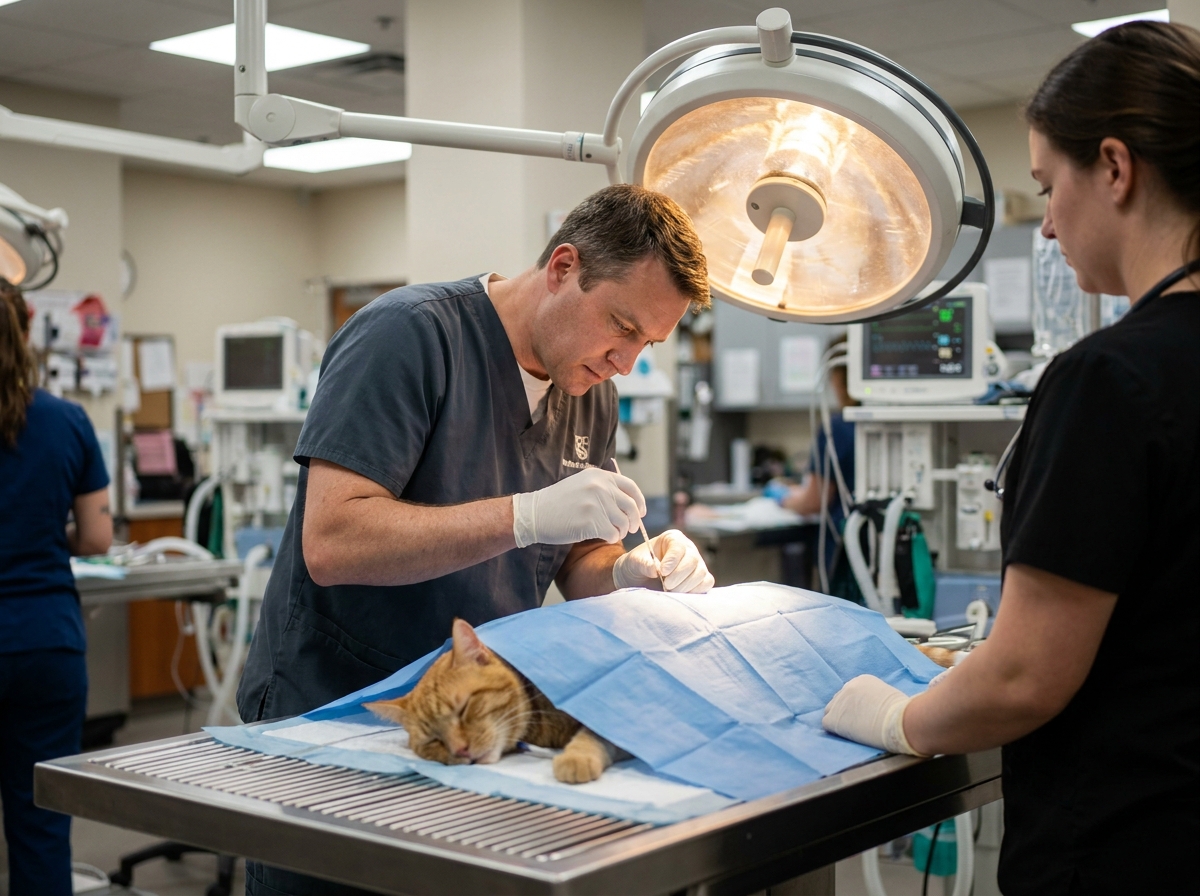
Unblocking. The vet sedates the cat, lubricates the penile urethra, and passes a urinary catheter. The catheter is advanced into the bladder, the plug is dislodged, and the urine drains. The cat is usually dramatically better within minutes of the unblocking — the pain resolves, the cat's heart rhythm normalizes, the cat becomes alert. The catheter is then secured in place and left for 24-72 hours, depending on the severity of the obstruction and the underlying cause.
Hospitalization. The cat is hospitalized for 24-72 hours with the urinary catheter in place, IV fluids to flush the bladder, pain medications, and monitoring of urine output. The blood work is repeated to confirm the metabolic derangement has resolved. The cat that is producing normal urine and is eating well is the cat that is ready for catheter removal and discharge.
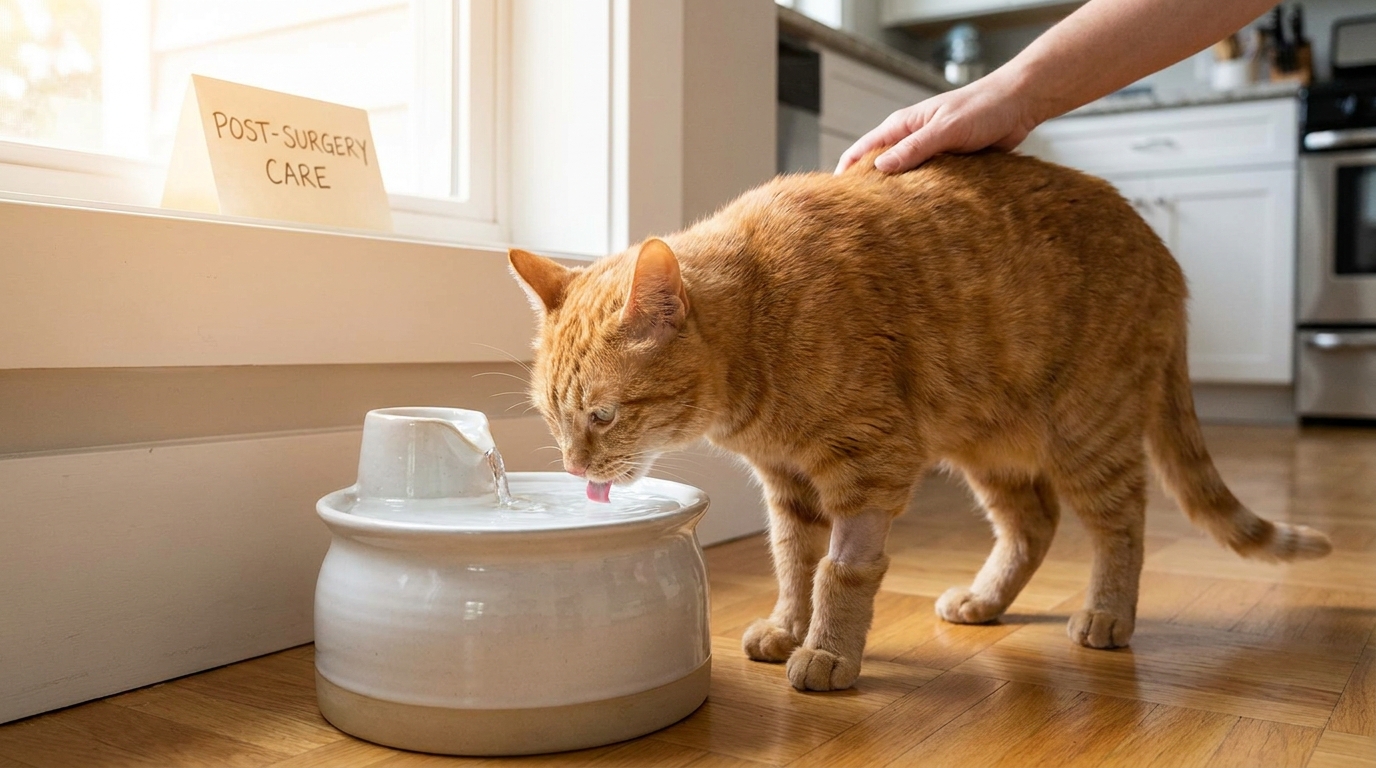
Prevention planning. Before discharge, the vet discusses the prevention plan with the owner. The prevention plan typically includes: a prescription urinary diet (Hill's c/d, Royal Canin Urinary SO, or Purina UR), increased water intake (a water fountain, multiple water bowls, wet food), stress reduction (more resources, more hiding spots, more vertical space), and monitoring for recurrence. The cat that is discharged without a prevention plan is the cat that has a 50-70% chance of re-obstructing within 6-12 months.
The post-obstruction care
The post-obstruction care at home: the prescription urinary diet (no other food, no treats that are not part of the urinary protocol), the increased water intake (the most important intervention), the stress reduction, and the monitoring. The owner should monitor the cat's litter box habits for the first 2-4 weeks after discharge, watching for any signs of straining or reduced urine output. Any sign of recurrence warrants an immediate vet visit.
The cat that has a repeat obstruction despite the prevention plan is the cat that may need a surgical intervention — a perineal urethrostomy (PU), a procedure that shortens the urethra and removes the narrowest part. The PU is a last-resort surgery that is effective but has its own complications (stricture, infection). The PU is not the first choice; the PU is the choice when the prevention plan has failed and the cat is re-obstructing.
The one mistake to avoid
The mistake is waiting. The owner who sees the signs and assumes the cat is "just having a bladder issue" and waits to see if the cat gets better is the owner who loses the 12-hour window. The cat that is seen within 12 hours has a 95% survival rate. The cat that is not seen until 36-48 hours has a 50-70% survival rate. The cat that is not seen until the cat is comatose has a 25-50% survival rate. The difference is the recognition. The owner who recognizes the emergency is the owner who saves the cat.
The single sentence to remember
A male cat that is straining in the litter box and producing nothing is a cat that is 24-48 hours from death. The signs are straining, frequent litter box trips, crying out, bloody urine, hiding, lethargy, vomiting. The first response is recognition and immediate vet visit. The in-hospital protocol is stabilization, unblocking, hospitalization, and prevention planning. The post-obstruction care is the prescription diet, water, stress reduction, and monitoring. The owner who recognizes the signs and acts within 12 hours saves the cat. The owner who waits loses the cat.