

Xylitol toxicity: the dog vs cat difference and the dose that triggers the emergency
Xylitol is a sugar alcohol that is used as a sugar substitute in a wide range of human foods, from sugar-free gum and mints to sugar-free baked goods to peanut butter and other "low-sugar" or "keto" products. Xylitol is safe for human consumption, but xylitol is highly toxic to dogs. The dog that eats a product containing xylitol can develop a life-threatening hypoglycemia (low blood sugar) within 10-60 minutes, and the dog that eats a larger amount can develop a life-threatening liver failure within 24-72 hours. The cat is at lower risk than the dog, but the cat is not at zero risk, and the cat that eats a xylitol-containing product should still be evaluated by the vet. In this article I will walk through what xylitol does in dogs and cats, the dose that triggers the emergency, the products that contain xylitol, the clinical signs, the emergency protocol, and the prevention that every pet owner should have in place.
What xylitol does in dogs
In dogs, xylitol triggers a rapid release of insulin from the pancreas. The insulin release is much more rapid and much more intense than the insulin release triggered by an equivalent amount of sugar, and the result is a rapid and severe drop in the blood glucose. The blood glucose can drop to dangerous levels within 10-60 minutes of ingestion, and the dog can develop hypoglycemia (low blood sugar) that causes weakness, collapse, seizures, and potentially death.
In addition to the insulin release, xylitol can cause liver damage in dogs. The mechanism is not fully understood, but the liver damage can be severe and can be fatal. The liver damage typically develops 12-72 hours after the ingestion, and the dog that survives the initial hypoglycemia can still die of the liver failure.
The dose that triggers the emergency
The dose of xylitol that triggers the hypoglycemia in dogs is approximately 0.1 grams per kilogram of body weight (about 0.04 grams per pound). The dose that triggers the liver damage is approximately 0.5 grams per kilogram of body weight (about 0.2 grams per pound).
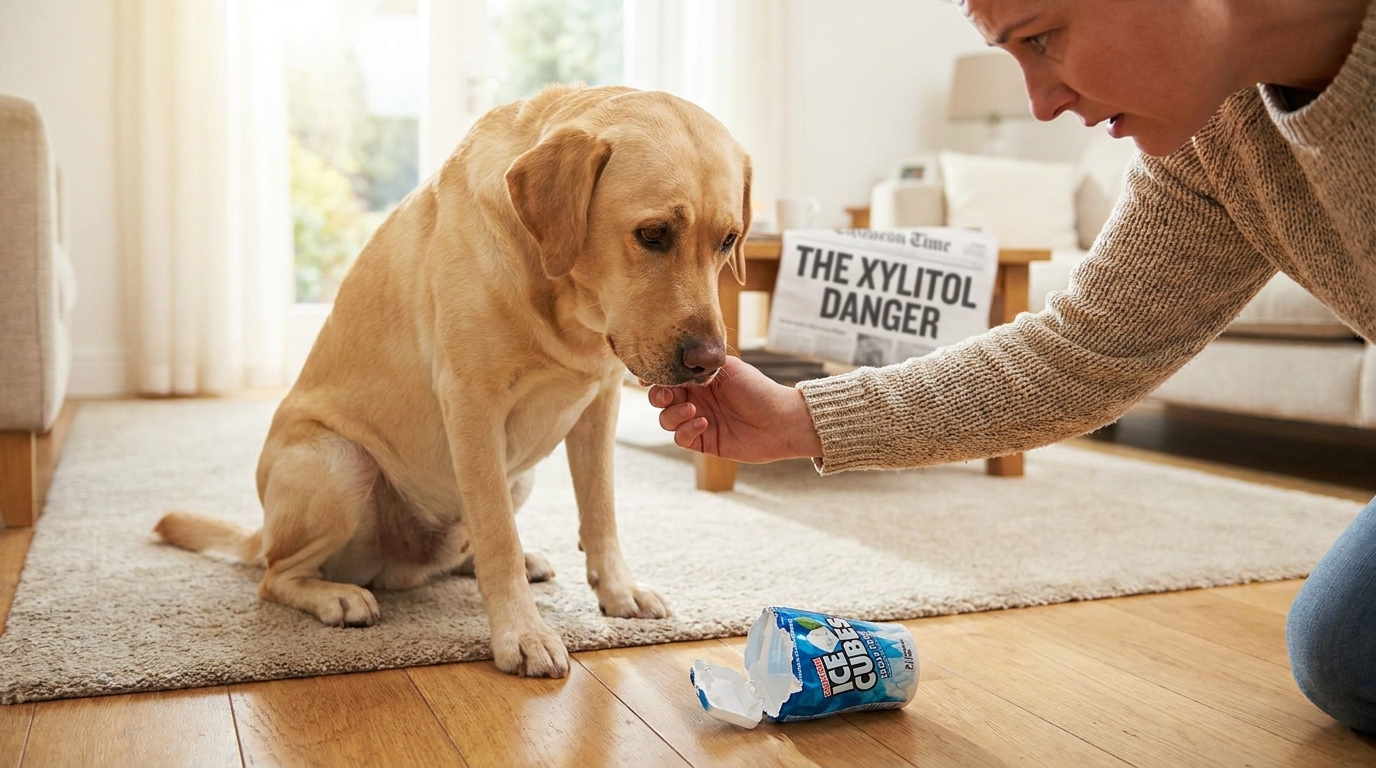
To put this in practical terms: a single piece of sugar-free gum typically contains 0.3-1 gram of xylitol. A 10-pound (4.5 kg) dog that eats a single piece of sugar-free gum containing 0.5 grams of xylitol has ingested approximately 0.11 g/kg, which is just at the threshold for the hypoglycemia. The same dog that eats 3-4 pieces of gum has ingested 0.3-0.4 g/kg, which is at the threshold for the liver damage.
A 50-pound (23 kg) dog that eats 10 pieces of sugar-free gum containing 5 grams of xylitol has ingested approximately 0.2 g/kg, which is above the threshold for the hypoglycemia. The same dog that eats 20 pieces of gum has ingested approximately 0.4 g/kg, which is approaching the threshold for the liver damage.
What xylitol does in cats
Cats are at lower risk than dogs, and the reason is not fully understood. The hypothesis is that cats have a different insulin response to xylitol, and the cats' insulin release is not as rapid or as intense as the dogs' insulin release. The published cases of xylitol toxicity in cats are rare, and the cats that have been reported have typically had mild or no clinical signs.
The lower risk does not mean zero risk. The cat that eats a large amount of xylitol can develop hypoglycemia, and the cat that eats an extremely large amount can develop liver damage. The cat owner should treat any xylitol ingestion as a potential emergency and should contact the vet or the animal poison control center for guidance.
The products that contain xylitol
The xylitol is in a wide range of human products, and the product list has expanded significantly in the last decade. The most common products:
- Sugar-free gum and mints (Trident, Orbit, Ice Breakers, Altoids, etc.) — the most common source of xylitol toxicity in dogs.
- Sugar-free baked goods (cookies, cakes, muffins, pancake syrup) — the second most common source.
- Sugar-free candy and chocolate (Russell Stover sugar-free chocolates, Lily's chocolate, etc.) — the third most common source, with the added risk of chocolate toxicity.
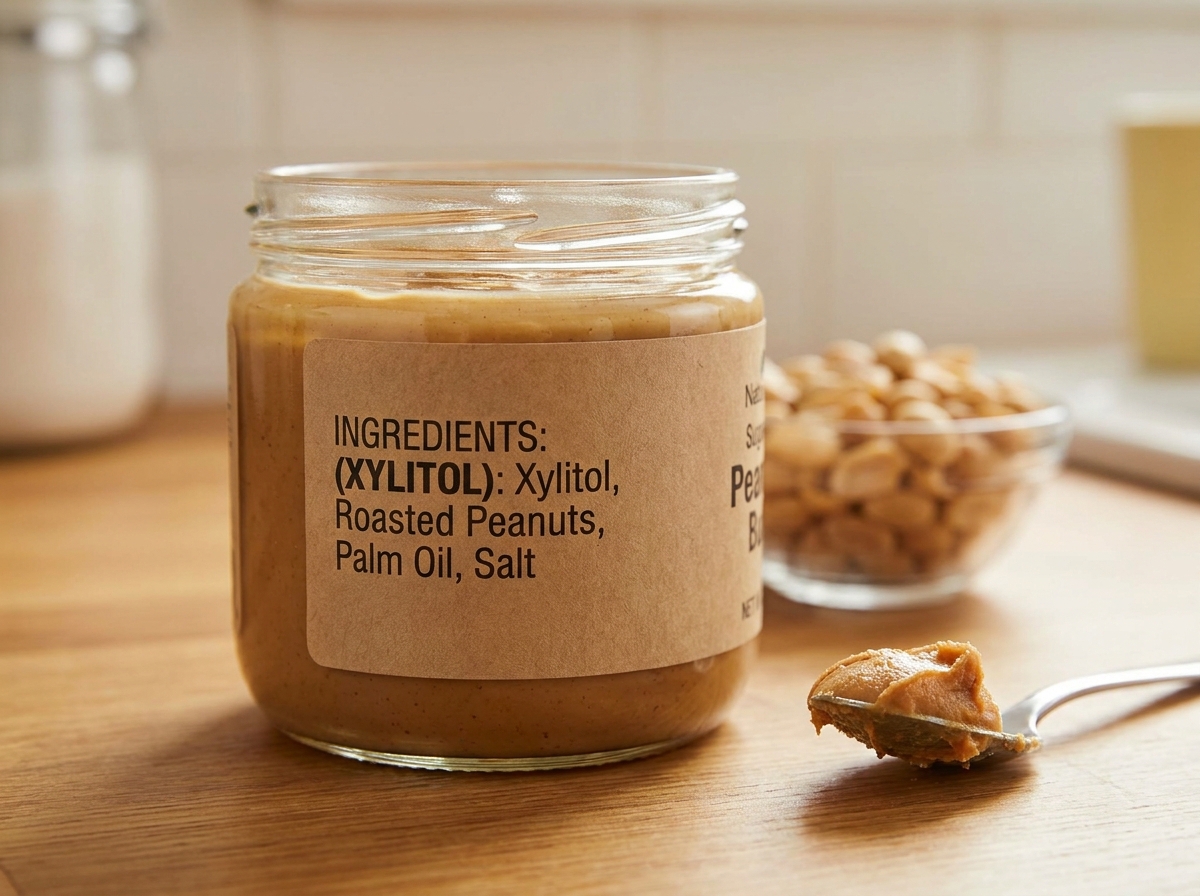
- Sugar-free peanut butter (PBfit, Pyure, and many "keto" peanut butter brands) — a recently identified source, particularly dangerous because the peanut butter is often used as a treat or a pill pocket for dogs.
- Sugar-free jam, jelly, and preserves — less common but possible.
- Toothpaste, mouthwash, and other oral care products — the original source of xylitol, less common as a toxicity source now.
- Sugar-free ice cream, yogurt, and pudding — less common.
- Some chewable vitamins and supplements — check the label.
The pet products that contain xylitol are rare. Some pet dental chews and some pet toothpastes contain xylitol, and the pet products that contain xylitol are safe for pets at the recommended doses (the dental benefit outweighs the low xylitol content).
The clinical signs
The clinical signs in dogs: the signs appear within 10-60 minutes of the ingestion. The early signs are vomiting, lethargy, weakness, and incoordination. The progressive signs are collapse, tremors, and seizures. The signs that the dog is in severe hypoglycemia include pale gums, dilated pupils, and a slow heart rate. The signs that the dog is developing liver damage appear 12-72 hours later, and include jaundice (yellowing of the gums and the whites of the eyes), vomiting, diarrhea, and lethargy.
The clinical signs in cats: the signs are similar but less common. The early signs are vomiting and lethargy. The progressive signs are incoordination and collapse. The signs of liver damage are similar to the dogs.
The emergency protocol
The dog or cat that is known or suspected to have eaten a xylitol-containing product: call the vet or the animal poison control center (ASPCA Animal Poison Control Center: 888-426-4435, fee may apply) immediately. The vet or the poison control will calculate the dose based on the amount ingested and the pet's weight, and will advise on whether the pet needs to be seen immediately or can be monitored at home.
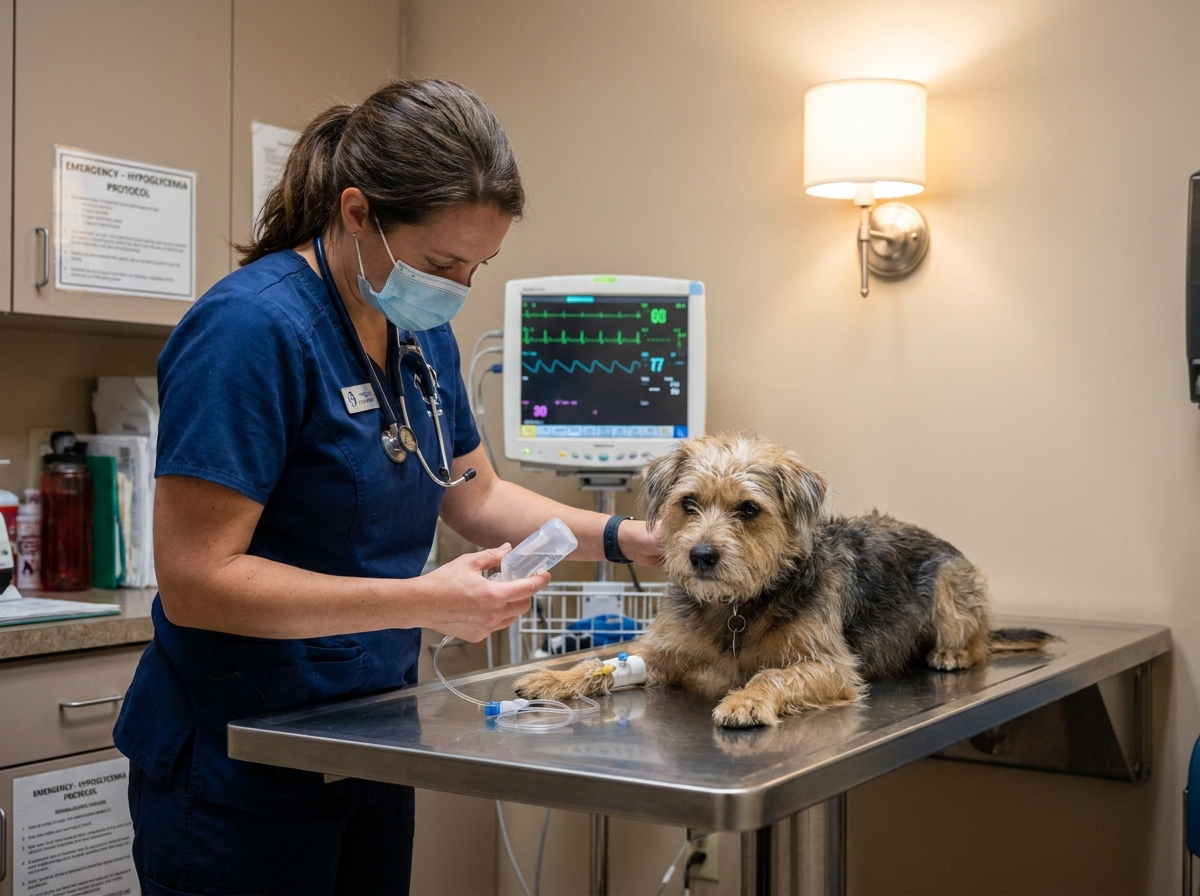
The dog or cat that needs to be seen immediately: the dog or cat that has ingested a dose above the hypoglycemia threshold (0.1 g/kg for dogs, 0.5 g/kg for cats) should be seen by the vet within 1-2 hours of the ingestion. The vet will induce vomiting (if the ingestion was within the last 30-60 minutes), check the blood glucose, and start IV dextrose if the blood glucose is low. The dog that is showing clinical signs should be seen immediately, regardless of the dose.
The dog or cat that is showing clinical signs: the dog or cat that is showing signs of hypoglycemia should be given a sugar source (a sugar cube, honey, or Karo syrup) on the way to the vet. The sugar is absorbed through the gums and can raise the blood glucose within minutes. The sugar is not a substitute for the veterinary care, but the sugar is a bridge that can buy time until the vet is reached.
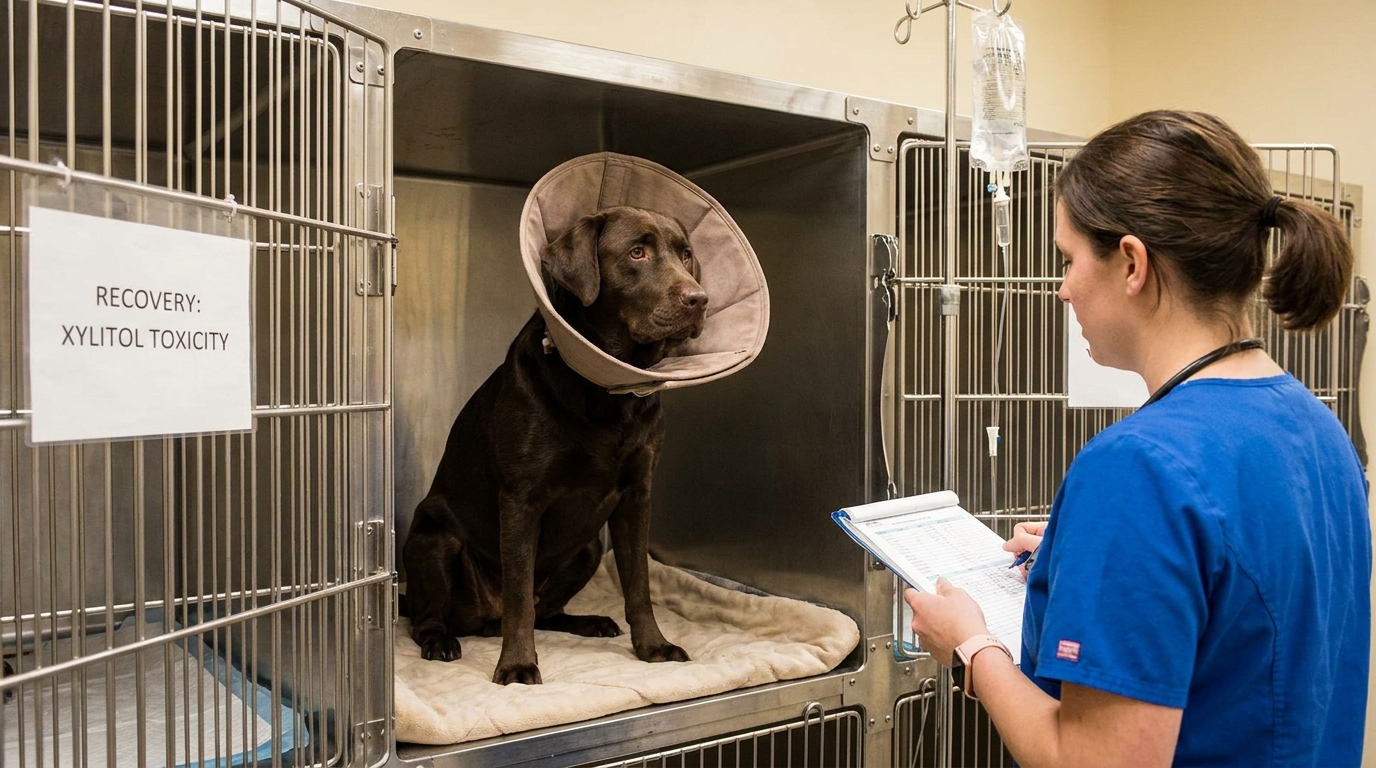
The monitoring after the ingestion: the dog or cat that has ingested a dose below the threshold can be monitored at home for 24-72 hours, with the owner watching for any clinical signs. The dog that has ingested a dose above the threshold should be monitored at the vet for 12-24 hours, with the blood glucose and the liver enzymes checked at 12 and 24 hours.
The prevention
The prevention is straightforward: keep all xylitol-containing products out of the pet's reach. The products should be stored in closed cabinets, not in open bowls on the counter. The trash should be in a closed bin, not in an open basket. The purse should be in a closed closet, not on the floor. The dog or cat that is known to raid the counter or the trash should be managed more carefully, with the products stored in the refrigerator or in a locked cabinet.
The pet owner should also check the labels of the products they buy, particularly the "keto" and "low-sugar" products, for xylitol. The ingredient list should be checked before the product is brought into the home, and the product should not be brought into the home if it contains xylitol and the home has a dog that is known to raid the counter.
The one-page summary
Xylitol is highly toxic to dogs, and a single piece of sugar-free gum can trigger a life-threatening hypoglycemia in a small dog. The dose that triggers the emergency: 0.1 g/kg for hypoglycemia, 0.5 g/kg for liver damage. The products: sugar-free gum, mints, baked goods, candy, peanut butter. The clinical signs: vomiting, lethargy, weakness, collapse, seizures. The emergency: induce vomiting if within 30-60 minutes, IV dextrose, monitor blood glucose and liver enzymes for 12-72 hours. The prevention: keep xylitol products out of reach, check labels, store in closed cabinets. The owner who knows the risk and takes the prevention is the owner whose dog is safe. The owner who does not know the risk is the owner whose dog is at risk. The knowledge is the work. The knowledge is what saves the dog.