
Multi-cat resource math: the N+1 rule in practice
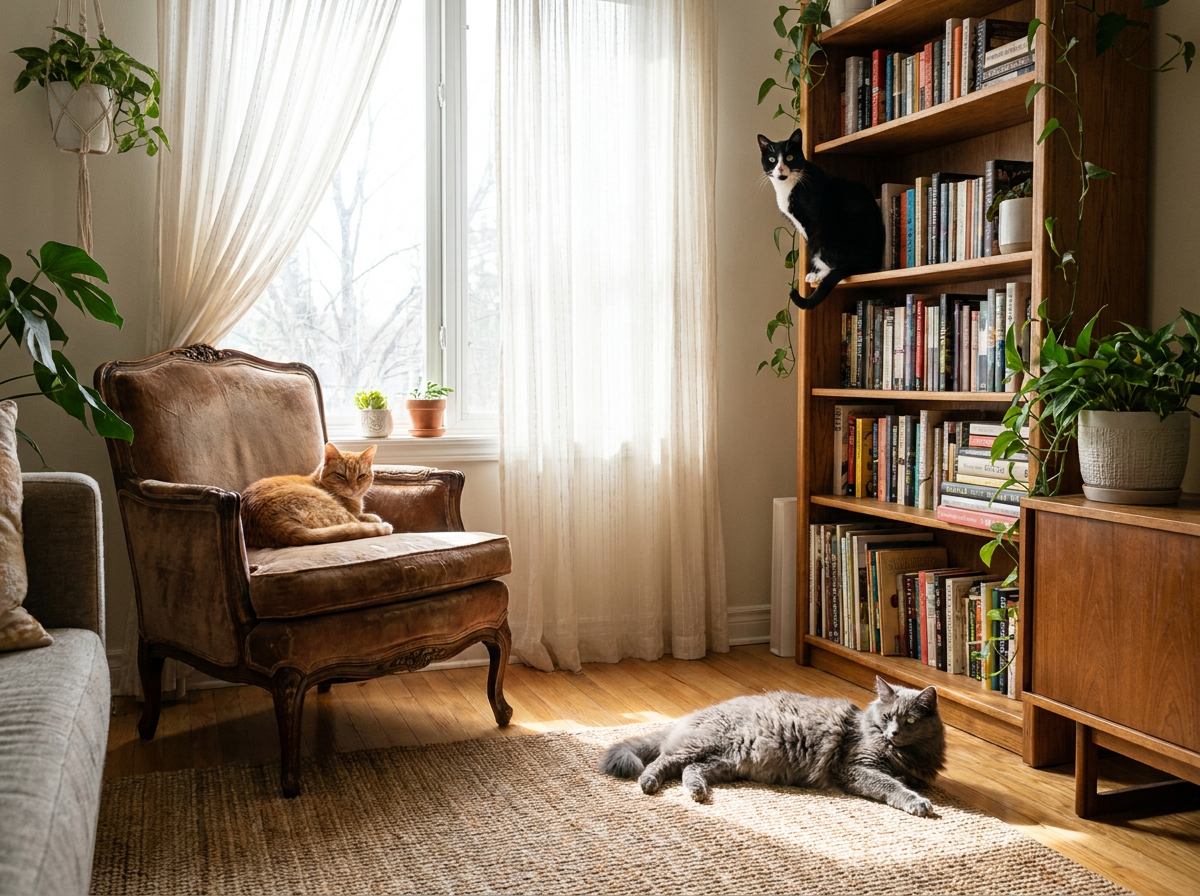
The photo on the owner's phone always looks the same. Two cats on the same windowsill. Two cats asleep, foreheads touching, in afternoon sun. The owner shows me the photo and says, "See? They love each other." I see the photo and start counting.
Not affection. I am auditing resources.
Cats are not pack animals. They are solitary survivors who, under specific conditions, tolerate other cats. The conditions have very little to do with love and almost everything to do with whether each cat can find what it needs without crossing the path of another. When the conditions are met, the photo looks like love. When they are not, the same cats start guarding the hallway, ambushing the litter box, or peeing on the duvet.
That gap between the photo and the reality is what the N+1 rule was designed to close. And in most multi-cat homes I walk into, it is closed by accident, not by design.
What the N+1 rule actually says
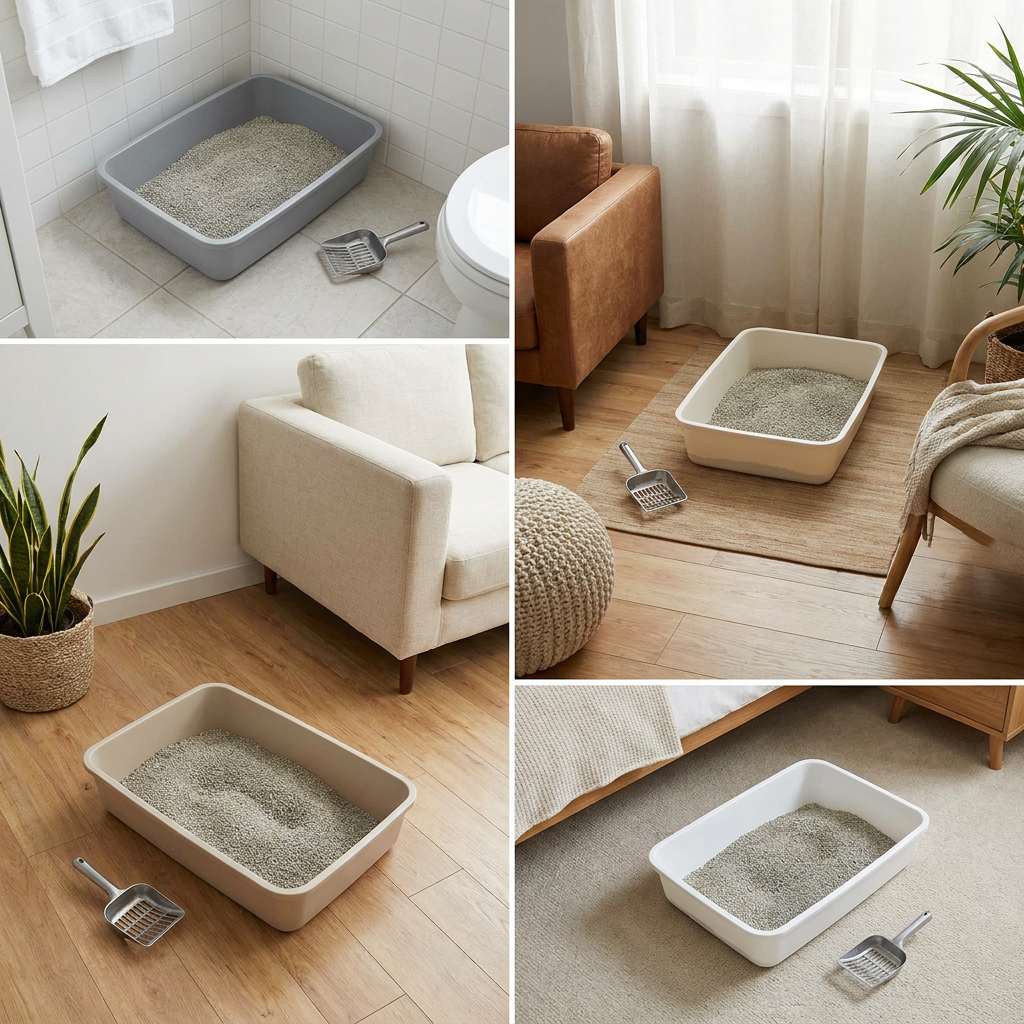
For a household with N cats, you provide N + 1 of every important resource. Two cats: three litter boxes, three feeding stations, three water stations, three resting perches, three scratch posts, three hiding spots. Three cats: four of each. Four cats: five. The "+1" is the buffer — the reason a cat never has to wait for the other cat to finish using the only thing the other cat has.
The rule is not a slogan. It comes from applied animal behavior work going back to the 1990s and the earlier ethological observations of Paul Leyhausen on feline social structure. What Leyhausen observed in feral colonies was that cats who share a territory do so by partitioning resources across space and time. They do not queue. They do not take turns. They simply have enough places, enough pathways, enough options, that conflict becomes unnecessary.
The indoor multi-cat home is a manufactured colony. We control every variable. Most of us, without meaning to, recreate the scarcity.
The behavioural cues owners miss
Before I count a single litter box, I ask the owner to watch for two weeks. Not for fights — fights are the loud failure mode and the easy one to spot. I ask them to watch for the quiet ones. The cues that say one of your cats is managing the other:
- The hallway ambush. One cat sits at the threshold between rooms. The other waits at the far end, then turns around. The blocked cat does not look scared. The blocked cat looks patient. Patience is the giveaway.
- The bowl hover. One cat eats, finishes, walks away. The other waits until the first is two rooms away before approaching. Sometimes the second cat does not approach at all and goes to the kitchen tap. Owners read this as "the shy one is just shy." The shy one has been displaced at the bowl enough times to give it up.
- The litter box detour. Two cats, one litter box. Cat A uses it. Cat B sniffs the entrance, walks away, and eliminates on the bath mat an hour later. Cat B's bladder is fine. Cat B has decided the box is not currently available and invented a new bathroom.
- The perch swap. One cat claims the top of the cat tree. The other sleeps on the arm of the sofa, on the floor, on the back of a chair — anywhere except the perch it would prefer. The subordinate cat has ranked every surface in the house and selected the safest one, not the best one.
- The 3 a.m. yowl. A cat blocked from resources during the day sometimes announces its frustration at night. Owners assume the cat is lonely, or anxious. Sometimes it is simply the household's pressure valve.
None of these is dramatic. None of them looks like a "behavior problem." All of them are.
What owners count (and what they don't)
When I ask owners to list their resources, here is what I usually hear:
"Two litter boxes. Two food bowls. Two water bowls. One cat tree. Two beds."
Two cats, N+1 says three of each. They have two of everything. Almost every line item is short by one. The owner is usually surprised — sure the cats have "plenty."
The harder part of the audit is the resources that don't appear on the list:
- Pathways, not just perches. A cat tree is one resource. The path from the tree to the litter box, without crossing the line of sight of the dominant cat, is another. In a small apartment the path might be the back of the sofa, the top of a bookshelf, a ledge above the doorway. If the path requires the cat to cross open floor in front of the dominant cat, the subordinate cat simply will not use the upstairs box.
- Scent-distinct resting spots. A cat who has slept in one place for three weeks has marked it. Another cat sleeping there mixes scents, and one of the two finds it unacceptable. Three resting spots in three different rooms — not three beds in a row — gives each cat a scent-distinct territory within the shared one.
- Water, far from food. This is the one owners almost always miss. Cats in the wild drink away from where they eat, because water near a kill is contaminated. The instinct is ancient. A bowl three feet from the food bowl is, to the cat, a water bowl that is not safe. A second station in a different room often produces a quiet increase in water intake — sometimes enough to matter medically, especially for the cat who is borderline urinary.
A real home, before and after
Two cats, Mika (4, female, confident) and Soren (7, male, retired stud, calm but easily displaced). Two litter boxes in the same bathroom. Two bowls side by side. One cat tree in the living room. The cats "got along" — slept at opposite ends of the same bed, touched noses in the morning, never had a fight in seven years.
The complaint was not a fight. Soren had started peeing on the guest bed, twice a month, for three months. Vet workup: clean.
I watched the apartment for an afternoon. Mika ate first, finished, walked to the cat tree, sat on the top platform. Soren finished after, walked toward the tree, looked up at Mika, and detoured to the armchair. Mika did not hiss. Mika simply was on the perch, and Soren read the perch as occupied. Same pattern with the boxes. Mika used the master bathroom box in the morning. Soren used the guest bathroom box in the evening. Twice a month Soren needed the master box at 11 p.m. — and Mika was on the bed, in the doorway, between Soren and the box. Soren went to the guest bed instead.
The fix was N+1, applied to every line item. A third litter box in the laundry room, with a low-entry cut for Soren's older hips. Bowls separated to opposite ends of the kitchen counter. A second cat tree in the bedroom, taller than the living-room one, positioned so Soren could reach it from the bed without touching the floor. Two water stations. A scratch post beside each tree.
Within three weeks the incidents stopped. Within two months Soren was using the top platform of the bedroom tree more often than the armchair — the perch he had actually wanted all along.
The relationship did not change. The resources did. That was enough.
The 30-day audit: an evidence-rooted plan
If you are auditing a multi-cat home, here is the order I suggest. Print it. Tape it to the fridge.
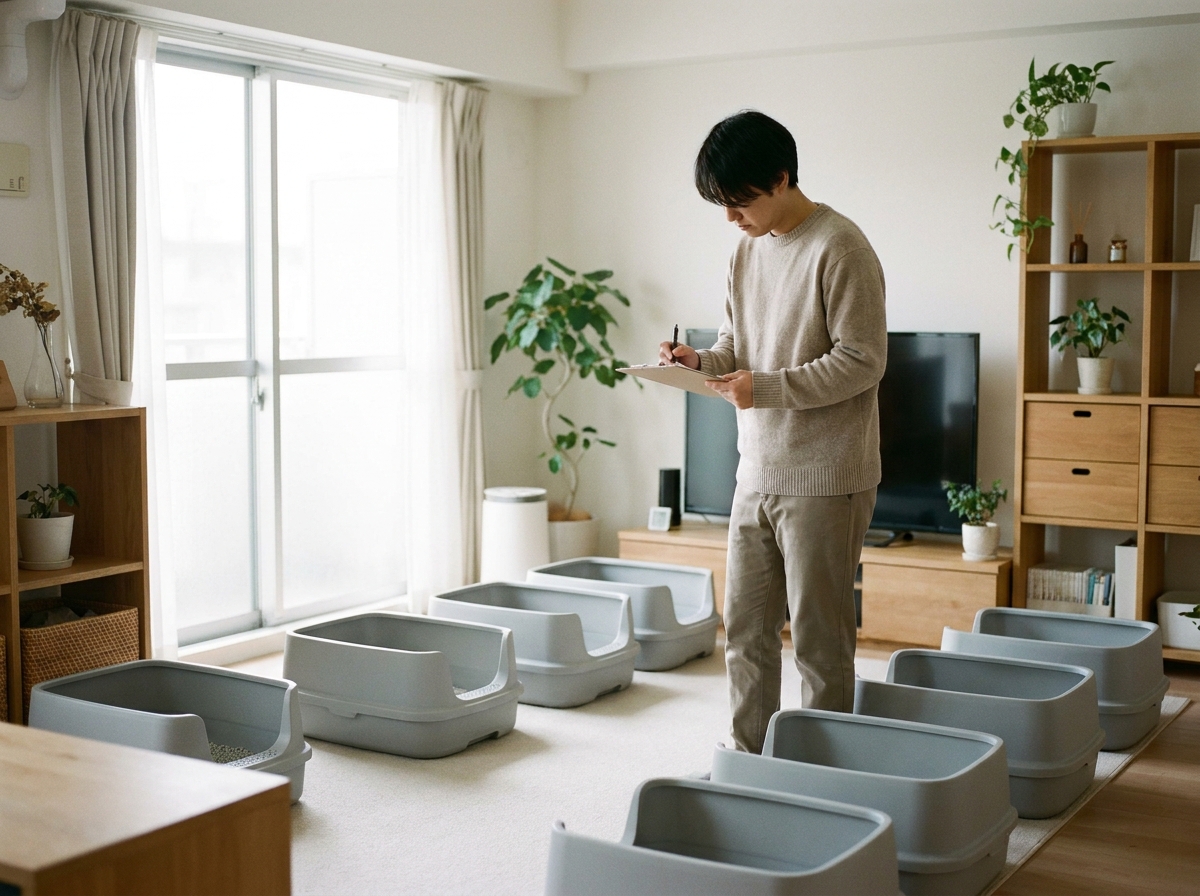
Week 1 — count, don't change. Walk through the home with a notebook. For each resource — litter boxes, food bowls, water bowls, scratch posts, beds, perches, hiding spots — write the number and the location. Compare to N+1. Most homes come up two to four resources short.
Week 2 — separate, don't add. Before buying anything, move what you already have. The two bowls that are side by side go to opposite ends of the kitchen. The two litter boxes in the same bathroom go to different rooms. The cat tree moves from the centre of the living room to the corner near a window. You will see changes in the cats within days. This is your baseline data.
Week 3 — fill the gaps. Buy what you actually need. A third litter box (large, open-top, unscented clumping). A second cat tree, taller than the first, in a different room. A second scratch post, vertical or horizontal depending on what your cats already use. A third water station. Two or three new beds, placed where the cats actually sleep.
Week 4 — observe, refine. Watch for the cues above. Is the subordinate cat using the upstairs box? Is the dominant cat still guarding the perch? Has the 3 a.m. yowling changed? Tweak. N+1 is a relationship to maintain, not a number to hit once.
When the math is right and the cats still struggle
If you have done the audit, separated the resources, added the spares, given it four to six weeks, and the conflict continues, the cause is usually one of three things:
- A medical issue in one cat. Pain makes cats irritable. Arthritis, dental pain, hyperthyroidism, even a healing wound can shift a tolerant cat into a defensive one. Vet check first, always.
- A history the resources cannot fix. Two cats forced to share a small space before they had a choice — a rescue pairing, a rehome into an existing cat's territory — sometimes carry a resentment no amount of cat trees will resolve. These cases need a slower reintroduction, often with an in-person consultant.
- An undersized territory. A 40-square-metre apartment with five cats is not under-resourced; it is over-catted. No formula fixes that. The honest answer is sometimes that the household has more cats than the household can support.

The simplest version
Cats do not need love from each other. They need options. The N+1 rule is the formula for options — one resource per cat, plus one extra, across every category, in different rooms, without a dominant cat between the subordinate cat and the thing it needs. Give it a month, and the photo of the two cats on the windowsill starts to mean what you thought it meant. They will not be tolerating each other. They will be choosing each other. That is the difference between a household that works and one that merely looks like one.