
Multi-cat resource math: the N+1 rule in practice for households with two or more cats
The single most common reason for inter-cat aggression, inappropriate urination, hiding, and weight loss in multi-cat homes is not the cats themselves, and not "they just don't get along." It is too few resources in too small a space. The cats are not fighting because they hate each other; the cats are fighting because there is not enough to go around, and the social tension is the result. The fix is the N+1 rule: for every resource that matters to a cat, the household should have one more of that resource than the number of cats. Two cats means three litter boxes. Three cats means four food stations. Four cats means five scratching posts. The math is simple, and the math works. In this article I will walk through what counts as a resource, how to apply the N+1 rule to each resource category, the spacing and placement rules that make the math work in practice, and the behavior changes that should appear within 2-4 weeks of a properly resourced multi-cat household.
What counts as a resource
Cats have a specific list of resources that they consider essential. The list, in order of how often cats fight over them: litter boxes, food stations, water stations, resting spots, scratching posts, vertical space (cat trees, shelves, perches), hiding spots, and play opportunities. Each resource on the list has a specific function in the cat's life, and each resource that is missing or insufficient produces a specific behavioral problem. The house that has enough litter boxes but not enough food stations has a litter box problem that is hidden and a food station problem that is visible. The owner who fixes only the visible problem has not understood the resource model.
The most important resources are the ones that the cat cannot share without conflict. Food and water are shareable to a point — many cats will eat side by side, and many cats will drink from the same water bowl. Litter boxes are not shareable, ever, in the cat's mind. A litter box that has been used by another cat is, to the cat, contaminated, and the cat will find an alternative location if the contaminated box is the only option. Resting spots are conditionally shareable, depending on the relationship between the cats. Vertical space is shareable if there is enough of it, and the cat that does not have vertical space is the cat that is on the floor, where it feels vulnerable.
The N+1 rule, by resource
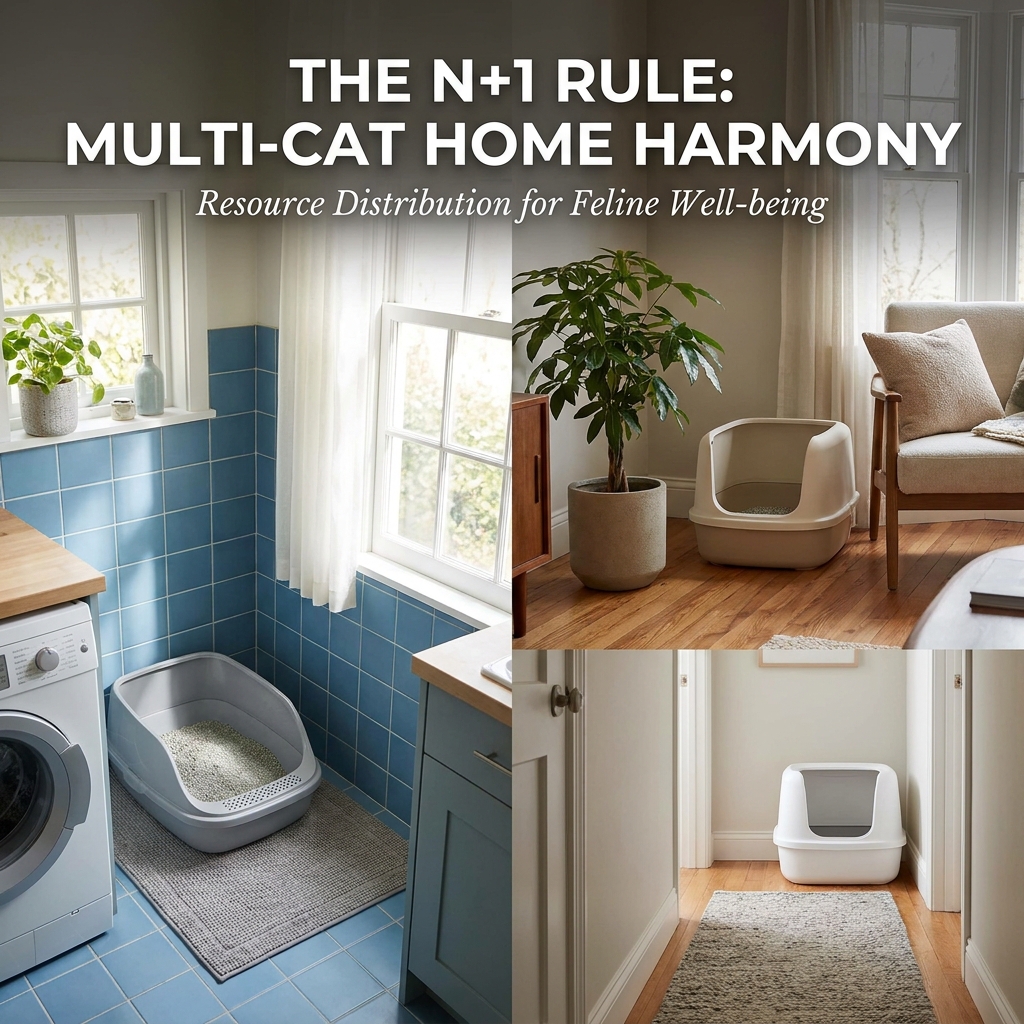
Litter boxes: the most important resource, and the one with the highest incidence of conflict. The rule: N+1 boxes, where N is the number of cats. Two cats means three boxes. Three cats means four boxes. Four cats means five boxes. The boxes should be distributed across the house, not all in one room. The boxes should be in different rooms or different floors, so a cat in one room can always reach a box without encountering the cat that is blocking access. The rule of thumb: no two boxes should be in the same room; a box should be available on every floor of the house that the cats have access to; a box should be in a low-traffic area where the cat is not likely to be ambushed by another cat while using it.
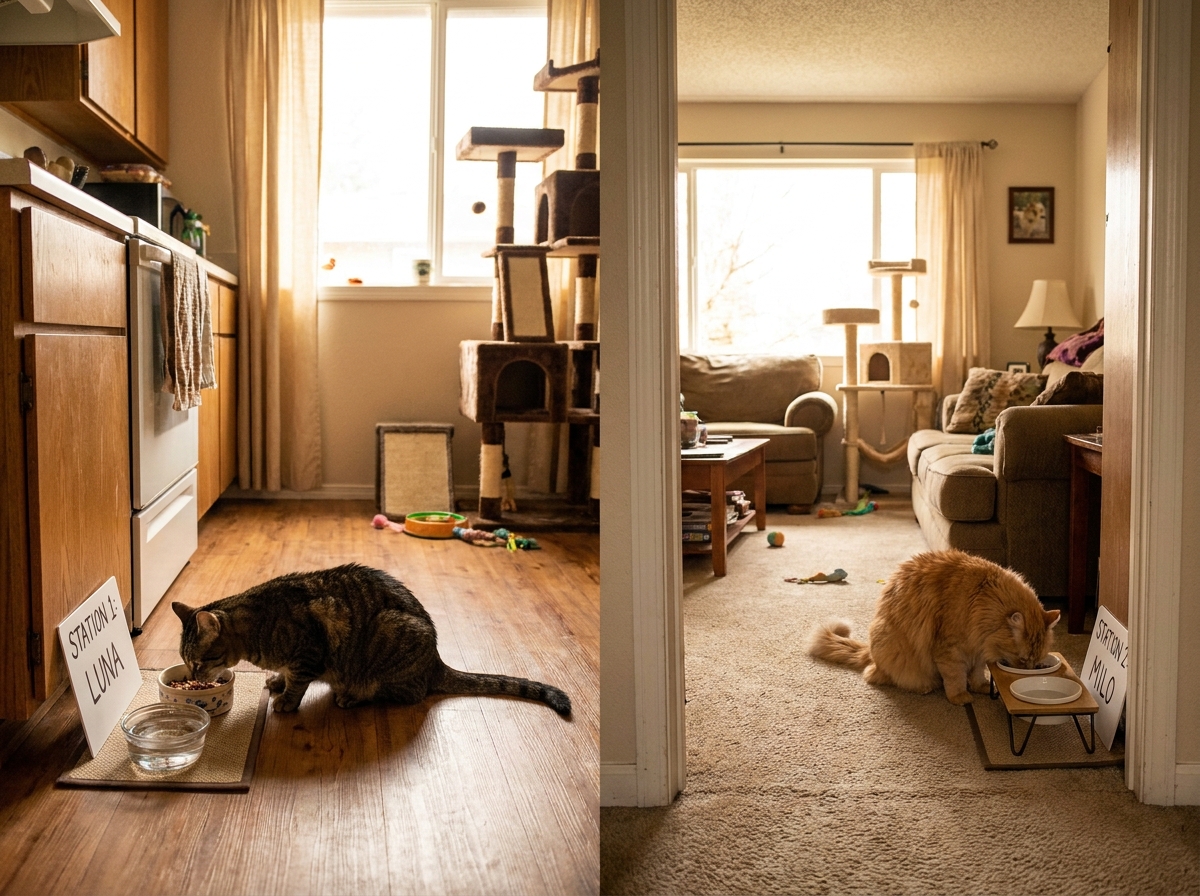
Food stations: the rule is N+1, but the spacing rule is more important. Each food station should be in a separate room or a separate floor. The cat that eats in the same room as another cat is a cat that is eating in a competitive environment, and the cat that is eating in a competitive environment is a cat that is eating faster and is more stressed. The cat that has its own quiet feeding spot is a cat that eats calmly, digests properly, and maintains a healthy weight. The food stations should be at floor level (cats do not naturally eat from elevated bowls, despite the marketing of "elevated cat bowls"). The food should be measured and refreshed daily; a bowl of stale kibble is not a resource, it is a signal that the food station is not a priority.
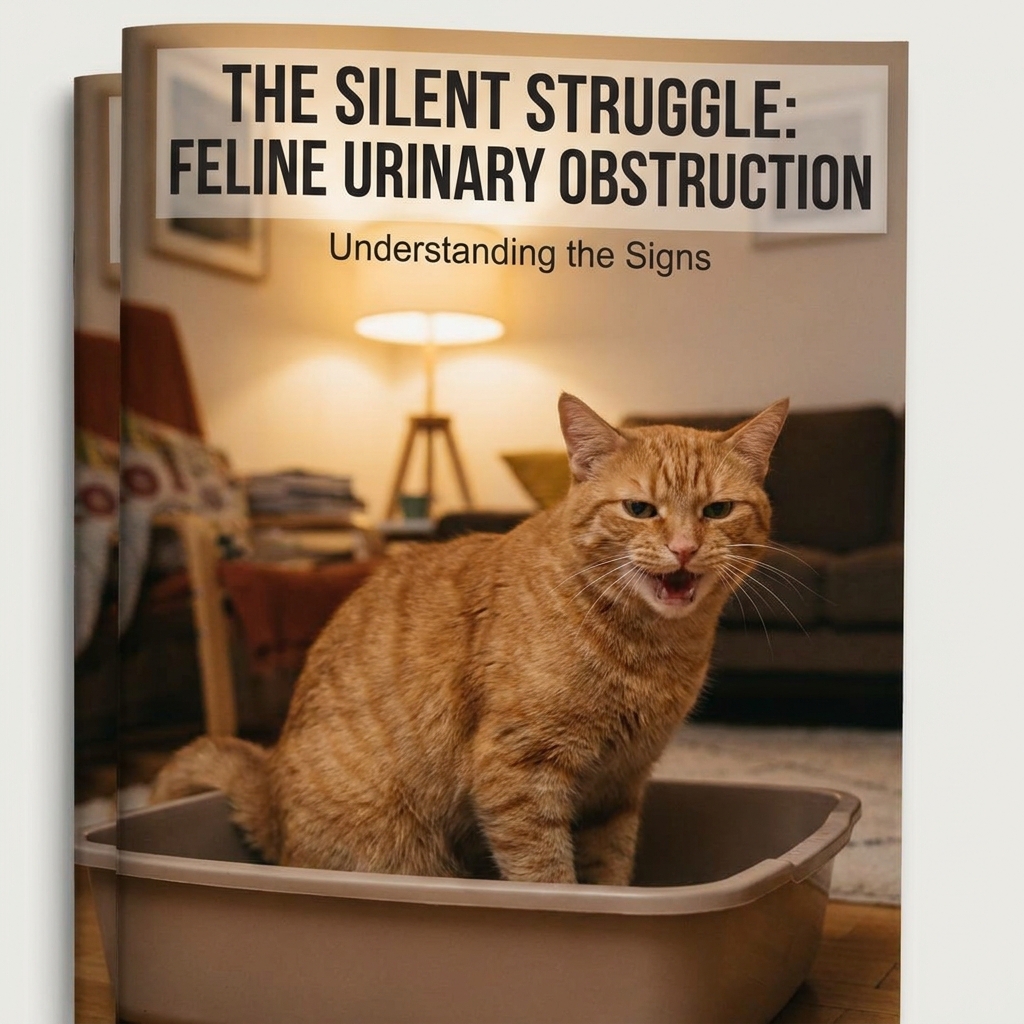
Water stations: N+1, same spacing as food. The water stations should be in different rooms from the food stations. The cat that has to choose between eating near the food bowl and drinking from a separate water bowl is a cat that will often under-drink. The under-drink is a major contributor to urinary tract disease in cats, particularly in male cats. The water should be fresh, changed daily, in a wide bowl (cats do not like to drink from narrow bowls that touch their whiskers). A water fountain is an option for cats that prefer moving water, but the fountain should be in addition to a regular bowl, not in place of it.
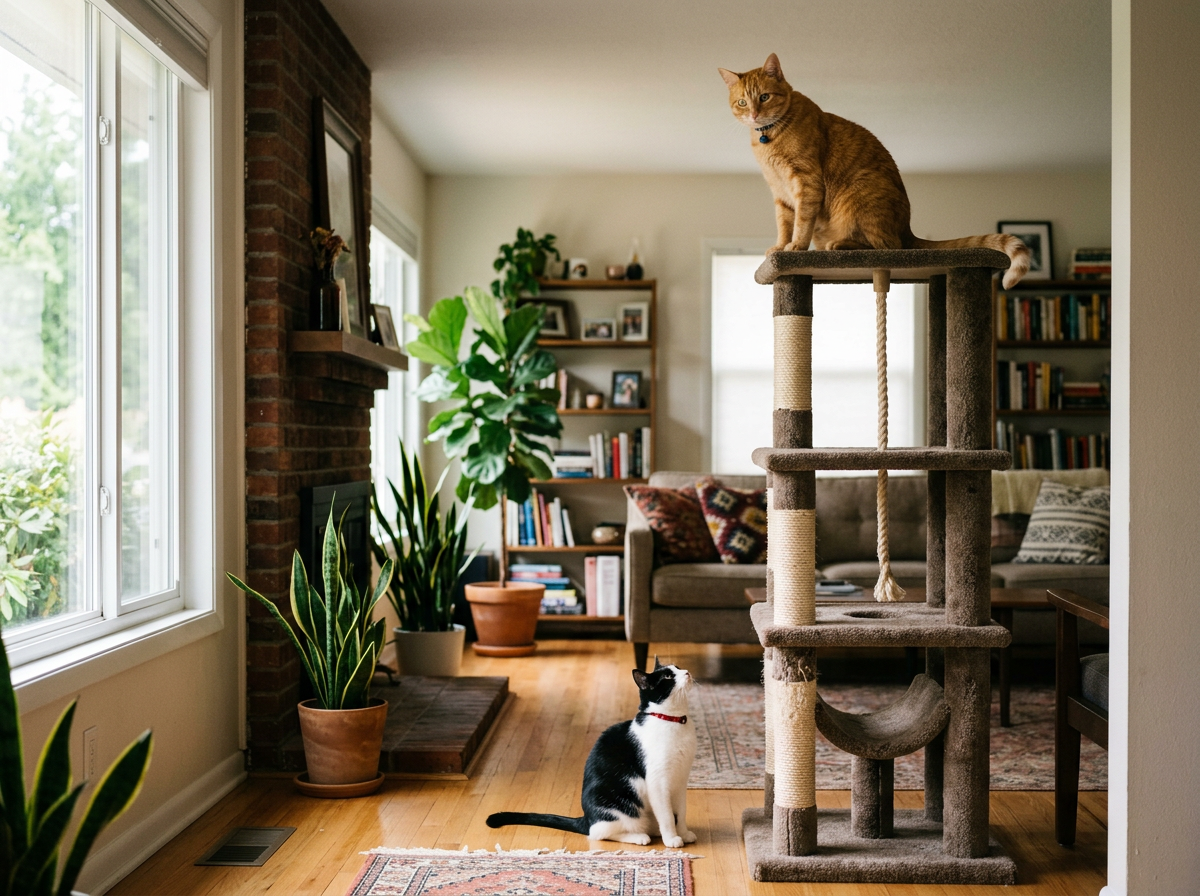
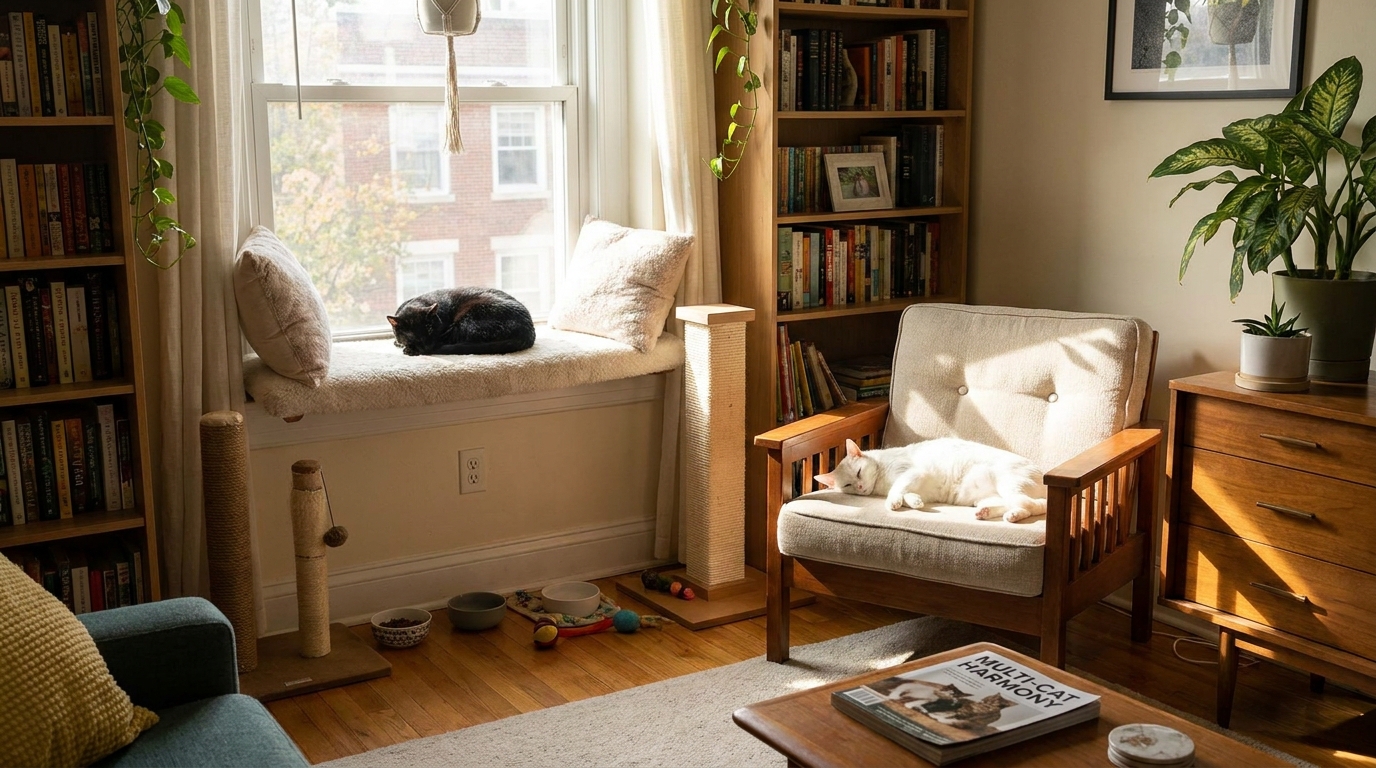
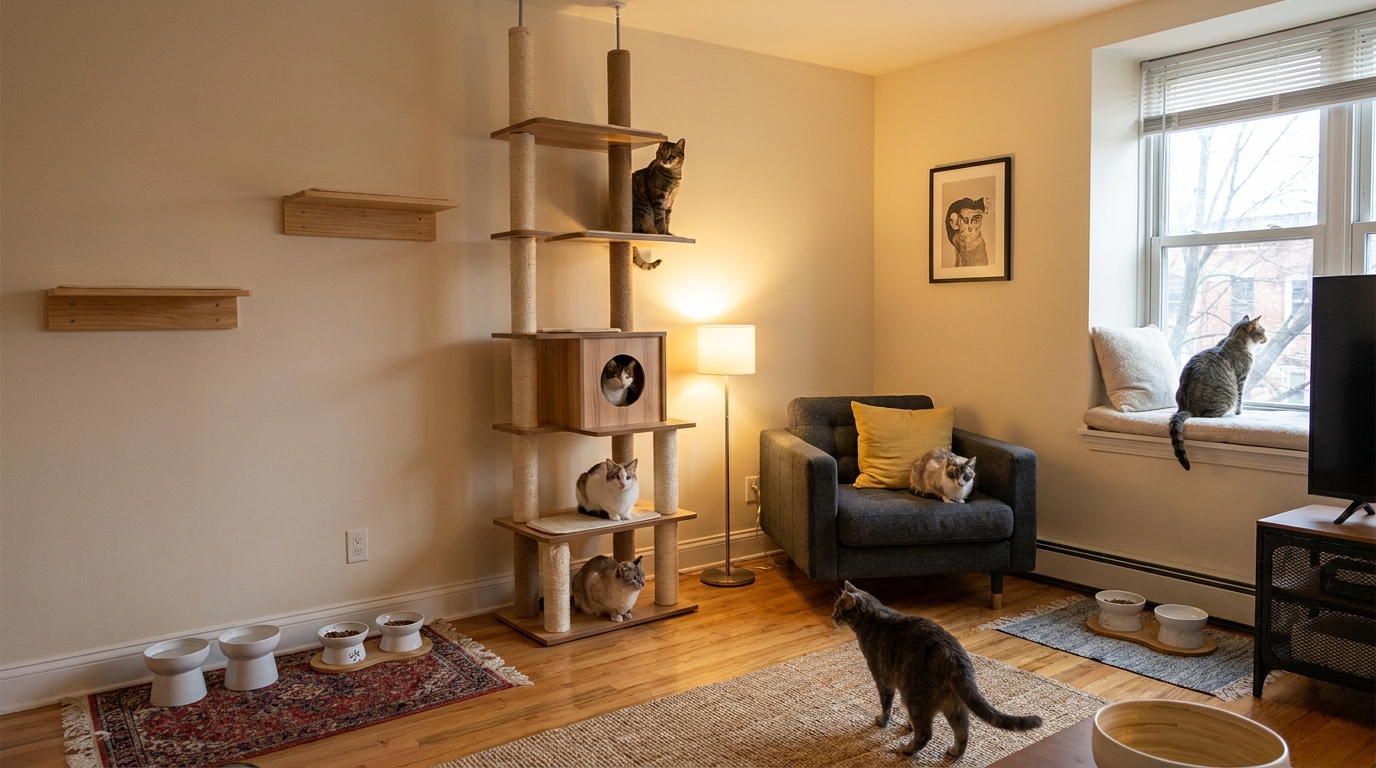
Resting spots: N+1, distributed across the house. The resting spots should include high perches (cat trees, shelves, the top of a cabinet) and low hiding spots (a cardboard box on its side, a covered bed, a quiet corner). The cat that has access to multiple resting spots is a cat that can always find a spot that is not currently occupied by another cat. The cat that has only one resting spot is a cat that is competing for that spot, and the losing cat is the cat that is on the floor, in the open, stressed. The high perches are particularly important; the cat that can perch up high is the cat that has the social confidence of being above the other cats.
Scratching posts: N+1, distributed across the house. The scratching posts should include vertical posts (tall, sturdy, with the cat able to fully extend) and horizontal scratchers (cardboard, sisal). The scratching post is a marking behavior, and the cat that has access to a post near the social center of the house is the cat that is using the post to communicate. The cat that has to walk across the living room to reach a post is a cat that is going to scratch the couch instead, because the couch is on the way to the post.
Vertical space: not strictly a resource, but a category that includes cat trees, wall shelves, window perches, and access to high surfaces. The rule of thumb: more is better. The cat that has access to a vertical path from the floor to a high perch is a cat that has an escape route from any social conflict on the floor. The cat that has no vertical space is a cat that is trapped on the floor when another cat is being aggressive.
Hiding spots: N+1, distributed across the house. Hiding spots are different from resting spots; a hiding spot is a place the cat can go when it is frightened, and the spot should be small, enclosed, and accessible from multiple sides. A cardboard box on its side, a covered cat bed, a crate with a blanket over it. The cat that has a hiding spot is a cat that can self-regulate its stress level. The cat that has no hiding spot is a cat that has no way to recover from a stressful event, and the stress accumulates.
The placement rules that make the math work
The N+1 rule only works if the resources are in the right places. A household with three litter boxes, all in the same corner of the basement, has one litter box in the cat's mind — the corner of the basement. The cat that is blocked from the basement is the cat with no litter box. The placement rules: resources in multiple rooms, ideally on multiple floors; resources away from walls that could be ambushed (cats like to face the room while eating, drinking, using the litter box, and resting); resources in quiet, low-traffic areas; resources not directly next to each other (the food and water should be in different rooms, the litter box should not be next to the food, the scratching post should not be next to the litter box).
The resource location that is most often wrong is the litter box placement. The most common mistake is putting the litter box in a corner where the cat has to back into the corner to use it. The cat that has to back into a corner is the cat that is vulnerable to ambush from any direction except the wall. The cat prefers to use a litter box that is in an open area, with multiple exit directions, and that is away from the food and water. The box should be in a low-traffic area (a bathroom, a laundry room, a quiet corner) but not in a dead-end corner.
The behavior changes you should see
A multi-cat household that is properly resourced, with the N+1 rule applied to all eight resource categories and the resources placed correctly, shows behavioral changes in 2-4 weeks. The inter-cat aggression drops, often dramatically. The inappropriate urination stops (the cat that was peeing on the bed was a cat that was blocked from the litter box or was stressed about the litter box; the cat that has access to a clean, well-placed litter box is a cat that uses the box). The hiding drops (the cat that was hiding under the bed was a cat that had no high perch or quiet resting spot; the cat that has a cat tree by the window is a cat that is on the cat tree, not under the bed). The eating and drinking normalize (the cats eat their own food at their own pace, the water intake increases, the urinary health improves).
The change is not instant. The first week after a resource adjustment often shows an increase in inter-cat tension, as the cats renegotiate access to the new resources. The owner who is patient through the first week, who does not interpret the increased tension as a sign that the resource adjustment was wrong, sees the resolution in the second and third weeks. The math works. The math just takes a few weeks to be reflected in the cats' behavior.
The one-page summary
For every cat in the house, add one to every resource category. Litter boxes, food stations, water stations, resting spots, scratching posts, vertical space, hiding spots. Distribute them across the house, on multiple floors, in quiet locations, away from each other. The math is the easy part. The placement is the part that takes thought. The behavior change is the part that confirms the math was right.