
Moving house: the 3-3-3 rule for cats and how to make the transition less stressful
Moving house is the most stressful event in a cat's life, and the stress is not a single event — it is a sequence of stress responses that unfold over the days, weeks, and months after the move. The cat that hides under the bed for three days, that begins to explore in week two, that starts using the litter box reliably in week three, and that fully integrates into the new home around month three is following a predictable timeline that the rescue and behavior community has codified as the 3-3-3 rule. The rule is not a guarantee; it is a guideline that helps the owner set realistic expectations and avoid the mistakes that extend the adjustment period. In this article I will walk through what each phase looks like, the mistakes that owners make at each phase, the right support for each phase, and the few cases where the timeline is genuinely longer and a vet or behaviorist should be involved.
The principle: cats are territorial, not adaptable
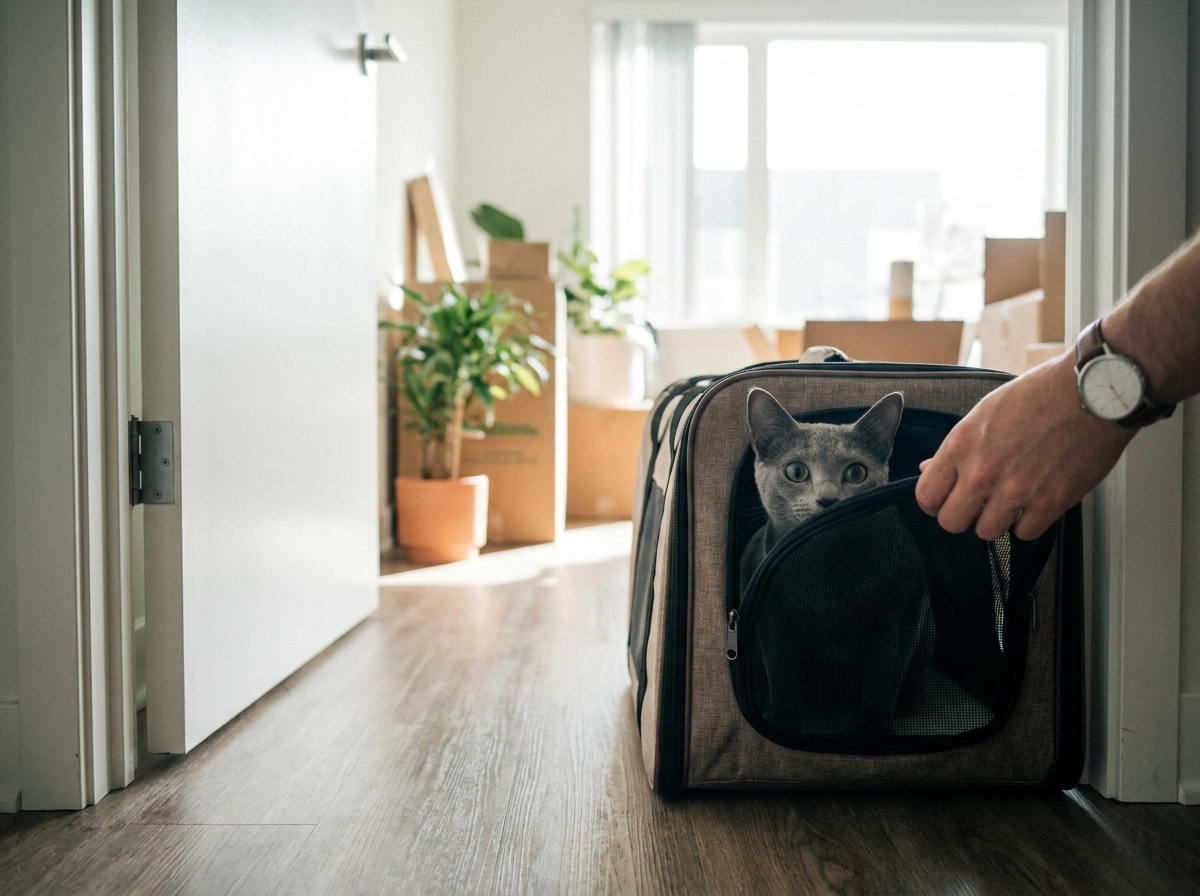
The cat that hides under the bed is not a cat that is "not adjusting." The cat is a cat that is following its biology. The domestic cat evolved as a territorial species that knows its home range in minute detail — the hiding spots, the escape routes, the hunting grounds, the high perches, the safe zones. The cat that is moved to a new home is a cat that has lost its entire territory. The cat is not "in a new home" — the cat is in a featureless, scent-free, dangerous environment that contains the same humans and the same food bowl and nothing else that the cat recognizes as its own.
The cat's stress response to this is predictable. The acute stress response (flight, hide, freeze) lasts 24-72 hours. The medium-term adjustment (learning the new layout, establishing new territory) takes 2-4 weeks. The long-term integration (feeling safe enough to display normal behaviors — affection, play, exploration) takes 2-3 months. The 3-3-3 rule is the codification of this timeline: 3 days, 3 weeks, 3 months. The owner who understands the timeline is the owner who does not panic at the 4-day mark, the 2-week mark, or the 1-month mark. The owner who does not understand the timeline is the owner who calls the vet at day 5 because the cat is still hiding, or who gives up on the cat at week 4 because the cat is not yet affectionate.
The first 3 days: the decompression phase
The cat arrives at the new home and finds an environment with no familiar scents, no hiding spots, and no territory. The cat's response is to hide, to be still, to refuse food, to refuse the litter box, to be silent. This is normal. This is the cat's stress response in its most acute form.
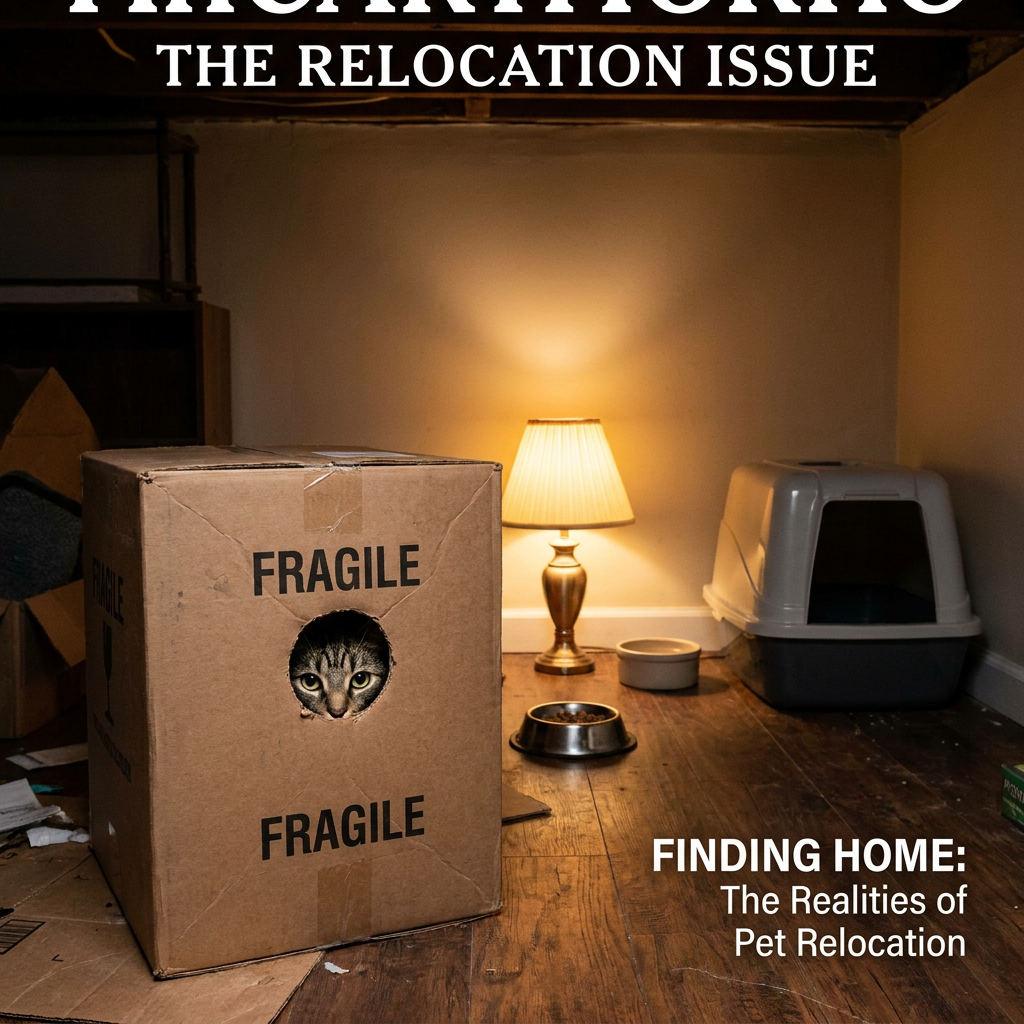
The right support for the first 3 days: confine the cat to one small room. The room should be a low-traffic room (a bedroom, an office, a bathroom with no other animals or children). The room should have everything the cat needs: food, water, litter box, a hiding spot (a cardboard box, a covered bed), a high perch if possible, a familiar-smelling item from the old home (a blanket, a bed, a piece of clothing). The door stays closed. The cat is not let out to explore the house. The cat is not introduced to the rest of the family. The cat is allowed to hide, to refuse food, to be silent, and to adjust to the new room at its own pace.
The mistakes in the first 3 days: the owner who lets the cat roam the house "so it can get used to it" is the owner who is overwhelming the cat. The new home is too big, too unfamiliar, too full of unexplored territory. The cat is back to square one — no territory, no hiding spot, no safe zone. The cat hides under the sofa for the next 3 weeks instead of in the base room for 3 days. The owner who forces the cat out of its hiding spot to "socialize" is the owner who is breaking the cat's stress coping mechanism. The cat that cannot hide is the cat that escalates to aggression or illness.
The first 3 weeks: the exploration phase
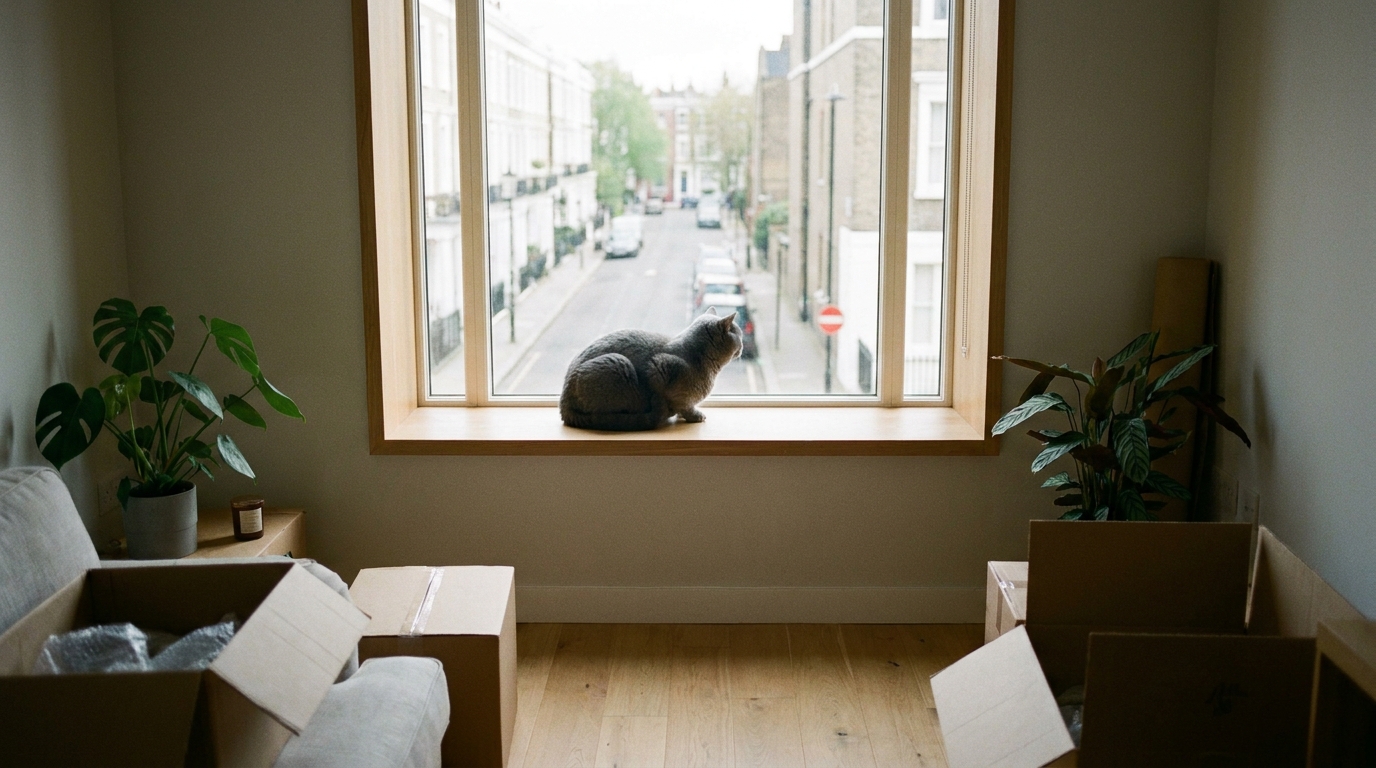
By day 3-4, the cat has begun to accept the base room. The cat is using the litter box, eating, drinking, and beginning to explore the room. By the end of week 2, the cat has learned the room — the hiding spots, the perch, the routes, the smells. The cat is ready to begin exploring the rest of the house.
The right support for the exploration phase: open the door to the rest of the house, one room at a time. The cat is allowed to explore at its own pace, with access back to the base room at all times. The base room stays as the "home base" — the food, water, and one litter box remain in the base room. The other litter boxes are placed in the rooms the cat is exploring. The cat is not picked up and carried to the new rooms. The cat walks to the new rooms on its own.
The cat that has been at the new home for 3 weeks and is still hiding in the base room is a cat that is on the slower end of the normal range. The owner should not force the cat out, but should make the exploration inviting — open doors, accessible perches, treats in the new rooms, no forced interactions. The cat will explore when the cat is ready.
The mistakes in the first 3 weeks: the owner who moves the food, water, and litter box out of the base room "to encourage exploration" is the owner who is removing the cat's safe zone. The cat that no longer has a base room is the cat that is back to square one. The fix: keep the base room intact for the full 3 months, with food, water, and at least one litter box in it. Add the new resources, do not move the old ones.
The first 3 months: the integration phase
By the end of week 4-6, the cat is using the new house, the new litter boxes, the new perches. By the end of month 2-3, the cat has established a new territory — the cat has favorite spots, the cat has routes, the cat is rubbing on furniture and doorframes to deposit scent. The cat is integrating into the new home. The integration is not yet complete, but the cat is on the way.
The right support for the integration phase: continue to let the cat set the pace. Provide vertical space (cat trees, shelves, window perches) so the cat can claim the new house as its own. Provide routine — feeding times, play times, quiet times. The cat that has a routine is the cat that feels safe. The cat that feels safe is the cat that integrates faster.
The mistakes in the first 3 months: the owner who brings a new pet into the home during the first 3 months is the owner who is adding a second stressor to a cat that is still integrating the first. The new pet should be introduced only after the resident cat has fully integrated, typically 3-6 months after the move. The owner who rearranges the furniture frequently during the first 3 months is the owner who is destabilizing the cat's emerging territory. The cat is in the process of learning the new layout; rearranging resets the learning.
The exceptions to the 3-3-3 rule
The senior cat, the sick cat, and the cat with a history of anxiety or behavior problems may take 4-6 months or longer to fully integrate. The senior cat has less behavioral flexibility, the sick cat has reduced coping capacity, and the anxious cat has a stress response that is already elevated at baseline. The owner of these cats should plan for a longer adjustment period, and should involve the vet early if the cat is not eating, not using the litter box, or is showing signs of illness.
The sign that the adjustment is not normal: the cat that is still hiding in the base room at week 4, the cat that is still not eating at week 2, the cat that is showing signs of stress-related illness (urinary issues, vomiting, overgrooming) at any point. These are signs that the cat is not adjusting and needs intervention. The intervention can be as simple as a more thorough base-room setup, or as involved as a consultation with a veterinary behaviorist and a course of anti-anxiety medication.
The multi-cat household
The 3-3-3 rule is applied to each cat in the household separately. The move disrupts the established territory of each cat, and each cat has to re-establish its own territory in the new home. The cats that had a strong bonded relationship before the move will often seek each other out for reassurance; the cats that had a tense relationship will often have the tension amplified by the move. The multi-cat household should be set up with the base room for the most anxious cat, with the other cats allowed to roam, and with the base room opened to the other cats only after the anxious cat is settled.
The litter box math is the same as in any multi-cat household: N+1 boxes, distributed across the new home, in low-traffic areas. The move is a good opportunity to set up the resource distribution correctly, because there is no existing territory to disrupt.

The single sentence to remember
The cat is not "in a new home" — the cat is in a featureless environment that has no territory, no scent, and no familiar hiding spots. The 3-3-3 rule is the predictable timeline of the cat's adjustment: 3 days to decompress, 3 weeks to learn the new layout, 3 months to feel at home. The owner who supports the timeline is the owner who gives the cat the best chance of integrating quickly. The owner who fights the timeline is the owner who extends the adjustment period and risks long-term behavior problems.