
Large-breed puppy growth: how to feed for slow, controlled growth
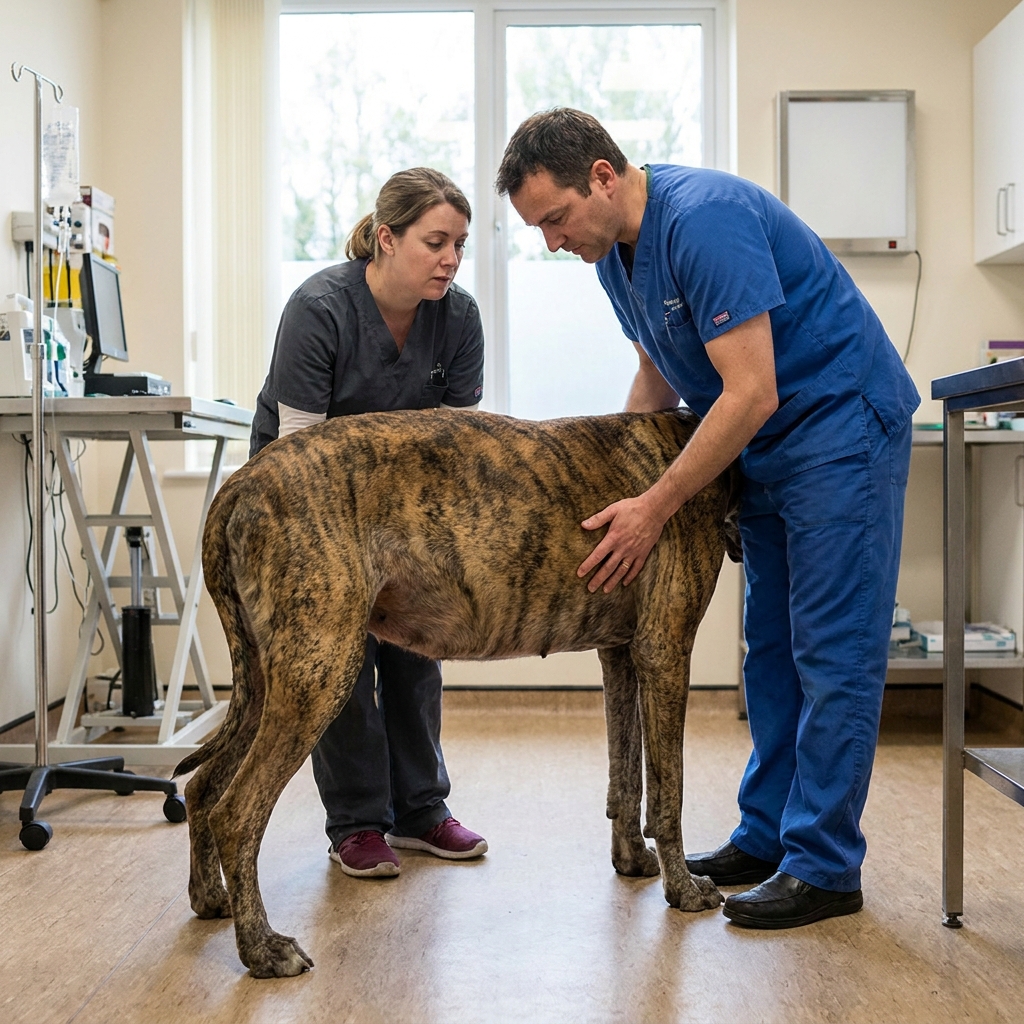
The biggest nutritional mistake I see in my clinic is also the most well-intentioned: the owner of a 12-week-old German Shepherd puppy wants the puppy to grow up big and strong, so they free-feed a high-calorie puppy food, add a calcium supplement "for the bones", and add a scoop of whole-fat yogurt "for the coat". Six months later, the puppy is 70 pounds at six months, the growth plates are showing lesions on x-ray, and the owner is facing a hip dysplasia diagnosis before the dog is even a year old. None of this had to happen.
The science here is that large-breed puppies — defined by most veterinary nutritionists as breeds with an expected adult weight above 25 kg (55 lb) — have a fundamentally different growth biology than small-breed puppies. They grow for longer (12 to 24 months instead of 6 to 12), they have a wider window for developmental orthopedic disease (DOD), and they are sensitive to caloric excess and calcium excess in ways small breeds are not. The goal is not to feed the puppy less — it is to feed the puppy for slow, controlled growth.
What "large breed" actually means in feeding terms
Most veterinary nutritionists use a cutoff of 25 kg expected adult weight. The clinically important large and giant breeds are:
- Large breeds (25–40 kg adult): Labrador Retriever, Golden Retriever, German Shepherd, Standard Poodle, Boxer, Doberman, Border Collie, Australian Shepherd, Siberian Husky
- Giant breeds (>40 kg adult): Great Dane, English Mastiff, Saint Bernard, Bernese Mountain Dog, Newfoundland, Great Pyrenees, Irish Wolfhound, Leonberger
The two groups have slightly different feeding protocols, but the underlying principles are the same: controlled calorie intake, controlled calcium intake, and a growth curve measured in months, not weeks.
A useful rule of thumb: if the breed standard puts the adult weight above 55 pounds, the puppy should be on a large-breed growth protocol from 8 weeks onward.
The growth target: 50–60% of adult weight at 5 months
The single most important number in large-breed feeding is the growth curve. A healthy large-breed puppy should reach approximately:
- 50–60% of adult weight at 5 months
- 80% of adult weight at 8 months
- 90% of adult weight at 12 months (large breeds)
- 90% of adult weight at 18–24 months (giant breeds)
If a Labrador puppy is expected to weigh 30 kg as an adult, it should weigh 15–18 kg at 5 months, 24 kg at 8 months, and 27 kg at 12 months. Puppies that exceed this curve are growing too fast, and the risk of hip dysplasia, elbow dysplasia, and osteochondritis dissecans (OCD) goes up measurably. A 2013 study from the University of Liverpool found that puppies fed to grow faster than the standard curve had a 1.6–2.2x higher risk of hip dysplasia by 12 months.
The practical implication: weigh the puppy every 2 weeks, plot the weight, and adjust food intake to keep the puppy on the standard curve. This is non-negotiable for large breeds.
The calorie target: lower than the bag says
Most large-breed puppy foods recommend feeding amounts that produce weight gains in the upper end of the normal range. The metabolizable energy (ME) target for controlled growth in large-breed puppies is:
- 8–12 weeks: 200–250 kcal ME per kg of expected adult weight per day
- 3–4 months: 175–200 kcal ME per kg of expected adult weight per day
- 5–6 months: 150–175 kcal ME per kg of expected adult weight per day
- 7–12 months: 130–150 kcal ME per kg of expected adult weight per day
- 12–18 months (large breeds) / 18–24 months (giant breeds): 110–130 kcal ME per kg of adult weight per day
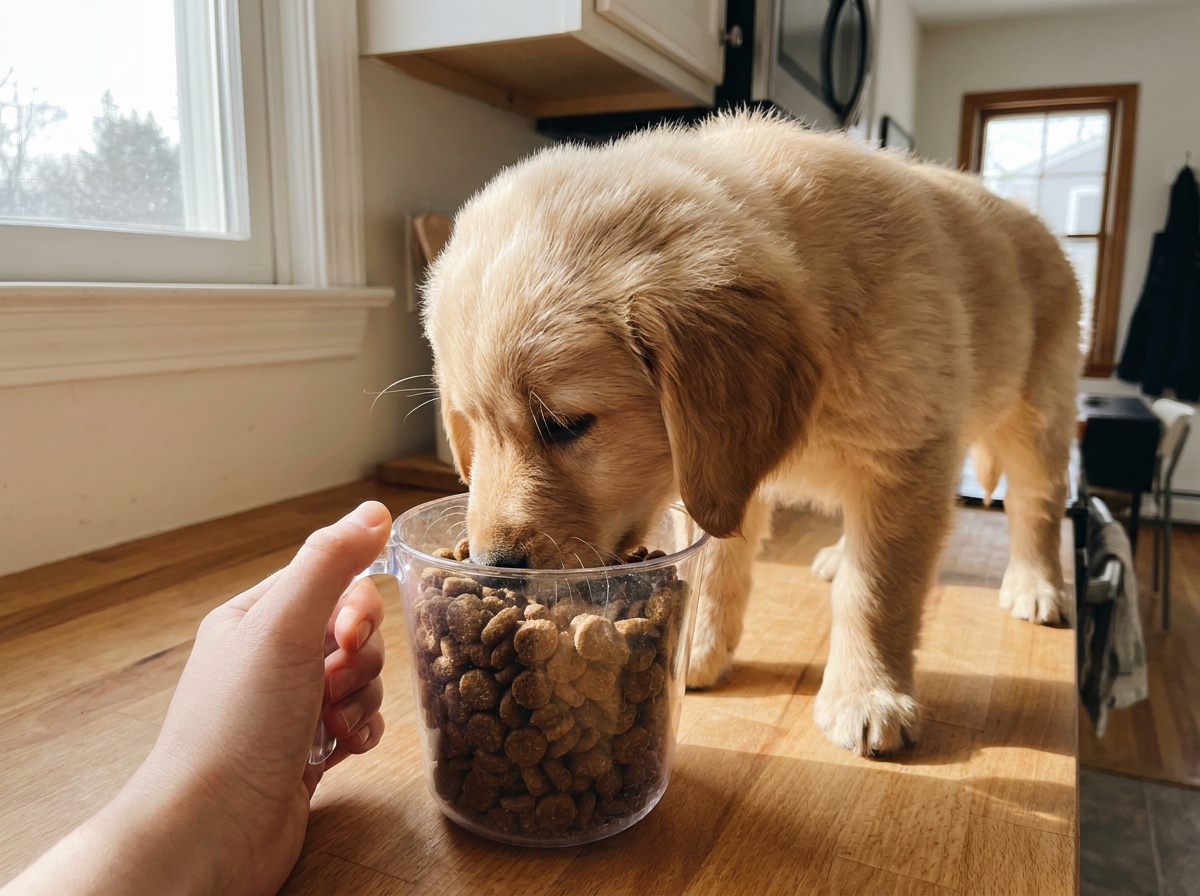
For a 30 kg adult-target Labrador at 4 months of age (about 13–15 kg actual weight), the target is roughly 1,000–1,200 kcal per day. Most bag recommendations would put the puppy at 1,400–1,800 kcal per day. The bag is overshooting the growth target by 20–40%.
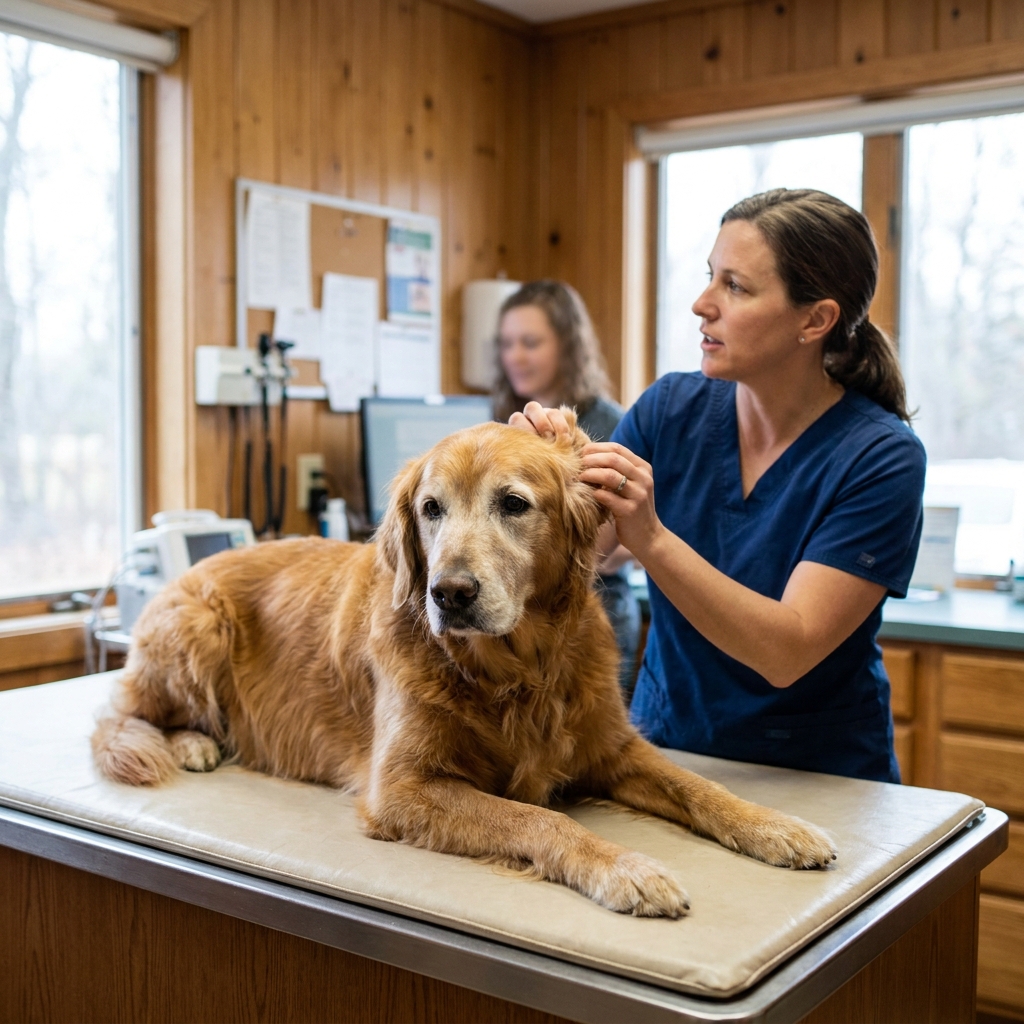
Adjust based on body condition, not the bag. Use the Body Condition Score (BCS): the puppy should have a visible waist when viewed from above, and the ribs should be easily felt with light pressure but not seen. If the ribs are buried, reduce the food by 10–15%. If the ribs are prominent, increase by 10–15%. Recheck every 2 weeks.
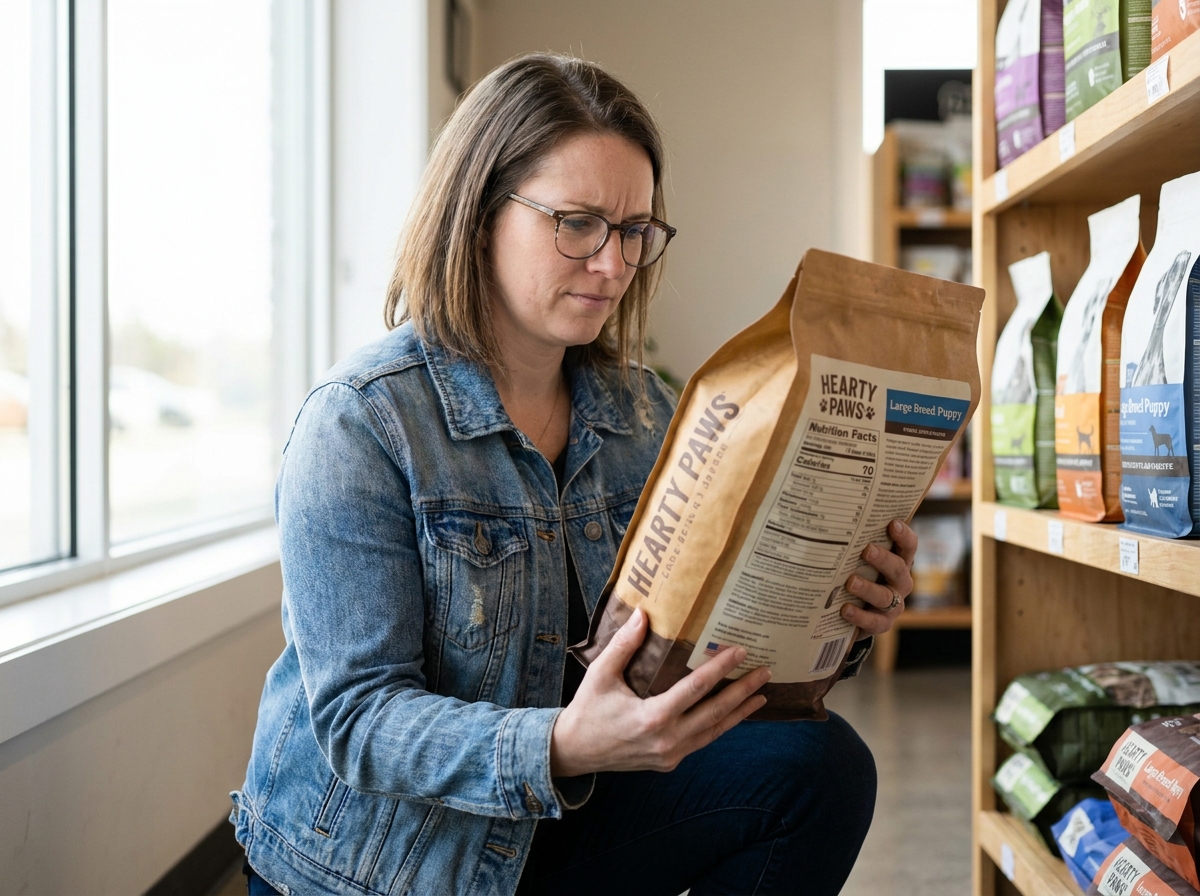
The calcium ceiling: 1.5% dry matter, no supplements
Calcium is the most over-supplemented nutrient in large-breed puppies, and the consequences are severe. The clinical evidence is unambiguous: calcium intake above 1.8% dry matter (DM) in large-breed puppies causes measurable skeletal abnormalities, including osteochondrosis, radius curvus, and wobbler syndrome. The Association of American Feed Control Officials (AAFCO) sets the maximum at 1.8% DM for growth, and most veterinary nutritionists recommend staying at or below 1.5% DM to leave a safety margin.
The numbers that matter for owners:
- A high-quality large-breed puppy food contains 1.0–1.5% calcium (DM) — adequate for growth, no supplementation needed
- Adding a calcium supplement on top of a balanced food can push intake to 2.5–4.0% DM — enough to cause lesions in 4–6 months
- Feeding an all-life-stages or performance food to a large-breed puppy can also overshoot calcium — these foods are formulated for adult or working dogs, not for slow growth
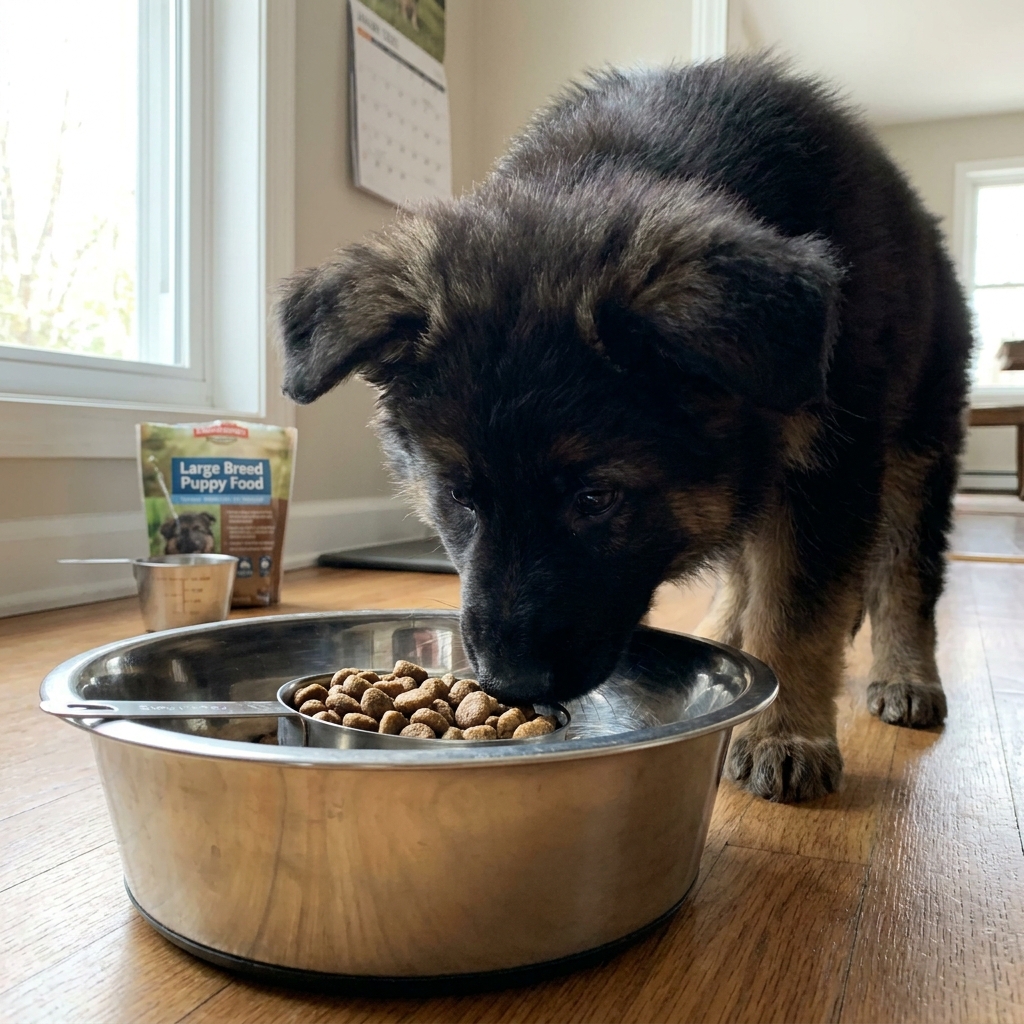
This is the reason large-breed puppy foods exist as a separate category. They are not a marketing gimmick. They have lower calorie density, lower calcium, and a more controlled calcium-to-phosphorus ratio (1.2:1 to 1.4:1) than regular puppy foods. Brands I work with and trust on the large-breed growth formulation:
- Royal Canin Large Puppy (and Giant Puppy for >45 kg adults)
- Hill's Science Diet Large Breed Puppy
- Purina Pro Plan Large Breed Puppy (Chicken & Rice)
- Eukanuba Large Breed Puppy
- Farmina N&D Ancestral Grain Large Breed Puppy (codfish/oat)
If the puppy is on one of these foods, no calcium supplement, no bone meal, no extra eggshell powder, no high-calcium treats. Period.
Phosphorus, vitamin D, and the supporting cast
Phosphorus should run 0.8–1.1% DM, and the calcium-to-phosphorus ratio should be 1.1:1 to 1.4:1. Excess phosphorus (or the wrong Ca:P ratio) interferes with calcium absorption and contributes to the same skeletal issues. Avoid foods with unnamed "meat meal" as the primary protein source if phosphorus is not declared on the label — call the manufacturer and ask.
Vitamin D should be 500–800 IU per kg of food (DM). Both deficiency and excess are problematic. The 2018 FDA investigation into diet-associated dilated cardiomyopathy (DCM) flagged some grain-free diets for vitamin D irregularities, and the issue is particularly relevant for large breeds where the cardiac workload is high. A diet that meets AAFCO growth standards and lists vitamin D as a guaranteed nutrient is usually safe.
Omega-3 fatty acids (EPA and DHA) support joint and cartilage development. Look for 0.1–0.3% combined EPA+DHA in the food, or supplement with a veterinary-grade fish oil (Welactin, Nordic Naturals Pet, or Royal Canin Mobility Support) at the label dose.
Glucosamine and chondroitin are often added to large-breed puppy foods. The evidence for prevention of hip dysplasia is weak, but the ingredients are safe and may support cartilage health during the high-stress growth phase. They are a "may help, won't hurt" addition.

The free-feeding trap
Many breeders and pet store staff still recommend free-feeding (leaving food out all day) for large-breed puppies. This is bad advice for the breed group most at risk for DOD. Free-feeding produces a higher average daily intake than meal-feeding, and the puppy cannot self-regulate during the growth phase. The result is faster growth, higher body fat, and a measurably higher risk of orthopedic disease.
Meal-feed the puppy. The standard schedule:
- 8–12 weeks: 4 meals per day
- 3–5 months: 3 meals per day
- 6+ months: 2 meals per day (maintain for life)
The meals also give the owner a built-in monitoring system. A puppy that consistently leaves food is telling the owner something — usually that the portion is too large, or that the puppy needs a vet check.
When to switch to adult food
For large breeds, the switch to adult food should happen at 12 months. For giant breeds, the switch should wait until 18–24 months. Switching too early deprives the puppy of the controlled growth formulation and may trigger a second growth spurt on the adult food, which is the wrong outcome.
The transition should follow the standard 7-day protocol: 25% new food on days 1–2, 50% on days 3–4, 75% on days 5–6, 100% on day 7. Watch for stool changes, and slow the transition if the puppy's digestion needs more time.
Common mistakes to avoid
In my experience, the most common large-breed feeding mistakes are:
- Feeding regular puppy food instead of large-breed puppy food. The calcium and calorie differences are clinically meaningful.
- Adding calcium supplements. This is the most damaging mistake. The food is balanced.
- Free-feeding. The puppy will overeat, and the growth curve will be wrong.
- Switching to adult food before 12 months (18 for giants). The growth phase isn't over.
- Treating the puppy as "too thin" when the puppy is at correct BCS. A large-breed puppy should be lean. The instinct to "feed more" produces the orthopedic problems the owner was trying to prevent.
- Using "all life stages" food. The calcium and calorie density are designed for adults, not for slow growth in puppies.
When to escalate
Consult a board-certified veterinary nutritionist (DACVN) if:
- The puppy is significantly off the standard growth curve (above or below)
- The puppy has been diagnosed with hip or elbow dysplasia and you want to optimize growth from diagnosis onward
- The puppy has a food allergy or chronic GI issue that limits food choices
- The owner wants to home-cook or feed a raw diet for a large-breed puppy (this requires expert formulation; do not attempt it from a blog or a book)
For the average large-breed puppy on a commercial large-breed puppy food, meal-fed to BCS, with no supplementation, the growth outcome is reliably good. The protocol is simple. The discipline is in following it.