Koi varieties: the classic three vs modern lines and what makes each unique
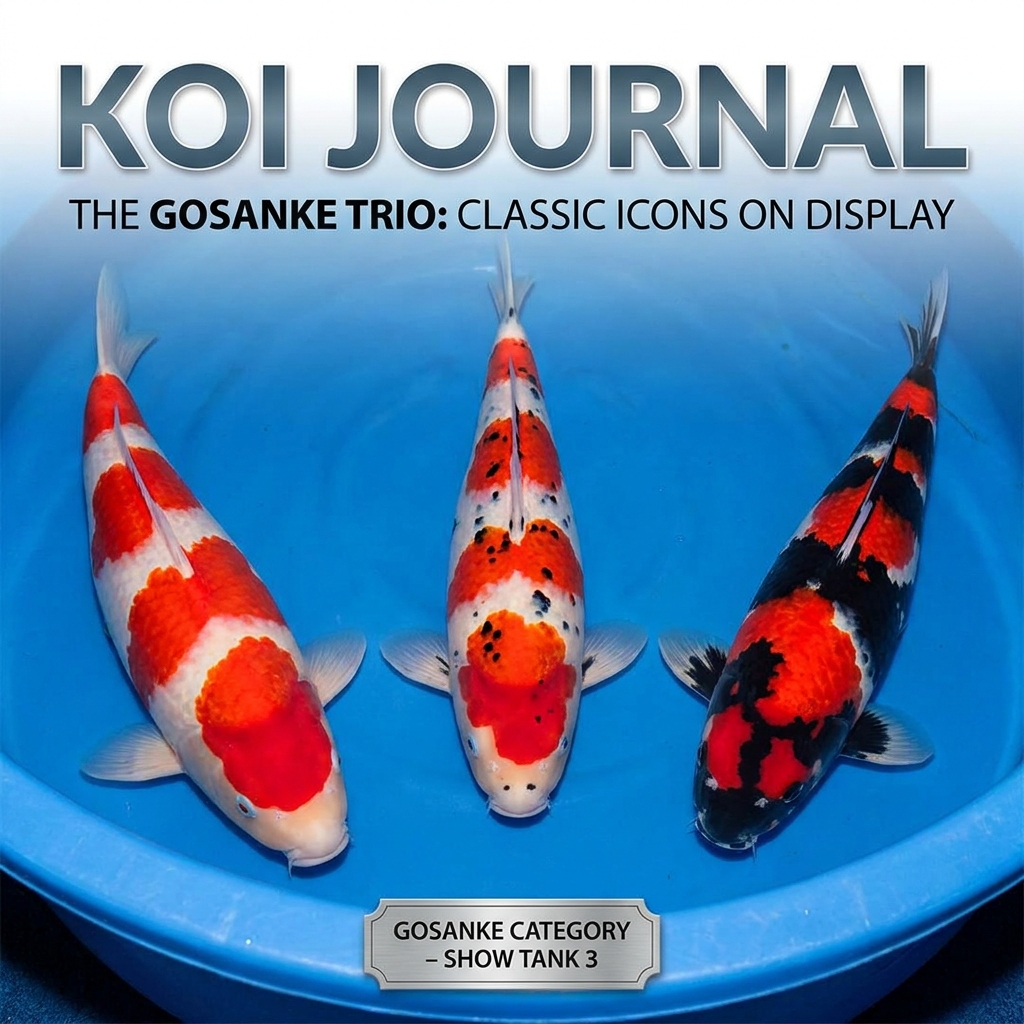
The koi hobby has produced dozens of named varieties over the centuries, but the foundation of the modern koi hobby is the Gosanke — the three classic varieties that have been the focus of Japanese koi breeding for over a century. The Kohaku (white with red), the Sanke (white with red and black), and the Showa (black with red and white) are the three varieties that every koi keeper knows, and the three varieties that every koi show judge evaluates most carefully. The modern lines have produced dozens of additional varieties, each with its own characteristics and its own breeding focus. The koi keeper who is serious about the hobby knows the classics and the moderns, and the koi breeder who is serious about breeding knows the genetic relationships between the varieties. In this article I will walk through the three classic Gosanke, the modern lines that have emerged, the genetic relationships, the breeding focus for each variety, and the variety that is the right choice for the right keeper.
The Kohaku: the foundation
The Kohaku is the oldest and most important of the koi varieties. The Kohaku is a white-skinned koi with red (hi) markings on the head, the body, and the tail. The Kohaku has been bred for over 200 years in Japan, and the Kohaku is the variety that every koi judge evaluates first. The Kohaku is also the variety that every koi breeder starts with, because the Kohaku is the foundation for the other Gosanke varieties.
The Kohaku quality: the white should be pure, with no yellowing or staining. The red should be deep and even, with no fading or orange tones. The pattern should be balanced, with the red markings placed at specific locations (the head, the shoulders, the body, the tail) and the white ground between the red markings should be visually balanced. The "ippon hi" (a single, unbroken red pattern from head to tail) is the most prized pattern, but the multi-step pattern is also acceptable.
The Kohaku breeding focus: the depth and evenness of the red, the purity of the white, and the balance of the pattern. The Kohaku breeder culls heavily on the pattern, keeping only the fish that have the right balance of red and white. The Kohaku line that has been developed over multiple generations is the line that produces the most consistent offspring.
The Taisho Sanke: the white-based tri-color
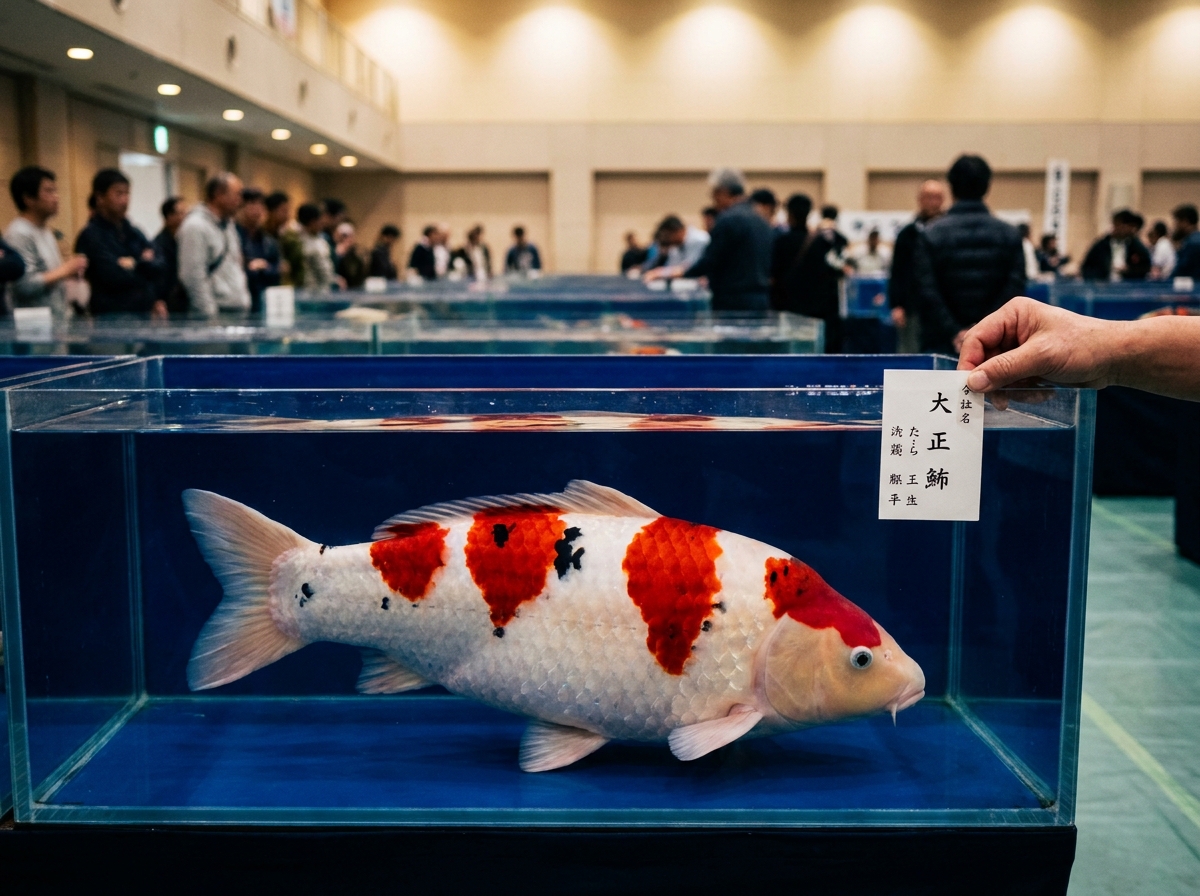
The Taisho Sanke (often just called "Sanke") is a white-skinned koi with red (hi) and black (sumi) markings. The Sanke is named for the Taisho era in Japan (1912-1926), and the Sanke was developed from the Kohaku line by introducing the black markings. The Sanke is a white-based variety — the white is the dominant color, and the red and black are the accent colors.
The Sanke quality: the white should be pure, the red should be deep, and the black should be in small, balanced patches (the "Sanke black" is a small, neat black, not the large, sprawling black of the Showa). The black should be placed on the body and the tail, not on the head (a small amount of black on the head is acceptable, but the dominant black-on-head is a Showa trait, not a Sanke trait).
The Sanke breeding focus: the placement and the quality of the black. The Sanke that has the right amount of black in the right places is the Sanke that wins shows. The Sanke that has too much black, or that has the black in the wrong places, is the Sanke that is culled. The Sanke line that has been developed for the right black pattern is the line that produces the consistent offspring.
The Showa: the black-based tri-color
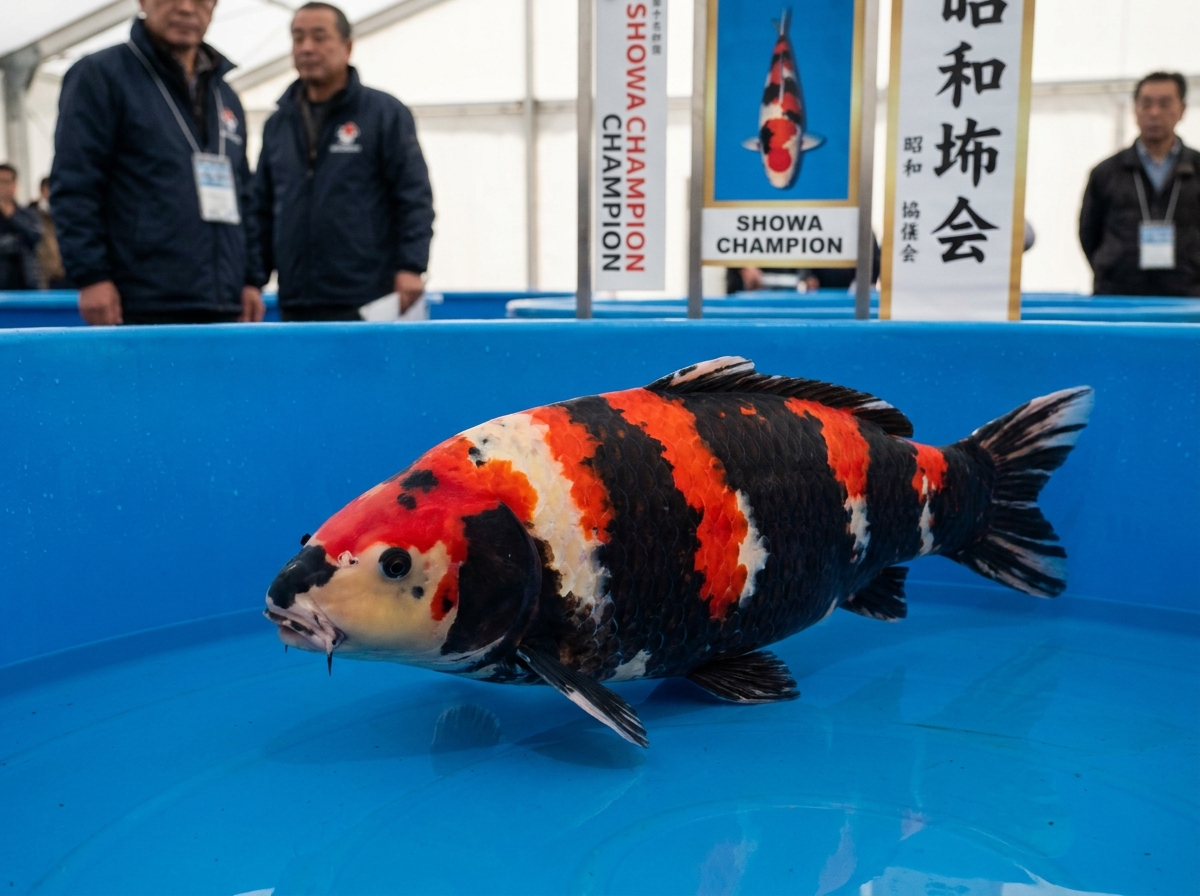
The Showa Sanshoku (often just called "Showa") is a black-skinned koi with red and white markings. The Showa is named for the Showa era in Japan (1926-1989), and the Showa was developed from the Sanke line by emphasizing the black. The Showa is a black-based variety — the black is the dominant color, and the red and white are the accent colors.
The Showa quality: the black should be deep and lustrous, the red should be deep and even, and the white should be pure. The pattern should have the black spread across the body, with the red and white breaking up the black. The "motoguro" (black at the base of the pectoral fins) is a signature Showa trait. The Showa that has the right balance of black, red, and white is the Showa that wins shows.
The Showa breeding focus: the depth and the spread of the black, and the balance between the black, the red, and the white. The Showa that has too much black is the Showa that looks like a black koi with red and white accents. The Showa that has too little black is the Showa that looks like a Sanke. The balance is what the breeder is selecting for.
The modern lines
The modern lines are the varieties that have been developed from the Gosanke or from other foundations. The most popular modern lines:
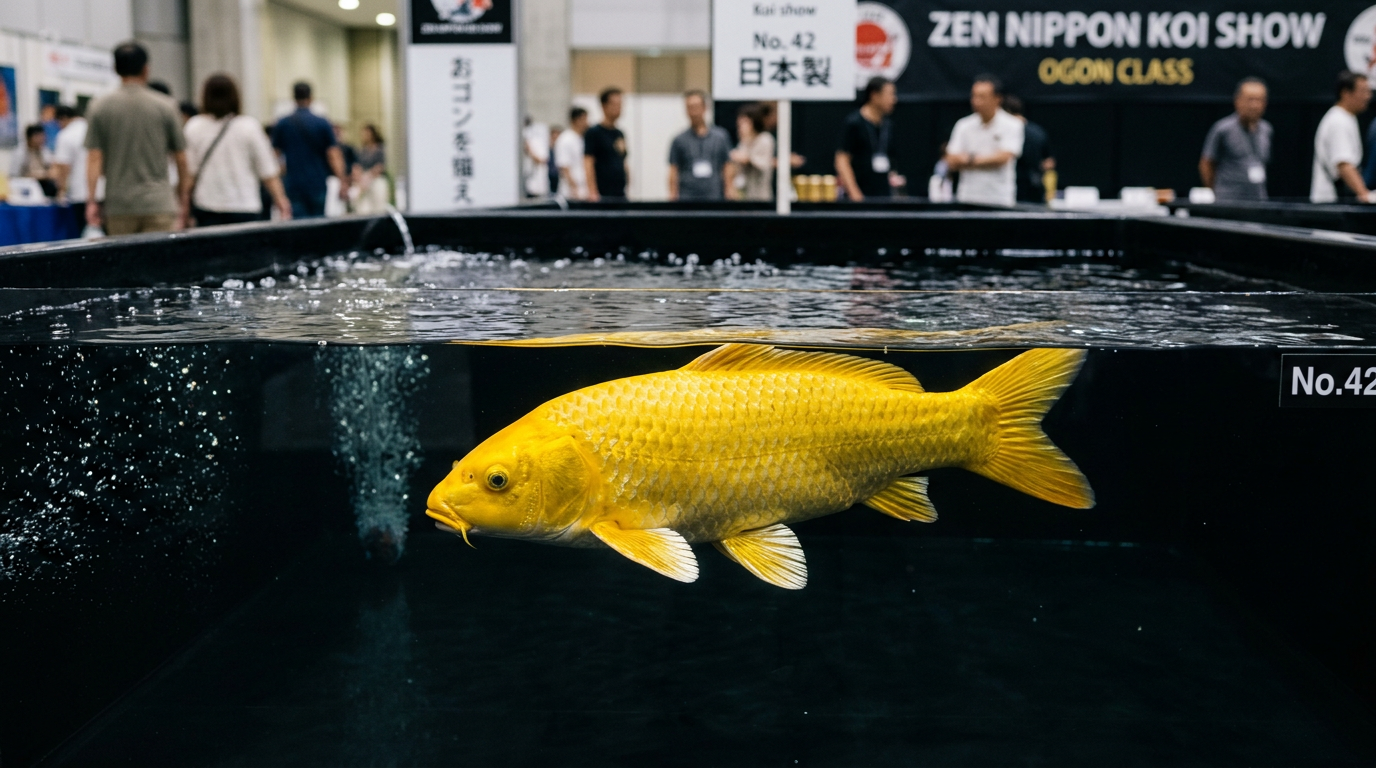
Ogon. A single-color metallic koi, typically yellow (Yamabuki Ogon), white (Platinum Ogon), or orange (Orange Ogon). The Ogon is a single-color fish, and the Ogon is judged on the depth and the evenness of the color and the metallic luster. The Ogon was developed in the 20th century from the wild carp and is one of the most popular modern varieties.
Shusui. A blue-colored, scale-less koi with a single row of large scales along the dorsal line. The Shusui was developed from the Asagi (the original blue koi) and is a popular variety for the modern koi keeper. The Shusui quality: the blue should be even and lustrous, the red markings (if any) should be on the sides and the head, and the scales along the dorsal line should be symmetrical.
Tancho. A pure white koi with a single red marking on the head. The Tancho is a koi that has only the red on the head, with no red on the body or the tail. The Tancho is the most extreme expression of the "one red mark" pattern, and the Tancho is the koi that is named for the Japanese crane (which has a similar red marking on the head). The Tancho is judged on the size, the shape, and the placement of the red mark.
Kawarimono. The catch-all category for the varieties that are not in any of the other categories. The Kawarimono includes dozens of varieties, each with its own characteristics. The most popular: Goshiki (five colors), Aigoromo (blue with red and orange reticulation), and Kujaku (peacock).
The genetic relationships
The Gosanke are all descended from the same ancestral line, and the genetic relationships between them are well-understood. The Kohaku is the foundation. The Sanke was developed from the Kohaku by introducing the black. The Showa was developed from the Sanke by emphasizing the black. The breeder who is breeding one of the three varieties should know the genetic relationships to avoid unintended outcomes in the offspring.
The genetics of the colors: the white is controlled by multiple genes, the red is controlled by multiple genes, and the black is controlled by multiple genes. The interactions between the genes are complex, and the offspring of two high-quality parents do not always produce high-quality offspring. The breeder who is breeding the Gosanke should expect a 10-30% rate of high-quality offspring from a high-quality pair, with the rest of the offspring being culled or sold as lower-quality fish.
The right variety for the right keeper
The Kohaku: for the keeper who wants the most classic koi variety, the keeper who is interested in the show standard, and the keeper who is willing to cull heavily for the right pattern.
The Sanke: for the keeper who wants a tri-color koi with the white as the dominant color, the keeper who is interested in the right balance of black, and the keeper who has experience with the Kohaku and is ready to add the black.
The Showa: for the keeper who wants a tri-color koi with the black as the dominant color, the keeper who is interested in the most dramatic of the Gosanke, and the keeper who has experience with the Sanke and is ready to work with the more complex Showa pattern.
The Ogon: for the keeper who wants a single-color koi, the keeper who is interested in the metallic luster, and the keeper who is looking for a koi that is easy to breed for consistency.
The Tancho: for the keeper who wants the most extreme expression of the "one red mark" pattern, the keeper who is interested in the symbolic association with the Japanese crane, and the keeper who is willing to wait for the right Tancho to develop (the red mark often takes 2-3 years to develop fully).
The Kawarimono: for the keeper who is interested in the variety of the modern koi hobby, the keeper who is looking for a koi that is not one of the standard varieties, and the keeper who is willing to research the specific variety.
The honest summary
The koi hobby is built on the Gosanke — the Kohaku, the Sanke, and the Showa. The modern lines have added dozens of varieties, each with its own characteristics and its own breeding focus. The breeder who is serious about the hobby knows the classics and the moderns, and the breeder knows the genetic relationships. The keeper who is serious about the hobby chooses the variety that matches the keeper's goals and the keeper's experience. The koi hobby is the work. The koi hobby is what makes the difference.