
Koi pond sizing: depth, surface area, and capacity calculations that produce a healthy pond
The koi pond is the most expensive part of the koi hobby, and the koi pond is the part that is the most difficult to fix after construction. The koi pond that is too small produces chronic water quality problems. The koi pond that is too shallow produces temperature extremes that stress the koi. The koi pond that is the wrong shape produces dead spots that accumulate debris. The koi keeper who is planning a new pond has to get the sizing right from the start, and the sizing requires the math. In this article I will walk through the depth requirements, the surface area requirements, the capacity calculations, the shape considerations, the filtration sizing, and the practical recommendations for the different koi-keeping goals.
The depth requirements
The minimum depth for a koi pond is 4 feet (1.2 meters), with the recommended depth of 5-6 feet (1.5-1.8 meters) for most climates and 6-8 feet (1.8-2.4 meters) for cold climates with deep winter freezes. The depth serves several purposes:
- Temperature stability. The deeper water has less temperature variation than the shallower water. The 4-foot deep pond has the bottom water that is 5-10°F cooler in summer and 5-10°F warmer in winter than the surface water. The deeper pond has the more stable temperature, which is critical for the koi's health and the bacteria's function.
- Predator protection. The deeper water makes it harder for the predators (raccoons, herons, cats) to reach the koi. The raccoon that can reach the koi in a 2-foot deep pond cannot reach the koi in a 4-foot deep pond.
- Fish size. The adult koi can reach 24-36 inches in length, and the koi needs the room to swim and to turn around. The 4-foot deep pond with the 8-foot long and 6-foot wide footprint has the room for the adult koi to swim and to turn around. The shallower pond is the pond that produces the koi that cannot turn around, the koi that is stressed, and the koi that is more susceptible to disease.
- Winter survival. In cold climates, the koi pond needs the depth to prevent the bottom water from freezing. The 4-5 foot deep pond in the temperate climate (with the de-icer keeping a hole in the ice) has the bottom water that stays above 35°F (2°C) throughout the winter. The shallower pond (under 3 feet deep) has the bottom water that can freeze, and the koi that is in the frozen water is the koi that dies.
The surface area requirements
The minimum surface area for a koi pond is 1 square foot of surface per 1 inch of koi length (or 0.1 square meter per 1 cm of koi length). The surface area is what determines the gas exchange (oxygen in, carbon dioxide out), and the surface area is what determines the carrying capacity of the pond.
For a pond with 5 adult koi at 24 inches each, the total koi length is 120 inches, and the minimum surface area is 120 square feet. A 10x12 foot pond has 120 square feet of surface, which is the minimum for the 5 koi. The recommended surface area is 50% more than the minimum, so the recommended surface area for the 5 adult koi is 180 square feet. A 12x15 foot pond has 180 square feet of surface, which is the recommended for the 5 koi.
The surface area is also what determines the location of the koi pond in the yard. The koi pond should be in a location that allows the full surface area, with no overhangs that limit the light or the gas exchange. The koi pond that is under a tree is the koi pond that has the falling leaves and the reduced light, both of which are problems for the koi.
The capacity calculations
The capacity of the koi pond is the total volume of water, and the capacity determines the amount of the water, the amount of the salt, the amount of the medication, the amount of the filter media, and the heating or cooling requirements. The capacity is calculated from the surface area and the average depth, with the formula: volume = surface area × average depth.
For a 12x15 foot pond with the average depth of 5 feet, the volume is 12 × 15 × 5 = 900 cubic feet, or 900 × 7.48 = 6,732 gallons (or 25,485 liters). The koi pond of this size is the typical medium-sized koi pond, and the medium-sized koi pond is the right size for the serious hobbyist with 5-10 adult koi.
The koi pond of 6,732 gallons has the following:
- Salt: at 0.1% salinity (1 gram per liter), the salt is 25,485 grams, or 25.5 kg, or 56 pounds of salt.
- Filter media: at 1-2% of the volume, the filter media is 67-134 gallons, or 2-5 cubic feet, depending on the type.
- Heating: at 5 watts per gallon, the heating is 33,660 watts, or 34 kW, which requires the multiple heaters to distribute the heat.
- Medication: at 1 gram per 10 gallons for most medications, the medication is 673 grams for a full-tank treatment.
The shape considerations
The shape of the koi pond affects the swimming space, the filtration efficiency, and the aesthetic appeal. The shapes that work:
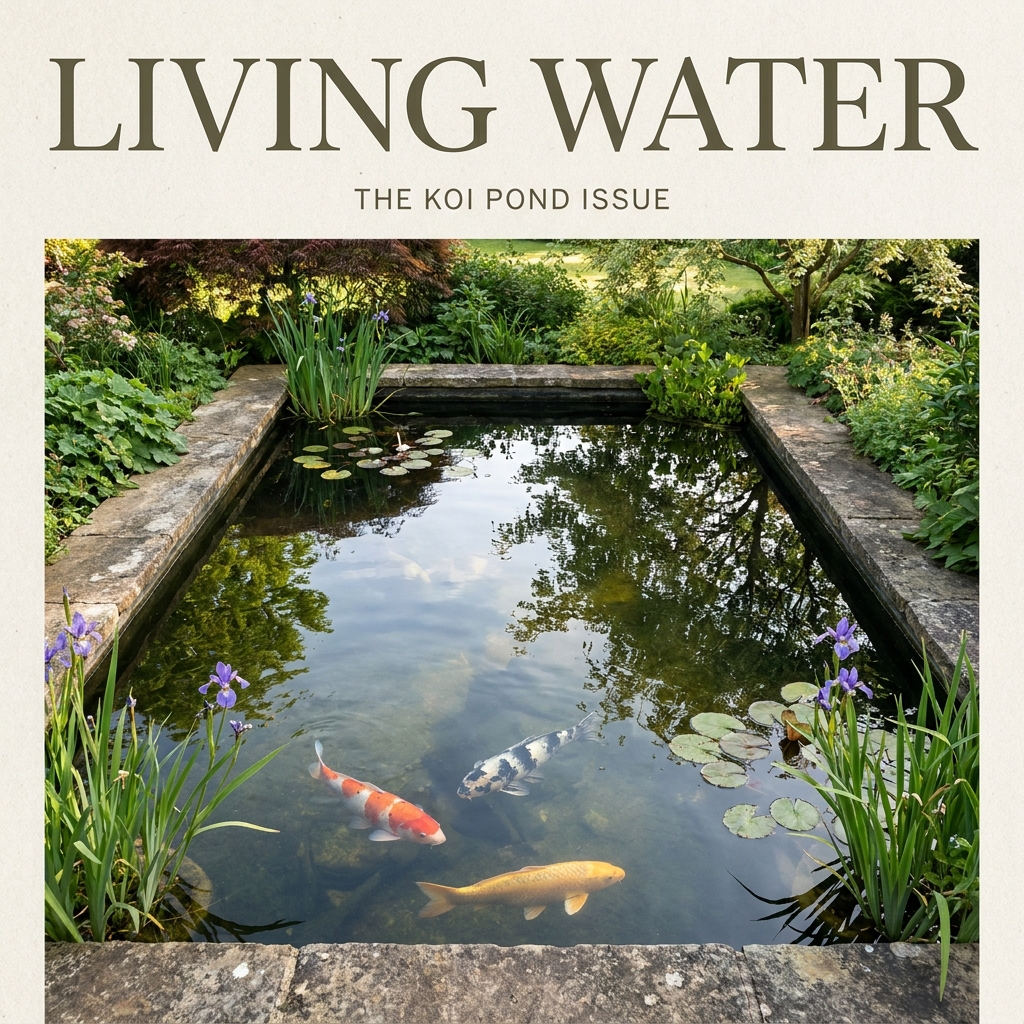
- The rectangle. The most common shape, the most efficient use of the yard space, the most efficient filtration (no dead spots), and the easiest to build. The rectangle is the right shape for most koi keepers.
- The kidney. The kidney shape has a more natural appearance, with the curves that break up the visual lines. The kidney has the disadvantage of the dead spots in the curves, and the kidney requires the careful placement of the filtration and the flow to prevent the dead spots.
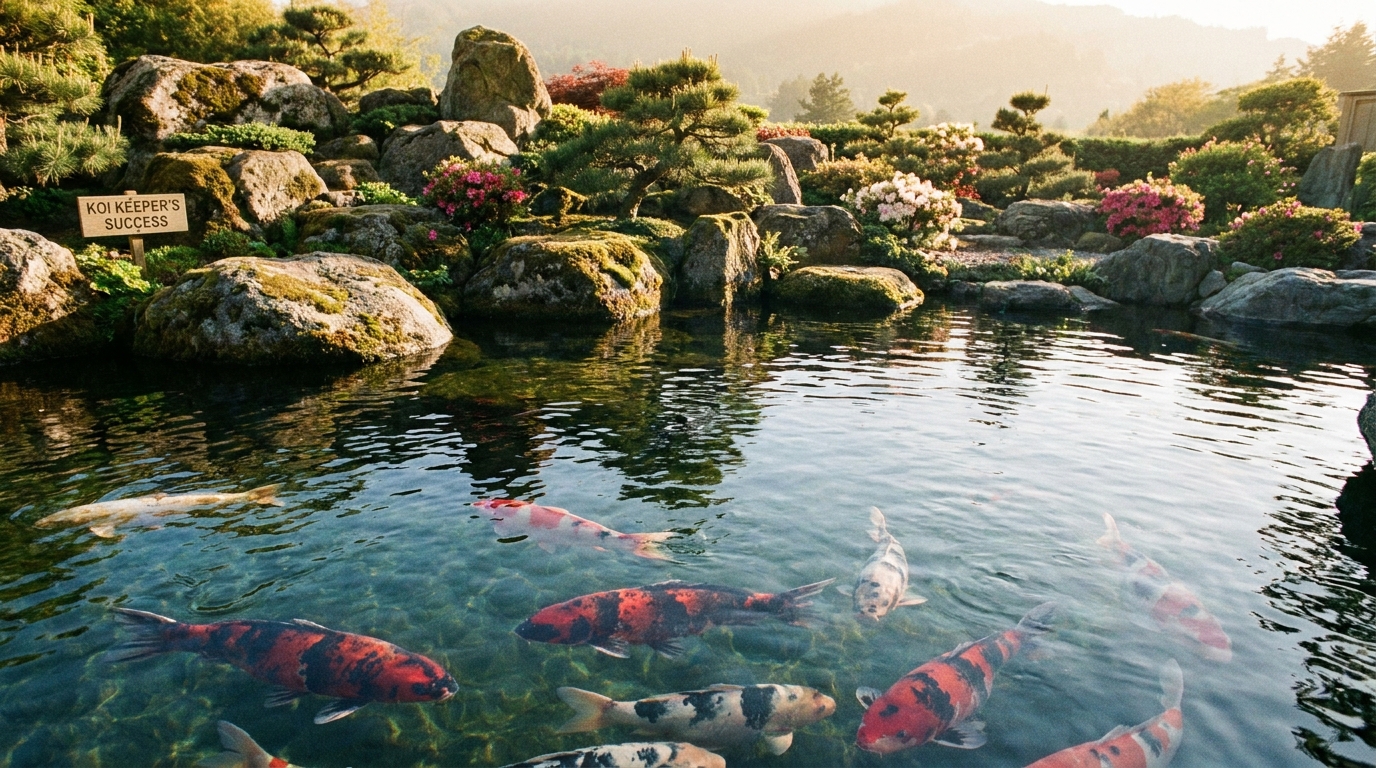
- The natural. The natural shape (with the irregular curves, the rock-lined edges, the planted margins) has the most natural appearance, but the natural shape has the most dead spots and the most difficult filtration. The natural shape is the right shape for the serious koi keeper who is willing to invest in the careful design.
The shapes that do not work: the circle (too small for the swimming koi), the L (dead spots at the corner), the figure-8 (dead spots at the curves). The shapes that do not work are the shapes that the koi keeper avoids.
The filtration sizing
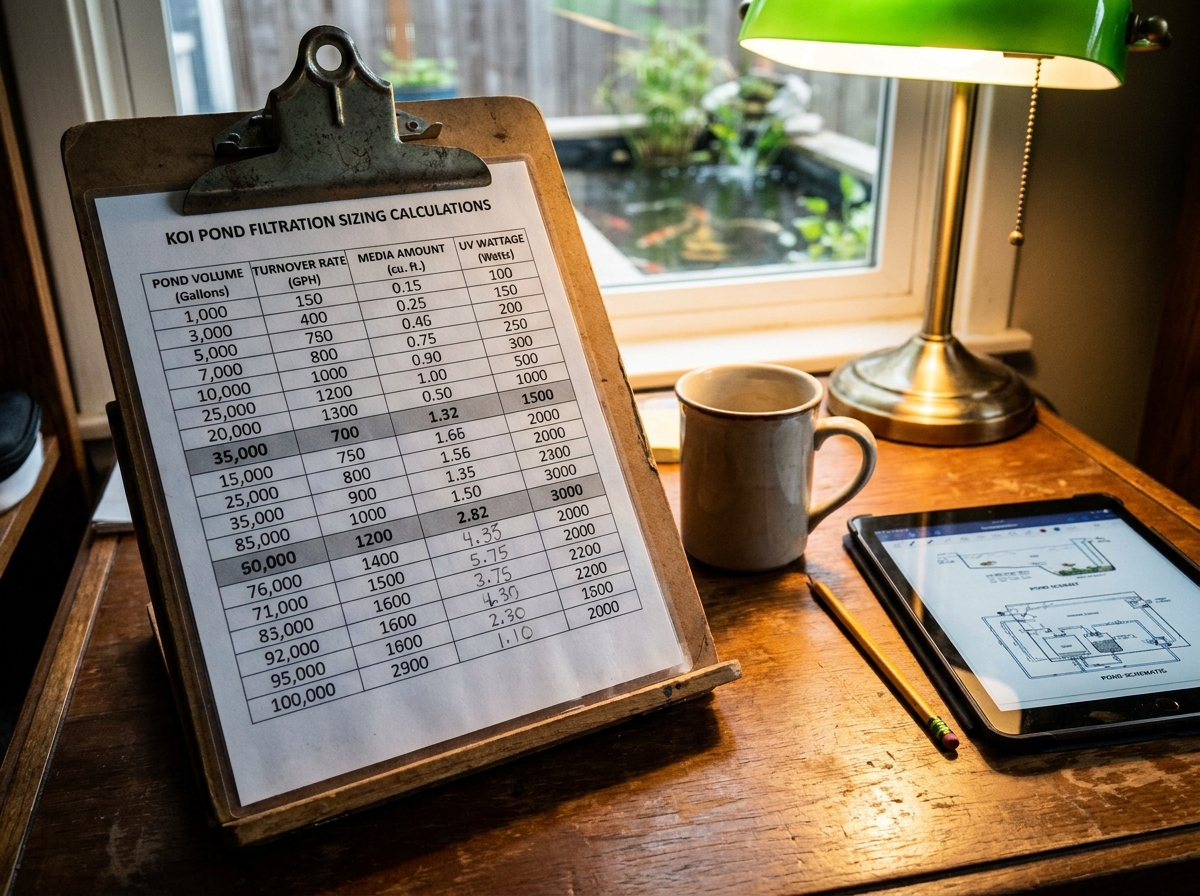
The filtration sizing depends on the koi load and the feeding rate. The general rule: the filter should turn over the entire pond volume at least once per hour, and ideally 2-3 times per hour. For the 6,732-gallon pond, the filter flow rate should be 6,732 gallons per hour (turnover of 1x), and the preferred flow rate is 13,464-20,196 gallons per hour (turnover of 2-3x). The flow rate is the rating of the pump, and the flow rate should account for the head loss (the resistance to the flow through the filter media and the piping).
The biological filtration media: the media should provide 1-2% of the pond volume, or 67-134 gallons of media for the 6,732-gallon pond. The media can be the moving bed (K1 or similar), the static bed (ceramic media or lava rock), or a combination. The biological filtration should be supplemented with the mechanical filtration (the pre-filter on the pump, the sieve, the drum filter) to prevent the biological media from clogging with the solids.
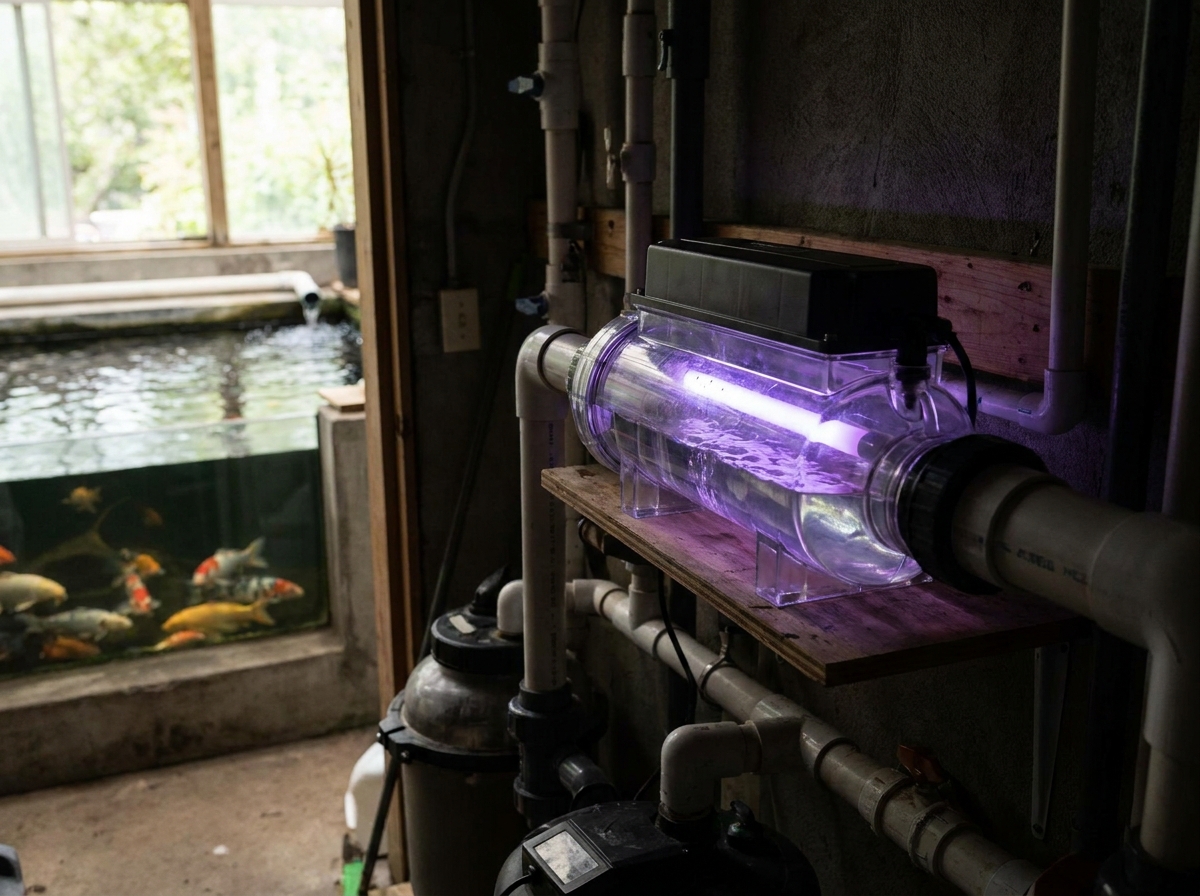
The UV sterilizer: the UV sterilizer is optional, but the UV sterilizer is highly recommended for the koi pond. The UV sterilizer controls the free-floating algae (the green water) and the free-floating bacteria. The UV sizing: 10 watts of UV per 1,000 gallons of pond water, or 67 watts of UV for the 6,732-gallon pond.
The practical recommendations by koi-keeping goal
The hobbyist with 3-5 koi. The pond size: 1,500-3,000 gallons, the surface area of 50-100 square feet, the depth of 4-5 feet. The filter: 2-3x turnover, 15-30 gallons of media, 15-30 watts of UV. The cost: $3,000-8,000 for the complete setup.
The serious hobbyist with 5-10 koi. The pond size: 4,000-8,000 gallons, the surface area of 100-200 square feet, the depth of 5-6 feet. The filter: 2-3x turnover, 40-80 gallons of media, 40-80 watts of UV. The cost: $8,000-20,000 for the complete setup.
The professional breeder with 10-30 koi. The pond size: 10,000-30,000 gallons, the surface area of 300-700 square feet, the depth of 6-8 feet. The filter: 2-3x turnover, 100-300 gallons of media, 100-300 watts of UV. The cost: $30,000-100,000 for the complete setup.
The one-page summary
The koi pond sizing is the math that produces a healthy koi environment. The depth: minimum 4 feet, recommended 5-6 feet, cold climate 6-8 feet. The surface area: 1 square foot per 1 inch of koi, recommended 50% more than the minimum. The capacity: surface area × average depth. The shape: the rectangle (most efficient), the kidney (more natural, more dead spots), the natural (most natural, most difficult). The filtration: 2-3x turnover, 1-2% media, 10 watts of UV per 1,000 gallons. The koi keeper who runs the math is the koi keeper who has a healthy koi pond. The math is the work. The math is what makes the difference.