
Kitten socialization: the 2-7 week sensitive window that shapes every cat for life
The 2-7 week window is the single most important developmental period in a cat's life. The kitten's brain is forming the synaptic connections that will determine how the adult cat categorizes the world — humans, other cats, dogs, surfaces, sounds, smells, novel situations. A novel stimulus encountered during the window is processed under low stress, with the kitten's stress hormones at baseline, and the stimulus is filed under "normal and safe." A novel stimulus encountered after the window closes is processed under higher stress, and is more likely to be filed under "potentially threatening." The owner who knows the window, and who ensures the kitten is exposed to a variety of positive experiences during it, produces a cat that is confident, adaptable, and resilient for life. The owner who misses the window produces a cat that is fearful, reactive, and difficult to live with. In this article I will walk through what the window actually is, the specific exposures that matter most, the protocol for foster breeders and new owners, and the consequences of missing the window.
What the 2-7 week window is
The 2-7 week window is the period during which the kitten's brain is most plastic to social learning. The window opens at about 2 weeks of age, when the kitten's eyes open and the kitten begins to engage with the environment. The window closes gradually between 7 and 9 weeks, with the most rapid closure between 6 and 7 weeks. By 9 weeks, the window is essentially closed — the kitten's social categories are largely set.
The mechanism: the kitten's stress response system is still developing during the window. The hypothalamic-pituitary-adrenal (HPA) axis, which produces cortisol in response to stress, is not fully functional in the first 2-3 weeks of life. The kitten that experiences a novel stimulus during the window has a low cortisol response, and the low cortisol response allows the kitten's brain to process the stimulus as safe. The kitten that experiences the same novel stimulus after the window closes has a fully functional HPA axis, and the cortisol response is high, and the high cortisol response causes the kitten's brain to file the stimulus as a potential threat.
The implication: the kitten's first experience with a human, with a dog, with a vacuum cleaner, with a car ride, with a hardwood floor, with a male voice, with a child — each of these experiences is being filed under "safe" or "threatening" during the window. The kitten that has 30 different positive experiences with humans during the window is the cat that has a generalized positive association with humans. The kitten that has 3 experiences with humans during the window is the cat that has a more specific association. The kitten that has 0 experiences with humans during the window (which happens in feral colonies where the kittens are handled only by the mother) is the cat that has a generalized fear of humans, and the fear is very difficult to reverse after the window closes.
What the kitten needs to be exposed to
The exposures that matter, in order of priority:
- A variety of humans. The kitten needs to be handled by men, women, children, people of different ethnicities, people wearing different clothing (hats, glasses, coats, boots), people with different voices (high-pitched, low-pitched, loud, soft). The more varied the exposure, the more generalized the positive association. The kitten that is handled by 10 different people during the window is a cat that is comfortable with all humans. The kitten that is handled by 1 person is a cat that is comfortable with that 1 person.
- Gentle handling exercises. The kitten that is gently handled — paws touched, ears touched, mouth touched, body lifted, belly exposed — is a cat that is comfortable with being handled for vet exams, for grooming, for medication. The kitten that is not handled gently is a cat that fights every vet exam. The handling should be 1-2 minutes per session, 2-3 sessions per day, with treats.
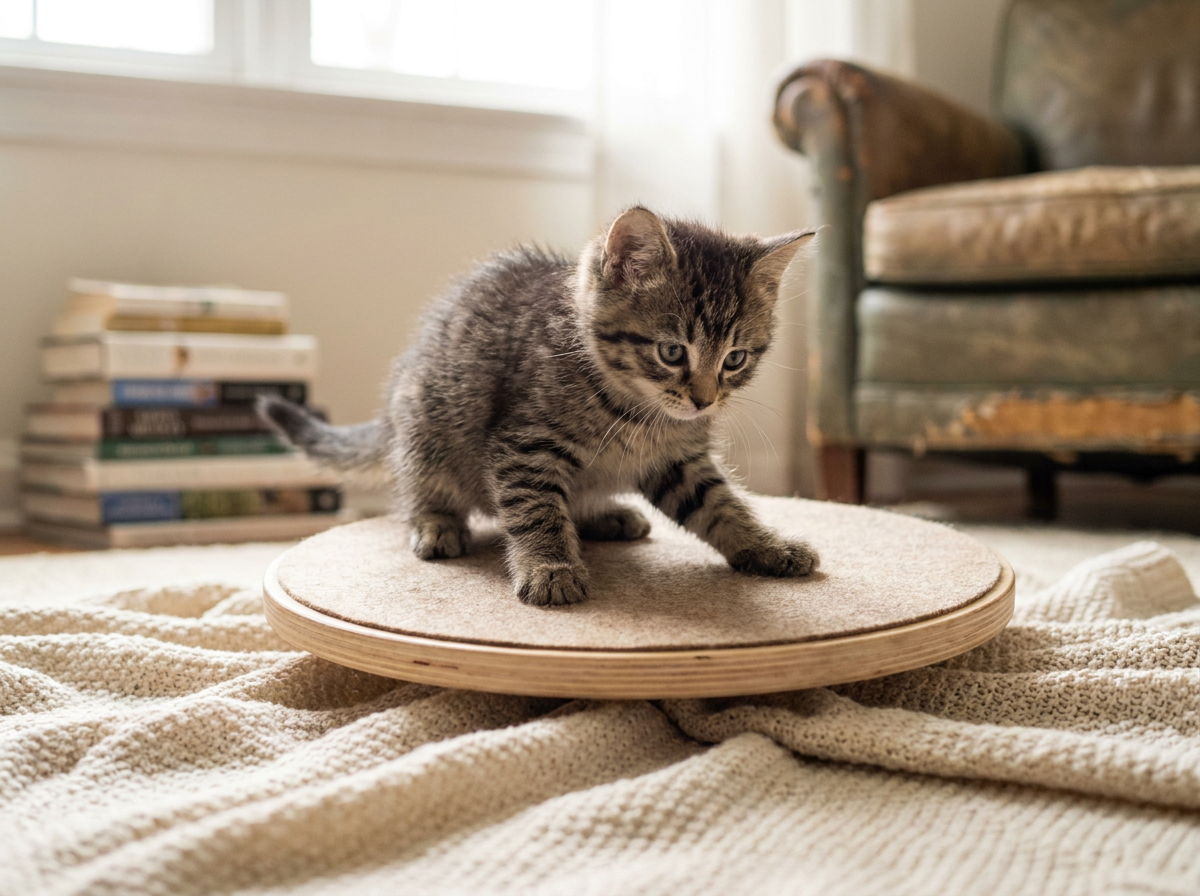
- A variety of surfaces. Tile, wood, carpet, grass, gravel, metal, plastic, wobble boards, different textures of bedding. The kitten that walks on a variety of surfaces during the window is a cat that does not develop surface phobias. The kitten that is raised on a single surface (a wire cage floor, a single blanket) is a cat that may balk at unfamiliar surfaces later.
- A variety of sounds. Vacuum, blender, hair dryer, doorbell, TV, music, thunder (recorded, at low volume), car engine, dog bark, baby cry. The kitten that hears a variety of sounds during the window is a cat that is not sound-phobic. The sound exposure should be paired with treats and play, to build a positive association.
- Other vaccinated, well-behaved cats and kittens. The kitten that plays with other kittens during the window is a cat that has appropriate social skills with other cats — bite inhibition, play signaling, body language. The kitten that is raised alone is a cat that does not learn these skills and may be socially awkward with other cats as an adult.
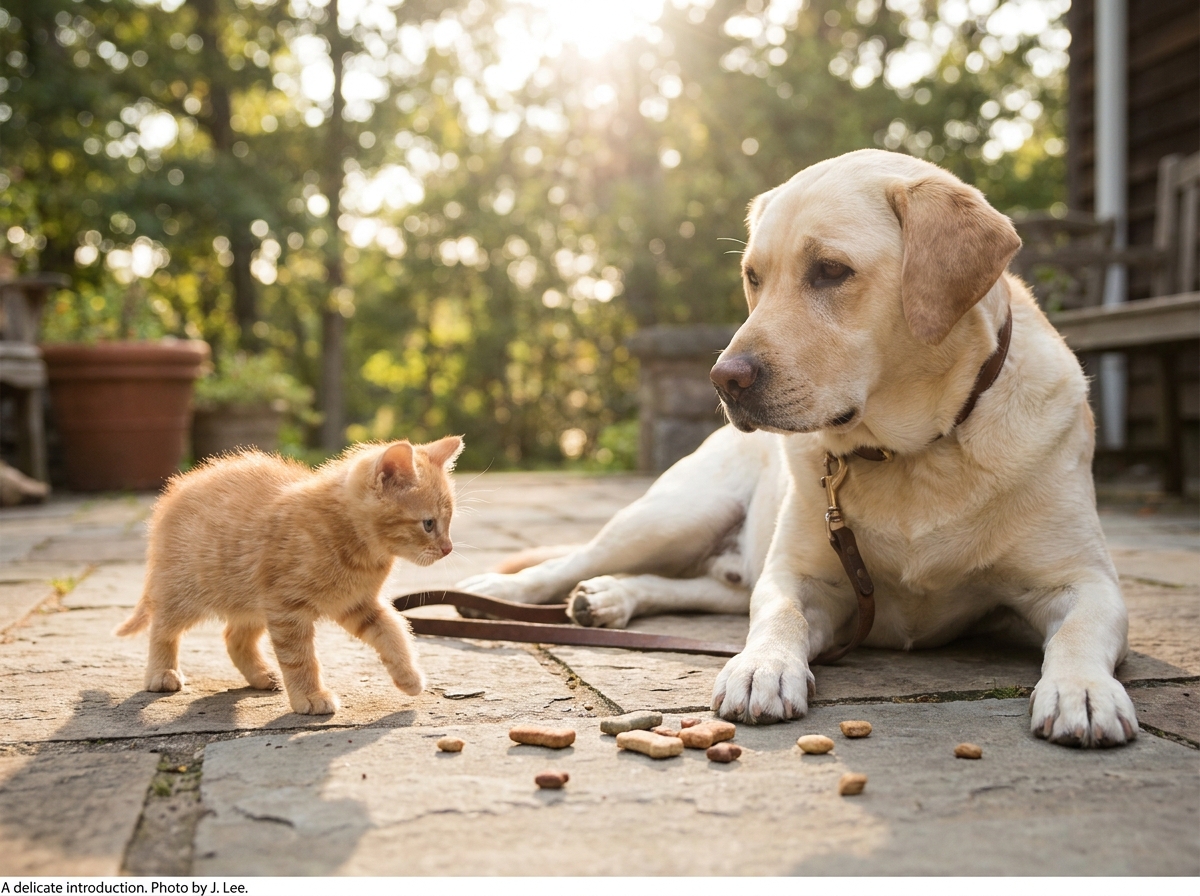
- A dog, if the household has one. The kitten that is exposed to a calm, cat-friendly dog during the window is a cat that has a positive association with dogs. The exposure should be supervised, gradual, and paired with treats. The kitten that is exposed to a calm dog for the first time at 6 months is a cat that is more likely to be fearful of dogs for life.
- The car, the carrier, the vet clinic. The kitten that is taken for short car rides, that is placed in a carrier, that visits the vet for "happy visits" (no exam, just treats and handling) during the window is a cat that is comfortable with these experiences. The kitten that is first placed in a carrier at 6 months for a vet visit is a cat that fights the carrier every time.
The protocol for the foster breeder
The foster breeder — the person who has the litter from birth to 8-12 weeks — has the responsibility for the socialization. The protocol:
- From 2 weeks of age, begin gentle handling sessions: 1-2 minutes per kitten, 2-3 times per day. Pick up the kitten, touch the paws, ears, and mouth, stroke the body, and place the kitten back with the mother. End each session with a small treat (the kitten can lick a tiny amount of baby food or a smear of wet food from a finger).
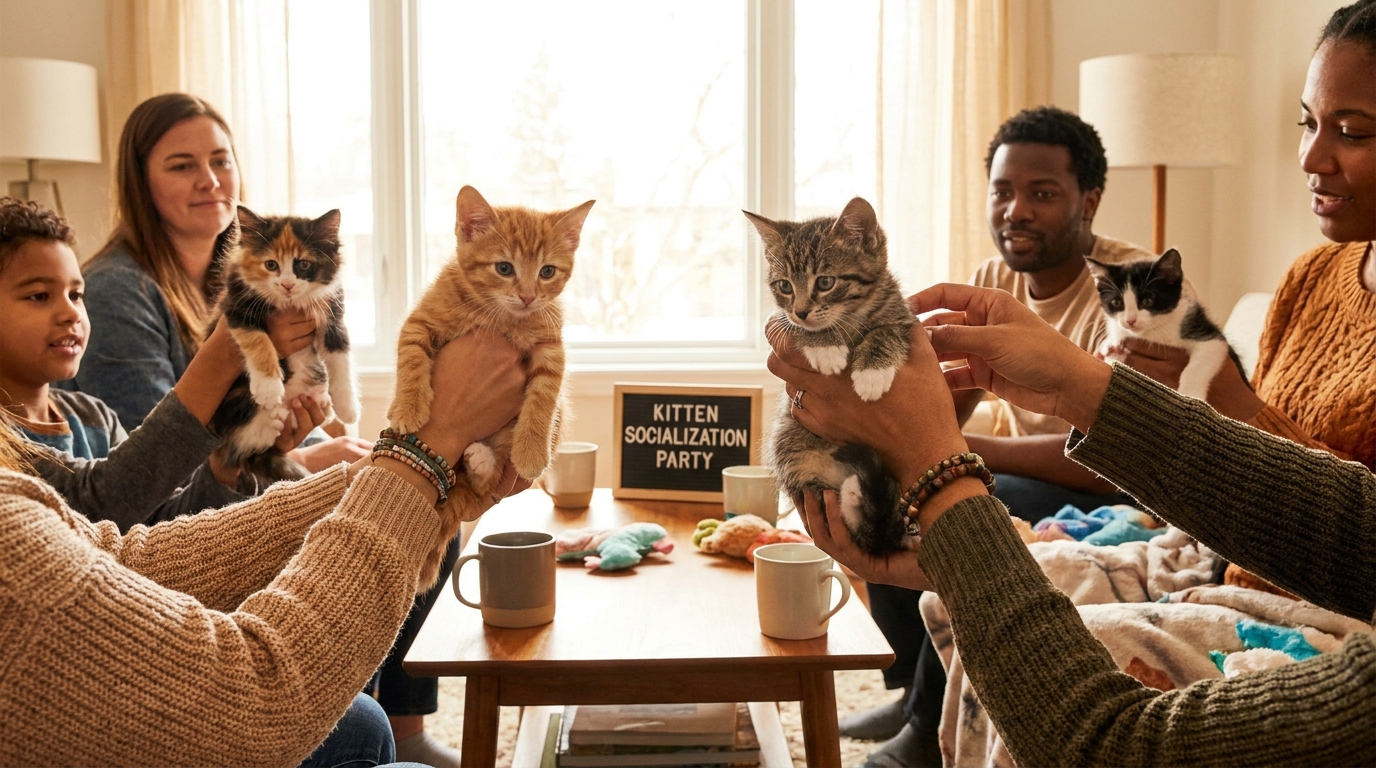
- From 3 weeks, introduce a variety of humans. Invite friends, family, and (if the breeder is comfortable) supervised children to visit the litter. Each visitor handles the kittens gently, in the presence of the mother cat, for 5-10 minutes per visit. The visits are 2-3 times per week, with 3-5 different visitors per week.
- From 4 weeks, introduce surfaces and sounds. Place a small wobble board, a piece of carpet, a piece of tile, and a piece of grass in the kitten area for the kittens to explore. Play recordings of household sounds (vacuum, blender, TV) at low volume during the kitten's awake periods, with treats.
- From 5 weeks, introduce the carrier and the car. Place the carrier in the kitten area with the door open and treats inside. Once the kittens are entering the carrier voluntarily, take a kitten for a short car ride (5 minutes, then back to the breeder). Pair the carrier and the car with treats and play.
- From 6 weeks, introduce a calm, cat-friendly dog. The exposure is supervised, gradual, and paired with treats. The dog should be calm, not puppy-playful (which can frighten kittens), and should be on a leash during the initial exposures.
- From 7 weeks, introduce the vet clinic. A "happy visit" — no exam, just treats and handling by the vet tech. The kitten is in the carrier, brought to the clinic, given treats, and brought home. The visit is paired with positive experience.
The protocol is time-intensive. The foster breeder who runs it for the full 7 weeks is the foster breeder who produces kittens that are confident, adaptable, and easy to place in homes. The foster breeder who does not run the protocol is the foster breeder who produces kittens that may develop behavior problems in their adult homes.
The protocol for the new owner
The new owner who adopts a kitten at 8-12 weeks of age has a narrower window — the kitten's primary socialization has already happened at the breeder. The new owner's job is to continue the socialization, not to start it. The protocol:
- The first 2 weeks at home: the kitten is in a base room, with the same gentle handling, the same exposure to a variety of surfaces and sounds, the same exposure to a variety of humans (in the household). The kitten is not exposed to novel situations, novel humans, or novel animals during the first 2 weeks — the kitten is decompressing and adjusting to the new home.
- From week 3 onwards: the kitten begins gentle exposure to the rest of the household — other pets, other rooms, novel humans (visitors, friends, family), the car, the carrier. The exposures are gradual, paired with treats, and supervised. The kitten that has had a strong foundation from the breeder is the kitten that responds quickly to the new owner's continuation of the protocol.
- The exposure to the outdoors: the kitten is not allowed outdoors unsupervised, but the kitten can be leash-trained or harness-trained for safe outdoor exposure. The window for socialization is closing, and the owner has 2-4 weeks of high-quality window left. The owner who maximizes those 2-4 weeks produces a confident adult cat.
The consequences of missing the window
The kitten that misses the window — whether because it was raised in a feral colony, a poorly-socialized cattery, a barn, or a home where the human exposure was minimal — is the cat that develops fear-based behavior problems as an adult. The cat is afraid of humans, afraid of novel situations, afraid of other cats, afraid of dogs, afraid of new environments. The fear does not resolve on its own; the fear is hardwired into the cat's social categories, and the cat's default response to a new human is to hide or to flee.
The owner of the undersocialized cat can still help the cat, but the help is the 8-week desensitization protocol, not the socialization window. The protocol produces a partial change in the cat's emotional response, but it does not produce the generalized positive association that the window would have produced. The owner who understands this is the owner who has realistic expectations: the undersocialized cat will be a cat that needs a quiet home with few visitors, predictable routine, and patient handling. The undersocialized cat will not be the cat that walks up to every visitor and demands to be petted.
The one-page summary
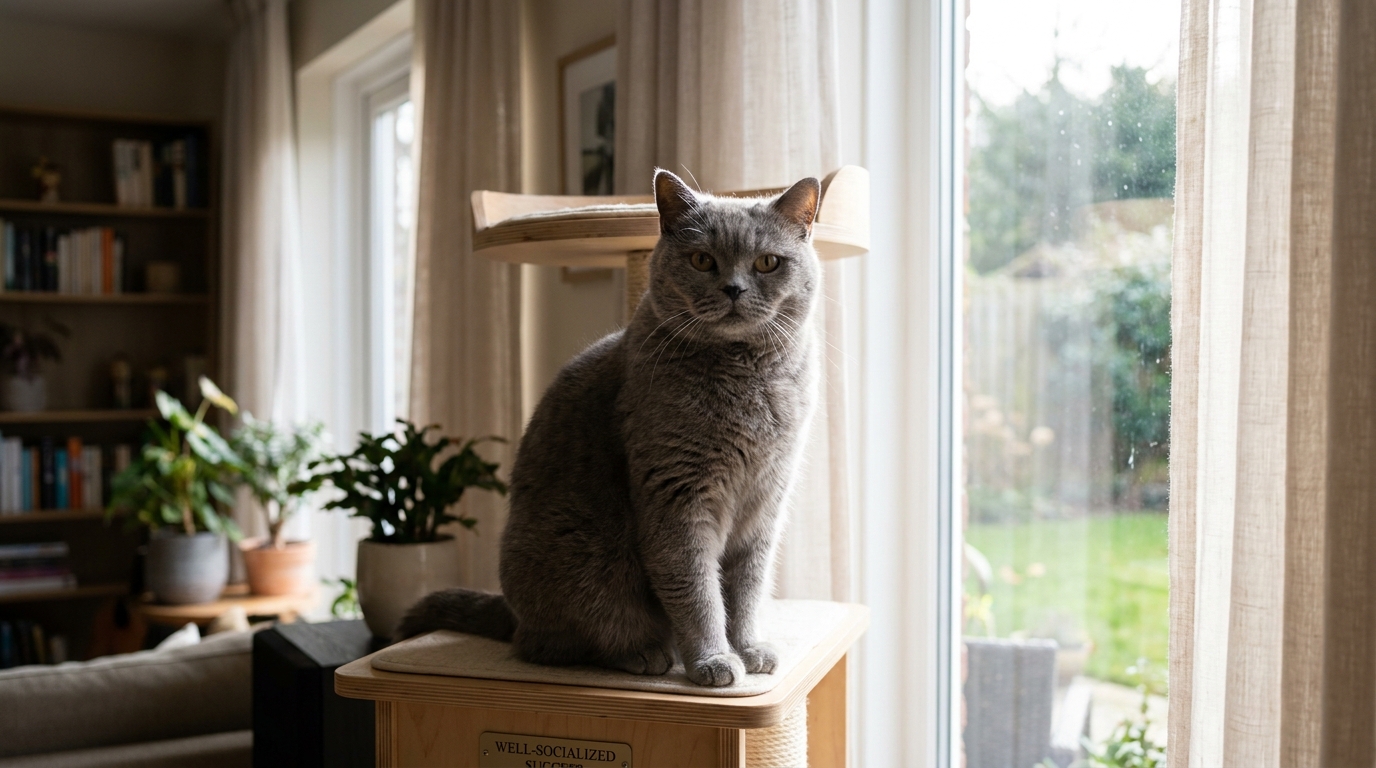
The 2-7 week window is the single most important developmental period in a cat's life. The exposures during the window — humans, surfaces, sounds, other animals — are what determine the cat's lifelong social categories. The foster breeder who runs the protocol produces confident, adaptable kittens. The new owner who continues the protocol produces confident, adaptable adults. The owner who misses the window produces a cat that is fearful for life. The window is the work. The window is what makes the difference between a cat that fits into a human family and a cat that does not.