

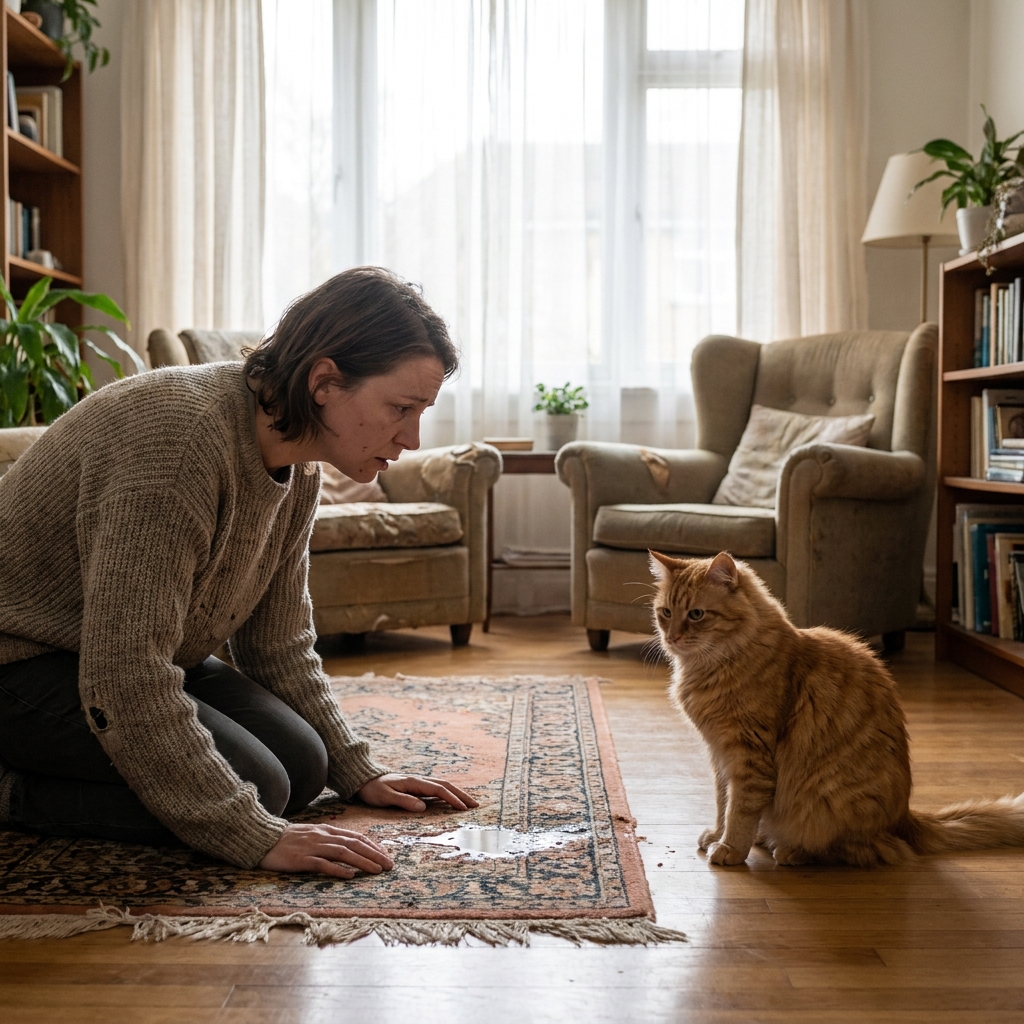
Inappropriate urination: 12 behavior vs medical causes and how to tell them apart
Inappropriate urination in cats is the single most common reason owners surrender cats to shelters, call veterinarians in frustration, or post on forums at 2 AM asking whether to euthanize. The behavior is stressful, the cleanup is relentless, and most owners have no idea where to start. The most important thing to know is that the symptom - peeing outside the box - has at least twelve distinct causes, split roughly evenly between medical and behavioral. The treatment for a medical cause and the treatment for a behavioral cause are different, and missing the distinction wastes months and damages the cat-owner bond.
This article walks through the twelve most common causes, the signal that points to each, and the first step in addressing it. It is not a substitute for a vet visit. The first step in every case is a vet visit to rule out the medical causes. Behavioral work on a medically sick cat is wasted effort.
The framework
A cat that urinates outside the box is communicating one of three things:
- I cannot comfortably reach the litter box. Pain, mobility, location, or litter preference issue.
- The litter box itself is the problem. Dirty, wrong litter, wrong style, wrong location, or a previous negative experience.
- I have a medical condition that affects urination. Urinary tract infection, bladder stones, idiopathic cystitis, diabetes, kidney disease, hyperthyroidism.
In the framework below, the twelve causes are split across these three categories.
Medical causes (rule these out first)
1. Feline idiopathic cystitis (FIC)
The single most common cause of inappropriate urination in cats under 10. FIC is a sterile inflammation of the bladder - no bacteria, no stones, no identifiable cause, but the bladder wall is inflamed and urination is painful. The cat associates the litter box with the pain and starts avoiding it.
Signal: straining in the box, producing small amounts of urine, blood-tinged urine, frequent attempts, vocalization while urinating. The cat may also urinate in unusual places - the bathtub, the sink, soft surfaces like laundry.
First step: vet visit with a urinalysis. Treatment includes pain medication, anti-inflammatory medication, increased water intake, and environmental enrichment to reduce stress.
2. Urinary tract infection (UTI)
Less common in young cats than in older cats. Bacterial infection of the bladder, often secondary to another condition (diabetes, kidney disease, bladder stones).
Signal: similar to FIC - straining, blood, frequent attempts. Often accompanied by a fever and lethargy.
First step: vet visit with urinalysis and culture. Antibiotics based on the culture result.
3. Bladder stones (uroliths)
Mineral crystals or stones in the bladder. Can cause pain, obstruction, and recurrent infections. Some stones (struvite) can be dissolved with diet; others (calcium oxalate) require surgical removal.
Signal: similar urinary symptoms, sometimes palpable mass in the abdomen, sometimes sudden obstruction (especially in male cats - this is a life-threatening emergency).
First step: vet visit with imaging (X-ray or ultrasound) and urinalysis. Treatment depends on stone type.
4. Urethral obstruction (blocked cat)
This is the most dangerous of the urinary conditions. A male cat's urethra becomes plugged with mucus, crystals, or a stone. The cat cannot urinate. Toxins build up in the blood. Without treatment within 24-48 hours, the cat dies.
Signal: repeated unproductive trips to the litter box, vocalization, a hard painful abdomen, lethargy, vomiting. This is a 2 AM emergency vet visit, not a wait-until-Monday situation.
First step: emergency vet. Catheterization, fluids, monitoring for reblockage.
5. Diabetes mellitus
Excess glucose in the blood spills into the urine, drawing water with it. The cat produces large volumes of dilute urine. The litter box gets saturated faster than the cat can use it cleanly, and the cat starts finding other places.
Signal: large amounts of urine, increased thirst, weight loss despite normal or increased appetite.
First step: vet visit with blood glucose and fructosamine. Treatment includes insulin and dietary management.
6. Chronic kidney disease (CKD)
The kidneys lose the ability to concentrate urine. The cat produces large volumes of dilute urine. Similar to diabetes, the litter box cannot keep up.
Signal: large urine volumes, increased thirst, weight loss, sometimes vomiting, sometimes bad breath.
First step: vet visit with bloodwork (BUN, creatinine, SDMA) and urinalysis. Treatment includes renal diet, phosphate binders, and sometimes subcutaneous fluids at home.
7. Hyperthyroidism
Overactive thyroid gland, most common in cats over 10. The metabolism runs hot, the cat eats more, loses weight, and produces more urine.
Signal: weight loss despite good appetite, hyperactivity or restlessness, increased thirst and urination, sometimes vomiting or diarrhea.
First step: vet visit with T4 blood test. Treatment includes medication, radioactive iodine, or surgery.
8. Arthritis or mobility issues
Not strictly urinary, but arthritis is a common cause of litter box avoidance in older cats. The cat cannot comfortably step over the high side of a covered litter box, or cannot walk to a litter box on a different floor, or cannot squat properly because of hip pain.
Signal: hesitance to jump, stiffness, sometimes urinating right next to the box (the cat tried but could not get in), multiple boxes in the home but the cat uses the easiest one or none of them.
First step: vet visit for mobility assessment. Treatment includes pain management (Solensia, NSAIDs where appropriate) and switching to a low-entry litter box.
Behavioral causes (after medical is ruled out)
9. Litter box aversion - hygiene
The box is dirty and the cat is looking for a clean place. Cats have a strong preference for clean substrate. A box that has not been scooped in 24 hours is too dirty for many cats.
Signal: the cat uses the box sometimes, but produces "extra" urine elsewhere, often near the box or in a similar type of substrate (the bathtub, the sink, a soft towel).
Fix: scoop twice daily. Empty and refill the box with fresh litter weekly. Replace plastic boxes every 1-2 years because the plastic absorbs odor over time.
10. Litter box aversion - litter type
The cat dislikes the texture or smell of the litter. Most cats prefer unscented, fine-grained clumping clay. Scented litter, pine pellets, crystals, and very coarse litter can all cause avoidance.
Signal: cat sniffs the box, does not enter, leaves. Or enters briefly, scratches, leaves without urinating.
Fix: switch to unscented clumping clay. Offer multiple boxes with different litter types side by side and let the cat vote with its feet.
11. Litter box aversion - location or style
The box is in a high-traffic area, near a noisy appliance, near a dog, or in a corner the cat feels trapped in. Or the box is covered, and the cat does not like the cover (most cats prefer uncovered).
Signal: the cat consistently avoids a specific box, uses other boxes in the home, or eliminates in a location that suggests a preference for a different kind of space.
Fix: move the box to a quiet, accessible location. Try removing the cover. Provide one box per cat plus one extra, distributed across multiple rooms and floors.
12. Stress, anxiety, or territorial marking
In multi-cat households, in homes with recent changes (new baby, new pet, moved furniture, moved home), or with outdoor cats visible through windows, the cat may urinate inappropriately as a stress response or as territorial marking. Marking is usually small amounts on vertical surfaces; stress urination is usually larger amounts on horizontal surfaces.
Signal: small urine marks on walls, doors, or new objects in the home; or full urination episodes in the middle of the floor in homes with multiple cats or recent changes.
Fix: identify and reduce the stressor. Provide vertical space (cat trees, shelves), multiple feeding stations, multiple litter boxes. In multi-cat households, treat the relationship between the cats. Feliway (a synthetic facial pheromone analog) helps some cats. Severe cases may need a veterinary behaviorist and anti-anxiety medication.
The diagnostic sequence
When a cat starts urinating outside the box, the right order is:
- Vet visit within 48 hours for a physical exam, urinalysis, and bloodwork. Rule out medical causes first.
- Address the litter box setup in parallel - more boxes, cleaner boxes, different litter, different locations. The improvements do not hurt and they help in many cases.
- If medical and litter box are both addressed and the behavior continues, treat as a stress/anxiety issue. Feliway, environmental enrichment, behavior consultation.
The mistake is the reverse order - working on litter boxes and stress for months before the vet visit, while the cat has a UTI that is getting worse. A few hundred dollars of diagnostics at the start saves a thousand dollars of behavioral work on a cat that needed antibiotics.
The bottom line
Inappropriate urination is a solvable problem in the vast majority of cases. The solution requires identifying the right cause and applying the right treatment. Medical causes need a vet. Behavioral causes need management changes. Sometimes it is both. The owner's job is to get to the vet quickly, take notes on the pattern, and be willing to make changes to the home environment. The cat's job is to use the box once the underlying issue is resolved.
About the author
Elena Rossi is a feline behavior specialist based in Milan with a degree in veterinary medicine and a post-graduate certification in animal behavior from the European College of Animal Welfare and Behavioural Medicine. She has spent 15 years working with cat behavior cases in private practice, shelter consultation, and as a scientific advisor for Italian and international feline welfare organizations. See her full profile at [authors/Elena Rossi/](../Elena%20Rossi.md).