

Arthritis in dogs: a multi-modal pain plan that actually helps
If your senior dog's arthritis plan is "give him an NSAID when he looks stiff", you are leaving 60% of the available relief on the table. Modern veterinary pain management is multi-modal — meaning we stack interventions that work through different mechanisms so each one can be used at a lower dose, with fewer side effects, and greater overall comfort.
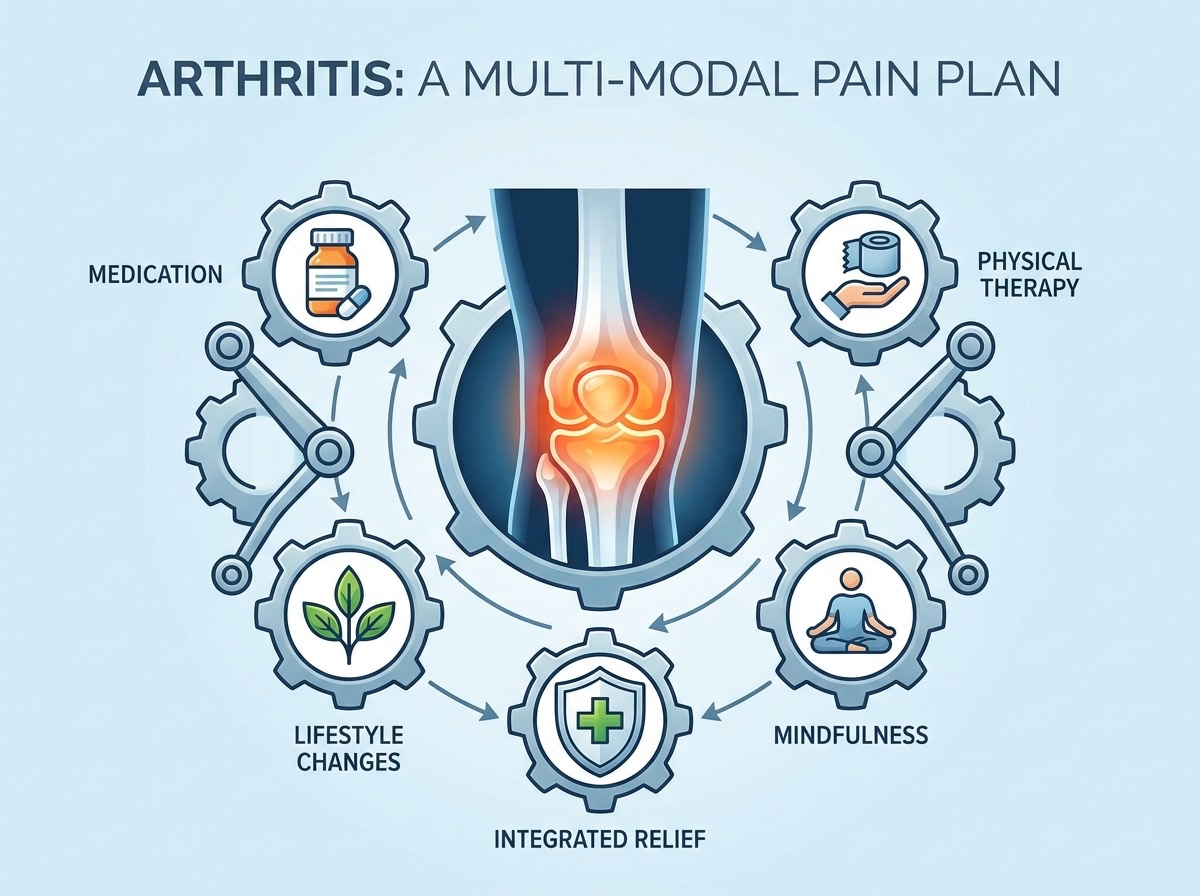
The five layers, in the order I usually add them:
- Weight optimisation
- Controlled movement
- Environment modification
- Supplements (omega-3, joint support)
- Pharmaceutical pain control
Layer 1: weight optimisation (the highest-impact intervention)
A lean dog with arthritis is a comfortable dog. Every extra kilo loads the joint roughly 4× that weight in force across the cartilage. A 30 kg dog who loses 3 kg removes 12 kg of force per step. That single change often produces more visible improvement than any medication.
The goal is a body condition score (BCS) of 4/9 for most dogs with arthritis. Visible waist from above, ribs easily felt under a thin fat cover.
If your dog is overweight, ask your vet for a calorie target. Most senior arthritic dogs need 20–30% fewer calories than the maintenance figure on the bag.
Layer 2: controlled movement
The instinct is to "rest the bad leg". This is wrong. Cartilage depends on cyclic loading for nutrient exchange. Total rest accelerates cartilage loss.
What works:
- Low-impact daily movement: 15–30 minutes of leash walking, two or three times a day.
- Swimming or hydrotherapy: ideal if available. Non-weight-bearing, full range of motion.
- Avoid high-impact: jumping, ball-chasing, sudden sprints, stairs.
- Consistent surface: grass, dirt, or carpet over hardwood. Avoid slippery floors.
The single biggest mistake I see is the "weekend warrior" pattern — sedentary all week, then a 5 km hike on Saturday. That produces a flare, which leads to more rest, which leads to muscle loss, which leads to worse arthritis. Smooth daily movement wins.
Layer 3: environment modification
Small changes in the home can remove pain triggers:
- Ramps instead of stairs to the sofa, bed, or car
- Non-slip runners on hardwood or tile floors
- Orthopaedic bed with memory foam — keeps joints in neutral position
- Raised food and water bowls for tall dogs (reduces neck flexion strain)
- Nail trimming every 3–4 weeks; long nails alter gait and load joints abnormally
These are not cosmetic changes. Each one removes a small daily pain stimulus that compounds.
Layer 4: supplements with actual evidence
Three supplements have meaningful clinical-trial support in canine osteoarthritis:
| Supplement | Evidence strength | Effective daily dose (medium dog) |
|---|---|---|
| Omega-3 (EPA + DHA from fish oil) | Strong | 50–75 mg/kg combined EPA+DHA |
| Green-lipped mussel (GLM) | Moderate | 20–30 mg/kg of GLM extract |
| Undenatured type II collagen (UC-II) | Moderate | 40 mg/day |
- Omega-3: the strongest evidence. Look for marine oil with EPA and DHA totals on the label, not just "fish oil". Takes 6–8 weeks to see effect.
- GLM: works through a different mechanism than omega-3 and stacks well with it.
- UC-II: a smaller, more targeted supplement; the evidence is encouraging but still maturing.
Skip: glucosamine + chondroitin as a primary intervention. The effect in dogs is small and inconsistent in clinical trials. Use it only as an inexpensive add-on, not as the main joint strategy.
Layer 5: pharmaceutical pain control
Medication is layer 5, not layer 1, for a reason: the layers above reduce the dose you need. Pharmaceuticals come in roughly four tiers.
Tier 1: NSAIDs (e.g., carprofen, meloxicam, firocoxib)
The workhorse of canine arthritis pain. Effective, fast-acting, well-studied. The downsides are real: GI ulceration risk, liver and kidney monitoring, contraindicated in some pre-existing conditions. Never combine NSAIDs with corticosteroids, and never give an over-the-counter human NSAID to a dog without vet supervision.
Tier 2: adjunctive analgesics
Drugs added to an NSAID to reduce pain through other pathways:
- Gabapentin: neuropathic component of arthritis, often significant in chronic cases
- Amantadine: NMDA-receptor antagonist, stacks with NSAIDs for chronic pain
- Tramadol: opioid-like, useful for flares but variable efficacy in dogs
Tier 3: disease-modifying drugs
- Adequan (polysulfated glycosaminoglycan): injectable, given as a loading series then maintenance. Strong evidence for slowing cartilage degradation.
- Librela (bedinvetmab): a monthly monoclonal antibody injection against nerve growth factor (NGF). Effective for many dogs with osteoarthritis pain, with a different side-effect profile than NSAIDs.
Tier 4: interventional and surgical
- Stem cell therapy: emerging; mixed evidence
- Platelet-rich plasma (PRP): useful for some joints
- Total hip replacement: gold standard for severe hip dysplasia / OA
- Femoral head ostectomy (FHO): salvage procedure for small/medium dogs
How the layers combine
A typical senior dog with hip osteoarthritis on my service ends up on a plan that looks like:
- BCS 4/9 (layer 1)
- 25 min leash walk twice daily + weekly swim (layer 2)
- Ramps, runners, orthopaedic bed (layer 3)
- High-EPA fish oil + GLM (layer 4)
- Carprofen + gabapentin + monthly Librela (layer 5)
The NSAID dose in this dog is typically lower than it would be without layers 1–4, which means lower GI risk, lower liver load, and longer tolerance of the medication over years.
When to escalate the plan
Call your vet sooner rather than later if:
- Your dog stops rising without obvious reluctance (pain escalation)
- A previously comfortable dog starts panting at rest
- Appetite drops
- There is a sudden limp on a leg that was previously even
- Any "yelp" or guarding behaviour on handling
A small flare caught early is a one-week NSAID course. A small flare ignored becomes a major flare that takes months to recover from.
Bottom line
Arthritis is not solved by a pill. The dogs I see doing best at 12, 14, even 16 years old are the ones whose owners stacked weight, movement, environment, supplements, and medication — in that order — and adjusted the stack every 6 months. The plan is a living thing, not a prescription.
---
About the author: [Dr. James Morrison](../James%20Morrison.md), DVM, is a Cornell-trained veterinarian and founder of Bayview Animal Hospital in San Francisco, with 26 years of clinical practice.