

When to go to the emergency vet: the decision framework every owner needs
The most expensive part of pet ownership is not the routine care — it is the emergency visit you should have made earlier. The decision to go to the emergency vet (and the decision NOT to go) is one of the highest-stakes judgment calls a pet owner makes. Get it wrong in the conservative direction (go when you don't need to) and you waste money and time. Get it wrong in the other direction (don't go when you should) and your pet dies.
This is the framework I share with every new puppy and kitten owner. It is not a substitute for calling your vet, but it tells you when calling is essential and when it is reasonable to wait.
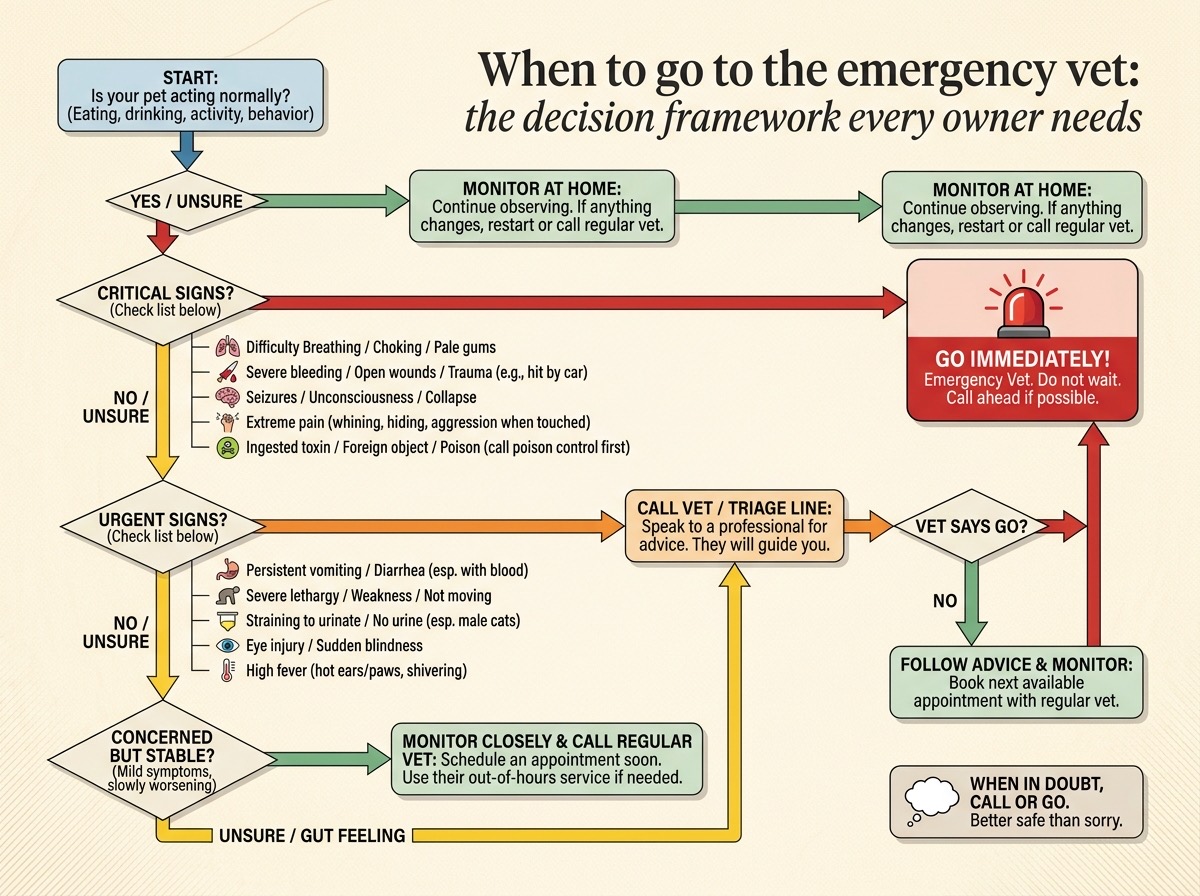
The "go now" list: no hesitation
These presentations warrant immediate ER visit, regardless of time of day:
Airway and breathing
- Blue or purple gums or tongue (cyanosis): oxygen deprivation
- Open-mouth breathing in a cat (always abnormal in cats)
- Rapid breathing at rest (>50 breaths/minute in dogs, >60 in cats) sustained
- Stridor (high-pitched sound on inhale): airway obstruction
- Gums or tongue swelling: allergic reaction, possibly anaphylactic
Cardiovascular
- Collapse or fainting: cardiac or neurological emergency
- Sustained rapid heart rate at rest (>180 bpm in dogs, >220 in cats)
- Pale, white, or grey gums: shock or severe blood loss
- Cold extremities with rapid heart rate: shock
- Distended, hard abdomen in a large deep-chested dog: gastric dilatation and volvulus (GDV / bloat) — minutes matter
Trauma
- Hit by car, even if the pet seems fine
- Visible bleeding that does not stop with 5 minutes of direct pressure
- Suspected fracture (limb deformity, inability to bear weight, painful swelling)
- Fall from height (>1 metre for cats, >2 metres for dogs)
- Animal attack (especially puncture wounds which can be deep and hidden)
- Eye injury (protruding eye, sudden blindness, blood in eye)
- Burns (chemical, electrical, or thermal covering >5% of body)
Toxins
- Known or suspected toxin ingestion within the past 2 hours
- Chocolate (especially dark), xylitol, grapes/raisins, onions/garlic
- Human medications (ibuprofen, acetaminophen, ADHD meds, antidepressants)
- Rodenticide (any amount)
- Antifreeze
- Lilies (cats, even pollen)
- Grapes, raisins, currants
- Macadamia nuts
- Human foods in toxic amounts
- Snake bite (any species)
- Toad poisoning (cane toad, marine toad, Colorado river toad)
- Smoke inhalation
Neurological
- Seizure lasting more than 3 minutes (status epilepticus)
- Multiple seizures in 24 hours (cluster seizures)
- Sudden loss of balance or coordination (vestibular disease, stroke, toxin)
- Head pressing (pressing head against walls or furniture, often sign of severe neurological disease)
- Sudden blindness (retinal detachment, glaucoma, neurological)
Urinary
- Male cat straining to urinate with no output (urethral obstruction — life-threatening within 24–48 hours)
- Straining without producing urine in any pet
Gastrointestinal
- Bloated, hard, distended abdomen (especially deep-chested dogs)
- Persistent vomiting with blood (haematemesis)
- Suspected bloat / GDV
Reproductive
- Pregnant animal in active labour for more than 2 hours without producing offspring
- Bloody vaginal discharge in a pregnant animal with no labour
Other
- Heat stroke (rectal temp >40°C / 104°F)
- Hypothermia (rectal temp <35°C / 95°F)
- Drowning or near-drowning
- Electrocution (chewing cords)
- Severe burns
- Anaphylaxis (facial swelling, difficulty breathing, collapse)
If any of these are happening: go to the emergency vet now. Call ahead while you are en route.
The "call your vet now" list: same-day care needed
These presentations warrant a call to your regular vet for same-day triage. They may or may not require an ER visit, but they cannot wait days:
Behavioural changes
- Not eating for more than 24 hours (especially in cats — risk of hepatic lipidosis after 48–72 hours of anorexia)
- Lethargy for more than 24 hours without explanation
- Hiding for more than 24 hours in a normally social cat
- Sudden aggression in a previously gentle pet (often pain-related)
Gastrointestinal
- Vomiting more than 3 times in 24 hours
- Diarrhoea with blood (haematochezia or melena)
- Repeated unsuccessful vomiting attempts (non-productive retching)
- Diarrhoea lasting more than 48 hours
- Constipation lasting more than 48 hours in a cat (especially if previously regular)
Urinary
- Increased urination in a previously house-trained pet
- Blood in urine (haematuria)
- Straining to urinate that produces small amounts frequently (possible early obstruction)
- Inappropriate urination in a cat (especially male) — could be FLUTD
Respiratory
- Mild cough that does not resolve in 24–48 hours
- Sneezing with nasal discharge lasting more than 3–5 days
- Noisy breathing that is new
Skin
- Sudden facial swelling (could be allergic, often not anaphylactic but worth a vet check)
- Open wounds
- Sudden hair loss in patches
Lameness
- Sudden lameness with no obvious cause
- Lameness with swelling
- Inability to bear weight
Eye
- Red eye
- Squinting or holding eye closed
- Discharge from eye
- Cloudiness or change in eye appearance
Other
- Pale gums
- Sudden weight loss
- Pregnancy-related concerns (loss of appetite, vomiting in late gestation, abnormal discharge)
Call your regular vet. They will triage by phone and tell you whether same-day visit, next-day visit, or wait-and-watch is appropriate.
The "watch and wait" list: monitor but don't panic
These presentations are common, often benign, and usually resolve without intervention. They warrant a vet visit only if they persist or worsen:
Mild self-limiting issues
- Single episode of vomiting in an otherwise bright pet with normal appetite
- Soft stool for 1–2 days without other signs
- Mild decrease in appetite for one meal
- Sneezing for 1–2 days in an otherwise bright pet
- Mild cough for 1–2 days in an otherwise bright pet
- Single episode of diarrhoea in an otherwise bright pet
- Minor limp that improves with rest
- Small amount of clear eye discharge
- Mild itching without skin lesions
The rule: monitor for 24–48 hours. If it resolves, no vet visit needed. If it persists or any new signs appear, move up to the "call your vet" list.
Time-of-day considerations
Not every emergency is a 2 AM emergency. The clinic hour can influence the right move:
During regular vet hours
Always call your regular vet first. They have your pet's history, they can see you sooner than the ER, and they can do follow-up. The ER is a backup, not a replacement.
After hours but not "middle of the night"
Most cities have after-hours emergency clinics. The wait is often shorter than at a 24-hour facility, and the cost is similar. Call ahead to confirm they are open and accepting patients.
Middle of the night (10 PM – 6 AM)
The hardest call. The considerations:
- True emergencies go to the 24-hour facility regardless of wait time or cost
- Same-day urgent issues: if the pet is stable, wait until your regular vet opens (within hours), call them first thing
- Mild, persistent issues: unless they have escalated during the night, waiting is acceptable
- "Just want reassurance": if the pet is eating, drinking, walking, and not in obvious distress, you can wait
Cost considerations
Emergency vet care is expensive. A single ER visit can cost £500–3,000+ depending on diagnostics and treatment. This is real, and owners have real financial constraints.
Practical approaches:
- Pet insurance: covers 70–90% of emergency costs after deductible. Worth it before the emergency
- CareCredit / Scratchpay: financing options offered by most US vet clinics
- Humane societies and veterinary schools: sometimes offer reduced-cost emergency care
- Open communication with the vet: most vets will work with you on a phased treatment plan if you cannot afford the full workup
What you should not do:
- Withhold care for a life-threatening emergency because of cost. Discuss payment options with the vet
- Self-treat with internet advice for serious conditions
- Wait too long hoping the pet will "get better"
Communication with the ER vet
When you arrive at the ER, the vet will need specific information. Have ready:
- What happened: timeline, sequence of events
- What the pet was doing before: normal activity level, eating, drinking
- What you've given: medications, supplements, food, treats, human food
- What other pets are at home: are they affected
- Recent changes: new food, new treats, new medications, new household products, new plants, new pets
- Vaccination status: especially relevant for wounds, bites, and certain infectious diseases
The better the history you provide, the faster the vet can diagnose.
The cost-benefit framework
A useful decision aid for the borderline cases:
Cost of ER visit: £300–1,000 for basic triage and diagnostics, more for treatment
Cost of NOT going when you should: the pet's life, or chronic disease that becomes harder to treat over time
Probability the issue is serious: based on the symptoms, your vet's opinion, the duration
The general rule: err on the side of going. The cost of an unnecessary ER visit is recoverable. The cost of a missed emergency is not.
When NOT to go to the ER
There are times to avoid the ER:
- For routine care (vaccines, nail trims, non-urgent skin issues): your regular vet is the right place
- For second opinions without urgency: schedule with your regular vet for a follow-up
- For convenience at 2 AM: if the issue can wait 6 hours for regular vet, it should wait
- For repeated visits without progress: if the ER vet has seen your pet and the diagnosis is unclear, schedule with a specialist
How to find an ER vet (before you need one)
In an emergency, you do not want to be searching. Identify the nearest 24-hour emergency veterinary hospital before you need it:
- Ask your regular vet: they have a recommendation and often a direct referral line
- Search online: "emergency vet near me" + your location
- Check the directory of the Veterinary Emergency and Critical Care Society (VECCS): member hospitals meet specific standards
- Save the address and phone in your phone under a clear name like "ER VET"
What to bring to the ER
If you have time (and you're not in a respiratory or cardiac crisis):
- Your pet's recent medical records (if your vet has them online, the ER can usually access)
- A list of current medications and supplements
- A list of known allergies or reactions
- A photo of the toxin label (if toxin ingestion)
- The actual packaging of any human medication or supplement your pet may have eaten
- A friend or family member: for emotional support and to drive while you hold the pet
The bottom line
The ER vet decision is one of the highest-stakes calls a pet owner makes. The "go now" list is unambiguous — those presentations need an emergency visit regardless of hour. The "watch and wait" list is also unambiguous — those presentations usually resolve and don't justify an ER trip. The hard cases are in between. When in doubt, err on the side of going. The cost of an unnecessary visit is recoverable. The cost of a missed emergency is not. Know the location and phone number of your nearest 24-hour emergency veterinary hospital before you need it. And when you do go, bring the information the vet needs: what happened, what the pet was doing, what they've been given, what other pets are at home, what has changed. The first ten minutes of history you provide can save the next ten minutes of diagnostic workup.
---
About the author: [Dr. Sofia Martinez](../Sofia%20Martinez.md), DVM, CertECC, is a UCM-trained veterinarian with 13 years of practice and former head of emergency surgery at Hospital Veterinari 24h in Barcelona.